



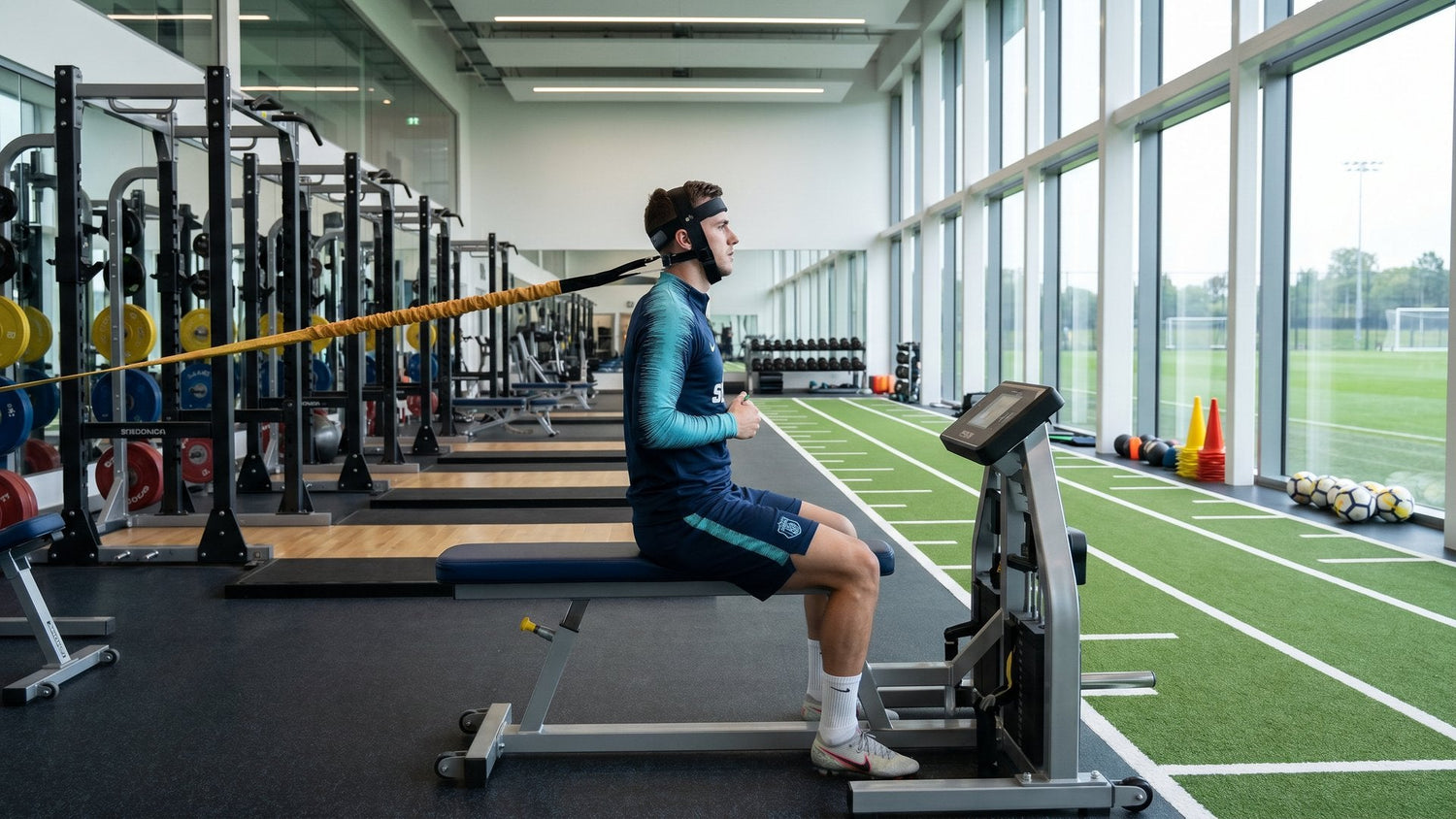
The players competing at the 2026 FIFA World Cup represent the most physically prepared athletes in the history of the sport. They train with sports scientists, nutritionists, biomechanics specialists, and strength and conditioning coaches whose sole purpose is to optimize every aspect of physical performance. They leave nothing to chance. And increasingly, what they are not leaving to chance is their neck.
Cervical strengthening has moved from the fringes of elite sports medicine into the mainstream of professional soccer preparation over the past decade. The science connecting neck strength to reduced head acceleration during impacts — and therefore to reduced concussion risk — has become too compelling for clubs investing millions in their players to ignore. What was once considered an optional add-on to a strength program is now a standard component of preparation at the highest level. And the principles that elite players apply are accessible to athletes at every level of the game.
Why Elite Clubs Take Neck Training Seriously
Professional soccer clubs operate with a clear financial and competitive incentive to keep their players healthy. A starting center back who misses six weeks with a concussion is not just a human cost — it is a competitive and financial liability. As the science connecting neck strength to head impact outcomes has strengthened, clubs have responded by incorporating cervical training into their standard S&C programs, particularly for players in positions that involve the highest frequency of aerial challenges and collisions.
Goalkeepers, center backs, and central midfielders are the positions most exposed to heading challenges and physical collisions. These players, at the elite level, now routinely perform dedicated neck training as part of their weekly preparation. The goal is dual: performance and protection. A stronger neck generates more power in the heading motion — the ability to direct the ball with precision and force rather than simply making contact with it. And a stronger neck reduces the head acceleration that occurs during that same heading motion, protecting the brain from the cumulative impact of hundreds of headers across a season.
This dual benefit — performance and protection from the same training stimulus — is what makes neck training uniquely valuable in soccer. It is not purely a safety measure that players tolerate for health reasons. It is a performance tool that makes players better at a core skill of the game while simultaneously making them safer.
What a Pro-Level Neck Training Protocol Looks Like
Elite soccer programs structure neck training as a progressive, periodized component of the broader S&C program. The principles are the same as any other strength training: progressive overload, specificity of movement, and periodization around the competitive calendar.
In the pre-season, when players have the most time for physical development, neck training volume is highest. Players perform dedicated cervical strengthening sessions two to three times per week, focusing on building baseline strength across all planes of movement. Rotation and extension are the primary movement patterns trained, as these are most directly relevant to heading mechanics and collision scenarios. Isometric holds, resistance band work, and specialized cervical training equipment are all used to apply progressive resistance to the cervical musculature.
During the competitive season, neck training volume decreases but frequency is maintained. One to two sessions per week of maintenance work, combined with the activation warm-up performed before every training session and match, preserves the strength built in pre-season and keeps the cervical musculature primed for the demands of competition. The pre-match activation routine — controlled rotation, extension warm-up, and isometric activation — takes approximately ten minutes and is performed as a standard component of the pre-match preparation.
Recovery protocols also address the neck specifically. After matches involving significant heading volume, players may use soft tissue work and targeted stretching to address cervical muscle fatigue. This is particularly relevant for central defenders who may head the ball 10 to 15 times in a single match.
The Tools Elite Athletes Use
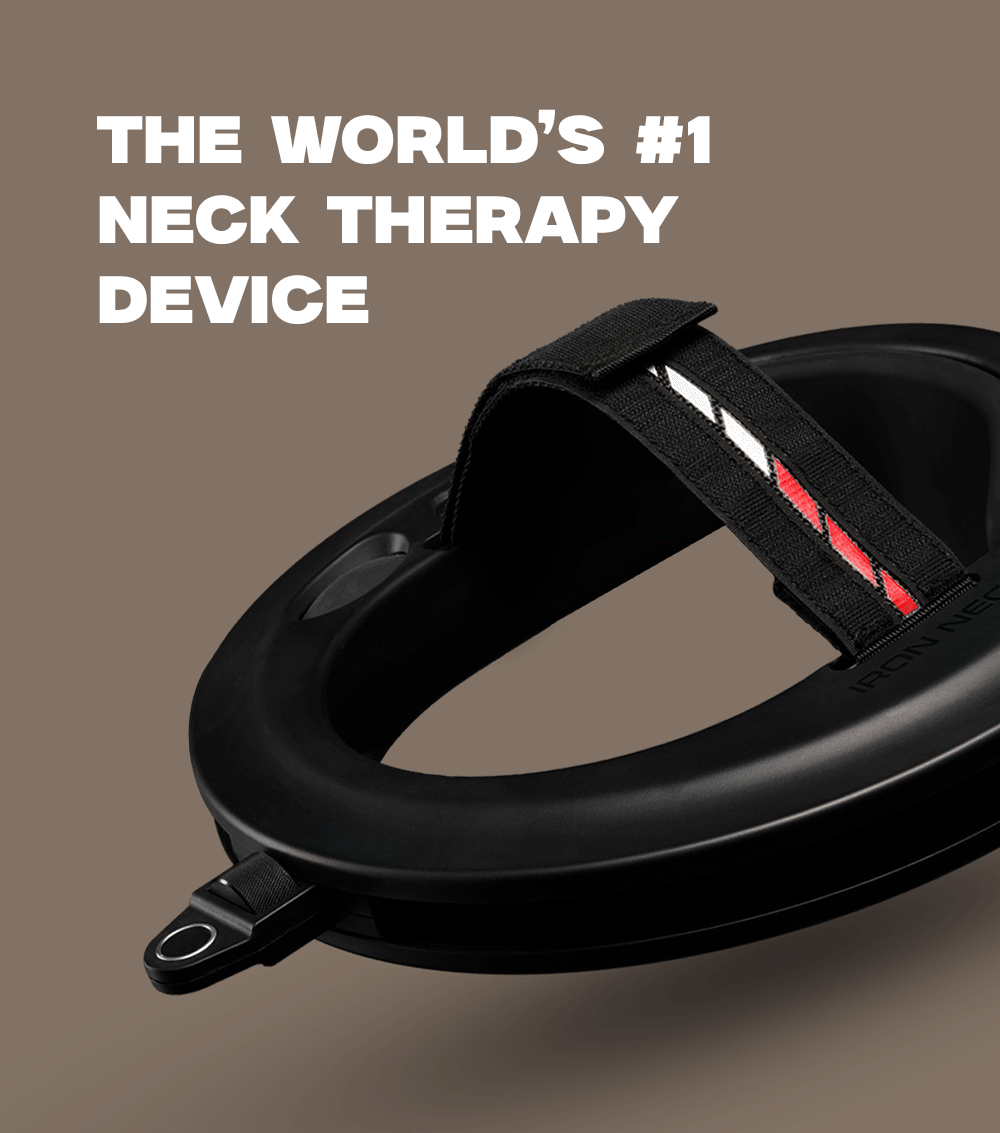
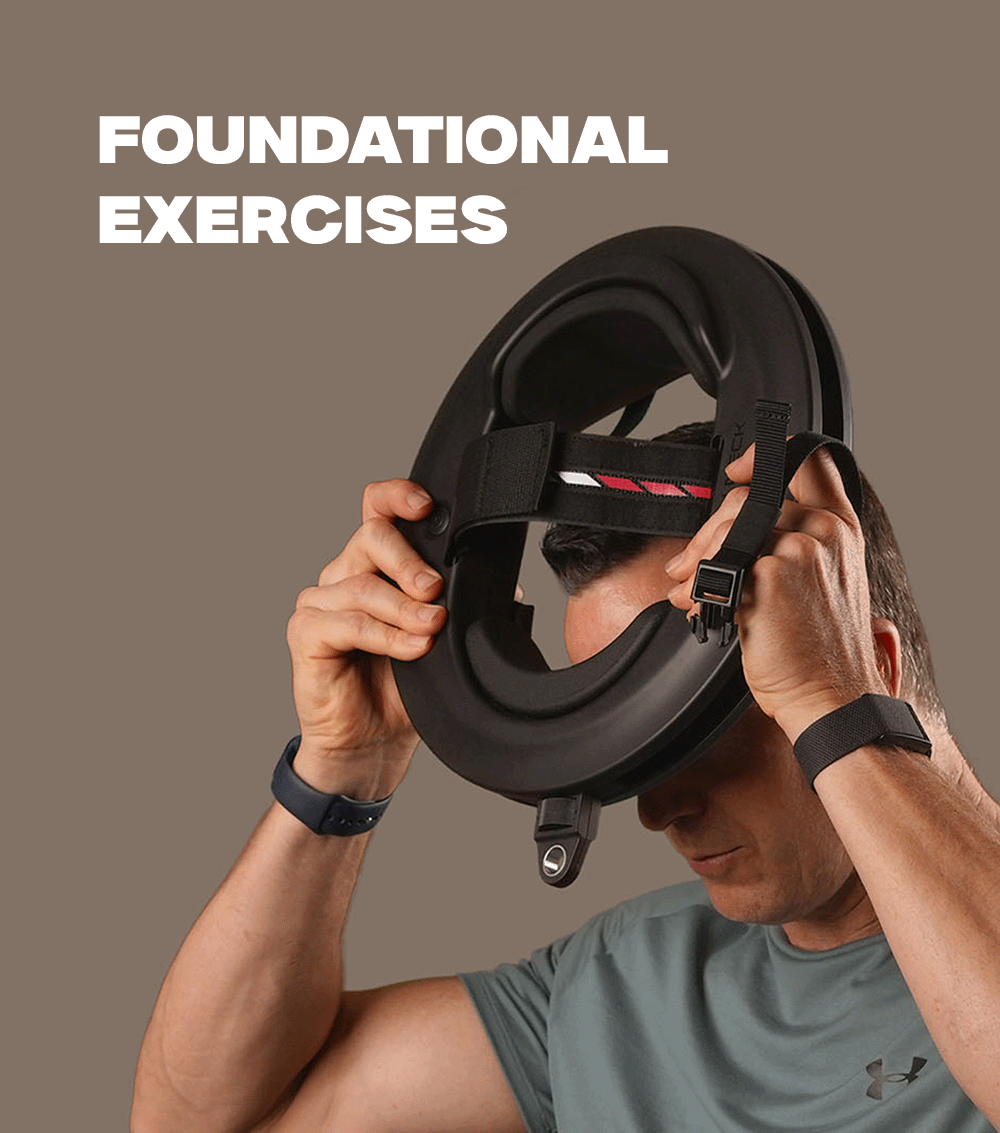
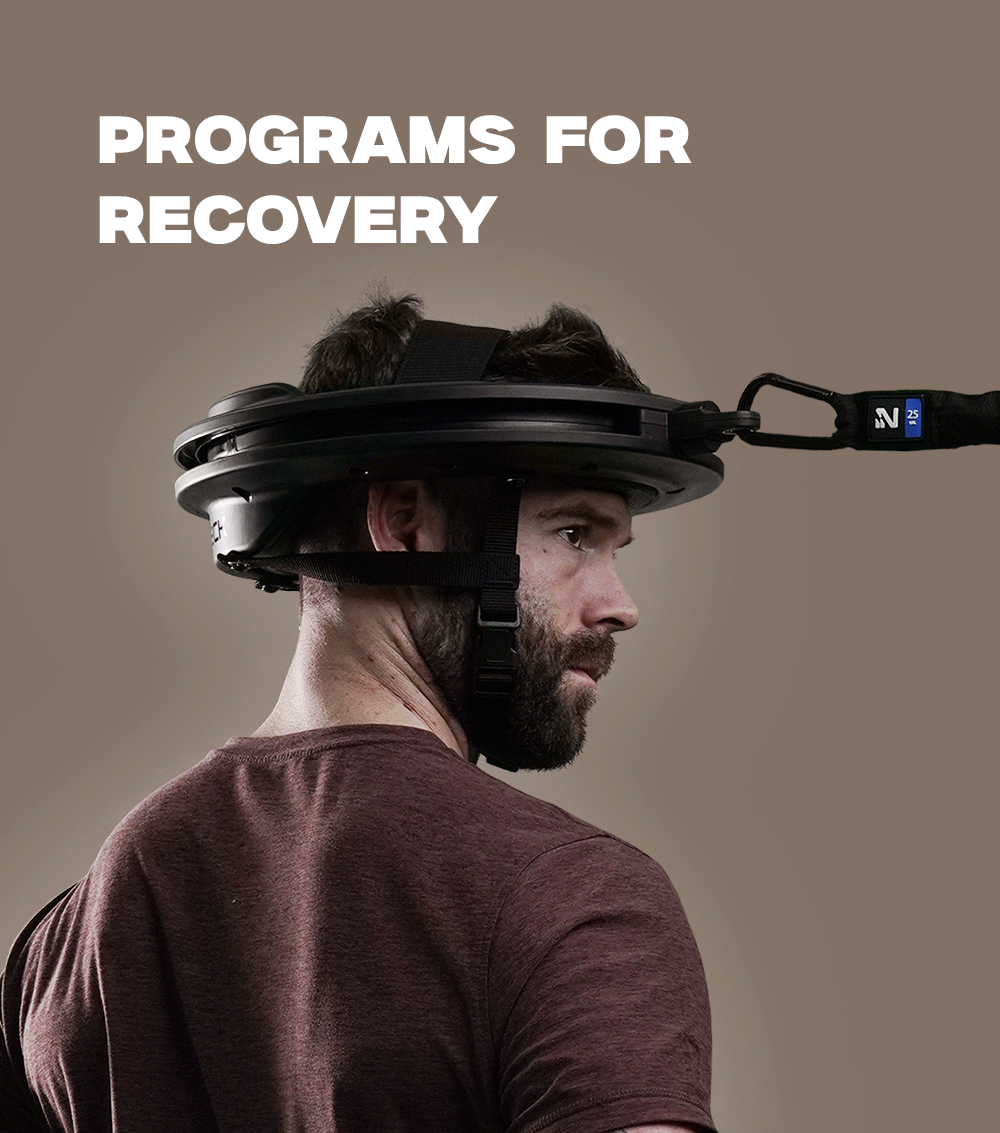
Specialized cervical training equipment has become a standard fixture in the weight rooms of professional sports teams across multiple disciplines. The Iron Neck, used by elite athletes in the NFL, MMA, and increasingly in professional soccer, allows athletes to train rotation and extension through a full 360-degree range of motion under consistent, progressive resistance. This type of training replicates the functional demands of heading and collision scenarios more closely than traditional resistance band work, and allows for the precise progressive overload that produces measurable strength gains over time.
The advantage of dedicated cervical training equipment over improvised alternatives is the ability to train through the full range of motion with consistent resistance throughout the movement. A resistance band's tension changes as it stretches; a dedicated cervical training tool maintains consistent resistance through the full arc of rotation and extension. This produces more complete muscular development and more accurate training specificity for the demands of soccer.
Applying Elite Principles at Every Level
The principles that World Cup players apply to neck training are not exclusive to professional athletes. Progressive overload, movement specificity, and consistent frequency are principles that any athlete can apply with the right tools and the right program. The difference between an elite player's neck training and an amateur player's is primarily one of volume, equipment quality, and the support of a professional S&C team — not of fundamentally different exercises or principles.
A high school or college soccer player who commits to a progressive cervical strengthening program two to three times per week will build meaningfully greater neck strength within six to eight weeks. That strength translates directly to better heading performance — more power, more control, more confidence in aerial challenges — and to reduced head acceleration during those same challenges. The return on investment from neck training is among the highest available in soccer-specific physical preparation.
The 2026 World Cup is a showcase of what the sport's best athletes can do. It is also a window into how those athletes prepare. Neck training is part of that preparation, and it is available to every player who chooses to take it seriously.
To explore the tools and programs used by elite athletes for cervical training, visit iron-neck.com.
- Jonathan Klinsmann's Broken Neck and What It Teaches Us About Soccer Safety
- Soccer Heading and Concussion: The Science Every World Cup Fan Should Know
- How to Strengthen Your Neck for Soccer: A Complete Training Guide
- Why Women Soccer Players Face a Higher Concussion Risk
- Neck Exercises Every Soccer Player Should Do Before Heading the Ball
- FIFA World Cup 2026 Concussion Rules: What Every Soccer Player Needs to Know
- The Parent's Guide to Concussion Prevention in Youth Soccer
Iron Neck is the only device that trains your neck through 360 degrees of resistance, combining rotation, extension, and lateral movement in one tool. Used by NFL teams, UFC fighters, and physical therapists.

Leave a comment
This site is protected by hCaptcha and the hCaptcha Privacy Policy and Terms of Service apply.