




Whiplash Recovery Exercises: Rebuilding Strength After a Neck Injury
Whiplash is one of the most common injuries sustained in motor vehicle accidents, affecting an estimated 83 per 100,000 people annually in developed countries. It occurs when the head undergoes a rapid acceleration-deceleration movement that exceeds the normal range of motion of the cervical spine, producing injury to the muscles, ligaments, discs, and facet joints of the neck. The spectrum of whiplash injuries ranges from mild muscle strain that resolves within days to severe ligamentous injury that produces chronic pain and disability lasting years. Regardless of the severity of the initial injury, a structured exercise program is the most important component of whiplash recovery, producing better long-term outcomes than passive treatments alone.
The Importance of Early Active Rehabilitation
The traditional approach to whiplash management, which involved prolonged rest and immobilization in a cervical collar, has been shown by research to produce worse outcomes than early active rehabilitation. Prolonged immobilization leads to muscle atrophy, joint stiffness, and the development of chronic pain behaviors that are difficult to reverse. The current evidence strongly supports early active mobilization, beginning within the first few days after injury, as the optimal approach to whiplash management.
Early active rehabilitation does not mean ignoring pain or pushing through severe symptoms. It means beginning gentle, pain-guided movement as soon as possible and progressively increasing the demands on the healing tissues as recovery allows. The exercises in this guide are organized by phase of recovery and should be performed within your pain tolerance, progressing to the next phase when the current exercises can be performed without significant discomfort.
Phase 1: Acute Phase (Days 1 to 14)
During the acute phase, the priority is managing pain and inflammation while beginning gentle movement to prevent the stiffness and muscle atrophy that develop rapidly after whiplash injury.
Gentle Active Range of Motion: Perform slow, controlled movements through your comfortable range of motion in all planes: rotation (looking over the shoulder), lateral flexion (ear to shoulder), flexion (chin to chest), and extension (looking up). Move only to the point where you feel mild discomfort, not sharp pain. Perform 10 repetitions in each direction, twice daily. Begin with the movements that are least painful and progress to more restricted movements as comfort allows.
Chin Tucks: Sit or stand with your back straight. Slide your head straight back as if making a double chin. Hold for 3 seconds and release. Perform 3 sets of 10 repetitions. Chin tucks activate the deep cervical flexors and gently mobilize the upper cervical spine, making them one of the most beneficial exercises in the acute phase of whiplash recovery.
Shoulder Rolls: Roll your shoulders backward in a slow, controlled circle. Perform 10 repetitions. Then roll forward. Perform 10 repetitions. Shoulder rolls maintain mobility in the upper back and reduce the muscle guarding that commonly develops in the trapezius and levator scapulae after whiplash injury.
Phase 2: Subacute Phase (Weeks 2 to 6)
As acute pain subsides, the focus shifts to restoring full cervical range of motion and beginning to strengthen the muscles that were injured or inhibited during the acute phase.
Progressive Range of Motion: Continue the active range of motion exercises from Phase 1, progressively increasing the range as comfort allows. Add gentle overpressure at the end range of each movement using your hand to provide a gentle stretch. Hold for 20 seconds per direction. Perform twice daily.
Isometric Neck Strengthening: Sit upright. Place your palm against your forehead and push your head forward against your hand without allowing your head to move. Hold for 5 seconds. Repeat with your hand on the back of your head (resisting extension), on the right side of your head (resisting right lateral flexion), and on the left side (resisting left lateral flexion). Perform 3 repetitions in each direction. Isometric exercises build cervical muscle strength without requiring joint movement, making them appropriate for the subacute phase when dynamic exercises may still be painful.
Scapular Retraction: Squeeze your shoulder blades together and down. Hold for 5 seconds and release. Perform 3 sets of 15 repetitions. Scapular retraction activates the lower and mid trapezius and begins to address the postural changes that commonly develop after whiplash injury.
Phase 3: Strengthening Phase (Weeks 6 to 12)
As pain resolves and range of motion is restored, progressive strengthening of the cervical and upper back muscles is the primary focus. This phase is critical for preventing chronic pain and recurrence, as the muscle weakness and coordination deficits that develop after whiplash injury are the primary drivers of long-term disability.
Progressive Chin Tuck Strengthening: Progress from basic chin tucks to resisted chin tucks by placing a resistance band against your forehead and performing the retraction movement against the resistance. Perform 3 sets of 15 repetitions.
Band Face Pulls: Attach a resistance band at face height. Pull the band toward your face while simultaneously externally rotating your shoulders. Squeeze your shoulder blades together and down. Perform 3 sets of 15 repetitions. The Iron Neck resistance bands are ideal for this exercise.
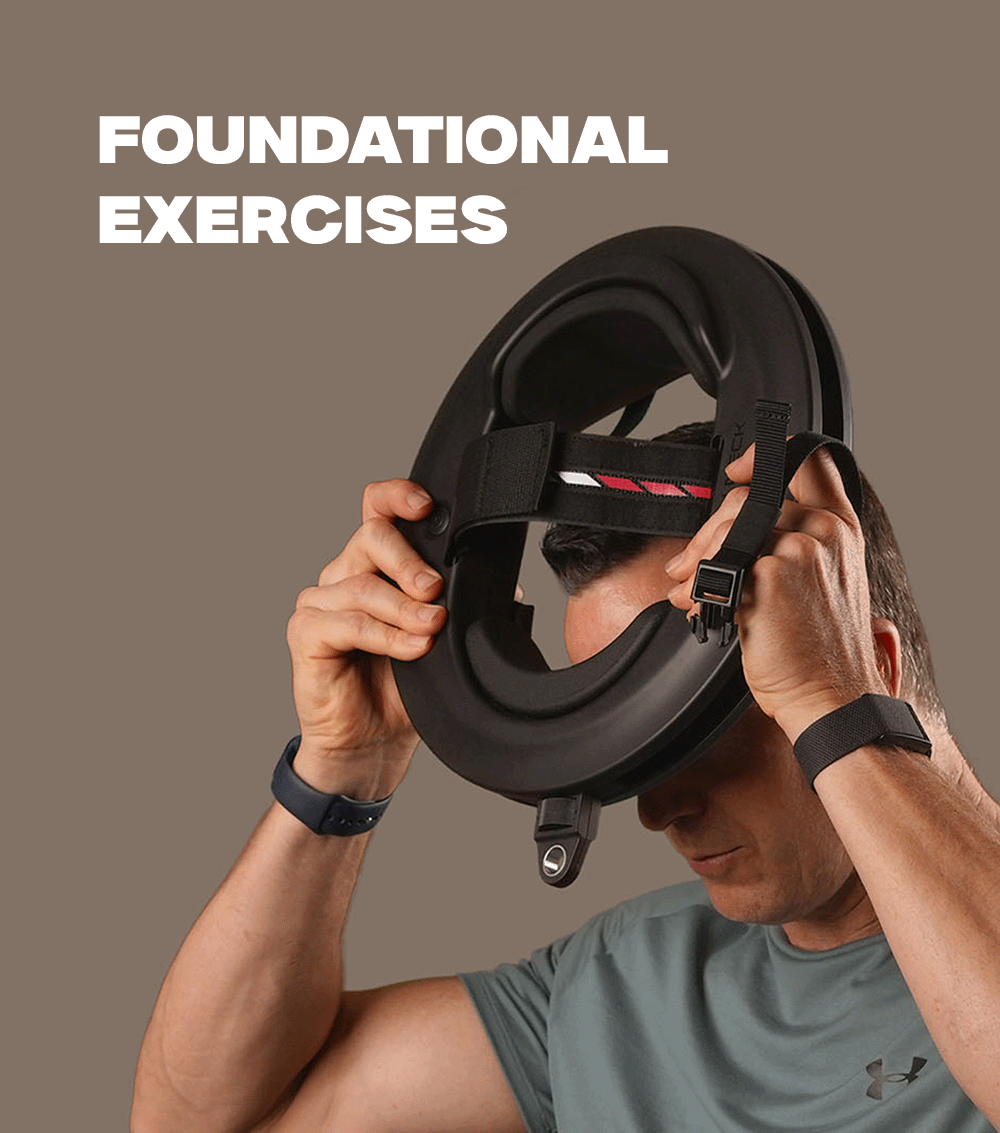
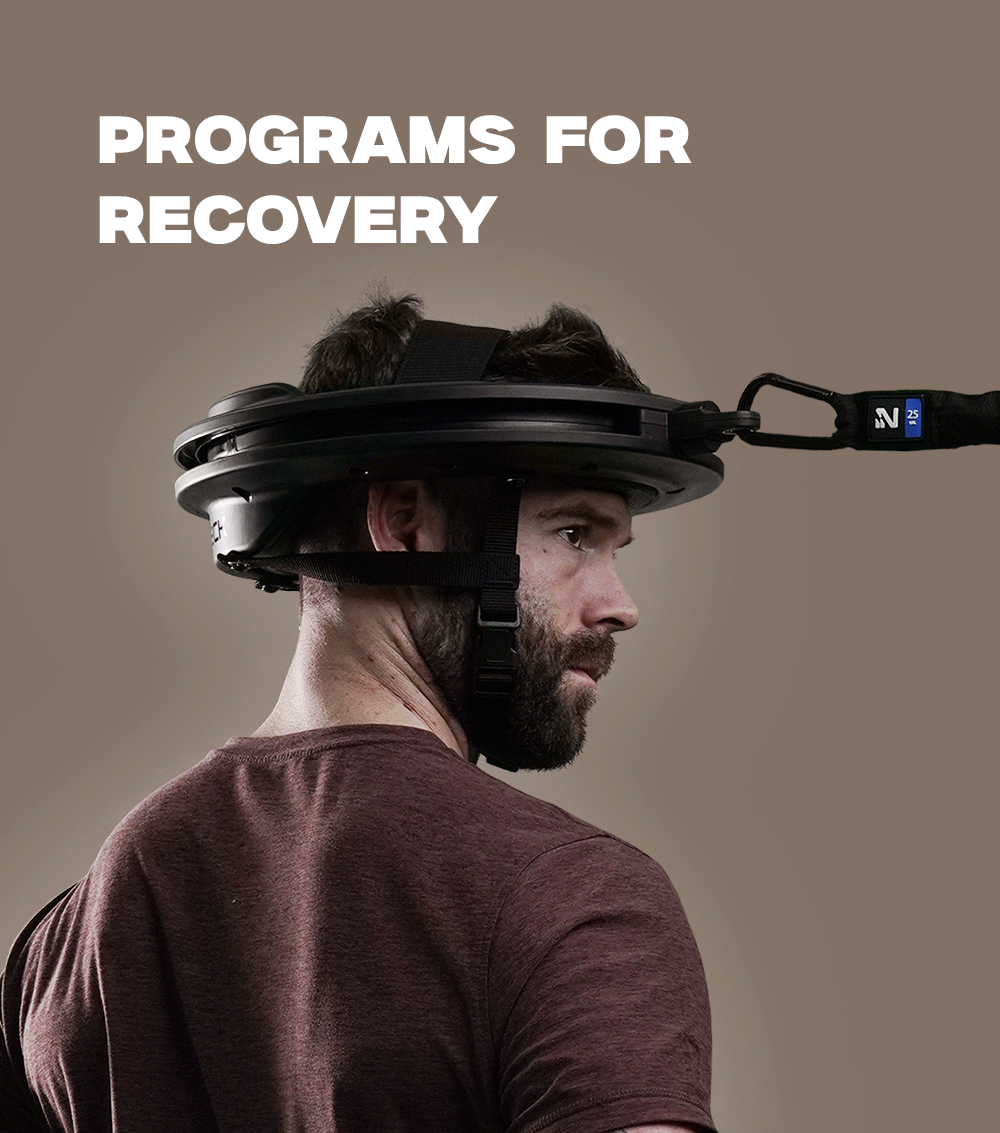
Cervical Rotation and Extension Strengthening: For people who want to build significant cervical strength after whiplash recovery, the Iron Neck device provides adjustable, 360-degree resistance for cervical rotation and extension training. This allows systematic progressive overload of the cervical muscles with the same principles used in strength training. Begin with very light resistance and progress gradually over several months.
Addressing Chronic Whiplash
Approximately 50 percent of people who sustain whiplash injuries continue to experience symptoms beyond three months, a condition known as chronic whiplash-associated disorder (WAD). Chronic WAD is associated with central sensitization, a state in which the nervous system becomes hypersensitive to pain signals, in addition to the ongoing mechanical deficits of muscle weakness and movement impairment. Management of chronic WAD typically requires a multidisciplinary approach that includes exercise, pain education, and psychological support. If your symptoms have persisted beyond three months despite consistent exercise, a referral to a multidisciplinary pain management program may be appropriate.
When to Seek Medical Attention
Seek medical attention immediately after a whiplash injury if you have significant neurological symptoms such as radiating pain, numbness, or weakness in the arms or hands; if you have difficulty swallowing or speaking; if you have significant dizziness or balance problems; or if you have a severe headache that came on immediately after the injury. These presentations may indicate a more serious injury that requires urgent evaluation.
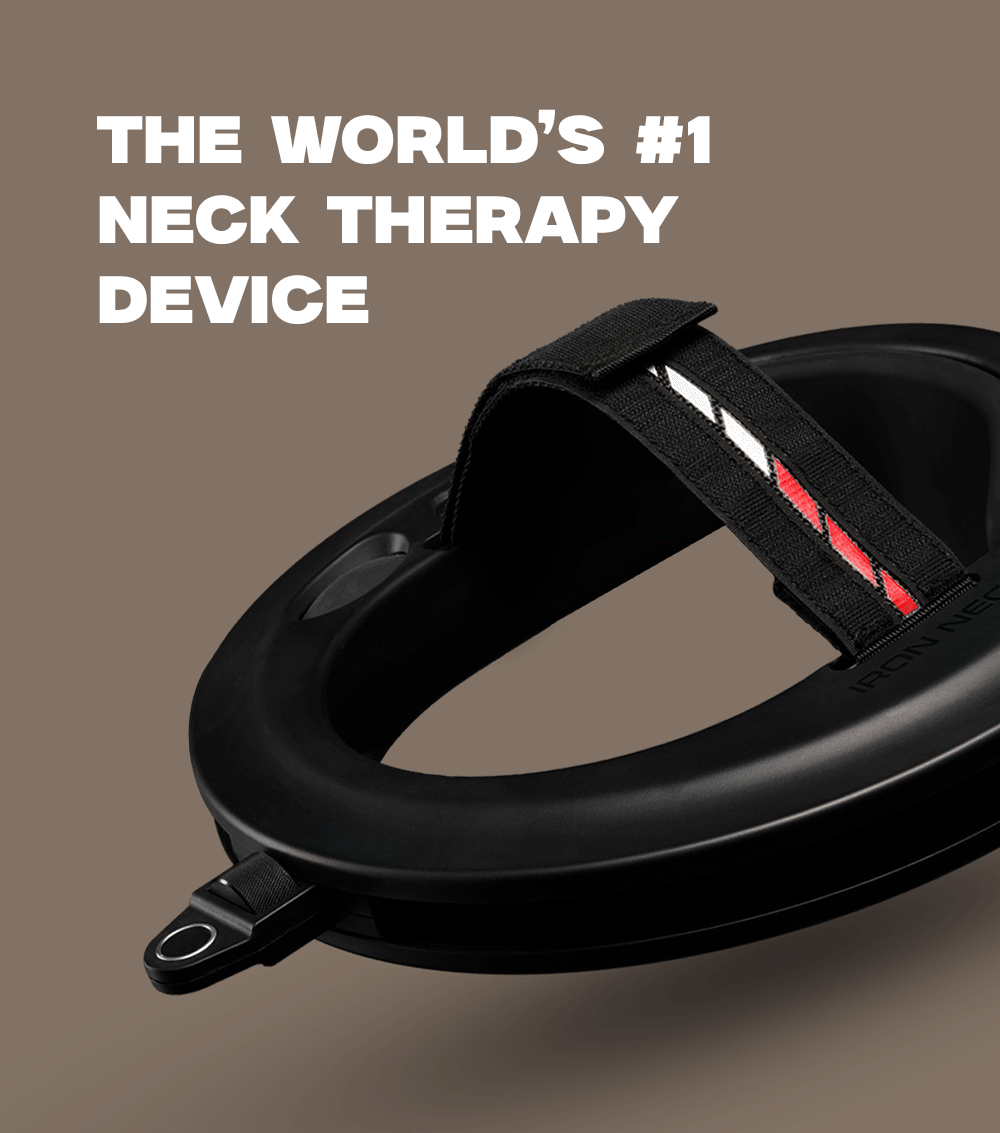
Iron Neck is the only device that trains your neck through 360 degrees of resistance, combining rotation, extension, and lateral movement in one tool. Used by NFL teams, UFC fighters, and physical therapists.
Frequently Asked Questions
When should I see a doctor for neck pain?
Seek medical attention if neck pain is accompanied by numbness or tingling in the arms, weakness, severe headache, fever, or pain following trauma. Pain that persists beyond 2-3 weeks without improvement also warrants evaluation.
Can exercises really help neck pain?
Yes. Research consistently shows that targeted neck strengthening exercises are among the most effective long-term treatments for chronic neck pain. They address the underlying muscle weakness and imbalances that cause pain, rather than just masking symptoms.
How long does neck pain typically last?
Acute neck pain from minor strains typically resolves in 1-2 weeks. Chronic neck pain (lasting more than 3 months) requires a more comprehensive approach including strengthening, posture correction, and ergonomic changes.


Leave a comment
This site is protected by hCaptcha and the hCaptcha Privacy Policy and Terms of Service apply.