




Pre-Participation Physical Exams for Football: What Coaches and Athletic Trainers Need to Know
The pre-participation physical exam (PPE) is the first line of defense in athlete safety. Conducted before the first practice of each season, the PPE identifies medical conditions that may increase an athlete's risk of injury or illness during participation — and in some cases, conditions that make participation temporarily or permanently unsafe.
For football programs, the PPE is particularly important given the sport's physical demands and the range of conditions that can create elevated risk. This guide covers the key components of the football PPE, the conditions that require special attention, and the documentation requirements that protect athletes and programs.
The Standard PPE Components
The American Academy of Pediatrics, American Academy of Family Physicians, and American College of Sports Medicine jointly publish the Preparticipation Physical Evaluation monograph, which is the standard reference for PPE design. The standard PPE includes:
Medical History
The medical history is the most important component of the PPE. It should be completed by the athlete and reviewed with a parent or guardian for athletes under 18. Key areas include:
- Prior injuries, surgeries, and hospitalizations
- Cardiac symptoms (chest pain, palpitations, syncope, shortness of breath with exertion)
- Family history of cardiac conditions or sudden death in a relative under 50
- Prior concussion history
- Asthma and exercise-induced bronchospasm
- Sickle cell trait status
- Current medications and supplements
- Heat illness history
Physical Examination
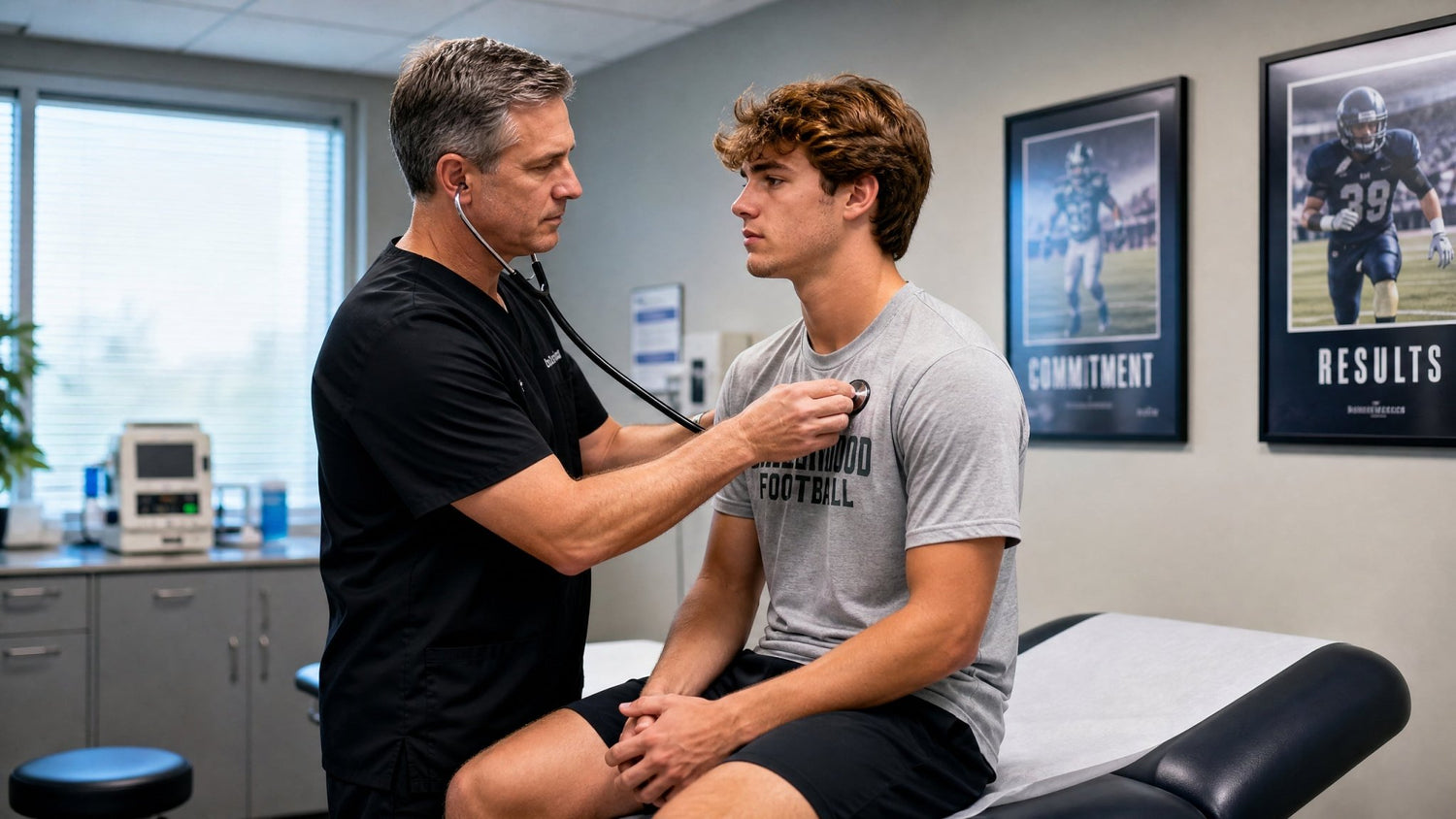
The physical exam should be conducted by a licensed physician or advanced practice provider. It includes cardiovascular auscultation, blood pressure measurement, musculoskeletal assessment, and neurological screening. Vision and hearing screening are also recommended.
Cardiac Screening: The Highest-Stakes Component
Sudden cardiac arrest is the leading cause of sudden death in young athletes. The most common underlying conditions — hypertrophic cardiomyopathy, long QT syndrome, and anomalous coronary arteries — are often asymptomatic and detectable only through screening.
The American Heart Association recommends a 14-element cardiac history and physical as the minimum standard for preparticipation cardiac screening. This includes specific questions about exertional chest pain, syncope, palpitations, and family history of sudden cardiac death.
Electrocardiogram (ECG) screening is more sensitive than history and physical alone but is not universally recommended due to cost and the rate of false positives. Some programs, particularly at the collegiate level, have implemented ECG screening for all athletes. If your program conducts ECG screening, ensure that results are interpreted by a cardiologist with expertise in athlete ECGs — normal athletic adaptations can mimic pathological findings.
Every football program should have an AED on site and staff trained in its use. The survival rate for sudden cardiac arrest treated with an AED within 3–5 minutes approaches 75%. Without defibrillation, survival rates drop by 10% per minute.
Sickle Cell Trait: An Underappreciated Risk
Sickle cell trait (SCT) is present in approximately 8% of African Americans and 1–3% of athletes of other ethnic backgrounds. It is not sickle cell disease — athletes with SCT are generally healthy and can participate in sports. However, under conditions of extreme exertion, dehydration, heat, or altitude, SCT can cause exertional sickling, a potentially fatal condition in which red blood cells deform and obstruct blood flow to muscles.
The NCAA mandates SCT screening for all Division I athletes. At the high school level, policies vary by state. Regardless of policy requirements, programs should know which athletes have SCT and have specific protocols in place for them:
- Gradual acclimatization to training intensity
- Extended rest periods during high-intensity drills
- Aggressive hydration
- Immediate response to symptoms (muscle cramping, weakness, pain) — stop activity immediately and call 911
Musculoskeletal Assessment
The musculoskeletal component of the PPE identifies prior injuries, asymmetries, and movement limitations that may predispose athletes to re-injury. For football, particular attention should be paid to:
- Cervical spine range of motion and strength — prior neck injuries increase concussion risk
- Shoulder stability — prior shoulder dislocations are a significant re-injury risk
- Knee ligament integrity — prior ACL or MCL injuries require specific return-to-play criteria
- Ankle stability — chronic ankle instability is common and addressable with bracing and rehabilitation
Concussion History
Athletes with a history of multiple concussions require special consideration. The PPE should document the number of prior concussions, the severity and duration of symptoms, and the time to recovery. Athletes with a history of prolonged post-concussion syndrome, multiple concussions in a single season, or concussions with progressively worsening symptoms should be referred to a sports medicine physician or neurologist before clearance is granted.
Documentation and Clearance
The PPE should result in one of three outcomes: full clearance, clearance with conditions (specific restrictions or required follow-up), or no clearance pending further evaluation. All outcomes should be documented in writing and kept on file.
Clearance forms should be signed by the examining provider, not by coaches or athletic trainers. Coaches and athletic trainers play an important role in identifying athletes who need referral, but the clearance decision must rest with a licensed healthcare provider.
Maintain PPE records for a minimum of three years. Some states require longer retention periods. Check your state's requirements.

Leave a comment
This site is protected by hCaptcha and the hCaptcha Privacy Policy and Terms of Service apply.