



Neck Strength Training for Football: Why It's the Most Overlooked Safety Protocol
Ask most football coaches what they do to prevent concussions and you will hear about helmet technology, tackling technique, and contact load management. Rarely will you hear about neck strength training. This is a significant gap — one that the research literature has been closing for over a decade.
The evidence is clear: neck strength is one of the most powerful modifiable risk factors for concussion in football. It is also one of the most neglected. This article explains the science, the programming, and the practical steps to make neck conditioning a core part of your football safety protocol.
The Biomechanics: Why Neck Strength Matters
A concussion occurs when the brain experiences rapid acceleration and deceleration inside the skull. The forces that drive this acceleration come from head impacts — tackles, blocks, helmet-to-helmet contact, and falls.
The neck is the primary mechanical link between the head and the body. A stronger, more muscular neck acts as a shock absorber, dissipating impact energy before it reaches the brain. A weaker neck allows the head to "whip" more freely on impact, increasing the acceleration forces transmitted to the brain.
This is not theoretical. A 2014 study in the Journal of Athletic Training followed 6,704 high school athletes across multiple sports and found that for every one-pound increase in neck strength, the odds of concussion decreased by 5%. Athletes with the weakest necks were more than twice as likely to sustain a concussion as those with the strongest necks.
The Current State of Neck Training in Football
Despite this evidence, neck strength training is systematically underemphasized in football programs at every level. A survey of NCAA Division I strength and conditioning programs found that fewer than 30% included dedicated neck training in their programming. At the high school level, the number is lower still.
The reasons are partly historical — neck training has a reputation for being dangerous, associated with the old-school neck bridge exercise that does carry real injury risk. But modern neck training, done correctly with appropriate equipment, is safe, effective, and highly transferable to the demands of football.
Assessment: Measuring Neck Strength
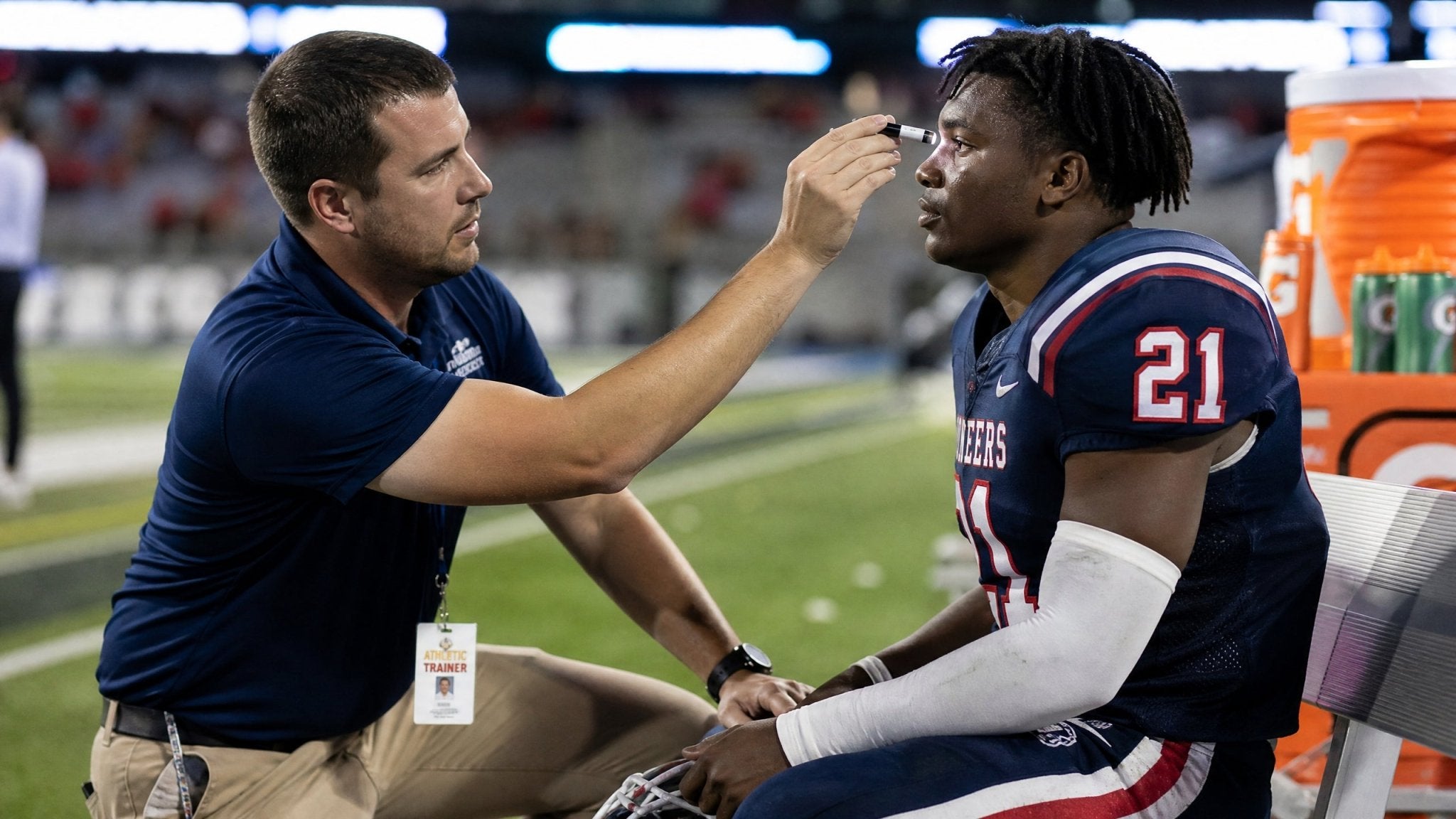
Before building a neck training program, establish baseline measurements. Neck strength can be assessed in four directions: flexion (forward), extension (backward), and lateral flexion to each side.
The simplest assessment uses a handheld dynamometer or a load cell attached to a head harness. Measure maximum isometric force in each direction. Record the results and retest every 4–6 weeks to track progress.
For programs without measurement equipment, a practical baseline is to assess whether athletes can perform 3 sets of 15 repetitions of neck flexion and extension against manual resistance without fatigue. If they cannot, they need foundational neck strength work before progressing to loaded training.
Programming: Building Neck Strength for Football
Neck training for football should address all four planes of movement and progress from isometric work to dynamic resistance training over the course of a training cycle.
Phase 1: Foundation (Weeks 1–4)
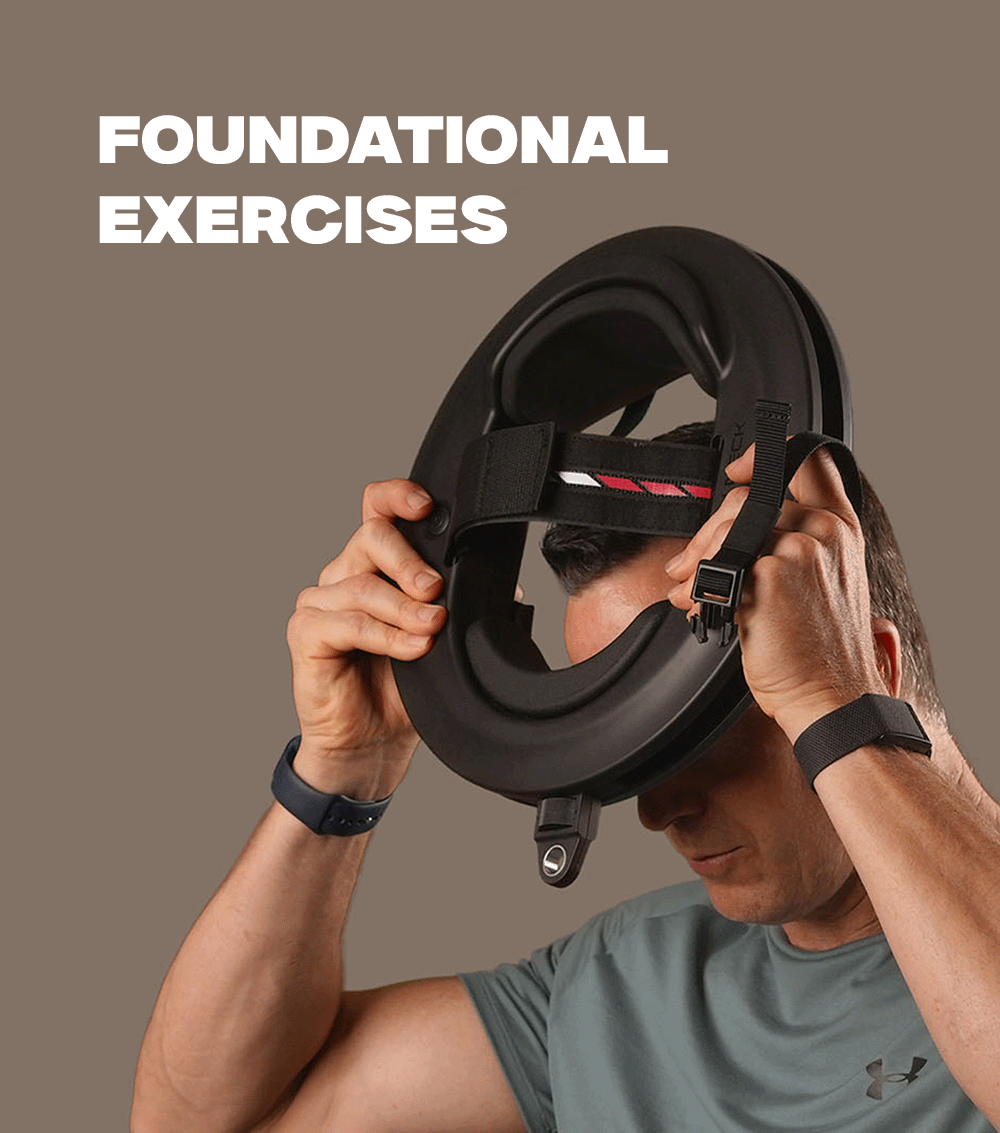
Focus on isometric holds and bodyweight movements. Exercises include isometric neck flexion and extension against manual resistance, neck nods, and controlled neck circles. Volume: 2–3 sets of 10–15 repetitions per direction, 3 days per week.
Phase 2: Loading (Weeks 5–10)
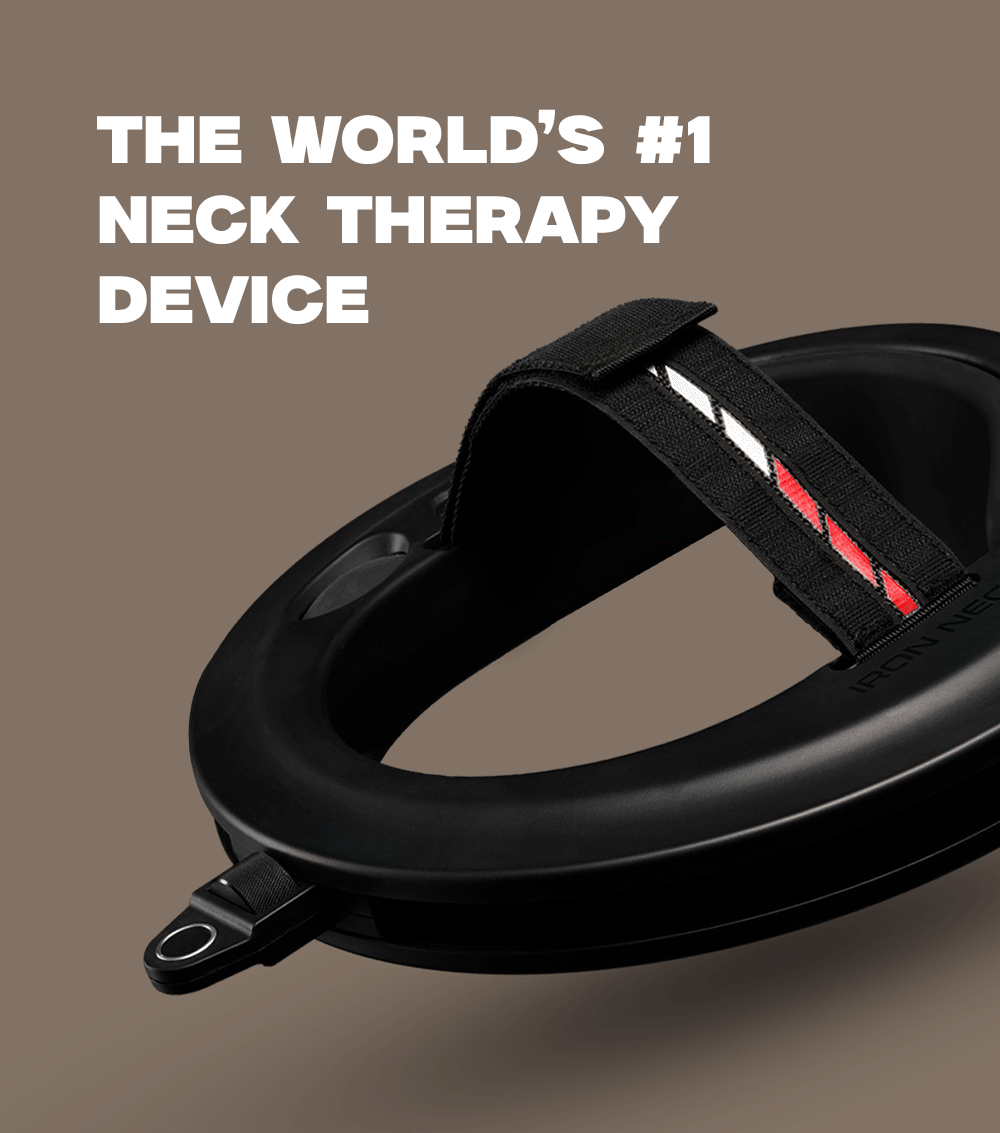
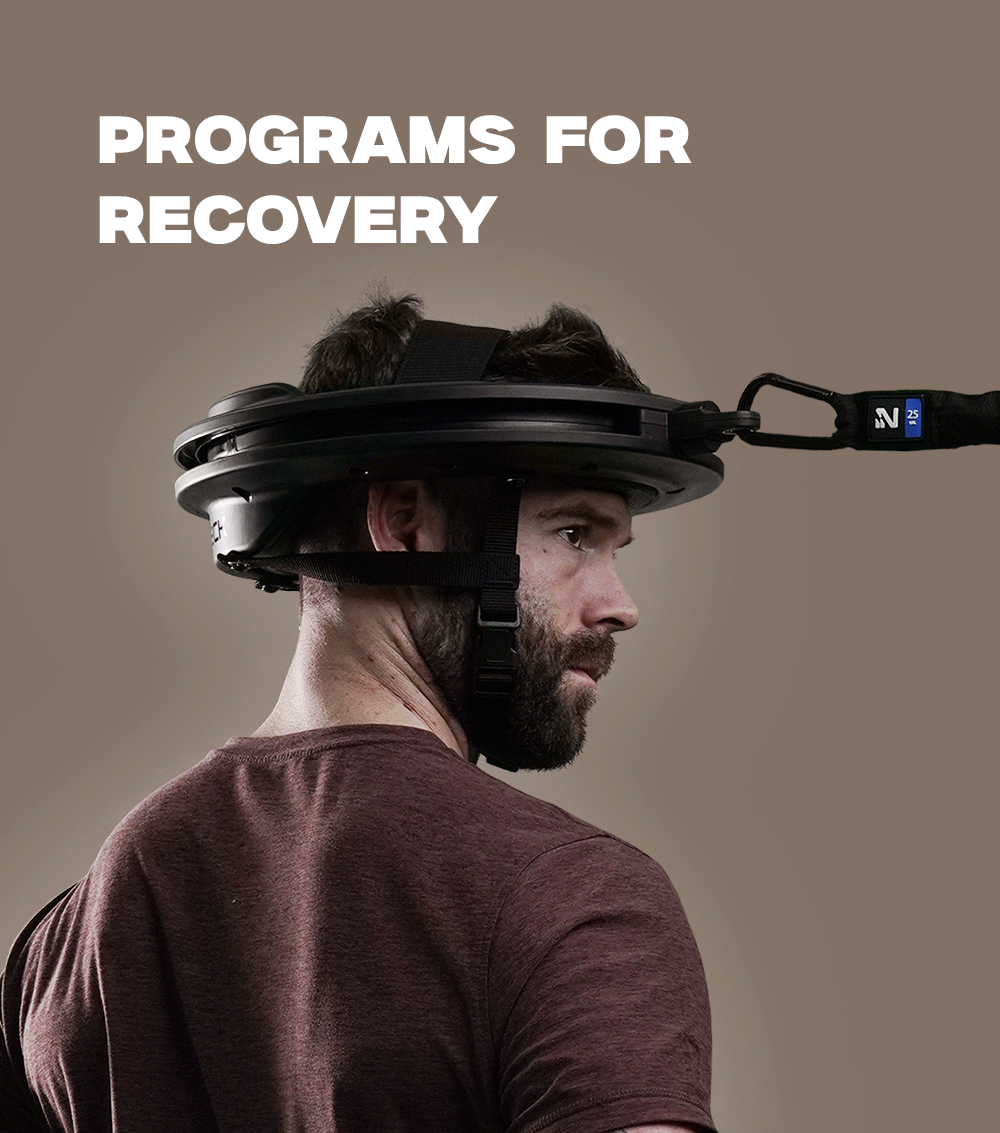
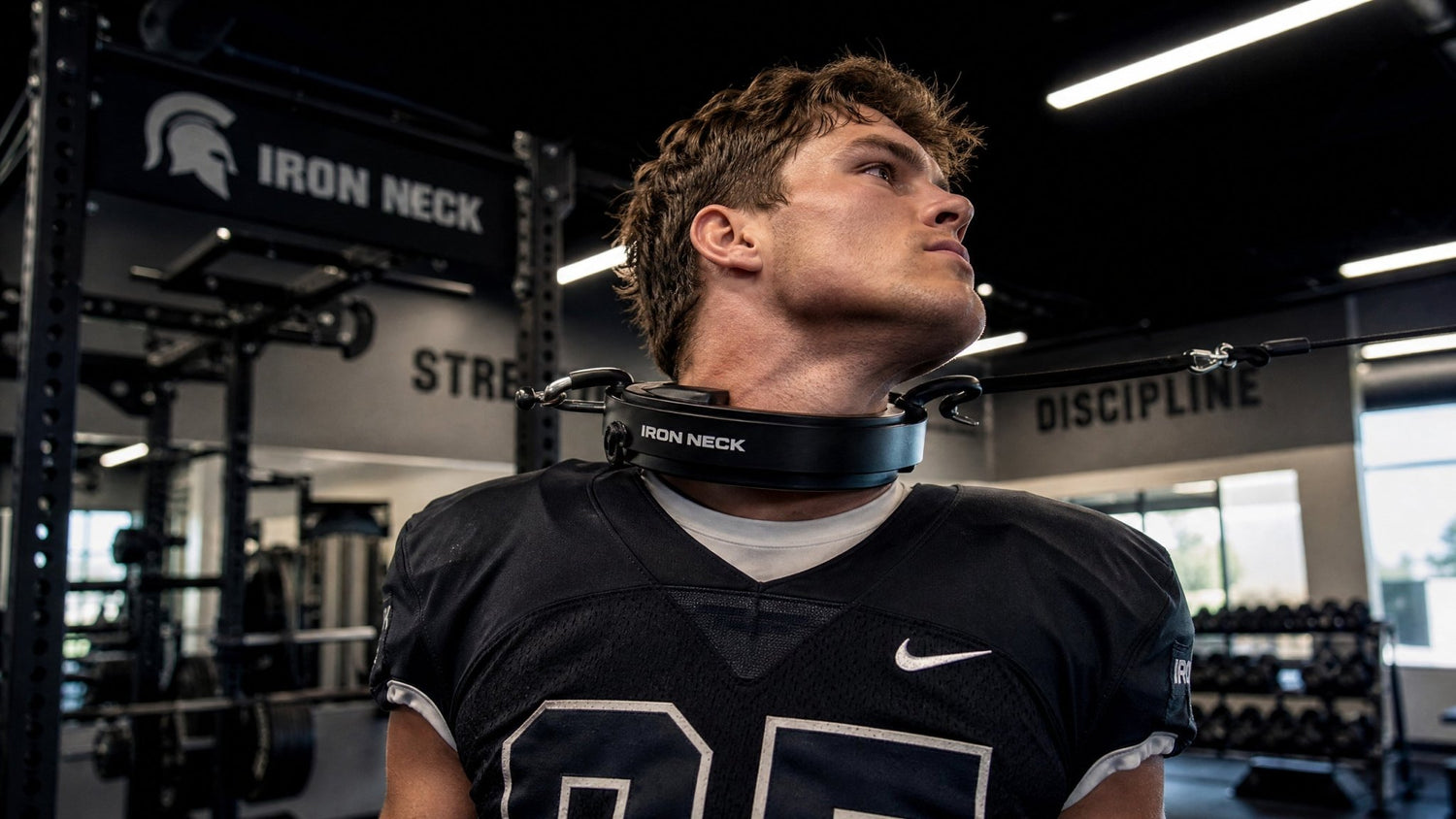
Introduce external resistance. Plate-loaded neck curls, resistance band work in all four directions, and head harness exercises. The Iron Neck device is particularly effective in this phase — it provides 360-degree resistance through a full range of motion, allowing athletes to train the neck in patterns that closely mimic the demands of football contact. Volume: 3–4 sets of 10–15 repetitions per direction, 3 days per week.
Phase 3: In-Season Maintenance (Throughout Season)
Reduce volume but maintain frequency. 2 sets of 10–12 repetitions per direction, 2 days per week. The goal is to preserve the strength gains built in the off-season without adding excessive fatigue during the competitive season.
Integration: Where Does Neck Training Fit?
The most common objection to neck training is time. Football programs are already packed. The answer is integration, not addition.
Neck training pairs naturally with existing warm-up routines. A 10-minute neck circuit at the start of each strength session adds minimal time while building one of the most important protective adaptations available to football players. It can also be incorporated into position group warm-ups before practice.
For programs with the Iron Neck device, athletes can rotate through the device during rest periods between other exercises, making neck training essentially "free" from a time perspective.
Position-Specific Considerations
All football players benefit from neck strength training, but the programming should account for position-specific demands:
- Linemen — highest contact frequency, need maximum strength in all planes. Prioritize loaded extension work.
- Linebackers and defensive backs — high-velocity contact, need strength combined with mobility. Prioritize dynamic resistance training.
- Skill positions (WR, RB, QB) — lower contact frequency but high-velocity impacts when they occur. Prioritize isometric strength and cervical stability.
- Special teams — often the most vulnerable position group due to high-speed collisions. Do not neglect neck training for special teams players.
The ROI of Neck Training
A conservative estimate: if neck strength training reduces concussion incidence by 20% in a 50-player program that averages 3 concussions per season, that is 0.6 fewer concussions per year. Each concussion costs the program 1–3 weeks of player availability, medical costs, documentation burden, and potential liability exposure.
The cost of implementing a neck training program — equipment, programming time, and coach education — is a fraction of the cost of a single serious concussion. The ROI is not close.
More importantly, the player who avoids a concussion stays on the field, stays in school, and stays in the game. That is the outcome that matters most.
Leave a comment
This site is protected by hCaptcha and the hCaptcha Privacy Policy and Terms of Service apply.