



Neck Mobility Exercises: Restore Full Range of Motion
A stiff neck is more than a discomfort. Restricted cervical range of motion affects your ability to drive safely, perform athletic movements, maintain proper posture, and even breathe efficiently. Whether your limited mobility comes from years of desk work, a previous injury, muscle tightness, or simply the natural stiffening that comes with age, targeted neck mobility exercises can restore a significant portion of your lost range of motion. This guide covers the most effective exercises for each plane of cervical movement, explains the physiological basis for why they work, and gives you a practical daily routine you can implement immediately.
Understanding Cervical Range of Motion
The cervical spine moves in six directions: flexion (chin to chest), extension (looking up), left and right lateral flexion (ear to shoulder), and left and right rotation (looking over the shoulder). Normal ranges vary by age and individual, but general reference values for healthy adults are approximately 50 degrees of flexion, 60 degrees of extension, 45 degrees of lateral flexion per side, and 70 to 80 degrees of rotation per side.
Restrictions in any of these planes typically reflect a combination of joint capsule tightness, muscle shortening, and reduced neural mobility. Effective mobility work addresses all three components, which is why the best neck mobility routines combine active movement, passive stretching, and controlled end-range loading.
The Daily Neck Mobility Routine
Perform this routine once daily, preferably in the morning or after a warm shower when the tissues are more pliable. Move slowly and with control. Never force range of motion or push through sharp pain. A sense of stretch or mild discomfort is acceptable; pain is not.
Cervical Flexion and Extension Mobility (2 minutes)
Begin with gentle active range of motion in flexion and extension. Sit upright with your shoulders relaxed. Slowly lower your chin toward your chest, moving through your full comfortable range of flexion. Hold for 2 seconds at the end range. Then slowly raise your head and look upward, moving through your full comfortable range of extension. Hold for 2 seconds. Return to neutral. Perform 10 repetitions in each direction. Move at a pace of approximately 3 seconds per direction. The goal is to explore your current range of motion, not to force beyond it.
Lateral Flexion Mobility (2 minutes)
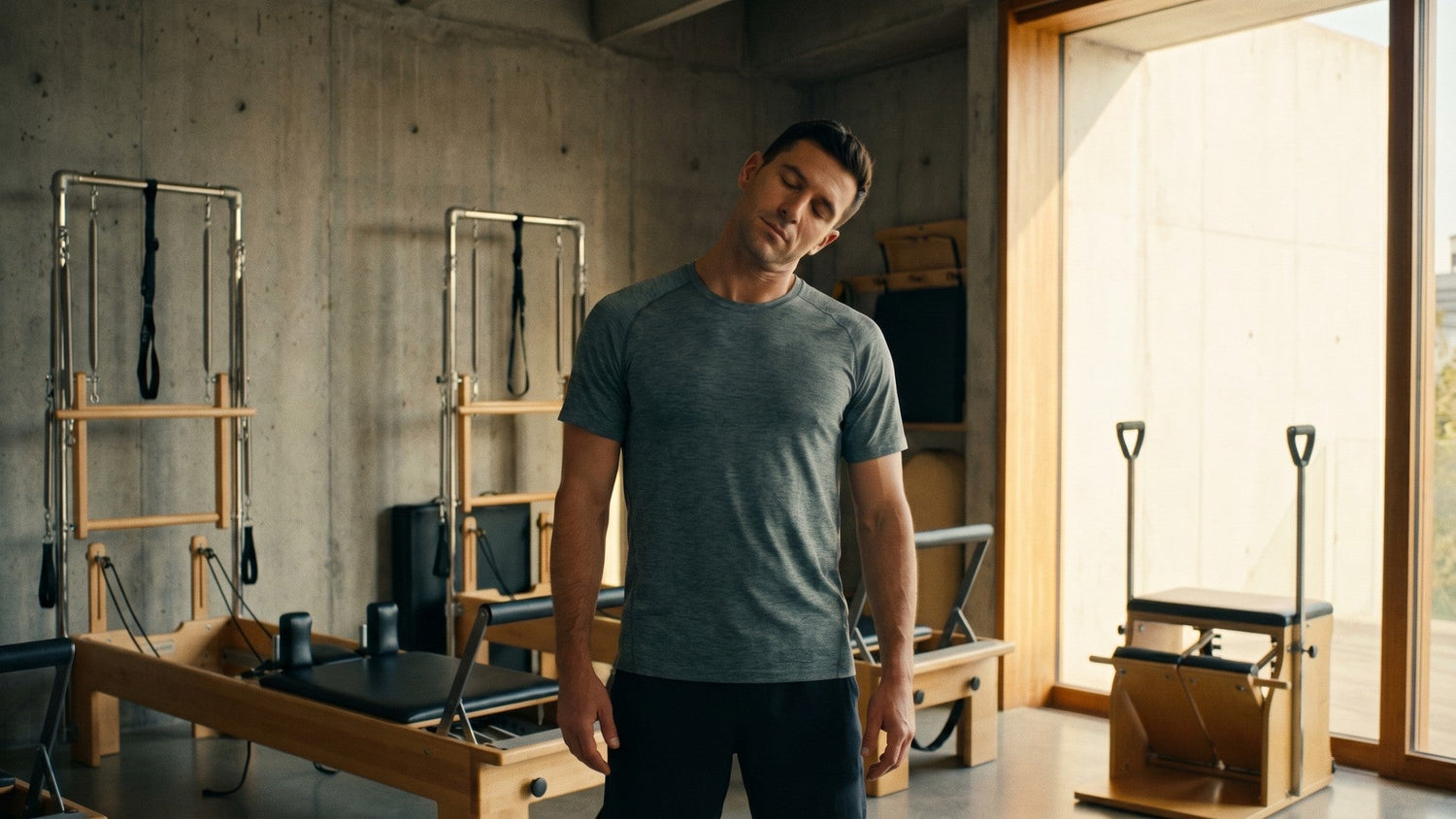
Sit upright. Slowly drop your right ear toward your right shoulder, keeping your left shoulder down and relaxed. Move through your full comfortable range of lateral flexion. Hold for 2 seconds at the end range. Return to neutral and repeat on the left side. Perform 10 repetitions per side. To deepen the stretch on the final repetition, place your same-side hand on top of your head and apply gentle downward pressure. Hold for 20 seconds per side.
Rotation Mobility (2 minutes)
Sit upright. Slowly rotate your head to the right, looking over your right shoulder, until you reach your comfortable end range. Hold for 2 seconds. Return to neutral and rotate to the left. Perform 10 repetitions per side. On the final repetition of each side, hold the end range position for 20 seconds to allow the joint capsule and muscles to release. Rotation restriction is often the first mobility limitation to appear in desk workers and the most functionally significant for driving and athletic performance.
Cervical Retraction and Protraction (1 minute)
Sit upright. Slowly slide your head straight back as far as comfortable, creating a double chin. Hold for 2 seconds. Then slowly slide your head straight forward as far as comfortable. Hold for 2 seconds. Return to neutral. Perform 10 repetitions. This movement restores the sagittal plane mobility of the cervical spine and directly addresses the restricted retraction that is characteristic of forward head posture.
Suboccipital Release (3 minutes)
Lie on your back with a small rolled towel or a pair of tennis balls in a sock placed at the base of your skull. Allow the weight of your head to rest on the towel or balls for 2 to 3 minutes. This technique decompresses the suboccipital joints and releases the suboccipital muscles, which are among the most commonly restricted structures in cervical mobility limitation. Many people notice an immediate improvement in rotation and extension range of motion after this technique.
Cervical Circles (1 minute)
Sit upright. Slowly move your head in a half-circle from your right shoulder, down through flexion, and up to your left shoulder. Reverse the direction. Perform 5 repetitions in each direction. Do not perform full 360-degree circles that include end-range extension, as this can compress the posterior cervical structures. The half-circle pattern covers the full range of flexion, lateral flexion, and rotation without the risks associated with forced extension.
Targeted Stretches for Specific Restrictions
If you have identified a specific plane of motion that is more restricted than others, the following targeted stretches address the most common causes of each restriction.
For Restricted Rotation: The sternocleidomastoid (SCM) is the large muscle that runs from behind the ear to the collarbone and is a primary rotator of the cervical spine. To stretch the right SCM, rotate your head to the right and tilt it slightly back and to the right. You should feel a stretch along the left side of your neck and into the left collarbone area. Hold for 30 seconds. Repeat on the opposite side.
For Restricted Extension: Tight anterior cervical muscles, particularly the longus colli and anterior scalenes, often limit extension. Sit upright and gently look upward, supporting the back of your head with both hands. Allow gravity to gently increase your extension range over 30 to 60 seconds. Do not force this stretch.
For Restricted Lateral Flexion: The levator scapulae and upper trapezius are the primary limiters of lateral flexion. The levator scapulae stretch (described in the B1 article) and the upper trapezius stretch (ear to shoulder with gentle overpressure) address both muscles effectively.
Adding Resistance for Mobility Maintenance
Once you have restored your cervical range of motion through the exercises above, maintaining it requires ongoing work. The most effective approach is to combine daily mobility work with regular strengthening exercises that train the cervical muscles through their full range of motion.
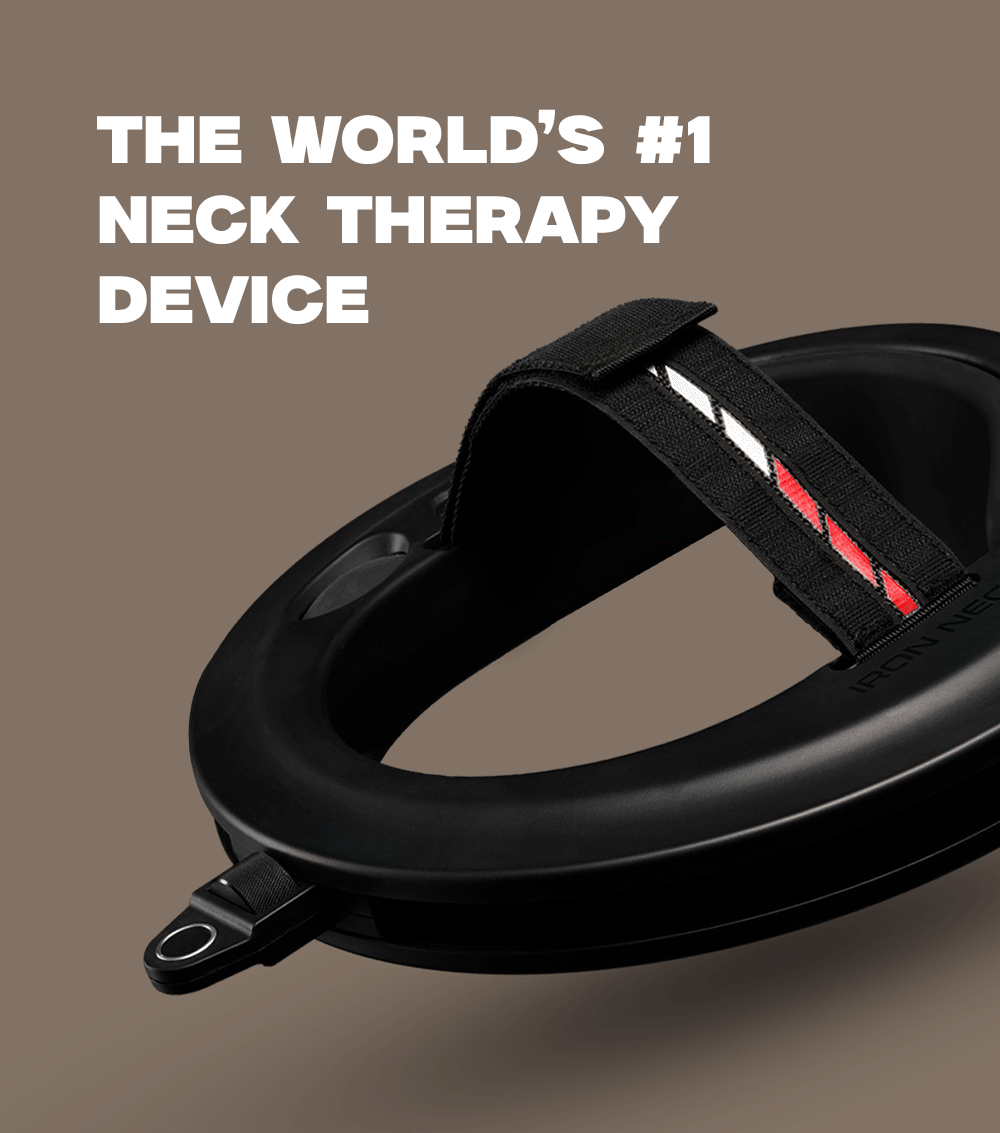
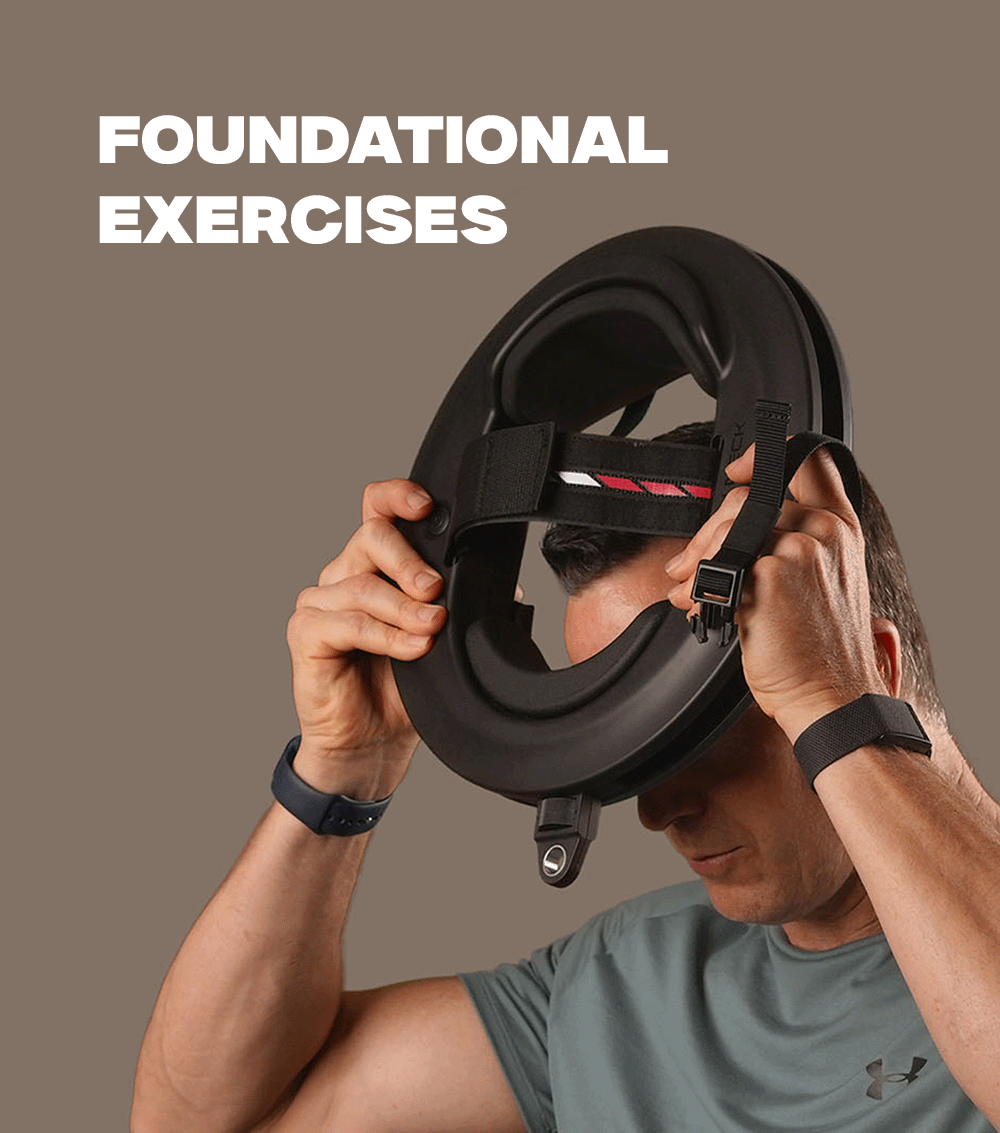
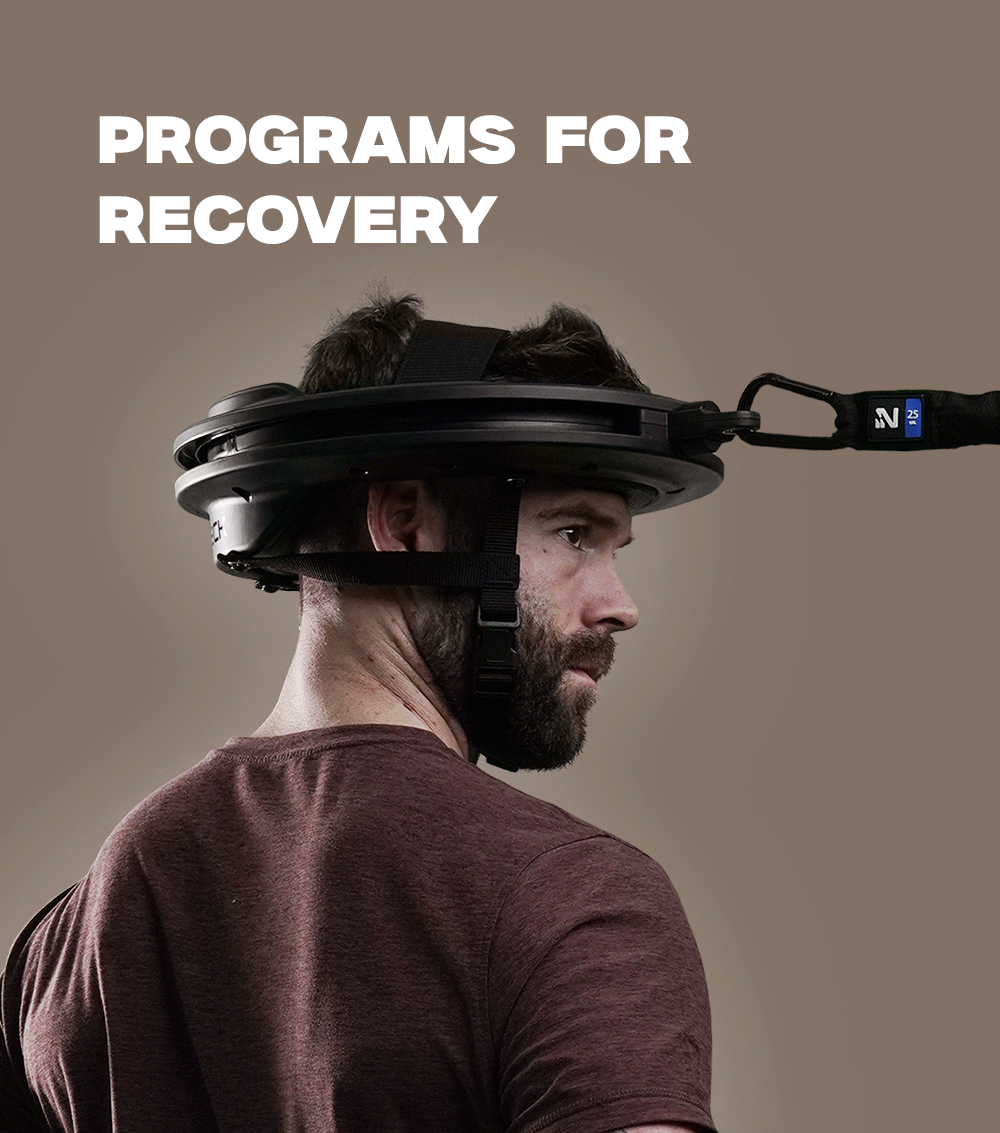
The Iron Neck device is particularly valuable for this purpose, as it provides resistance through the full 360-degree range of cervical motion. Training with the Iron Neck builds strength at the end ranges of motion where most people are weakest, which is the most effective way to maintain and expand cervical mobility over time. Unlike static stretching, which only addresses the passive mobility of the joint, resisted end-range training builds the active mobility needed for athletic performance and daily function.
For those beginning with lighter resistance work, the Iron Neck resistance bands provide an accessible starting point for cervical and upper back strengthening that complements the mobility work.
How Often Should You Do Neck Mobility Work?
Daily mobility work produces the fastest results. The routine described above takes approximately 10 minutes and can be performed every day without risk of overtraining, as it involves gentle movement rather than high-intensity loading. Most people notice meaningful improvement in range of motion within two to four weeks of daily practice. Continuing the routine indefinitely, even after full range of motion has been restored, is the most effective way to prevent future restrictions from developing.
When to Seek Professional Assessment
Neck mobility exercises are appropriate for most adults with stiffness from postural causes or general deconditioning. However, you should consult a physician or physical therapist before beginning if you have a history of cervical spine injury, surgery, or diagnosed cervical pathology; if you experience radiating pain, numbness, or tingling in your arms; if you have significant dizziness or balance problems with neck movement; or if your mobility restriction came on suddenly without an obvious cause. These presentations may indicate a structural issue that requires professional assessment before beginning a mobility program.


Leave a comment
This site is protected by hCaptcha and the hCaptcha Privacy Policy and Terms of Service apply.