




How to Fix Forward Head Posture Permanently
Most advice on fixing forward head posture focuses on stretching and awareness. Stretch your chest, tuck your chin, sit up straight. This advice is not wrong, but it is incomplete. People who follow it for a few weeks often see some improvement, then plateau or regress when life gets busy. The reason is that temporary postural corrections do not address the underlying structural and neuromuscular causes of the problem. Fixing forward head posture permanently requires a different approach: one that builds genuine strength in the muscles responsible for holding the head in proper alignment, restores the mobility that allows those muscles to do their job, and retrains the nervous system's default sense of what "normal" feels like.
Why Most Approaches Fail
The most common reason forward head posture correction fails is that people treat it as a flexibility problem when it is primarily a strength and motor control problem. Stretching the chest and neck provides temporary relief, but if the deep cervical flexors, lower trapezius, and serratus anterior are too weak to hold the corrected position, the body will default back to the forward head position as soon as conscious attention is removed. Permanent correction requires building the muscular endurance to maintain proper alignment without thinking about it.
The second reason correction fails is insufficient attention to the thoracic spine. The cervical spine does not exist in isolation. When the thoracic spine is stiff and rounded, the cervical spine compensates by extending, which pushes the head forward. No amount of cervical-specific exercise will produce lasting correction if the thoracic spine is not mobile enough to allow the head to sit over the shoulders.
The third reason is ergonomic: people perform their exercises diligently but then spend eight hours per day in the posture that created the problem. Exercise and ergonomics must work together.
The Permanent Fix: A Three-Component System
Component 1: Restore Thoracic Mobility
Daily thoracic mobility work is non-negotiable for permanent forward head posture correction. The following two exercises, performed every day, address the thoracic stiffness that underlies most cases of forward head posture.
Foam Roller Thoracic Extension: Place a foam roller at mid-back level, perpendicular to your spine. Support your head with your hands and extend backward over the roller. Hold each position for 5 to 10 seconds, then shift the roller one inch up your spine. Work from mid-back to the base of the neck. Perform two passes daily. This is the single most effective tool for restoring thoracic extension mobility.
Cat-Cow with Thoracic Emphasis: Begin on all fours. As you move into the cow position (back arching, chest lifting), focus on opening the thoracic spine rather than just the lumbar spine. Hold the thoracic extension position for 3 seconds. Perform 10 repetitions daily. This exercise reinforces the thoracic extension mobility gained from foam rolling.
Component 2: Build the Right Muscles
The muscles that hold the head in proper alignment must be strong enough to do so for hours at a time without fatigue. Building this endurance requires consistent, progressive resistance training targeting the specific muscles involved.
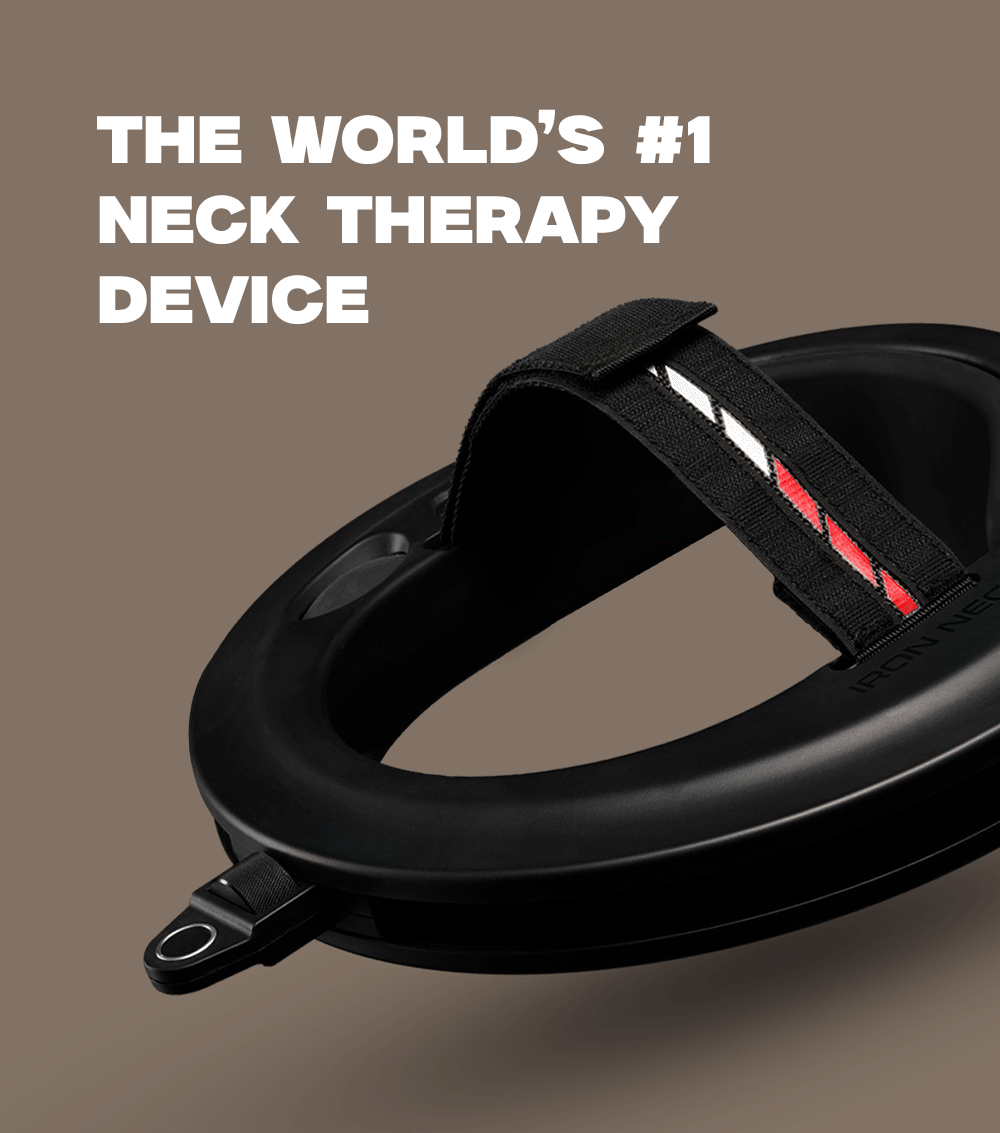
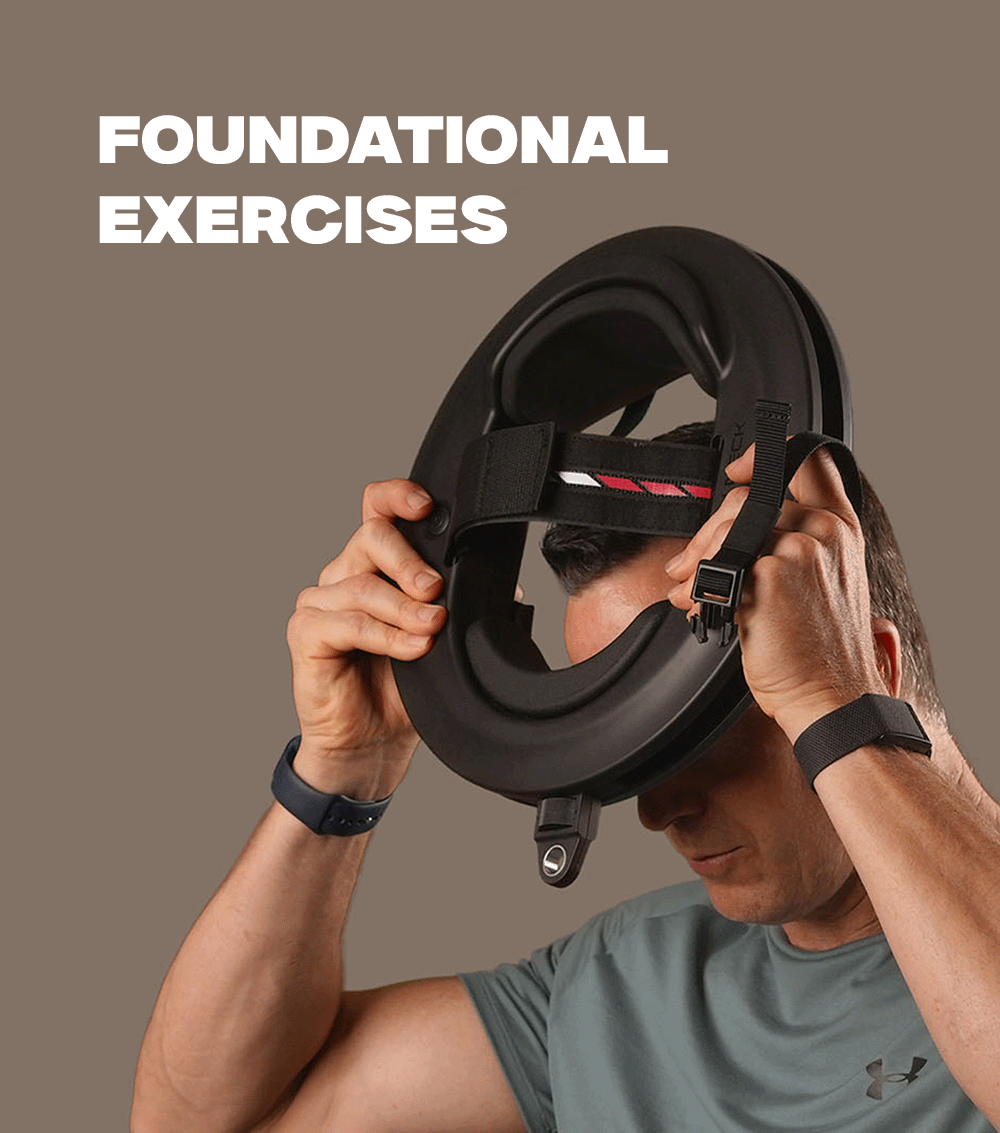
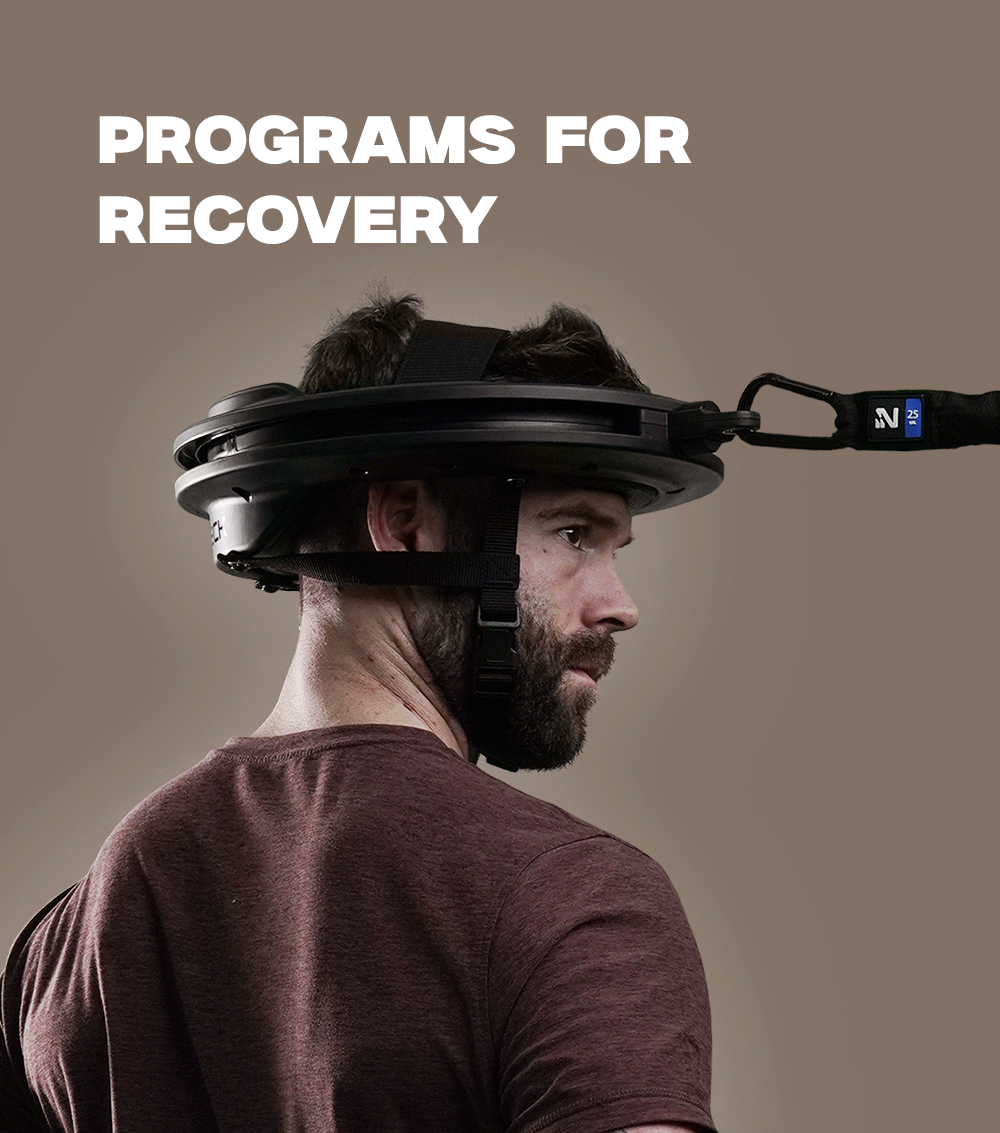
Deep Cervical Flexors: The longus colli and longus capitis are the primary muscles responsible for maintaining cervical lordosis and preventing forward head drift. They are trained most effectively through chin tucks and resisted cervical retraction. Begin with bodyweight chin tucks (3 sets of 20 repetitions daily) and progress to resisted variations after four to six weeks. The Iron Neck device provides the most effective form of progressive resistance for the deep cervical flexors, allowing you to increase the challenge systematically as your strength improves. Unlike bands or manual resistance, the Iron Neck provides consistent, controllable resistance through the full range of cervical motion.
Lower and Mid Trapezius: These muscles hold the shoulder blades in proper position, which is a prerequisite for the head sitting over the shoulders. Train them with face pulls, prone Y raises, and band pull-aparts. Perform 3 sets of 15 repetitions, three to four times per week. The Iron Neck resistance bands are well-suited for face pulls and pull-aparts, with multiple resistance levels that allow progressive overload over time.
Serratus Anterior: The serratus anterior holds the shoulder blade against the rib cage and is essential for proper scapular positioning. Train it with wall push-ups with a plus (at the top of a push-up, push your shoulder blades apart and forward), serratus punches, and plank shoulder taps. Perform 3 sets of 12 repetitions, three times per week.
Deep Neck Extensors: The semispinalis and multifidus of the cervical spine maintain the cervical lordosis from the posterior side. They are trained through resisted cervical extension. The Iron Neck device provides 360-degree resistance, meaning it trains both the flexors and extensors in a single session, which is highly efficient for comprehensive cervical strengthening.
Component 3: Retrain the Nervous System
Permanent postural correction requires changing the nervous system's default sense of neutral head position. This is called proprioceptive retraining, and it is the component most often overlooked in self-directed correction programs.
Wall Standing Practice: Stand with your back against a wall, heels 4 inches from the baseboard, shoulder blades touching the wall. Perform a chin tuck and touch the back of your head to the wall. Hold this position for 60 seconds while breathing normally. This trains the nervous system to recognize proper head position as the default rather than an effortful correction. Perform this exercise twice daily for the first eight weeks of your program.
Mirror Feedback: Place a mirror at eye level at your workstation. Periodically glance at your reflection during the day to check your head position. The visual feedback accelerates proprioceptive retraining by providing an external reference point that your nervous system can use to recalibrate its sense of neutral.
Postural Cues: Develop a consistent internal cue for proper head position that you can apply throughout the day. A useful cue is to imagine a string attached to the crown of your skull pulling it gently upward. This cue tends to produce natural cervical lengthening and chin retraction without the forced, rigid quality that comes from consciously "standing up straight."
The Timeline for Permanent Correction
Permanent forward head posture correction is a process that unfolds over months, not weeks. The following timeline reflects what is realistic for most adults with moderate forward head posture who follow this program consistently.
In the first two to four weeks, most people notice a reduction in neck tension and headache frequency as the mobility work begins to decompress the cervical structures. In weeks four to eight, the strengthening exercises begin to produce measurable changes in muscle activation patterns, and the wall standing practice starts to shift the nervous system's sense of neutral. By weeks eight to twelve, visible postural improvement is typically evident in photographs, and the corrected position begins to feel more natural and less effortful. By months four to six, the corrected position has become the default for most daily activities, and maintenance work is sufficient to sustain the gains.
For people with severe forward head posture, a history of cervical injury, or significant thoracic kyphosis, the timeline may be longer, and working with a physical therapist is advisable to ensure the program is appropriately tailored.
Maintenance: How to Keep the Results
Once you have achieved the corrected position, maintaining it requires ongoing but reduced effort. The mobility work can be reduced to three times per week. The strengthening work should continue at two to three times per week indefinitely, as the muscles responsible for maintaining proper alignment require ongoing training stimulus to remain strong. The ergonomic adjustments, monitor at eye level, phone held at face height, regular movement breaks, should be maintained as permanent habits rather than temporary measures.
The most common reason people lose their postural gains is that they stop the strengthening work once they feel better. Feeling better is a sign that the program is working, not a signal to stop. Treat cervical and upper back strengthening as a permanent component of your fitness routine, and the results will be permanent.


Leave a comment
This site is protected by hCaptcha and the hCaptcha Privacy Policy and Terms of Service apply.