

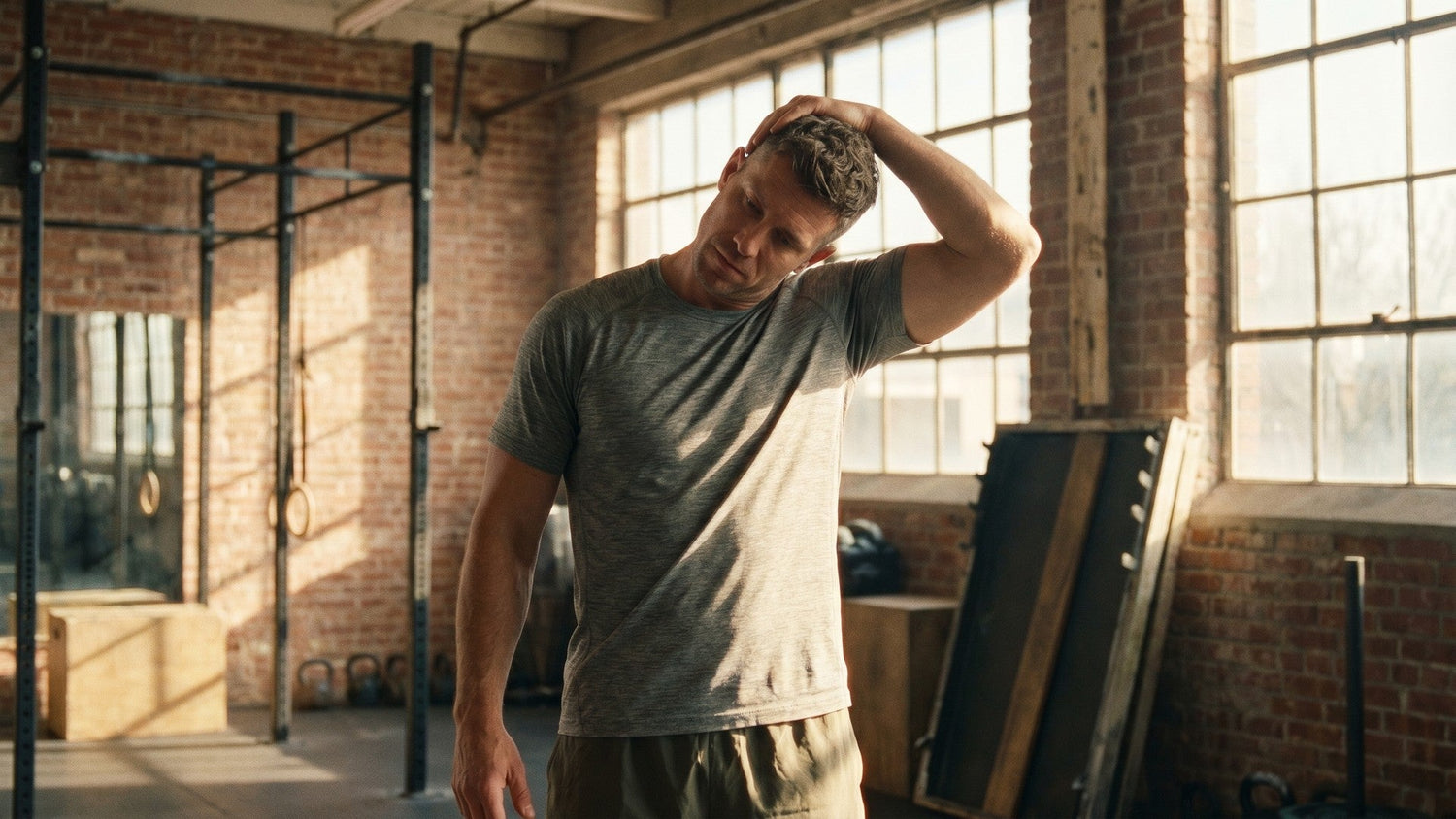
Neck injuries are among the most disruptive setbacks an athlete can face. Whether the cause is a single high impact collision or the gradual build up of repetitive strain across a season, cervical injuries affect performance, training, and quality of life in ways that most musculoskeletal problems do not.
The good news is that most sports neck injuries respond well to structured rehabilitation when managed correctly from the start. The key is understanding what you are dealing with, what stage of recovery you are in, and what the evidence supports at each phase.
This guide covers the full picture: the most common injury types, why they happen, how to spot them early, a structured four phase rehabilitation pathway, sport specific considerations, and the long term strength work that keeps them from coming back.
Why Biomechanics Matter
Understanding why neck injuries happen makes the prevention and rehabilitation logic easier to follow. In the natural position, the cervical spine has a gentle curve, the lordosis. This curve acts as a shock absorber, distributing the forces of impact across the muscles, discs, and bony structures of the neck.
When the neck is flexed, that curve flattens. Research on cervical spine injuries in athletes has established that flexion straightens the cervical spine into a column, removing the protective curve and forcing axial loads directly onto the vertebral bodies. This is the primary mechanism behind cervical fractures and dislocations in contact sports. It is also why techniques like spearing in American football leading with the top of the helmet, have been banned and why coaching proper contact mechanics is central to injury prevention.

Neck muscle strength matters for a related reason. When the muscles surrounding the cervical spine are stronger and better conditioned, they contribute more meaningfully to force absorption. A weakened or fatigued neck transfers more of that load to the passive structures, discs, ligaments, and vertebrae that are more vulnerable to injury.
Types of Neck Injuries in Sport
No two athletes experience neck injuries the same way. The sport, the mechanism of injury, and the structures involved all shape what rehabilitation looks like. ACR imaging criteria for cervical conditions provide clinical guidance on when diagnostic imaging is warranted, making accurate diagnosis the foundation of any effective rehab plan.
Stingers and Burners
Stingers are the most common cervical nerve injury in sport. Clinical estimates suggest they affect up to half of collision sport athletes over the course of a career, though they are frequently under reported. They occur when the nerves of the brachial plexus are stretched or compressed, most often during a tackle or collision that forces the head to one side while the opposite shoulder is driven downward.
The result is a burning or electric sensation that shoots down one arm, sometimes with temporary weakness. Stingers typically resolve within minutes to hours. When they do, many athletes return to play without seeking assessment, a pattern that can allow a more significant underlying injury to go undetected.
Bilateral symptoms, tingling or weakness in both arms simultaneously or symptoms that travel into the legs are not a stinger. These patterns require emergency assessment as they may indicate spinal cord involvement.
Athletes with recurrent stingers warrant imaging to check for cervical stenosis, which is discussed below, as a narrowed spinal canal significantly increases the risk of more serious injury on subsequent impacts.
Transient Quadriplegia
Less common than stingers but considerably more alarming, transient quadriplegia involves temporary weakness, numbness, or loss of movement in both arms and both legs following an impact. It occurs when the spinal cord itself is briefly compressed, most often in athletes with a narrow cervical canal.
The neurological symptoms typically resolve within minutes, but clinical guidance is clear: any athlete experiencing these symptoms should not be allowed to return to play without a complete specialist evaluation, including imaging of the cervical canal. Transient resolution of symptoms does not mean the structural risk has resolved.
Cervical Stenosis
Cervical stenosis is a narrowing of the spinal canal that leaves less space to accommodate the spinal cord and nerve roots during cervical movement. It can be congenital or develop over time through degenerative changes, the latter is common in long serving contact sport athletes.
Stenosis is frequently asymptomatic until an impact or extreme movement compresses the cord or nerve roots. Athletes with a history of recurrent stingers, or who have experienced transient quadriplegia, should have their canal dimensions assessed by imaging before a return to play decision is made. The treating specialist determines clearance in these cases, not the athlete or coaching staff.
Whiplash and Ligament Sprains
Whiplash involves a rapid back and forth movement of the neck caused by sudden acceleration or deceleration, common after hard tackles, collisions, or crashes. The result is stiffness, reduced range of motion, and often referred discomfort into the shoulders and head. Ligament sprains occur when the cervical ligaments overstretch or partially tear under impact. Without appropriate rehabilitation, both can lead to persistent stiffness and recurring discomfort.
Clinical evidence on neck pain rehabilitation supports early, graded movement over prolonged immobilisation for most soft tissue cervical injuries once serious pathology has been excluded.
Cervical Fractures
Fractures of the cervical vertebrae are rare but represent a medical emergency. Severe impacts, particularly those involving an axially loaded, flexed neck, can crack or dislocate the cervical vertebrae. If a fracture is suspected, the athlete must not be moved. Emergency protocols should be activated immediately, and the cervical spine should be immobilised until specialist medical assessment is complete. Consensus guidelines on prehospital care of suspected catastrophic cervical spine injury provide the framework used by sports medicine and emergency responders.
Overuse and Repetitive Strain
Not all sports neck injuries come from a single incident. Cyclists spend hours in sustained cervical extension to look forward, loading the posterior cervical muscles continuously. Swimmers rotate the neck for breathing thousands of times per session, stressing the mid cervical facet joints over a full season. Rowers maintain sustained forward flexion under load. These patterns fatigue the deep cervical stabilisers and create muscular imbalance that eventually leads to structural overload. Addressing how to fix bad neck posture is often a central component of overuse injury rehabilitation, because the postural pattern driving the load must be corrected alongside the injury itself.
How Much Do Neck Injuries Actually Happen?
The scale is larger than most athletes realise. Sports are among the leading causes of catastrophic cervical injury in the United States, with more than 250 new sport related cervical spinal cord injuries occurring annually. Nearly one quarter of cervical spinal cord injuries in children under 15 are sport related. Between 2000 and 2015, sport related cervical fractures increased by 30%, driven largely by a 300% rise in cycling related injuries. The incidence of fractures in males was 3.6 times greater than in females across that period.
Less catastrophic injuries are far more common. Stingers affect up to half of all collision sport athletes over a career. Cervical sprains and strains are among the most frequently reported musculoskeletal complaints across both contact and endurance sports.
How to Spot a Neck Injury Early
Early identification prevents minor injuries from becoming chronic problems. Signs that warrant clinical assessment include reduced cervical range of motion, persistent discomfort after training that does not resolve with rest, muscle spasms in the neck or upper back, headaches following training or competition, and difficulty maintaining posture or balance. Tingling, numbness, or weakness in the shoulders or arms indicates possible nerve involvement and requires prompt review. Clinical guidance on initial neck injury evaluation provides a framework for identifying which presentations need urgent referral and which are appropriate for standard physiotherapy pathways.
Red Flags: Seek Emergency Assessment Immediately
- Severe neck pain after high impact trauma
- Tingling, numbness, or weakness in both arms, or symptoms travelling into the legs
- New or progressive neurological deficit, including gait disturbance or hand clumsiness
- Sudden severe neck or occipital pain with dizziness, visual changes, slurred speech, or facial numbness. These may indicate cervical artery involvement and require emergency assessment
- Post operative cervical spine status or known instability with new symptoms
Do not move an athlete after significant neck trauma until medical assessment is complete.
Sport Specific Injury Profiles
American Football and Rugby
These sports carry the highest incidence of cervical spinal injury in organised sport. High speed tackles, scrums, and falls are the primary mechanisms. Stingers are the most common presentation; cervical fractures are rare but must always be ruled out after any significant impact before rehabilitation begins. The consensus recommendations for suspected catastrophic cervical injury provide the on field and sideline assessment framework used by sports medicine teams in these disciplines.
Scrum specific cervical loading in rugby creates demands unlike any other sport, with sustained high force compressive loads through the cervical spine. Specialist sports medicine assessment is recommended for scrum related injuries before any rehabilitation loading begins.
Wrestling and MMA
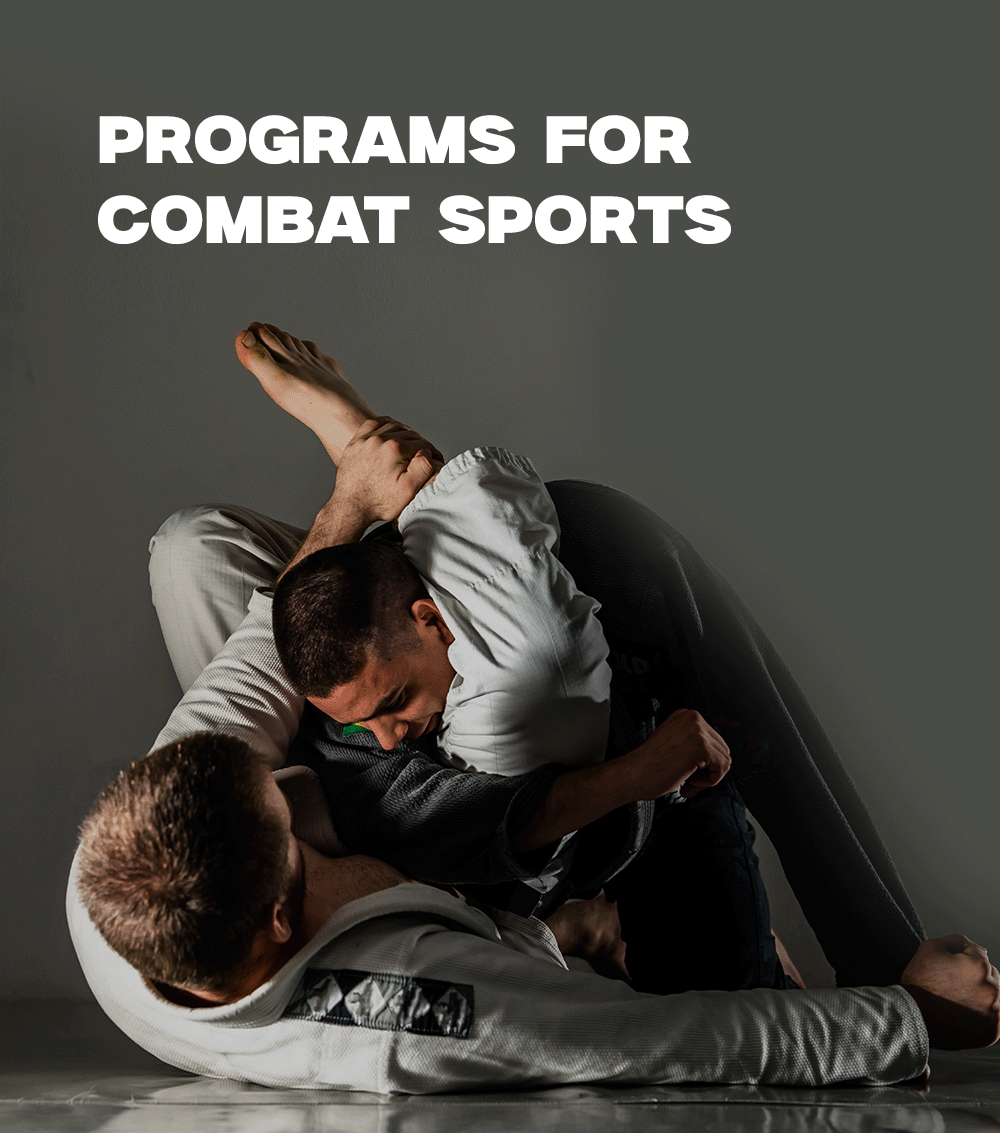
Grappling sports place unique demands on the cervical spine: sustained isometric loads, rotational forces, and positions of extreme range that general training programmes do not replicate. Athletes in these disciplines are at elevated risk from cumulative microtrauma across a competitive season. The neck bridge safer alternatives guide covers the risks of common wrestling conditioning practices and the evidence supported movements that develop equivalent cervical strength without the same structural risks.
Cycling
Prolonged cervical extension to look forward is the primary injury driver for cyclists. Rehabilitation must address both the acute soft tissue injury and the postural pattern that caused it. Bike fit adjustments and work on posterior cervical muscle endurance are typically both required for lasting recovery.
Swimming
Consistently breathing to the same side creates rotational asymmetry across thousands of repetitions per session. Rehabilitation targets range of motion symmetry and develops rotational stabiliser strength equally on both sides, rather than simply strengthening the dominant side further.
Rehabilitation Pathway: Acute to Return to Play
Phase 1: Acute Management
Safety comes first. After any significant cervical injury, work only within a comfortable, pain free mid range. Move slowly, do not hold your breath, and stop immediately at any sign of dizziness, visual changes, numbness, tingling, weakness, or unsteadiness. High velocity or ballistic neck movements are not appropriate at any point during this phase.
After high impact trauma or any red flag symptoms, do not move the athlete and activate emergency protocols. The consensus guidelines for catastrophic cervical injury describe the prehospital care process that sports medicine and emergency responders follow in these situations.
Once serious pathology has been excluded, acute management focuses on reducing inflammation and protecting the injured structures. Ice in the first days, heat in the subacute phase for muscle spasm and stiffness, and gentle range of motion within comfortable mid range limits under clinician guidance are the typical sequence. Immobilisation is prescribed only when clinically indicated and should not be self applied. Therapeutic modalities such as TENS may be introduced by the treating physiotherapist for discomfort management.
Phase 2: Early Rehabilitation
Strengthening begins only after explicit clinician clearance. Clinical practice guidelines on neck pain rehabilitation support starting with deep neck flexor isometrics in neutral position and progressing gradually, while avoiding loaded end range extension or lateral flexion throughout this phase.
Chin tucks are the foundational deep cervical flexor activation technique used in early rehabilitation. The neck curl exercise is the natural progression once chin tucks are comfortable and well controlled. Both activate the deep cervical flexors without placing shear or compressive load on recovering structures.
Isometric holds, where gentle resistance is applied against the head in various directions without producing movement, build cervical stability during early recovery. Controlled mid range mobility work and scapular stability exercises are also typically included to address compensatory loading patterns in the upper back and shoulders.
Phase 3: Progressive Strengthening
Once basic stability is established and pain free mid range movement is restored, progressive resistance training is introduced. The ACSM resistance training progression model supports incremental load increases with adequate recovery and consistent symptom monitoring as the guiding framework.
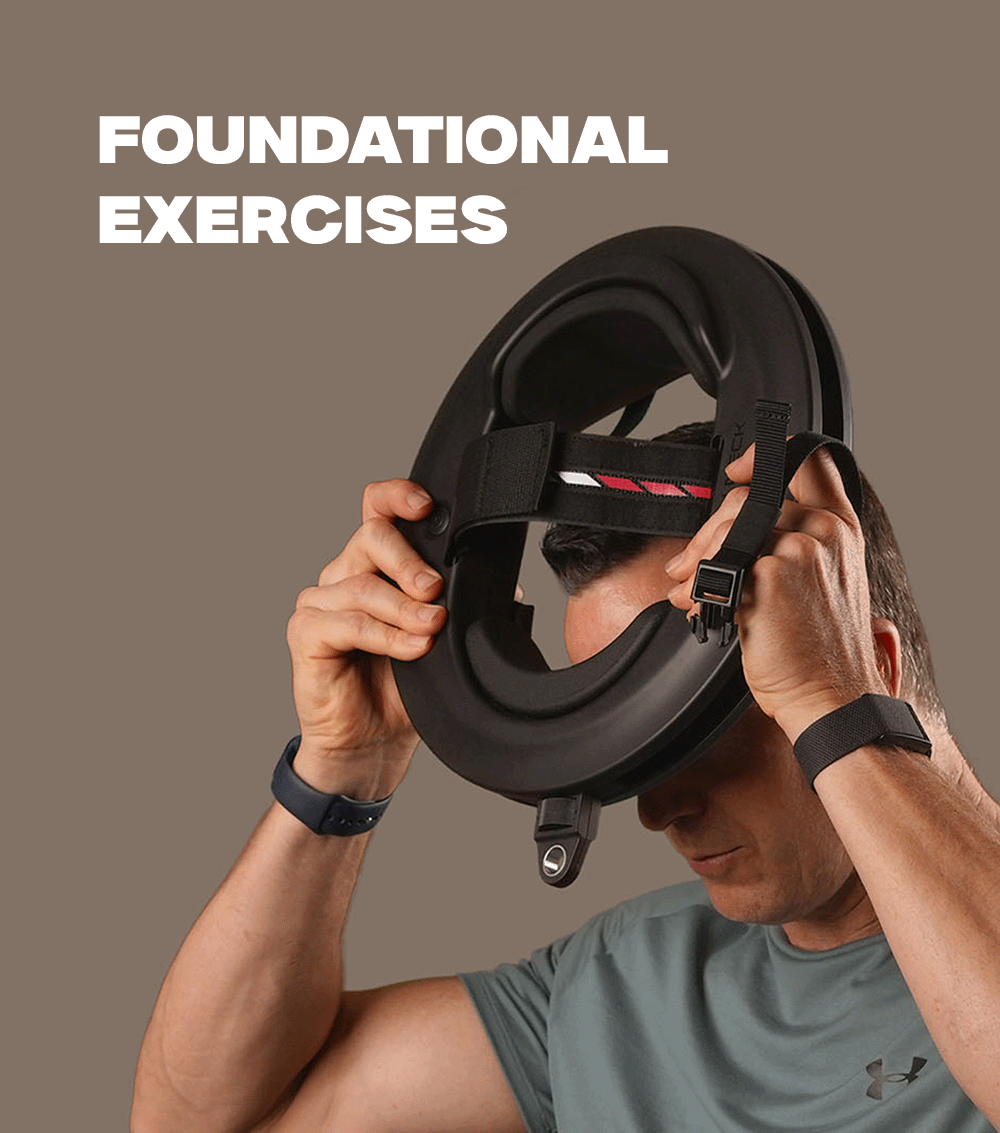
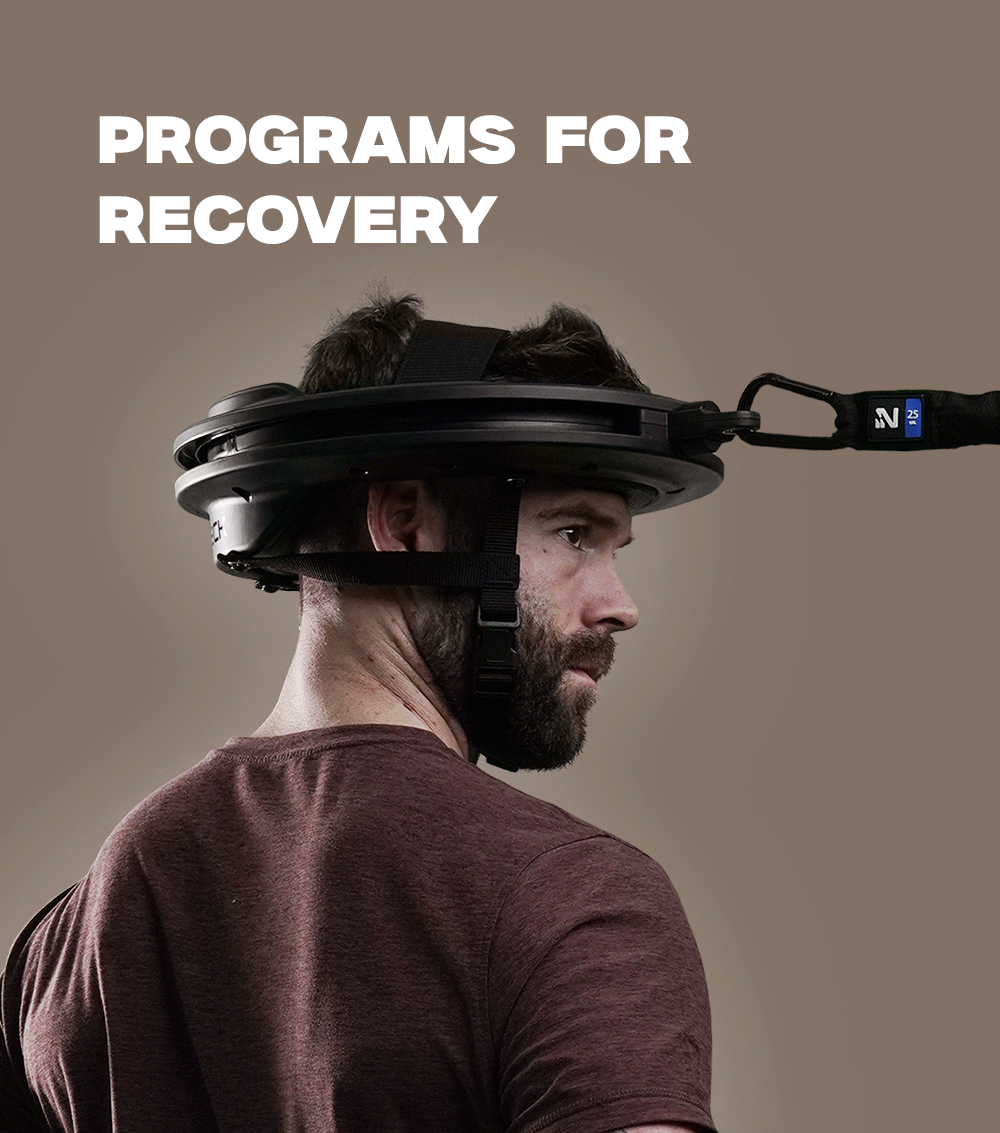
Light resistance band training in flexion, extension, and lateral directions within mid range is a typical starting point. Neck harness training principles are introduced next, beginning with isometric loading before progressing to dynamic movement as strength and tolerance allow, always under clinician guidance.
If discomfort increases at any point during this phase, the appropriate step is to return to the previous phase and seek clinical reassessment before continuing.
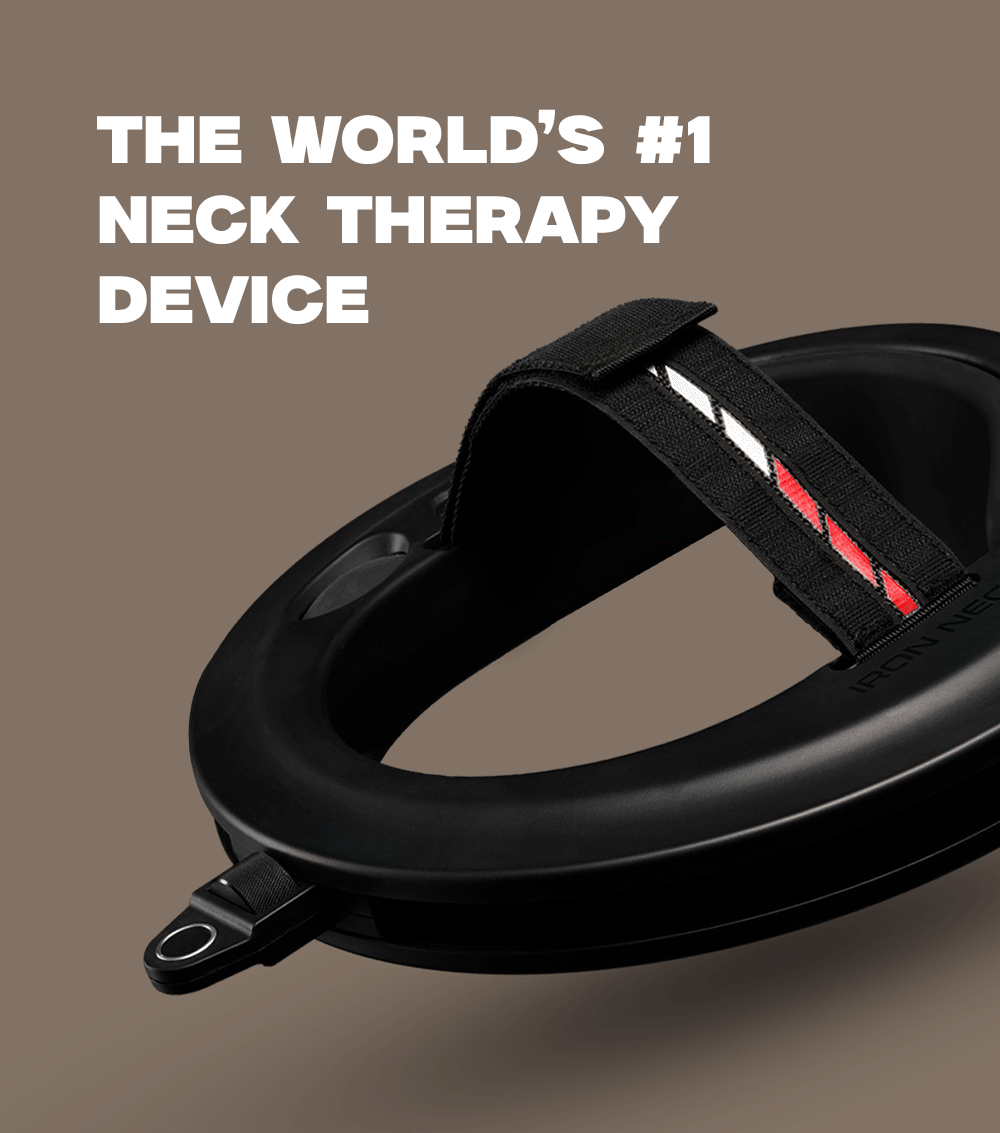
The Iron Neck Training Lab includes an Early Stage Rehab programme developed with physical therapists and athletic trainers, structured across four phases that align with the progression described here. Phase 1 is free to access without an account.
Phase 4: Return to Play
Return to full sport participation requires meeting all of the following criteria, not simply the absence of resting discomfort or a fixed number of weeks.
- Full, pain free cervical range of motion in all directions
- Cervical strength symmetrical between left and right sides, confirmed by a physiotherapist or sports medicine clinician
- No neurological symptoms, including tingling, numbness, or weakness in arms or hands
- Sport specific loading tolerated without symptom provocation. For contact sport athletes, this means contact specific practice at controlled intensity before full return
- Clinician sign off. Return to full contact should not be athlete initiated and requires clearance from the treating clinician or team physician
Athletes with structural injuries such as confirmed disc pathology require longer timelines and specialist led assessment at every phase. Guidance on retrolisthesis and neck exercises covers the considerations specific to structural cervical conditions.
Recovery Timeline
Most muscular and soft tissue sports neck injuries show measurable improvement within 2 to 6 weeks with appropriate management. Stingers that resolve fully within hours typically do not require extended rehabilitation, though recurrent stingers warrant imaging. Ligament sprains or disc involvement may take 8 to 12 weeks or longer. Structural injuries such as fractures or significant cord involvement have significantly longer, specialist determined timelines.
If discomfort is not improving after 2 to 3 weeks of structured management, or if symptoms worsen at any point, seek clinical reassessment promptly. This timeline is a general orientation only. Your physiotherapist or sports medicine clinician guides the actual pace based on your specific injury.
Likely Muscular vs. May Warrant Assessment
| Likely Muscular | May Warrant Assessment |
|---|---|
| Discomfort appearing after training that eases with rest | Pain that worsens progressively despite rest |
| Discomfort linked to a specific movement or position | Pain with no clear movement or positional trigger |
| Symmetrical tightness across both sides of the neck or upper back | Tingling, numbness, or weakness in one or both arms |
| Resolves with gentle movement, heat, or rest | Discomfort that disrupts sleep or wakes you at night |
| Onset matches a known training load or sustained posture | Onset following high impact trauma without assessment |
| No neurological symptoms | Dizziness, visual changes, or headaches alongside neck symptoms |
| Single episode, resolves within days | Recurrent stingers or episodes of transient arm or leg weakness |
This table is for general orientation only and is not a diagnostic tool. If in doubt, seek clinical assessment.
Long Term Prevention: Building Cervical Resilience
Rehabilitation returns you to sport. Consistent cervical strength training reduces the risk of going back through this process again.
The relationship between neck strength and sports injury risk has attracted significant research attention, particularly in contact disciplines. A 2025 systematic review and Delphi consensus published in the British Journal of Sports Medicine brought together 18 international experts and 21 studies to define best practices for neck training aimed at reducing head acceleration events in sport. The consensus supported systematic inclusion of neck training across collision and combat sports, recommending multiplanar work that combines isometric, concentric, and eccentric loading, not single direction exercises.
On the question of concussion specifically, the evidence is more nuanced. A meta-analysis in the Journal of Orthopaedic and Sports Physical Therapy reviewed eight studies covering 7,625 athletes and found a small, nonsignificant relationship between neck strength and concussion incidence, the certainty of that evidence was rated as very low. Individual studies within the review do show trends toward lower head acceleration in athletes with stronger necks, and expert consensus consistently supports neck training as part of a broader prevention programme. But no exercise has been shown to prevent concussion, and the evidence is not strong enough to claim otherwise.
What is well supported is this: a stronger neck absorbs force more effectively, recovers faster from training load, and is less likely to fatigue into positions of vulnerability. The neck exercises guide covers the foundational movements and how to progress them over a full training season.
Building on the BJSM Delphi findings, effective long term cervical conditioning should be multiplanar, training flexion, extension, lateral flexion, and rotation in equal measure rather than prioritising the directions your sport already emphasises. The ACSM progression model provides the framework: increase one training variable at a time, monitor for early warning signs, and maintain cervical training year round rather than only in preseason.
For athletes looking for a structured starting point, the Iron Neck Training Lab offers sport specific programmes including Combat Sports and Team Sports tracks, each built across four progressive phases and developed in collaboration with physical therapists and strength and conditioning coaches. Phase 1 of every programme is free.
What to Avoid
- Returning to contact or loaded activity before meeting all return to play criteria
- High velocity or ballistic neck movements at any phase of rehabilitation
- End range extension or forced rotation under load before full clearance
- Using a cervical collar without clinical guidance
- Increasing load and frequency simultaneously when progressing strength training
- Returning to play after a stinger without assessment if symptoms lasted more than a few hours or involved bilateral limb involvement
- Ignoring early warning signs such as recurring post training discomfort, headaches, or asymmetrical range of motion
- Any activity that reproduces dizziness, visual changes, numbness, tingling, or arm weakness
Who Should Not Begin Cervical Loading Without Clinical Clearance
- Recent significant neck trauma or suspected fracture
- Progressive neurological deficit, gait disturbance, or hand clumsiness
- Known vertebral or carotid artery disease, or recent stroke or TIA
- Post operative cervical spine status without surgeon clearance
- Diagnosed cervical stenosis with a history of transient quadriplegia, specialist clearance required
- Connective tissue laxity disorders or diagnosed cervical instability
- Severe osteoporosis
Frequently Asked Questions
How soon should rehabilitation begin after a sports neck injury?
Only after a full medical assessment confirms the injury type and rules out fracture, vascular involvement, or significant cord or nerve root injury. The timing is determined by the treating clinician based on the specific injury, not a fixed number of days from the incident.
What is a stinger and how is it different from a more serious injury?
A stinger produces burning or electric sensation down one arm, caused by brachial plexus stretch or compression. It typically resolves within minutes to hours. If symptoms persist beyond a few hours, affect both arms, or involve any leg symptoms, seek urgent medical assessment, these patterns may indicate spinal cord involvement. Recurrent stingers also warrant imaging to check for underlying cervical stenosis.
What is transient quadriplegia and what should happen if it occurs?
Transient quadriplegia involves temporary weakness, numbness, or loss of movement in both arms and both legs following an impact, caused by brief spinal cord compression. Symptoms resolve on their own, but this is not a signal that the athlete is safe to return to play. Any episode requires specialist evaluation and imaging before clearance, regardless of how quickly symptoms resolved.
Does neck strength reduce concussion risk?
The evidence is promising but not definitive. A 2023 meta-analysis found a small, nonsignificant trend toward lower concussion rates in athletes with greater neck strength, but rated the overall certainty of evidence as very low. A 2025 expert consensus in the British Journal of Sports Medicine still recommends neck training as part of a broader head acceleration event prevention programme. The practical position: cervical strength training has meaningful benefits for injury resilience and force absorption, but no exercise prevents concussion, and it should be one component of a wider safety approach that includes proper technique and coaching.
Can overuse neck injuries from endurance sports be managed the same way as contact injuries?
The rehabilitation phases are similar, but the underlying driver is different. Overuse injuries require correcting the biomechanical pattern that created the load, bike fit for cyclists, stroke symmetry for swimmers, alongside the standard cervical strengthening progression. Returning to training without addressing the cause typically results in recurrence.
When should imaging be requested for a sports neck injury?
Imaging is not required for all sports neck injuries. ACR appropriateness criteria for cervical conditions guide clinical decision making. X ray is used to assess bony structures, MRI where soft tissue, disc, or nerve involvement is suspected, and CT where plain film is insufficient to exclude fracture. The treating clinician determines the appropriate pathway based on mechanism, clinical presentation, and findings.
References
- Blanpied PR, Gross AR, Elliott JM, et al. Neck pain: clinical practice guidelines — revision 2017. J Orthop Sports Phys Ther. 2017;47(7):A1–A83. https://www.jospt.org/doi/10.2519/jospt.2017.0302
- Mills BM, Conrick KM, Anderson S, et al. Consensus recommendations on the prehospital care of the injured athlete with a suspected catastrophic cervical spine injury. Clin J Sport Med. 2020;30(4):296–304. https://pmc.ncbi.nlm.nih.gov/articles/PMC7319738/
- Jadhav AP, Yaghi S, Engelter S, et al. Treatment and outcomes of cervical artery dissection in adults: AHA/ASA scientific statement. Stroke. 2024;55:e91–e106. https://www.ahajournals.org/doi/10.1161/STR.0000000000000436
- Childress MA, Stuek SJ. Neck pain: initial evaluation and management. Am Fam Physician. 2020;102(3):150–156. https://pubmed.ncbi.nlm.nih.gov/32702221/
- Centers for Disease Control and Prevention. HEADS UP resources on concussion in sport. 2018–2025. https://www.cdc.gov/headsup/
- Garrett JM, Mastrorocco M, Peek K, van den Hoek DJ, McGuckian TB. The relationship between neck strength and sport related concussion in team sports: a systematic review with meta-analysis. J Orthop Sports Phys Ther. 2023;53(10):585–593. https://www.jospt.org/doi/10.2519/jospt.2023.11727
- American College of Sports Medicine. Position stand: progression models in resistance training for healthy adults. Med Sci Sports Exerc. 2009;41(3):687–708. https://journals.lww.com/acsm-msse/fulltext/2009/03000/progression_models_in_resistance_training_for.26.aspx
- American College of Radiology. ACR Appropriateness Criteria: cervical pain or cervical radiculopathy. Most recent update. https://www.acr.org/Clinical-Resources/ACR-Appropriateness-Criteria
- Fownes-Walpole M, Heyward O, Till K, et al. Combining evidence and practice to optimise neck training aimed at reducing head acceleration events in sport: a systematic review and Delphi-consensus study. Br J Sports Med. 2025;59:1027–1042. https://pubmed.ncbi.nlm.nih.gov/40345809/
- Bailes JE, Petschauer M, Guskiewicz KM, Marano G. Management of cervical spine injuries in athletes. J Athl Train. 2007;42(1):126–134. https://pmc.ncbi.nlm.nih.gov/articles/PMC1896065/
- USC Spine Center. Sports injuries: stingers and transient quadriplegia. https://www.uscspine.com/conditions-treated/neck-disorders/sports-injuries/
Disclaimer: The Iron Neck blog provides educational content on neck training, fitness, and recovery. It is not a substitute for medical advice. Please consult a healthcare professional before starting any new exercise or recovery programme.


Leave a comment
This site is protected by hCaptcha and the hCaptcha Privacy Policy and Terms of Service apply.