




Most people train their chest, back, and shoulders without giving their neck a second thought. But the neck is one of the most load-bearing structures in the body, it holds your head up all day, absorbs force during sport, and is directly involved in posture, mobility, and pain patterns that affect everything above the waist.
This guide covers the most effective neck exercises, who they are for, what each one trains, and what you can realistically expect to see and feel over time.
Why Train Your Neck?
The case for neck training goes well beyond aesthetics. A neck muscle training trial found that both strength and endurance training significantly reduced pain and disability in people with chronic neck pain with neck flexion strength improving by up to 110% over 12 months.
For desk workers and people with chronic tension: Weak cervical muscles are a primary driver of the neck and shoulder tension that builds over hours of screen time. reduces neck pain and forward head posture, the mechanism being that stronger deep muscles reduce the compensatory overload on the superficial ones, particularly the upper trapezius.
For athletes: neck strength reduces concussion and injury risk. This has been documented in football, rugby, combat sports, and any discipline involving sudden forces to the head. 8-week programme improved neck strength across all measured directions.
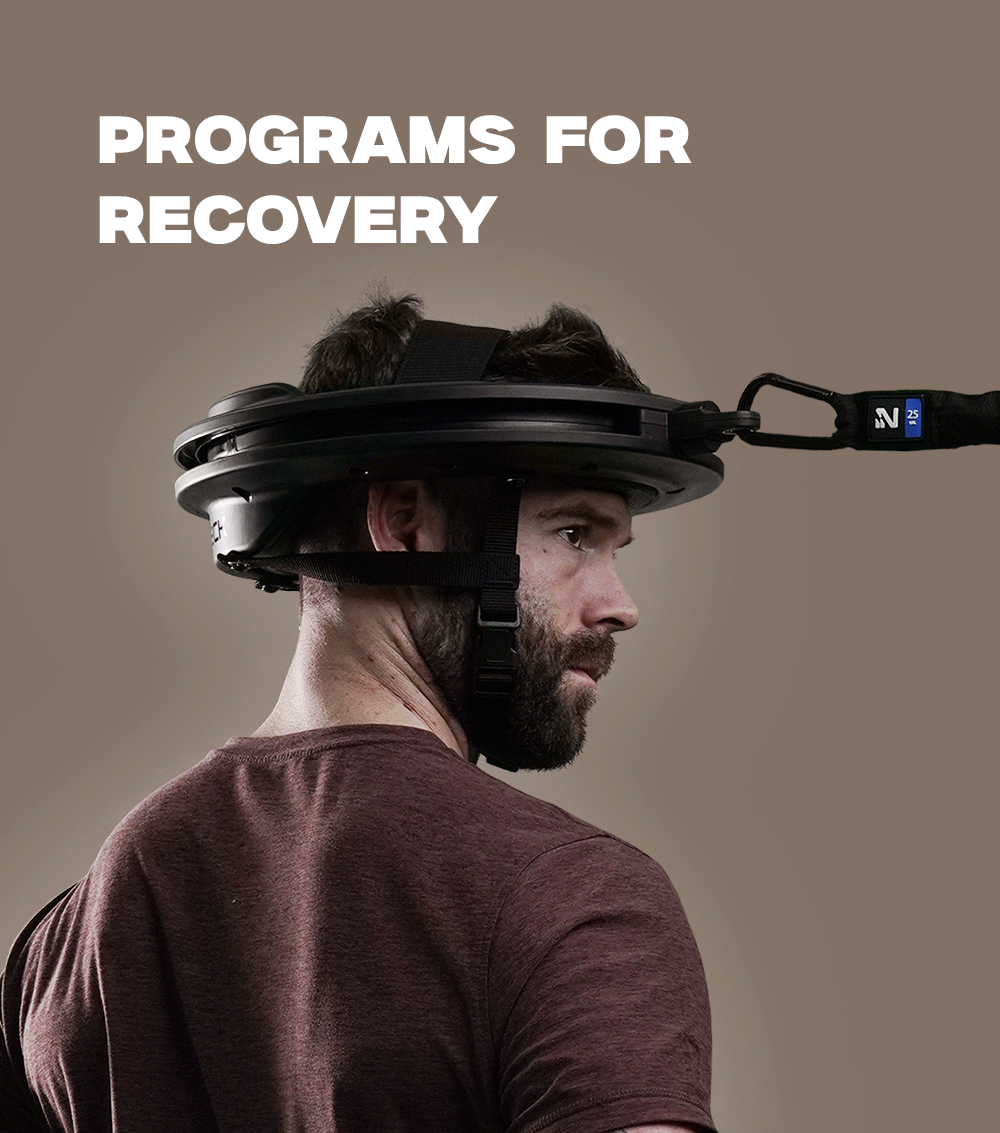
For people in recovery: greatest gains occur in first two months, with improvements continuing through 12 months of consistent work.
For visible results: Consistent neck-specific training produces both strength and structural changes over time. cervical training increases neck circumference, with improvements typically becoming noticeable from 6–12 weeks of consistent training.
Neck Exercises: The Core Movements
These exercises are grouped by goal. Most people start in the first category and progress from there.
For Beginners and Pain Relief
Chin Tucks
The chin tuck is the starting point for almost any neck training protocol. It activates the deep cervical flexors, the muscles at the front of the neck most underloaded by forward head posture and begins to restore the natural cervical curve. improves posture and reduces neck pain, and a systematic review confirms its effectiveness.
Isometric Holds
Isometric exercises contract the neck muscles against resistance without movement through range. 35% force increase in 8 weeks, making them an effective option for building neck strength without dynamic loading. The four directions - flexion, extension, and both lateral sides cover all major muscle groups and can be performed with nothing more than hand resistance.
Prone Cobra / Neck Extension
Lying face down and lifting the head activates the posterior cervical muscles and upper back extensors that are chronically underused in people who sit for long periods. This movement directly counteracts forward head posture and builds the foundation for heavier loading later.
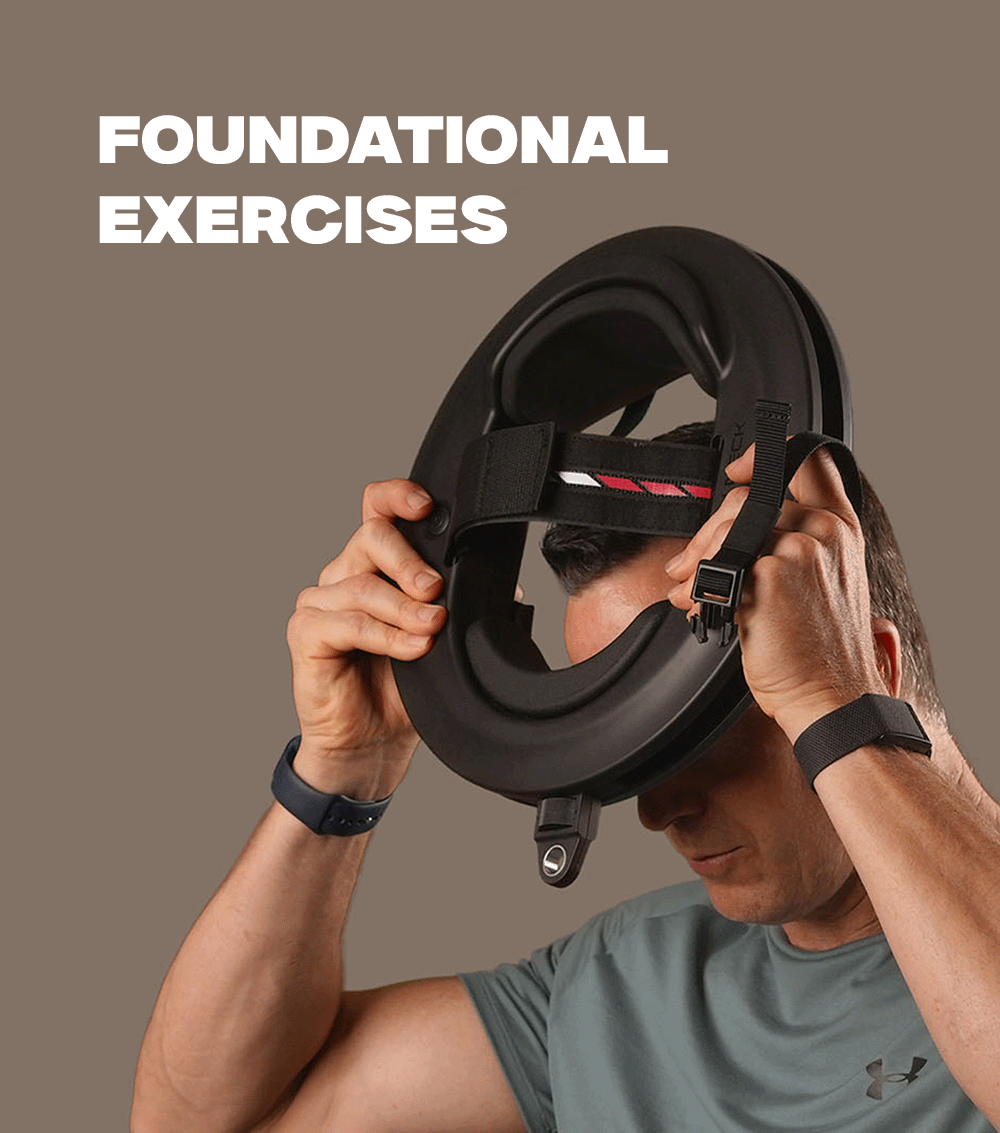
Foundational Movements — Free Program: Start here if you are new to neck training. Phase 1 covers the six core movements that train every part of the neck across all positions.
For Mobility and Range of Motion
Controlled Rotation
Slow, deliberate rotation, chin to shoulder in both directions - restores range of motion, reduces stiffness, and improves the neuromuscular control that keeps the neck stable during dynamic movement. The goal is controlled movement through a full, comfortable range, not end-range forcing.
Lateral Flexion
Ear-to-shoulder movement in both directions targets the scalenes and lateral cervical muscles - the muscles most affected by one-sided postures, sleeping position, and carrying loads on one side.
Cervical Circles and Diagonal Patterns
Multi-plane movements that restore three-dimensional cervical mobility. improves cervical range of motion, particularly in rotation, over a 12-month period.
Flexibility and Mobility — Free Program: Structured mobility work for the cervical spine. Appropriate for anyone whose main goal is range of motion, stiffness reduction, or post-desk recovery.
For Strength and Performance
Neck Curl
The neck curl is the primary loaded flexion exercise for the cervical spine, the equivalent of a crunch for the neck. It directly targets the deep cervical flexors and sternocleidomastoid, building the anterior strength that protects the neck during forward impacts and overhead loading. Our full guide on the neck curl exercise covers technique and progression in detail.
Neck Harness Training
A neck harness allows weighted loading in flexion, extension, and lateral directions, providing progressive overload that bodyweight exercises cannot match after the initial adaptation phase. This is where meaningful hypertrophy and strength gains accelerate. Our guide on neck harness training covers how to use one safely and effectively.
Iron Neck 360-Degree Training
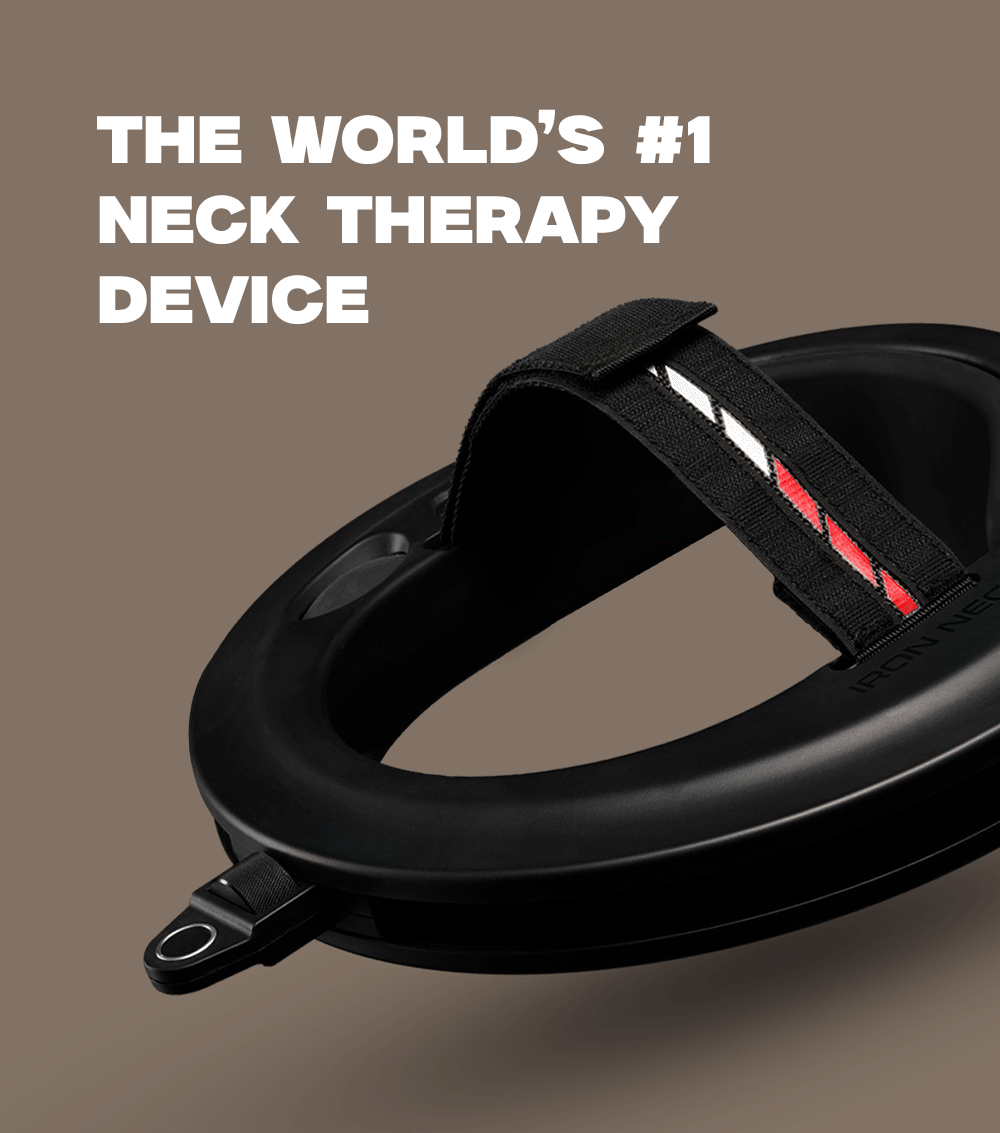
The Iron Neck trains all planes of neck movement simultaneously, including rotational resistance that harnesses cannot replicate. The friction-free slider allows smooth movement patterns across the full range, while the Variable Friction Dial controls resistance from rehabilitation-level to high performance. This is the tool used by NFL athletes, combat sports coaches, and physical therapists for progressive cervical loading.
Foundational Movements — Free Program: The six core Iron Neck movements that form the base of all strength and performance programming.
Iron Neck + Kettlebell Exercises with Mike Salemi — Free Program: For athletes integrating neck training with full-body strength work.
For Overactive Traps and Upper Body Tension
Many people who come to neck training are dealing less with weakness and more with chronic tightness, specifically in the upper trapezius. when deep stabilisers are underactive, superficial muscles like the trapezius compensate by taking on postural load they are not designed to sustain. The result is the familiar tension pattern: tight upper traps, base-of-skull tightness, and chronically sore shoulders.
The exercises that address this focus on releasing the traps from their compensatory role while building the stabiliser strength that allows them to relax.
Overactive Traps — Free Program: Directly addresses the most common tension pattern in people who sit at desks, drive regularly, or carry stress in their neck and shoulders.
Shoulder Recovery — Free Program: For those managing shoulder and upper back issues alongside neck training, the shoulder and cervical spine are closely connected, and both benefit from coordinated work.
What Results Can You Expect?
Neck training produces real, measurable results but the timeline matters for managing expectations and staying consistent.
greatest gains in first two months, with improvements continuing through 12 months. strength improves from 4 weeks onward.
| Phase | Timeframe | What typically changes |
|---|---|---|
| Adaptation | Weeks 1–2 | Better muscle activation, improved mind-muscle connection, early tension relief |
| Functional gains | Weeks 3–6 | Noticeable mobility improvement, posture easier to maintain, pain frequency reducing |
| Strength phase | Weeks 6–12 | Measurable strength increases, visible definition beginning, athletic resilience improving |
| Long-term | 3–12 months | Sustained strength, posture becomes default, significant reduction in recurring discomfort |
Most people feel a functional difference - less tension, better range of motion, within 2–3 weeks. Visible changes in definition typically appear from 6–8 weeks. meaningful improvement within 8 weeks. See a healthcare professional if symptoms are not improving after 2–3 weeks.
How to Get Started
New to neck training or managing existing discomfort: Begin with bodyweight — chin tucks, isometric holds, and gentle mobility work 2–3 times per week. Build comfort and control before adding resistance. The Foundational Movements program is structured for exactly this entry point.
Active gym-goers looking to add neck work: Neck training fits naturally at the end of a session as a finisher, or in a dedicated 5–10 minute block. research supports 2–3 weekly sessions. Allow recovery between sessions.
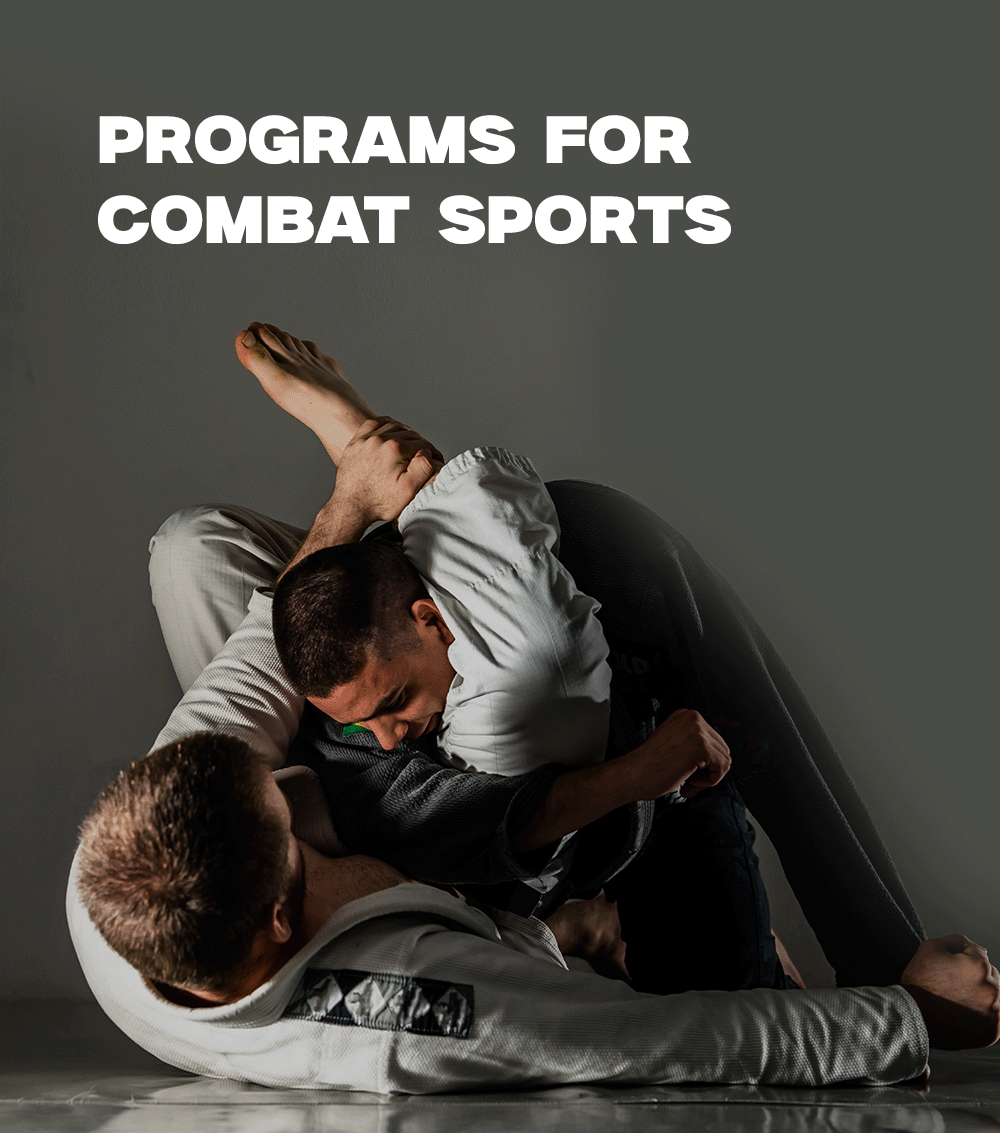
Athletes or those training for performance: Progressive loaded training, neck harness or Iron Neck — 2–3 times per week produces the strength and resilience required for contact sports. The Combat Sports and Team Sports programs in the Training Lab are built for this goal.
The Iron Neck Training Lab has structured programs for every level, with Phase 1 of every program free to watch.
Who Should Get Clearance First
- Recent significant neck trauma or suspected fracture
- Progressive neurological deficit, arm weakness, or hand clumsiness
- Known vertebral or carotid artery disease
- Post-operative cervical spine without surgeon clearance
- Severe osteoporosis or diagnosed cervical instability
If you are dealing with an existing neck condition, see our guides on waking up with a stiff neck, retrolisthesis and neck exercises, and neck exercises for arthritis for condition-specific guidance.
Frequently Asked Questions
How often should I train my neck?
research supports 2–3 weekly sessions. The neck responds well to frequent training but needs recovery between sessions like any muscle group. Daily mobility work, chin tucks, gentle rotation, is appropriate; heavy loaded training is not.
How long until I see results?
Most people notice functional improvements, less tension, better range of motion within 2–3 weeks. gains measurable from 4 weeks. Visible definition typically appears from 8-12 weeks of consistent training.
Can I train my neck without equipment?
Yes. Bodyweight exercises, chin tucks, isometric holds, prone extensions, lateral flexion are effective starting points and can produce real results, particularly for pain relief and posture improvement. Equipment like a neck harness or Iron Neck accelerates progress by allowing progressive overload that bodyweight cannot match once you have adapted.
Will my neck look bigger?
produces measurable neck circumference increases, and hypertrophy in 8 weeks of training. How pronounced visible changes are depends on training volume, intensity, and individual factors. Most people who train primarily for health and posture notice a defined, stronger-looking neck rather than a dramatic size increase.
I have neck pain, is it safe to train?
strengthening is safe and recommended. Start with bodyweight and low-load isometrics in a comfortable range. Avoid heavy loading and end-range movements until you have built a base. If your pain is acute, worsening, or accompanied by neurological symptoms, seek professional assessment before starting.
What is the best first exercise to start with?
The chin tuck. direct evidence for posture and pain improvement. It requires no equipment and is safe for almost everyone, making it the right entry point regardless of goal.
References
- Ylinen J, Takala EP, Nykanen M, et al. Active neck muscle training in the treatment of chronic neck pain in women: a randomized controlled trial. JAMA. 2003;289(19):2509-2516. https://pubmed.ncbi.nlm.nih.gov/12759322/
- Ylinen JJ, Hakkinen AH, Takala EP, et al. Effects of neck muscle training in women with chronic neck pain: one-year follow-up study. J Strength Cond Res. 2006;20(1):6-13. https://pubmed.ncbi.nlm.nih.gov/16503693/
- Fathollahnejad K, Letafatkar A, Hadadnezhad M. The effect of manual therapy and stabilizing exercises on forward head and rounded shoulder postures. BMC Musculoskelet Disord. 2019;20(1):86. https://pubmed.ncbi.nlm.nih.gov/30808311/
- Berg HE, Berggren G, Tesch PA. Dynamic neck strength training effect on pain and function. Arch Phys Med Rehabil. 1994;75(6):661-665. https://pubmed.ncbi.nlm.nih.gov/8002764/
- Hrysomallis C. Neck muscular strength, training, performance and sport injury risk: a review. Sports Med. 2016;46(8):1111-1124. https://pubmed.ncbi.nlm.nih.gov/26861960/
- Attwood MJ, Hudd LW, Roberts SP, Irwin G, Stokes KA. Eight weeks of self-resisted neck strength training improves neck strength in age-grade rugby union players. Sports Health. 2022;14(4):500-507. https://pubmed.ncbi.nlm.nih.gov/34558993/
- Portero P, Bigard AX, Gamet D, et al. Effects of resistance training in humans on neck muscles performance, and electromyogram power spectrum changes. Eur J Appl Physiol. 2001;84(6):540-546. https://pubmed.ncbi.nlm.nih.gov/11482549/
- Salo PK, Hakkinen AH, Kautiainen H, Ylinen JJ. Effect of neck strength training on health-related quality of life in females with chronic neck pain. Health Qual Life Outcomes. 2010;8:48. https://pubmed.ncbi.nlm.nih.gov/20465854/
- Lee KJ, Han HY, Cheon SH, Park SH, Yong MS. Clinical effects of deep cervical flexor muscle activation in patients with chronic neck pain. J Phys Ther Sci. 2016;28(1):269-273. https://pmc.ncbi.nlm.nih.gov/articles/PMC4756018/
- Blomgren J, Strandell E, Jull G, et al. Effects of deep cervical flexor training on impaired physiological functions associated with chronic neck pain: a systematic review. BMC Musculoskelet Disord. 2018;19(1):415. https://pubmed.ncbi.nlm.nih.gov/30486819/
- Taylor MK, Hodgdon JA, Griswold L, et al. Cervical resistance training: effects on isometric and dynamic strength. Aviat Space Environ Med. 2006;77(11):1131-1135. https://pubmed.ncbi.nlm.nih.gov/17086765/
Disclaimer: The Iron Neck blog provides educational content on neck training, fitness, and recovery. It is not a substitute for medical advice. Please consult a healthcare professional before starting any new exercise or recovery programme, particularly if you have a pre-existing condition.


Leave a comment
This site is protected by hCaptcha and the hCaptcha Privacy Policy and Terms of Service apply.