




Heat Safety in Football: WBGT Monitoring, Acclimatization, and Preventing Exertional Heat Stroke
Exertional heat stroke (EHS) is the leading cause of preventable death in football. It is also one of the most survivable emergencies in sports medicine — if recognized quickly and treated correctly. The difference between a full recovery and a fatality often comes down to whether the coaching and medical staff had a plan and executed it.
This guide covers the science of heat safety in football, the tools available to monitor environmental risk, and the protocols that have been proven to prevent and treat heat-related illness.
Understanding the Risk: Why Football Is Uniquely Dangerous
Football players face a combination of heat stress factors that few other athletes encounter simultaneously:
- Equipment — helmets and pads dramatically reduce the body's ability to dissipate heat through evaporation and convection
- High metabolic output — football involves repeated high-intensity efforts that generate significant internal heat
- Preseason timing — two-a-day practices often occur in August, the hottest month of the year in most of the United States
- Acclimatization gap — players arrive from summer break in varying states of heat acclimatization
The combination of these factors makes the first two weeks of preseason — before full acclimatization is achieved — the highest-risk period of the football year.
Wet Bulb Globe Temperature: The Right Measurement Tool
Air temperature alone is an inadequate measure of heat stress. Humidity, solar radiation, and wind speed all affect the body's ability to cool itself. Wet Bulb Globe Temperature (WBGT) integrates all of these factors into a single measurement that correlates directly with physiological heat stress.
WBGT meters are available for under $200 and should be considered essential equipment for any football program that practices outdoors. The Korey Stringer Institute provides activity modification guidelines based on WBGT readings:
| WBGT (°F) | Risk Level | Recommended Action |
|---|---|---|
| Under 65°F | Low | Normal activity |
| 65–72°F | Moderate | Increase rest breaks, monitor high-risk athletes |
| 72–78°F | High | Increase rest breaks to 3:1 work-to-rest, limit equipment |
| 78–82°F | Very High | Limit practice to 1 hour, helmets only, maximum rest breaks |
| Over 82°F | Extreme | Cancel or postpone outdoor activity |
Heat Acclimatization: The 14-Day Protocol
Heat acclimatization is the physiological adaptation process that allows the body to work more efficiently in hot environments. Full acclimatization takes approximately 10–14 days of progressive heat exposure and produces measurable improvements in plasma volume, sweat rate, and cardiovascular efficiency.
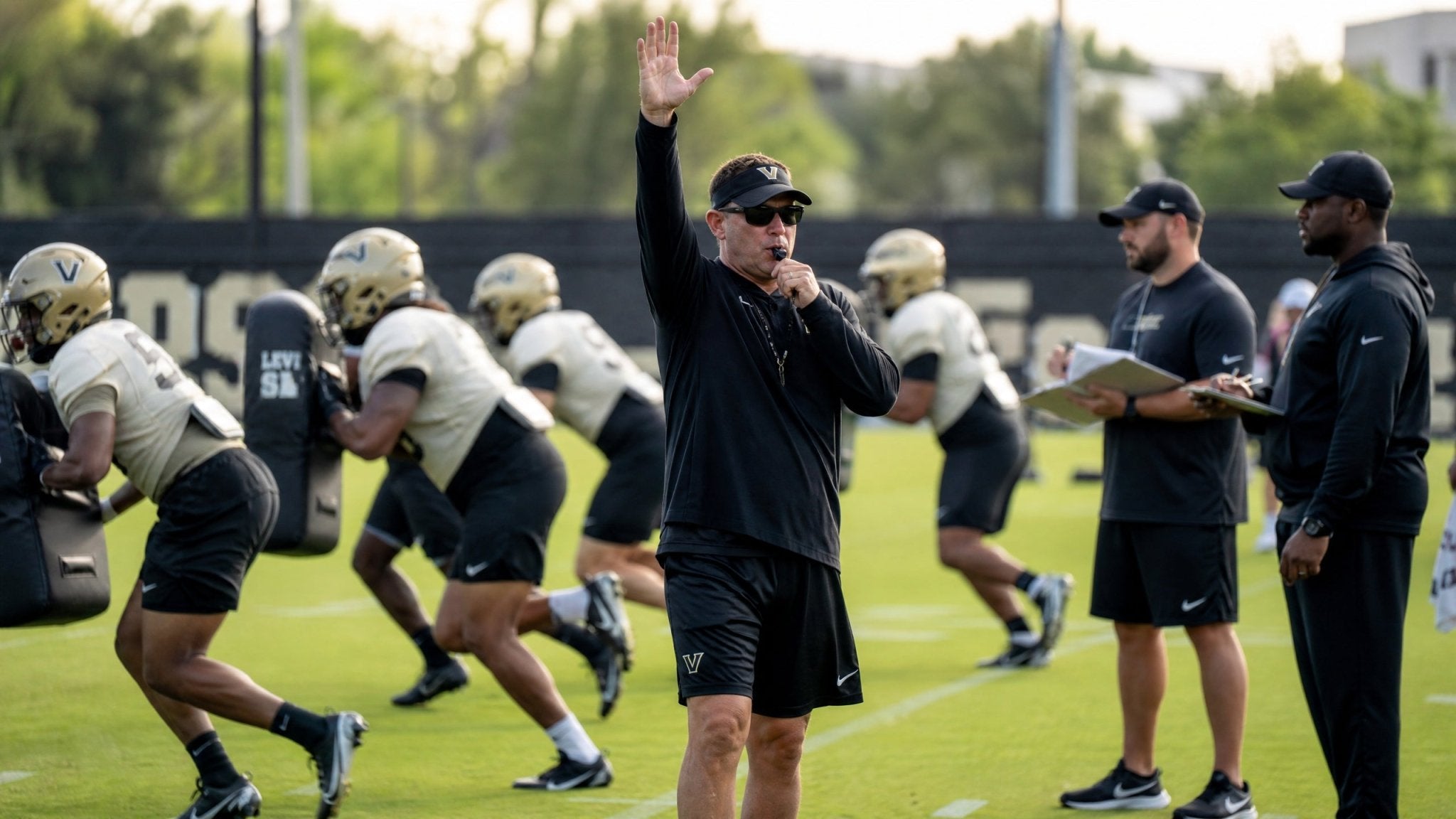
The NFHS and NCAA both mandate heat acclimatization periods at the start of preseason. The standard protocol:
Days 1–5 (Acclimatization Phase)
- Helmets only (no shoulder pads or full equipment)
- Maximum 3 hours of total activity per day
- Only one practice per day
- No two-a-days during this phase
Days 6–14 (Transition Phase)
- Full equipment may be introduced gradually
- Two-a-days may begin on Day 6 if Day 5 included only helmets
- When two-a-days are held, one session must be a walkthrough (no pads, no contact)
- Minimum 3-hour rest between sessions
Hydration: The Foundation of Heat Safety
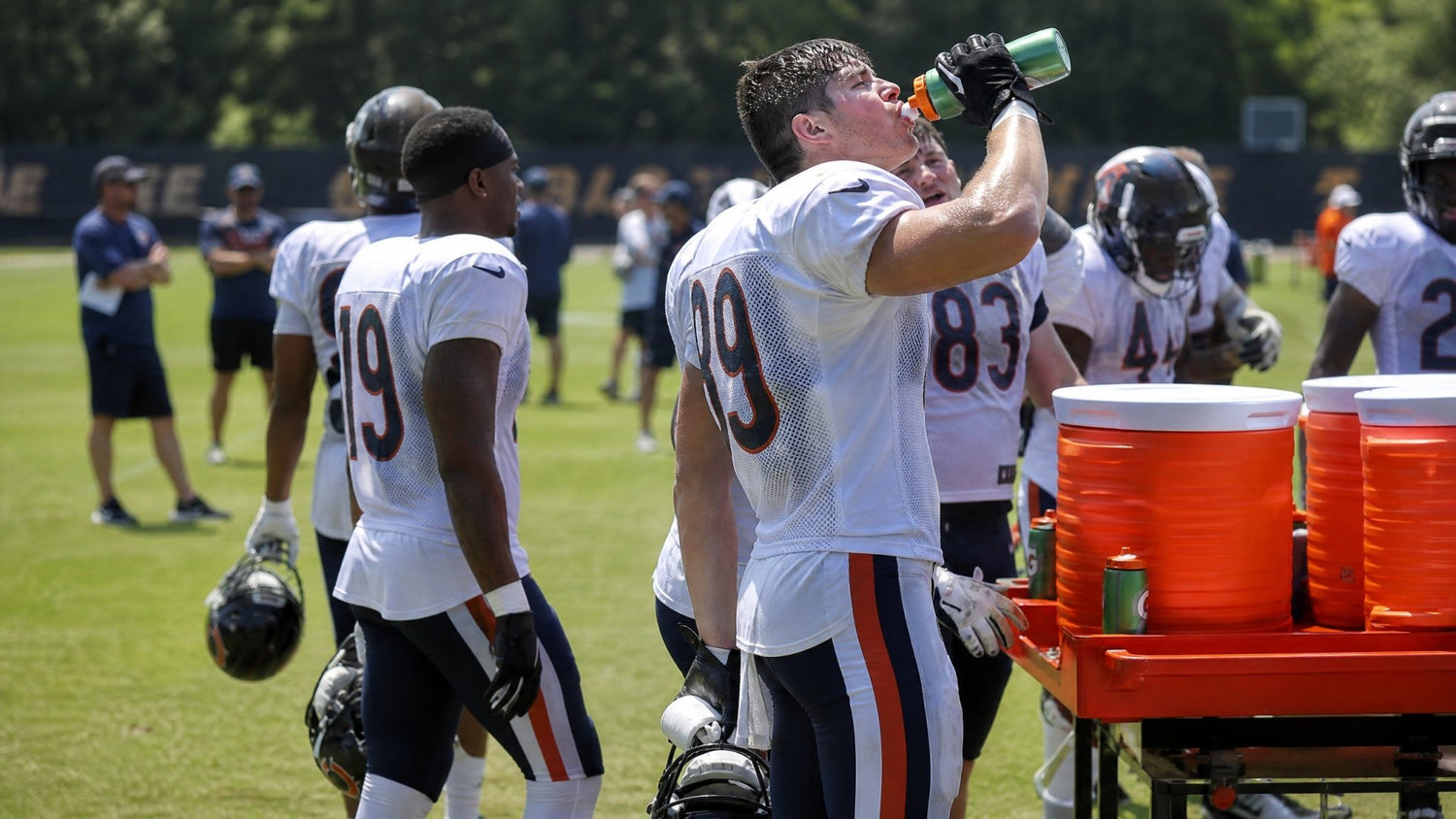
Dehydration of even 2% of body weight impairs athletic performance and increases heat stress. For a 200-pound lineman, that is just 4 pounds of fluid loss — easily achievable in a single practice session.
Best practices for football hydration:
- Pre-practice weigh-ins — weigh athletes before and after practice. Weight loss greater than 2% indicates inadequate hydration. Athletes should not return to practice the following day until they have replaced the lost fluid.
- Scheduled hydration breaks — do not rely on athletes to drink when thirsty. Thirst is a lagging indicator of dehydration. Schedule breaks every 15–20 minutes.
- Fluid availability — cold water should be available at all times. For practices exceeding 60 minutes, electrolyte replacement beverages should be available.
- Individual variation — sweat rates vary enormously between athletes. Some players need significantly more fluid than others. Monitor individual weight changes to identify high-loss athletes.
Recognizing and Treating Exertional Heat Stroke
Exertional heat stroke is defined as a core body temperature above 104°F combined with central nervous system dysfunction (confusion, disorientation, loss of consciousness, seizure). It is a medical emergency.
Recognition
The classic presentation includes: collapse during or after intense exercise in hot conditions, altered mental status (confusion, combativeness, unresponsiveness), hot skin (may or may not be sweating), and rapid heart rate. Do not wait for a temperature reading to initiate treatment.
Treatment: Cool First, Transport Second
The Korey Stringer Institute's "cool first, transport second" protocol has transformed EHS survival rates. The goal is to reduce core body temperature below 104°F as rapidly as possible — ideally within 30 minutes of collapse.
Cold-water immersion (CWI) is the most effective cooling method available. A tub of ice water (35–59°F) should be present at every outdoor practice. Immerse the athlete up to the neck and stir the water continuously. Do not remove the athlete from the tub until core temperature is below 102°F.
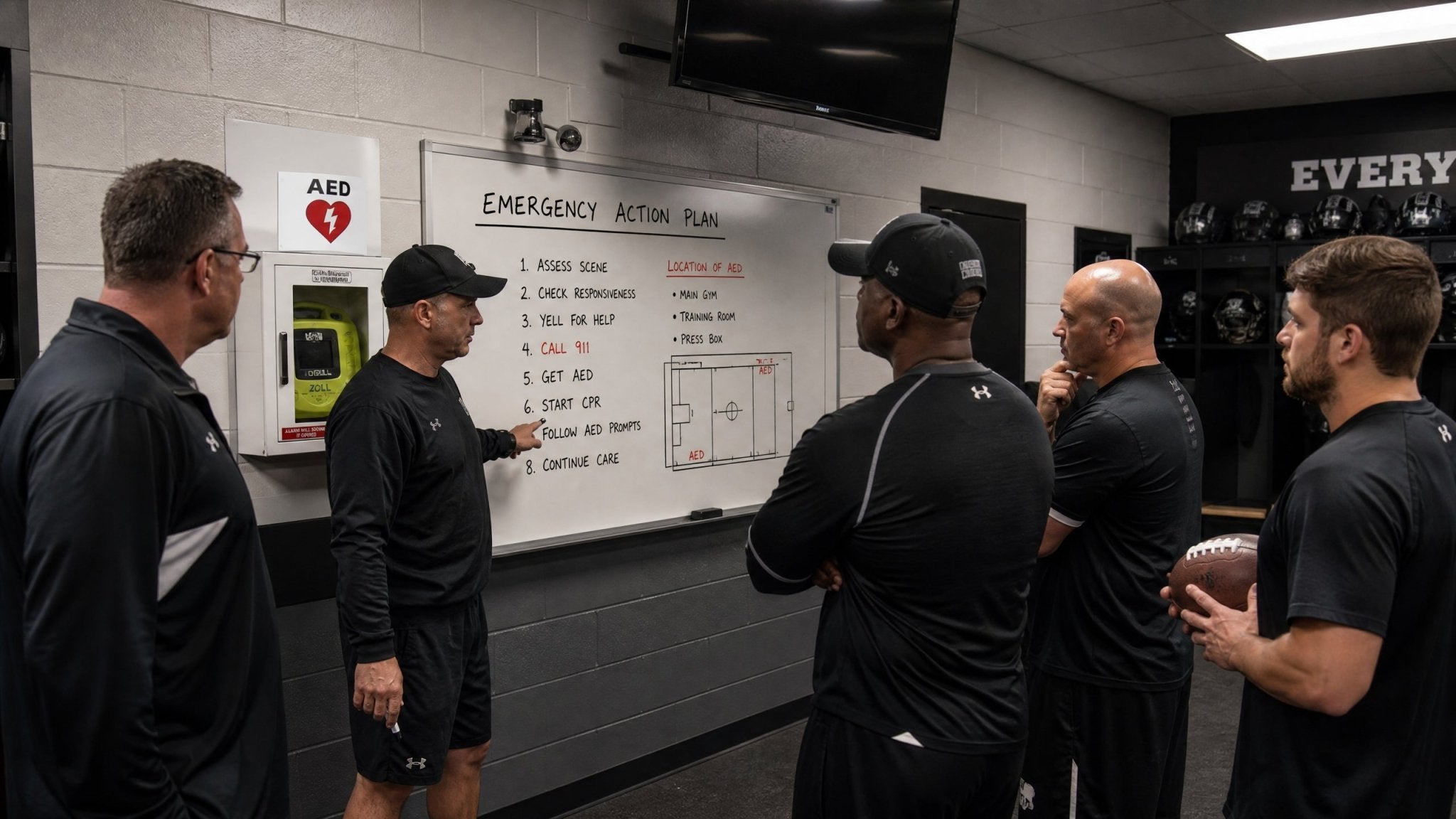
If a CWI tub is not available, rotating ice bags over the neck, armpits, and groin while fanning the athlete is the next best option. Call 911 immediately and continue cooling until EMS arrives.
High-Risk Athletes: Who Needs Extra Monitoring
Certain athletes face elevated heat stress risk and require additional monitoring:
- Athletes with a history of heat illness
- Athletes with sickle cell trait
- Athletes taking medications that impair thermoregulation (antihistamines, diuretics, stimulants)
- Athletes who are significantly overweight
- Athletes who have been ill recently (fever, GI illness, dehydration)
- Athletes who are not acclimatized (returning from injury, new to the program)
Identify these athletes before preseason begins and have a specific monitoring plan in place for them.
Leave a comment
This site is protected by hCaptcha and the hCaptcha Privacy Policy and Terms of Service apply.