



Football Equipment Safety: Helmet Fitting, NOCSAE Standards, and Reconditioning Requirements
Football equipment is the first line of defense against impact injury. But equipment only provides its intended protection when it fits correctly, meets current certification standards, and has been properly reconditioned. This guide covers the equipment safety requirements that every football program needs to understand and implement.
Helmet Safety: The Foundation
The football helmet is the most important piece of protective equipment in the sport. It is also the most complex to fit correctly and the most frequently misused.
NOCSAE Certification
The National Operating Committee on Standards for Athletic Equipment (NOCSAE) sets the performance standards for football helmets. All helmets used in high school and collegiate football must carry the NOCSAE certification mark. This mark indicates that the helmet has been tested and meets minimum performance standards for impact attenuation.
Important caveat: NOCSAE certification is a minimum standard, not a guarantee of concussion prevention. No helmet currently available can prevent concussions — they can only reduce the severity of certain types of impacts. The NOCSAE mark means the helmet provides a baseline level of protection; it does not mean all NOCSAE-certified helmets perform equally.
Helmet Performance Ratings
Virginia Tech's Helmet Lab publishes annual star ratings for football helmets based on laboratory impact testing. The ratings range from 1 to 5 stars, with 5-star helmets providing the best measured protection. Programs should prioritize higher-rated helmets when making purchasing decisions, particularly for positions with the highest contact frequency (linemen, linebackers).
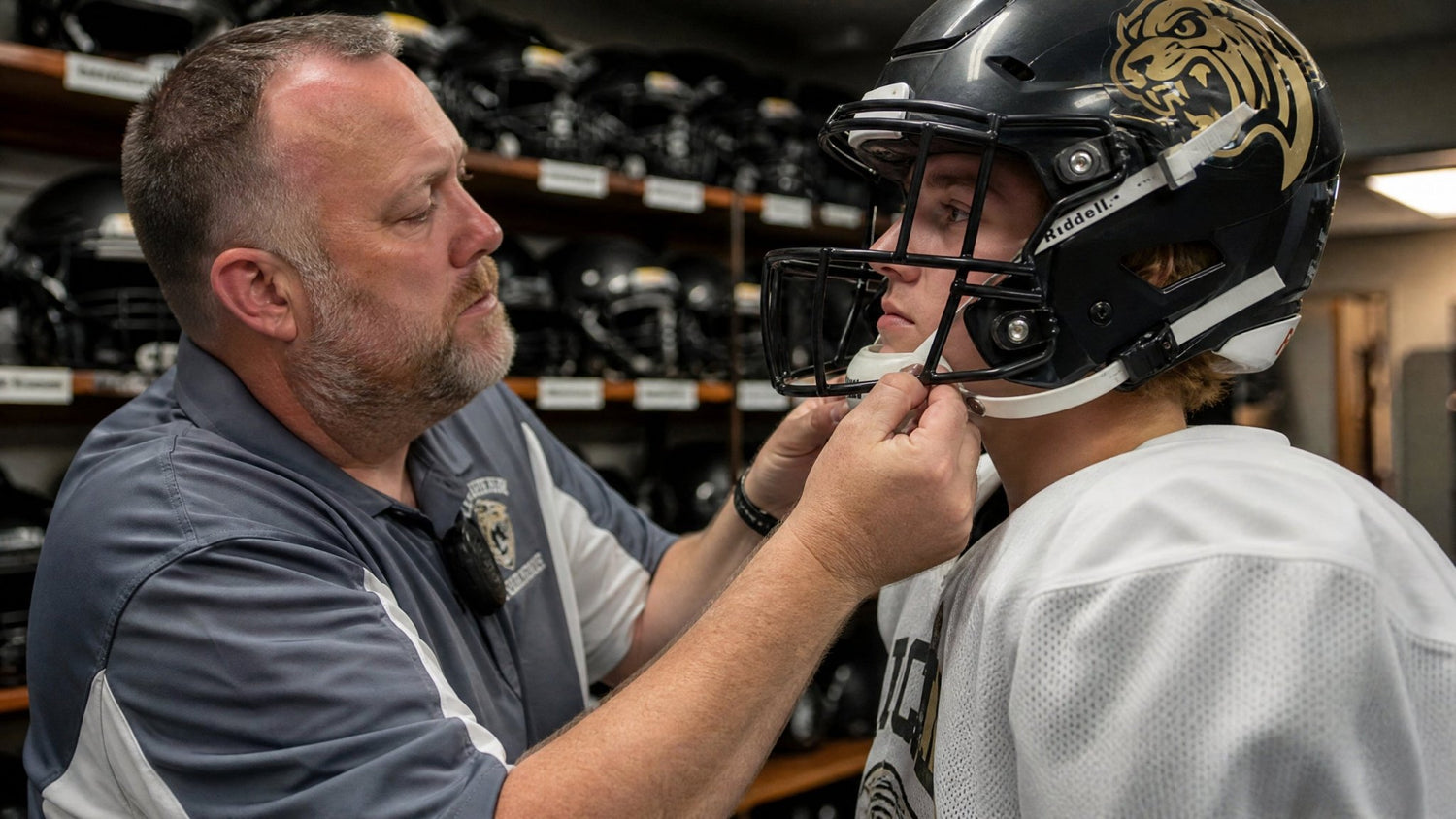
Proper Helmet Fitting
A properly fitted helmet is essential for protection. The fitting process:
- Measure head circumference at the widest point (approximately 1 inch above the eyebrows)
- Select the correct shell size based on the manufacturer's sizing chart
- Inflate the air bladders (if applicable) to achieve a snug fit — the helmet should not move when the athlete shakes their head
-
Check the fit points:
- The helmet should sit two finger-widths above the eyebrows
- The jaw pads should contact the jaw without pressure
- The chin strap should be snug with the mouth closed
- The helmet should not rock forward, backward, or side to side when the chin strap is fastened
- Recheck fit after the first practice — helmets often require adjustment after initial break-in
Reconditioning Requirements
Football helmets must be reconditioned and recertified annually. Reconditioning involves cleaning, inspection, replacement of worn components (pads, chin straps, hardware), and re-testing to NOCSAE standards. Only NOCSAE-certified reconditioning companies should perform this work.
Helmets that fail reconditioning inspection must be removed from service. The most common failure points are cracked shells, degraded padding systems, and hardware that cannot be replaced to original specifications.
Helmets have a useful life of approximately 10 years from the date of manufacture, after which the shell material degrades and the helmet should be retired regardless of its reconditioned status. Check the manufacture date stamped inside the helmet.
Shoulder Pads
Shoulder pads protect the acromioclavicular joint, clavicle, and shoulder girdle from direct impact. Proper fit is critical:
- The shoulder caps should cover the AC joint and extend to the edge of the shoulder
- The front arch should cover the sternum and upper chest
- The pads should not restrict arm movement — the athlete should be able to raise their arms fully overhead
- The back plate should cover the spine from the base of the neck to the top of the shoulder blades
Shoulder pads should be inspected at the start of each season and after any significant impact. Check for cracked shells, broken straps, and degraded padding. Replace any component that shows wear.
Mouthguards
Mouthguards are required equipment in high school and collegiate football. They protect the teeth, jaw, and temporomandibular joint from direct impact. Custom-fitted mouthguards provide better protection and comfort than stock or boil-and-bite options and are worth the investment for programs that can afford them.
Mouthguards should be inspected regularly for wear and replaced when they show significant degradation. Athletes who have had dental work during the season may need their mouthguards refitted.
Fit Checks Through the Season
Equipment fit changes through the season as athletes gain or lose weight, as padding compresses with use, and as components wear. Implement a systematic fit check protocol:
- Pre-season — full fit check for all equipment before the first practice
- Mid-season — re-check helmet fit for athletes who have had significant weight changes
- After any significant impact — inspect the helmet for damage and recheck fit
- After any head injury — the helmet involved should be removed from service and inspected before return to use
Field and Facility Safety
Equipment safety extends beyond what athletes wear. The playing surface and facility infrastructure also require regular inspection:
- Field surface — inspect for holes, uneven surfaces, and debris before each practice and game
- Goal posts — ensure padding is in place and secure
- Sideline equipment — keep the sideline clear of equipment that could create tripping hazards
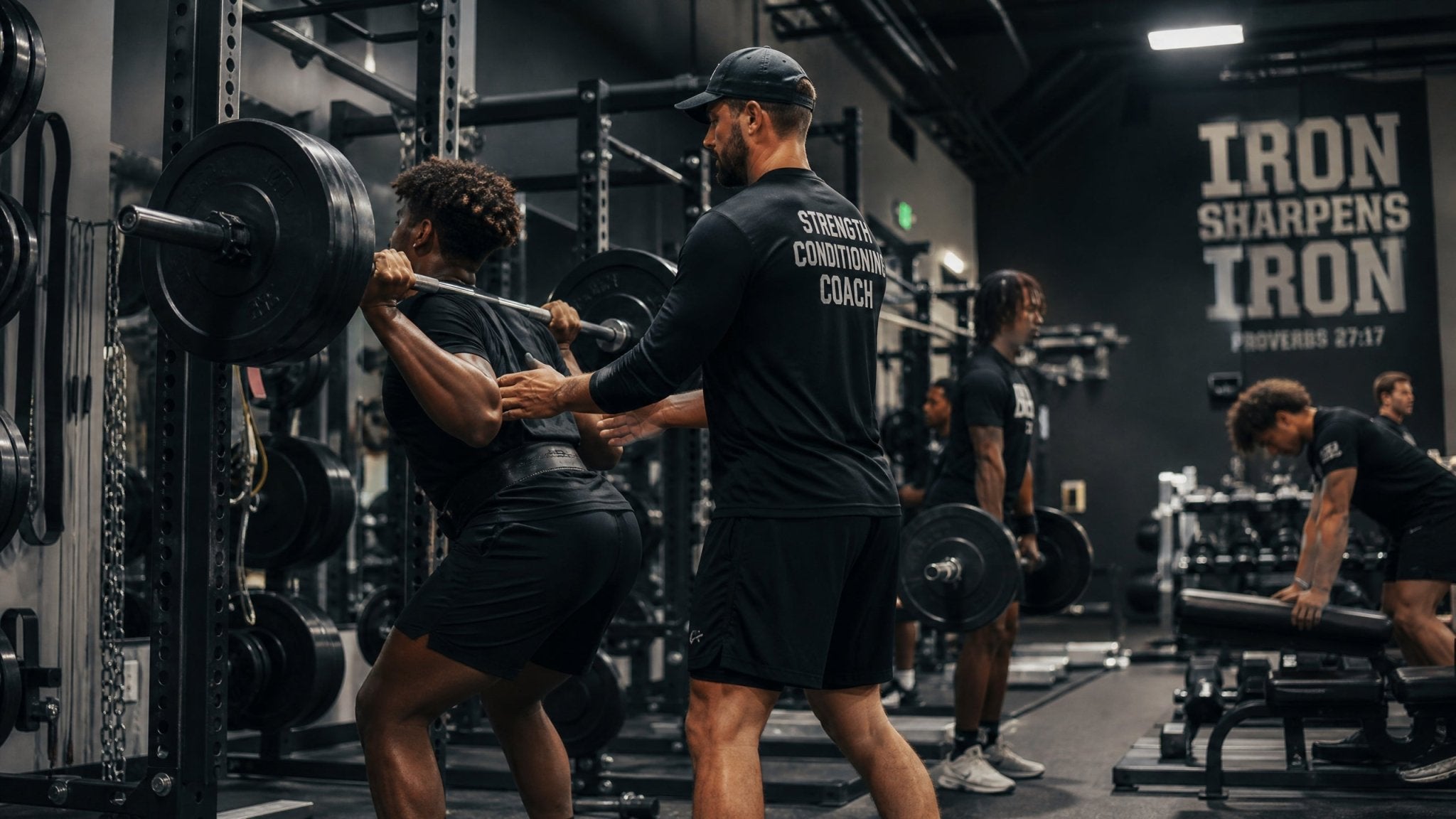
- Weight room equipment — inspect barbells, collars, cables, and machines regularly for wear and damage
Document all equipment inspections and any deficiencies found. Deficient equipment should be removed from service immediately and repaired or replaced before return to use.
Leave a comment
This site is protected by hCaptcha and the hCaptcha Privacy Policy and Terms of Service apply.