



How to Build a Neck Strength Program for Your Football Team: A Strength Coach's Guide
Neck strength training is one of the highest-ROI interventions available to football strength coaches. The research is clear, the implementation is straightforward, and the equipment requirements are modest. Yet most programs still do not have a structured neck training program. This guide changes that.
The Case for Neck Training
The biomechanical case for neck training is well-established: a stronger neck reduces head acceleration during contact, which reduces the forces transmitted to the brain. Every 1-pound increase in neck strength reduces concussion odds by approximately 5%. A player who increases their neck strength from 10 pounds to 20 pounds has roughly halved their concussion risk from that factor alone.
Beyond concussion prevention, neck strength contributes to:
- Improved head stability during contact, allowing better vision and reaction time
- Reduced cervical spine injury risk
- Better performance in blocking and tackling (a strong neck contributes to overall upper body force production)
- Faster recovery from minor neck strains
Assessment: Where Are Your Athletes Starting?
Before building the program, establish baseline measurements. The simplest approach:
- Use a handheld dynamometer or a load cell attached to a head harness
- Measure maximum isometric force in four directions: flexion, extension, left lateral flexion, right lateral flexion
- Record results and note any significant asymmetries (greater than 20% difference between left and right lateral flexion)
- Retest every 4–6 weeks to track progress
If you do not have measurement equipment, use a practical assessment: can the athlete perform 3 sets of 15 repetitions of neck flexion and extension against manual resistance without significant fatigue? If not, they need foundational work before progressing to loaded training.
Off-Season Programming (12–16 Weeks)
Phase 1: Foundation (Weeks 1–4)
Goal: Establish movement patterns, build connective tissue tolerance, identify and address asymmetries.
Exercises:
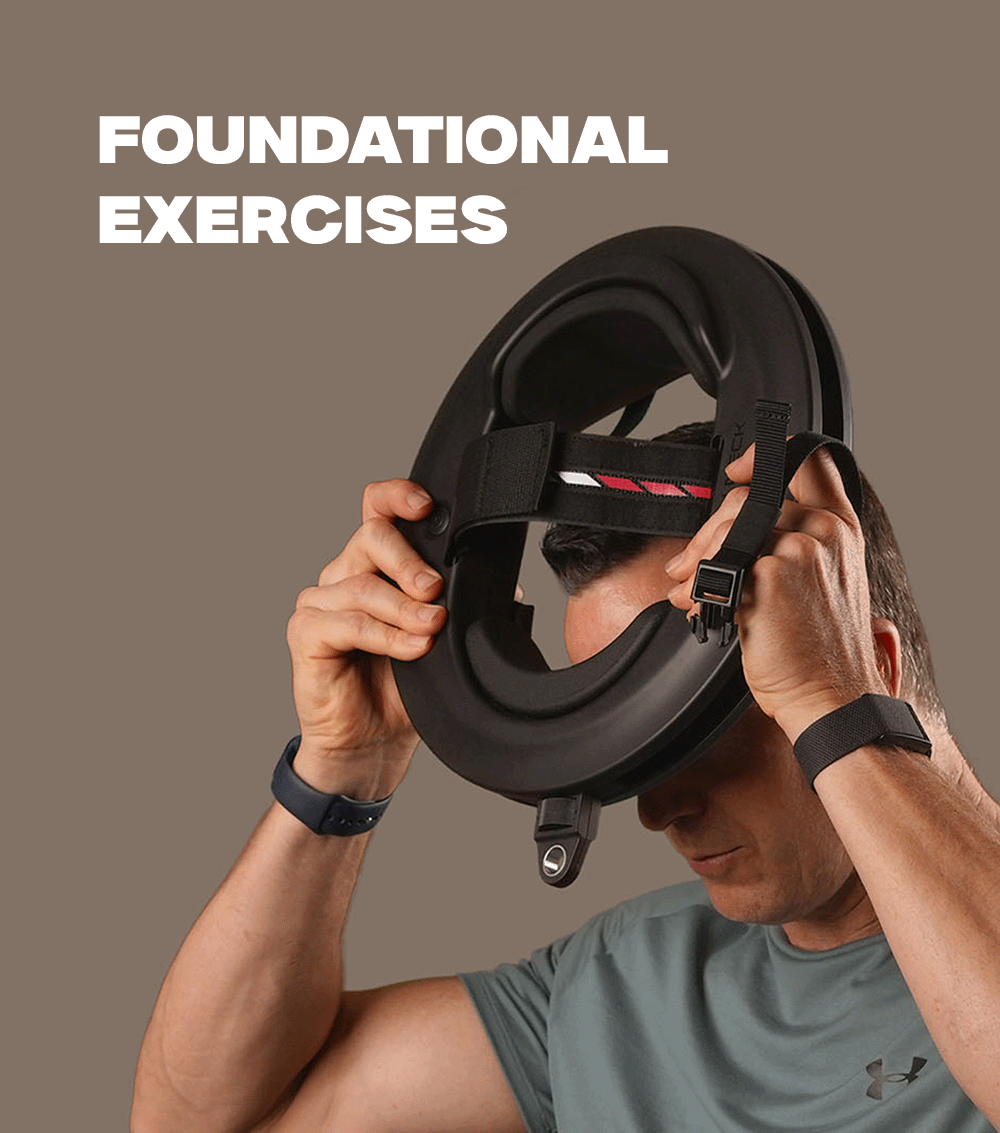
- Isometric neck flexion and extension against manual resistance — 3 sets × 10 reps × 5-second holds
- Isometric lateral flexion against manual resistance — 3 sets × 10 reps × 5-second holds per side
- Neck nods (controlled flexion/extension through full range) — 3 sets × 15 reps
- Cervical rotation — 3 sets × 10 reps per side
Frequency: 3 days per week, integrated into the warm-up or as a supplemental circuit.
Phase 2: Loading (Weeks 5–10)
Goal: Build maximum strength in all four planes.
Exercises:
- Plate-loaded neck curls (flexion) — 3–4 sets × 10–15 reps
- Plate-loaded neck extensions — 3–4 sets × 10–15 reps
- Resistance band lateral flexion — 3 sets × 12–15 reps per side
- Iron Neck rotational resistance — 3 sets × 10 reps per direction (if available)
- Neck harness work (if available) — 3 sets × 10–15 reps in flexion and extension
Frequency: 3 days per week. Progress load by 5–10% per week when the athlete can complete all sets with good form.
Phase 3: Strength Peaking (Weeks 11–16)
Goal: Maximize strength before the preseason.
Exercises: Same as Phase 2, with heavier loads and lower reps (6–10 per set).
Frequency: 3 days per week. Reduce volume in the final week before preseason begins.
In-Season Maintenance
The goal in-season is to preserve off-season strength gains without adding excessive fatigue. Reduce volume but maintain frequency:
- 2 sets per exercise (down from 3–4)
- 10–12 reps per set
- 2 days per week (down from 3)
- Integrate into the existing warm-up or post-lift circuit
The Iron Neck: The Most Effective Tool Available
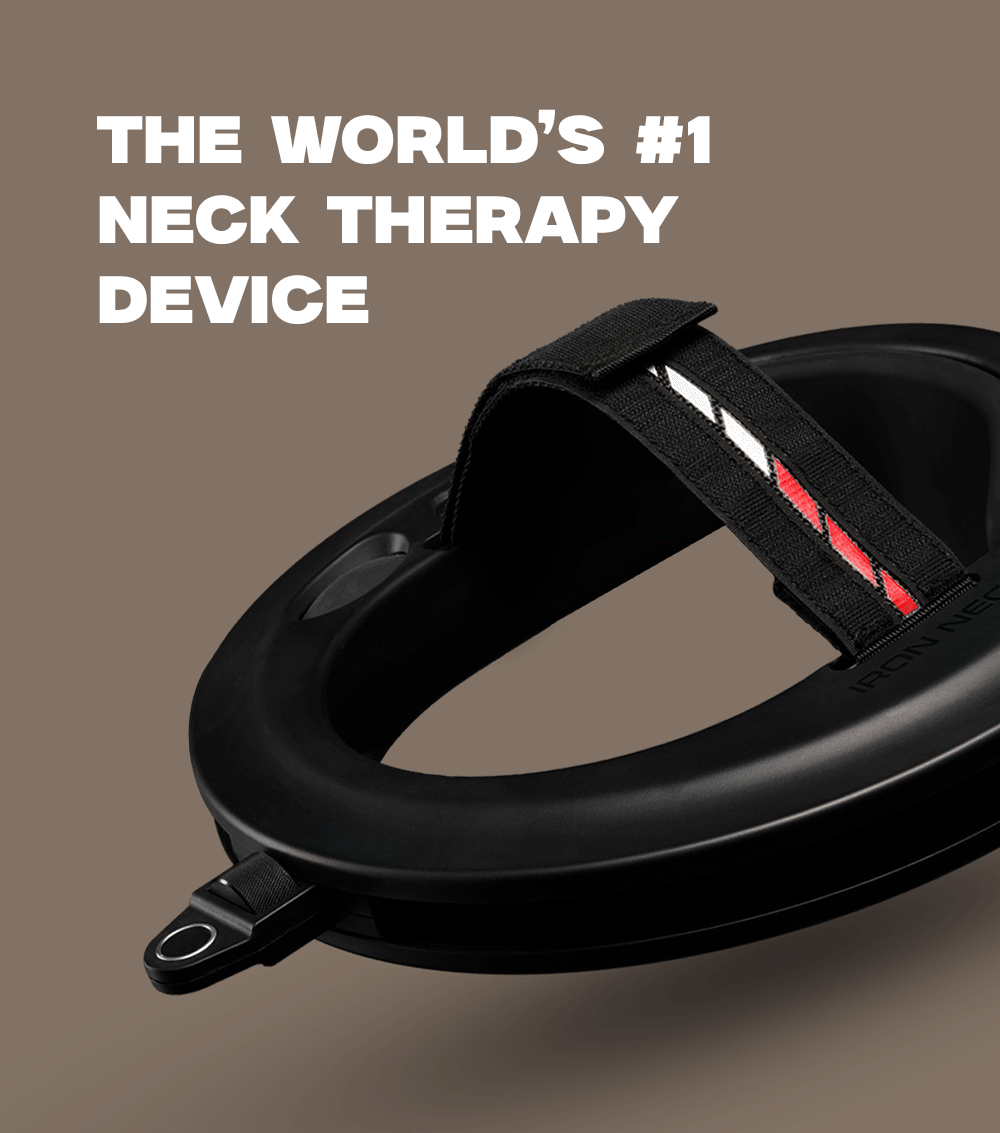
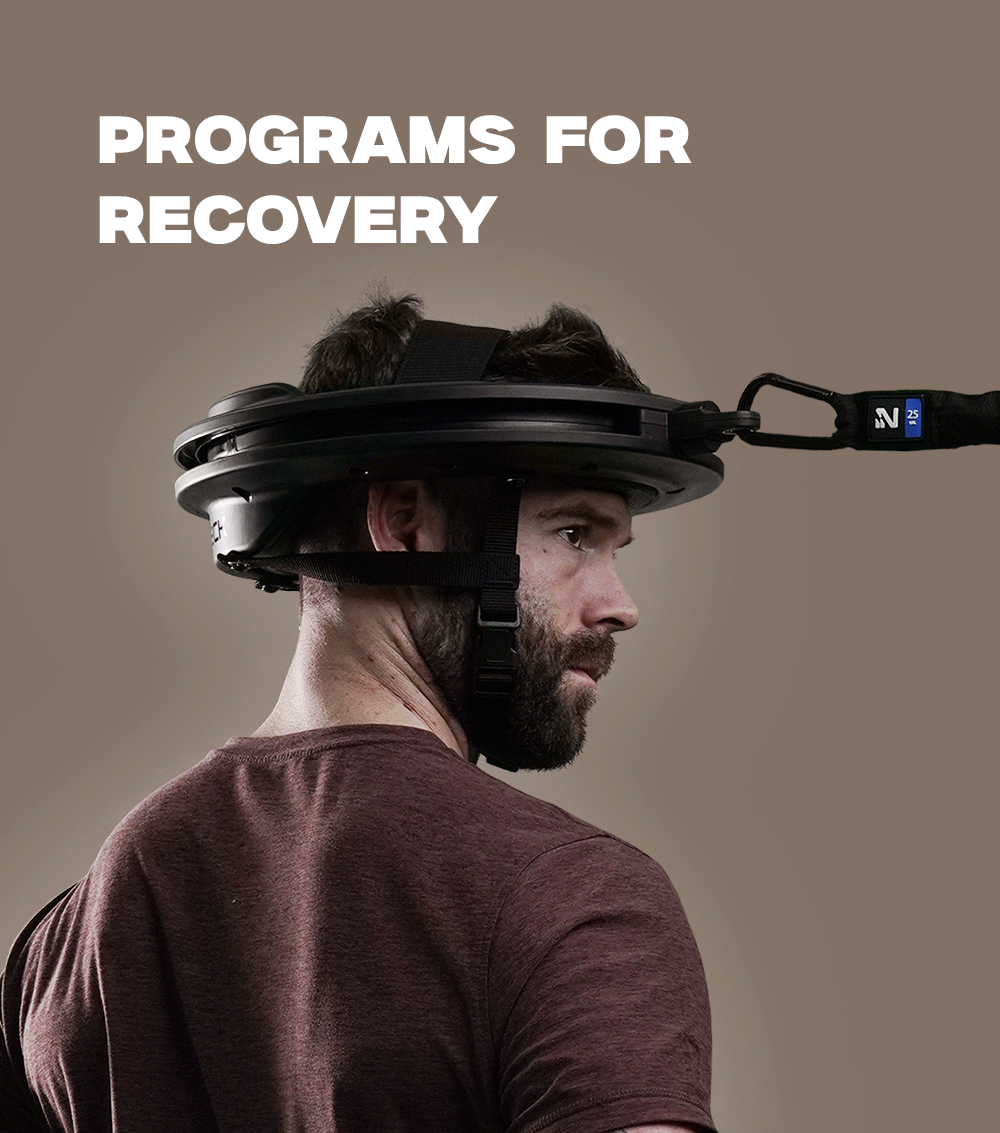
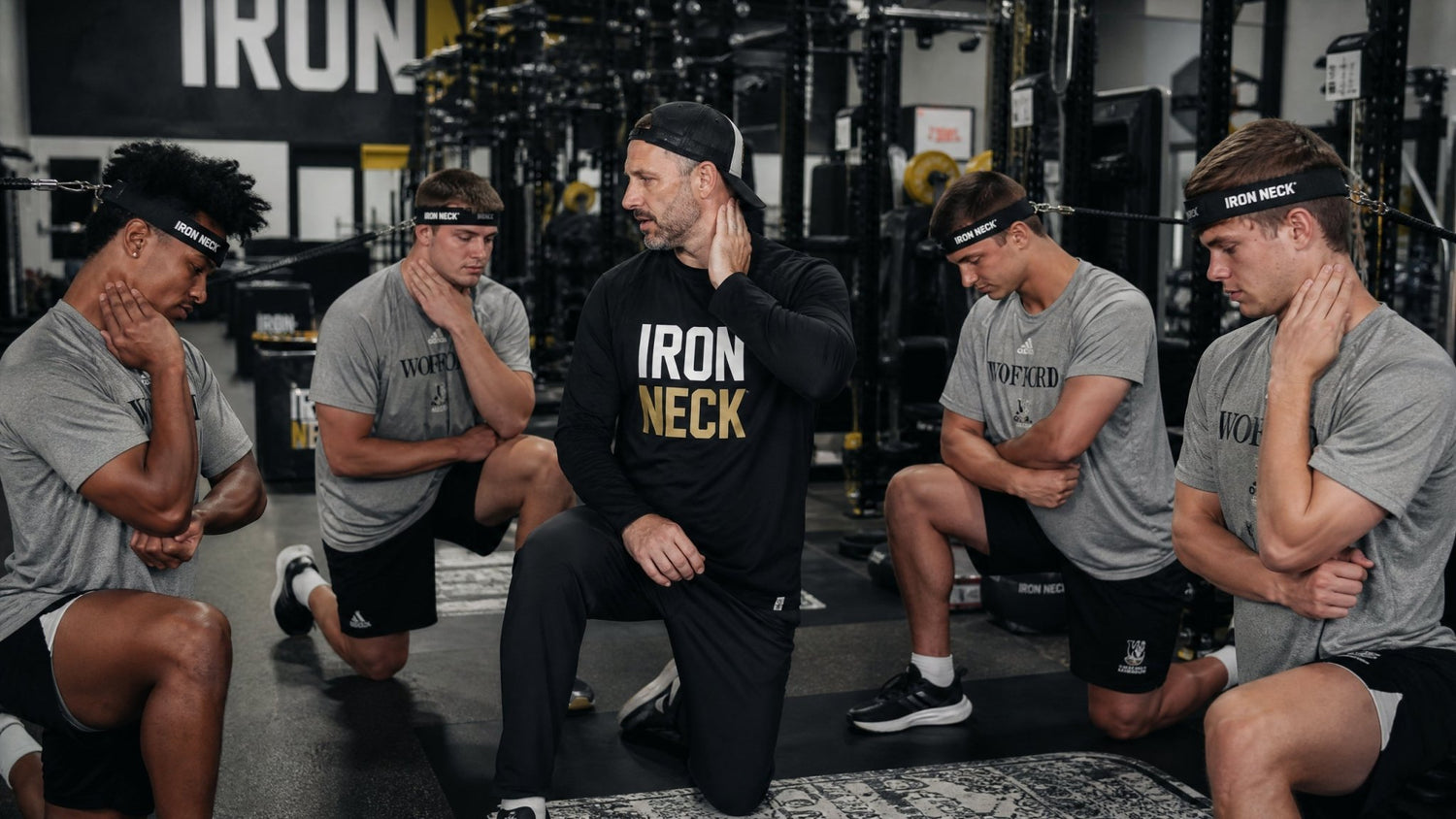
The Iron Neck is a head-mounted resistance device that provides 360-degree resistance through a full range of motion. Unlike plate-loaded or resistance band exercises, which train the neck in isolated planes, the Iron Neck trains the neck in the complex, multi-planar patterns that football contact actually demands.
Key advantages of the Iron Neck for football programs:
- Full range of motion — trains flexion, extension, lateral flexion, and rotation simultaneously
- Progressive resistance — resistance can be adjusted precisely to match the athlete's current strength level
- Time efficiency — a complete neck training circuit takes 8–12 minutes
- Safety — the device controls the range of motion, reducing injury risk compared to free-weight neck exercises
- Scalability — one device can serve an entire team through station rotation
For programs implementing neck training for the first time, the Iron Neck is the recommended starting point. It removes the technique barriers associated with plate-loaded exercises and provides a safe, effective introduction to neck training for athletes at all strength levels.
Integration: Making It Happen in a Packed Schedule
The most common barrier to neck training is time. Here are three integration strategies that work within existing football schedules:
- Warm-up integration — replace 8–10 minutes of the existing warm-up with a neck training circuit. This is the most common approach and works well for teams without dedicated neck training equipment.
- Station rotation — set up the Iron Neck as a station in the weight room circuit. Athletes rotate through it during rest periods between other exercises, making neck training essentially "free" from a time perspective.
- Position group warm-up — have linemen and linebackers (highest-contact positions) complete a neck circuit before position group practice begins. This takes 10 minutes and can be supervised by a position coach with minimal training.
Tracking Progress and Communicating Results
Strength coaches who track and communicate neck strength gains build buy-in from athletes, coaches, and administrators. Consider:
- Pre- and post-season strength assessments with results shared with the head coach and athletic director
- Individual progress tracking that athletes can see — athletes who see their numbers improve are more motivated to continue
- Correlation tracking — if your program tracks concussion incidence, compare rates before and after implementing the neck training program
The data will make the case for continuing and expanding the program. A 20% reduction in concussion incidence is a compelling argument for any athletic director or school board.

Leave a comment
This site is protected by hCaptcha and the hCaptcha Privacy Policy and Terms of Service apply.