

Demo video coming soonProtraction / Retraction
Front-to-back strength supports the constant shift between looking up the route and checking your feet on the wall.
Climbers spend entire sessions looking up, reading sequences overhead on the wall and craning back under steep roofs, and belayers hold the same extended position for hours. This program builds strength through that upward gaze, loads the end-range and diagonal patterns of moving between holds, then trains the reactive control that keeps the head safe when a foot cuts loose or a fall comes tight on the rope. A neck that ends the session fresh reads the crux better than one that is cooked by the third pitch.

Build the extension endurance to read routes overhead and the gaze control to find holds instantly through steep terrain and hard falls.
Build the base strength behind hours of looking up. Front-to-back control and steady holds train the extension endurance climbing quietly demands.
Demo video coming soonFront-to-back strength supports the constant shift between looking up the route and checking your feet on the wall.
Rotational strength powers the looks to sidepulls, cross-throughs, and your belayer without twisting the whole body off the wall.
Demo video coming soonLong neutral holds build the steady head that stays calm on a rest jug while you shake out and read the next sequence.
Demo video coming soonSlow full-range spins build controlled strength through rotation, the base for scanning terrain in every direction without strain.
Advance whenAdvance when holds are steady for the full duration and movement stays smooth in every plane.
Load the extreme positions steep climbing forces. End-range holds and full diagonals build strength in the craned-back, angled gaze positions of roofs and overhangs.
Demo video coming soonEnd-range strength is the craned-back position under a roof, holding your gaze on the lip while your neck sits at full extension.
Demo video coming soonFull-range diagonals trace the gaze path of climbing itself, from a foothold by your hip to the crimp above your opposite shoulder.
Demo video coming soonHeld rotation builds the strength to stay locked on a distant hold while you set up a drop-knee or a long reach sideways.
Demo video coming soonHeld retraction rebuilds the aligned posture that hours of belaying erode, keeping the head stacked instead of drooping forward between burns.
Advance whenAdvance when end-range holds are solid at Heavy resistance and diagonal patterns stay precise.
Train the neck for climbing's fast moments. Cue reactions, fast pulses, gaze tracking, and perturbation prepare the head for dynos, cut feet, and falls onto the rope.
Cue-based reaction trains the instant gaze snap of a dyno, eyes jumping to the catch hold before the hands ever leave.
Demo video coming soonFast diagonal pulses build the quick stiffening that controls the head when your feet cut on an overhang and your body swings.
Eye tracking through movement keeps your gaze welded to the target hold while momentum moves your head through space.
Demo video coming soonPerturbation holds replicate the jolt of a fall coming tight on the rope, training the neck to catch the head instead of whipping.
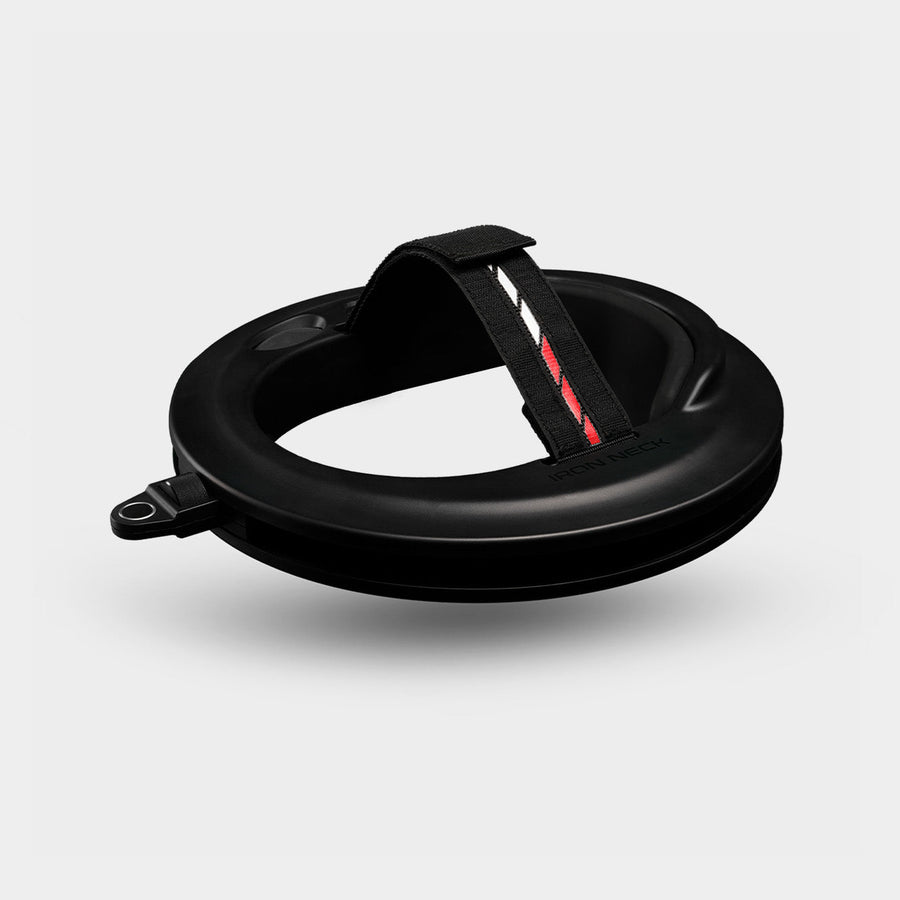
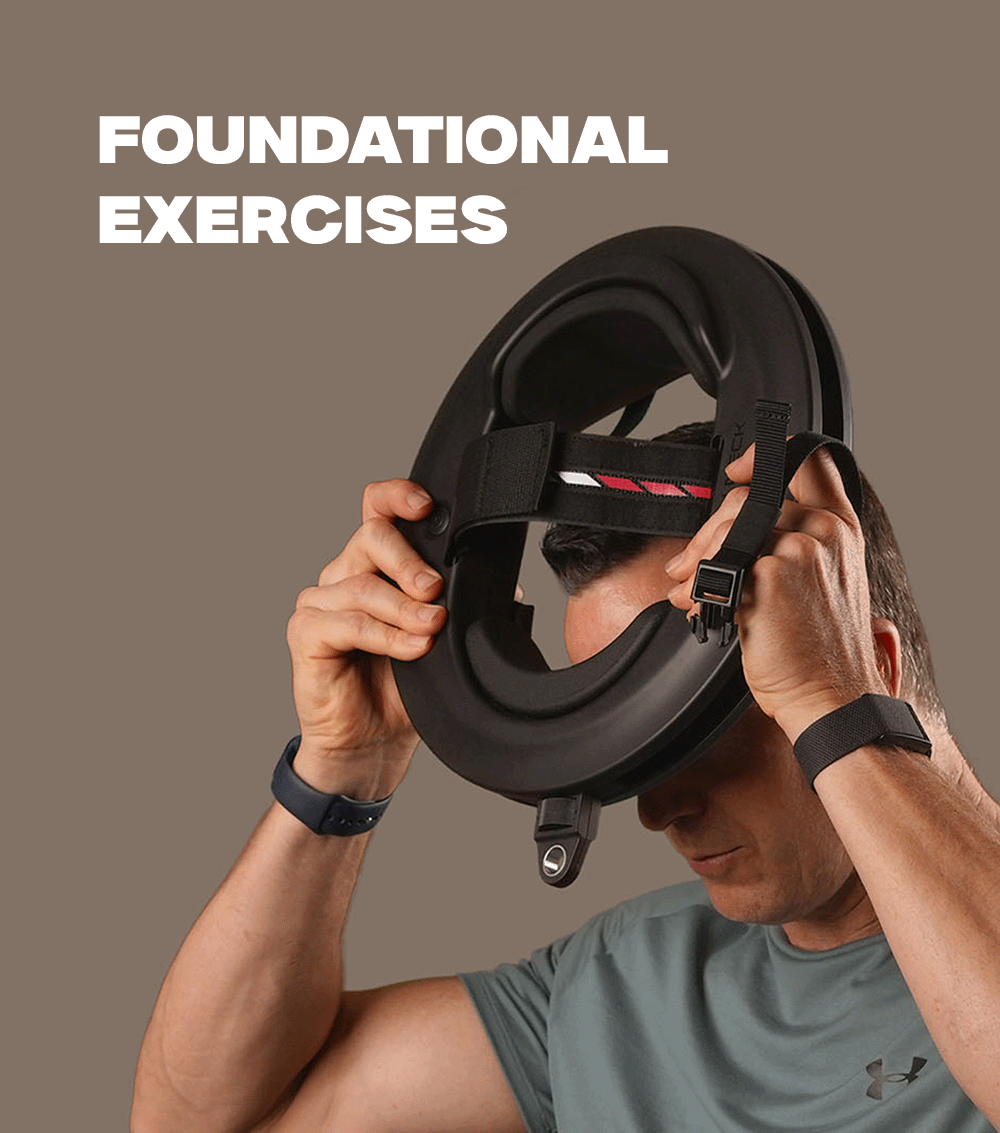
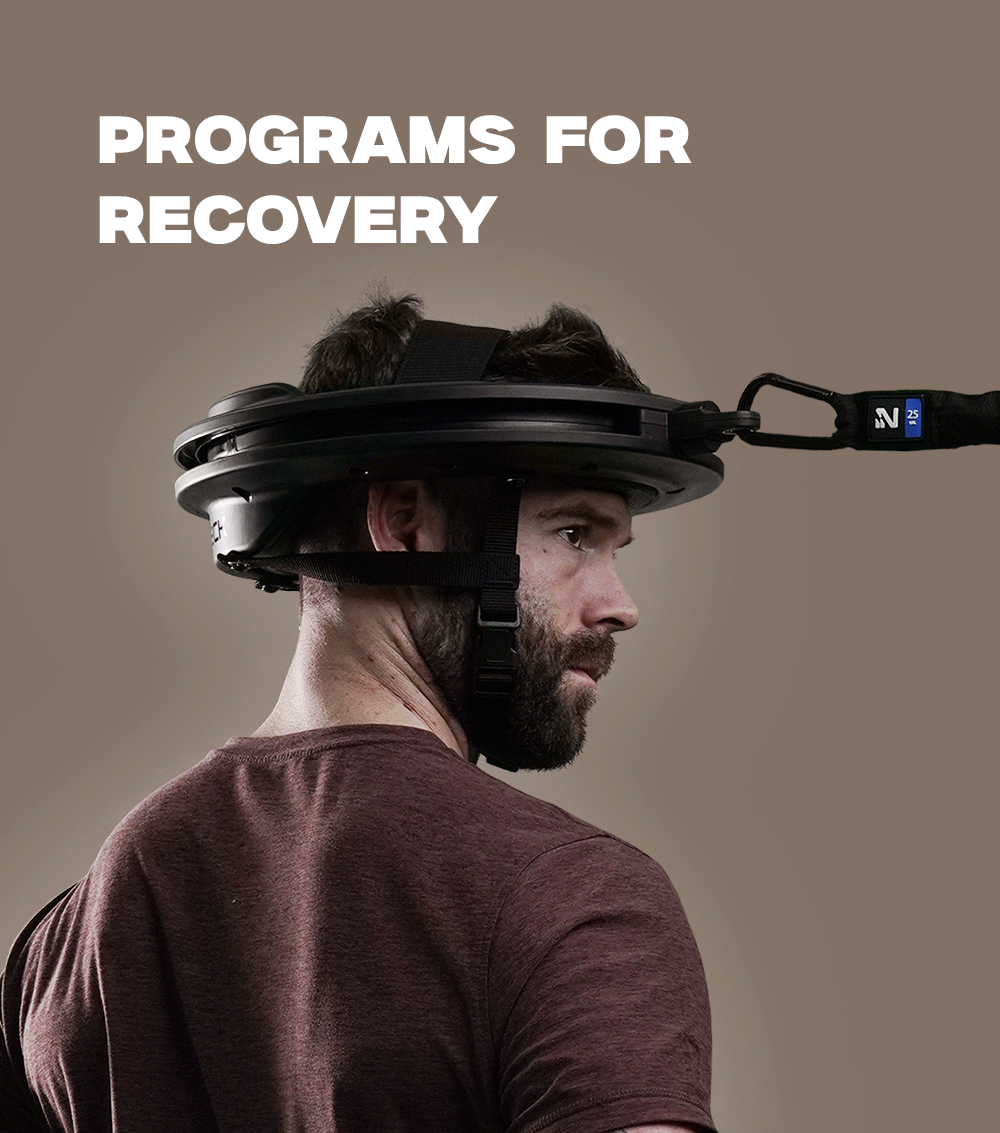
The 360 degree resistance head unit this program is built around, with the anchor and bands you need to train every direction from day one.

We call for an effort level instead of a specific weight, because the right resistance depends on you, the movement, and where you are in your training. For the sets and reps listed on each exercise, pick the resistance that makes the last few reps feel like the level shown.
You finish the set with several clean reps still in the tank. The work stays easy and fully controlled from the first rep to the last.
You could manage a few more reps at the end, but not many. The final reps take real effort while your form holds.
You reach the last prescribed rep with little or nothing left. Completing every rep with good form is genuinely hard.
These are starting points, not rules. Everyone is built differently, so adjust to fit you: size down if your form breaks before the final rep or a movement aggravates a symptom, and only size up once every rep feels smooth and pain free. When you are unsure, choose the lighter option.