


Sport Specific · Program 74

Sprint Posture & Track Speed

Sprinting is a posture contest and the head leads it, from the held-down drive phase out of the blocks to the tall, relaxed carriage that lets top-end speed happen. This program builds the neutral strength that keeps the head from bobbing at max velocity, loads the rise out of the drive phase and the rotated positions of relay exchanges, then finishes with gun-speed reaction and stability against stride impact. When the head stays quiet, the arms and legs get to do their job.

Focus · Track / SprintingFrequency · 2-3x per weekSession · 15-20 min
Sprint Posture & Track Speed cover art
The goal

Build the head control that holds sprint mechanics together, from the drive phase out of the blocks to a relaxed, tall posture at top speed.

Who it is for
  • Sprinters and hurdlers chasing top-end mechanics
  • Relay runners who check zones at full speed
  • Field-sport athletes building straight-line speed

Sprint Posture Foundation

Build the neutral strength and postural endurance of tall sprinting. The neck learns to hold the head still and level so nothing leaks out of the sprint up top.

01Muscles worked in Protraction / RetractionDemo video coming soon

Protraction / Retraction

3 sets of 10 repsFront & Back

Front-to-back control builds the packed, level chin of good sprint posture and fights the head-back reach that shows up at the line.

How To
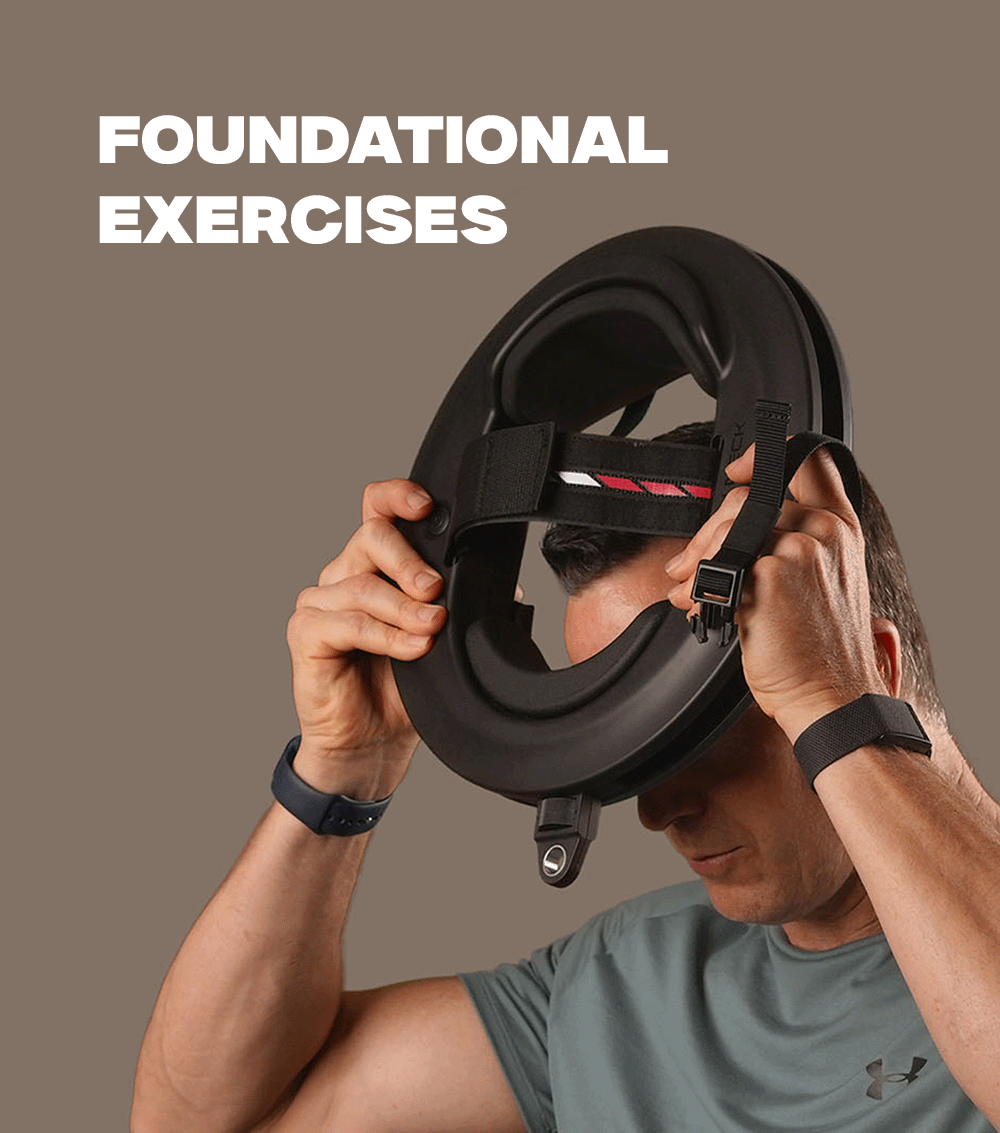
1Glide your head straight forward, reaching your chin outward, then glide it straight back as though making a double chin.
2Keep your eyes and chin level the entire time and move smoothly along a horizontal path.
Coaching Cues
Slide your head along an invisible shelf
Make a double chin
then get rid of it
No nodding
keep your eyes level throughout
Think forward and back
not up and down
Muscles Activated
SCMAnterior scaleneDeep neck flexorsSemispinalis cervicis
02Muscles worked in Isometric HoldDemo video coming soon

Isometric Hold

3 sets of 20 second holdsFront

Long neutral holds train the quiet head of top-end speed, absorbing stride impact without a visible bob.

How To
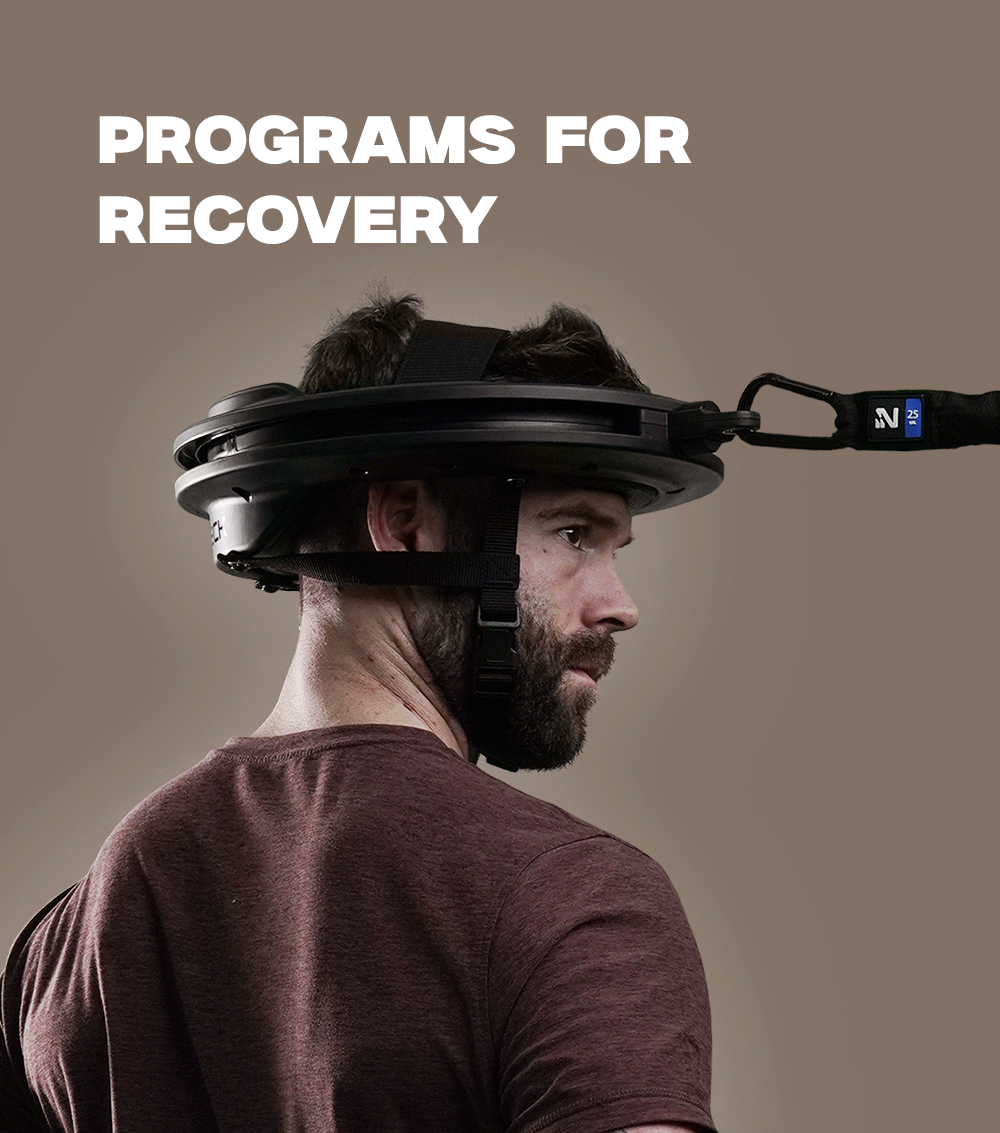
1Set your head in the working position and hold it there against the band.
2Keep your chin level, breathe normally, and resist any drift for the full time prescribed.
Coaching Cues
Brace your neck without clenching your jaw
Keep breathing through the hold
Nothing moves but your ribs
End the set when your position starts to drift
Muscles Activated
Deep neck flexors/extensorsSCMSplenius
03Muscles worked in Protraction / RetractionDemo video coming soon

Protraction / Retraction (with hold)

3 sets of 8 reps with 3 second holdsFront & Back

Repeated posture holds build the endurance that keeps your head tall in the final 30 meters, when everyone else is tightening up.

How To
1Glide your head straight forward, reaching your chin outward, then glide it straight back as though making a double chin.
2Keep your eyes and chin level the entire time and move smoothly along a horizontal path.
Coaching Cues
Slide your head along an invisible shelf
Make a double chin
then get rid of it
No nodding
keep your eyes level throughout
Think forward and back
not up and down
Muscles Activated
SCMAnterior scaleneDeep neck flexorsSemispinalis cervicis
04

Look Left, Look Right

3 sets of 10 repsAny direction

Rotational strength means a glance across lanes costs you nothing, the head turns and returns without dragging the shoulders along.

How To
1Stand tall with your chest up and your chin level.
2Turn your head slowly to one side as far as you can go comfortably, hold for a moment, then return to center and repeat to the other side.
3Only your head moves.
Coaching Cues
Chin stays level as you rotate
Eyes lead the movement
Do not tilt your head
it is a turn and not a lean
Move with control and not momentum
Muscles Activated
SCMSplenius capitis/cervicisLongissimus capitis

Advance whenAdvance when holds are steady for the full duration and head position stays fixed through every rep.

Drive-Phase & Exchange Strength

Load the positions racing actually forces. Controlled tempo work builds the rise out of the drive phase, and held rotation builds the checked-back look of a relay exchange.

01Muscles worked in Protraction / RetractionDemo video coming soon

Protraction / Retraction (tempo 3-1-3)

3 sets of 8 repsFront & Back

The slow controlled tempo mirrors the gradual head rise out of the drive phase, earned stride by stride instead of popping up early.

How To
1Glide your head straight forward, reaching your chin outward, then glide it straight back as though making a double chin.
2Keep your eyes and chin level the entire time and move smoothly along a horizontal path.
Coaching Cues
Slide your head along an invisible shelf
Make a double chin
then get rid of it
No nodding
keep your eyes level throughout
Think forward and back
not up and down
Muscles Activated
SCMAnterior scaleneDeep neck flexorsSemispinalis cervicis
02Muscles worked in Protraction / RetractionDemo video coming soon

Protraction / Retraction (end-range hold)

3 sets of 6 reps with 2 second holdsFront & Back

End-range strength holds the flexed head position of the drive phase against the pull of wanting to look up too soon.

How To
1Glide your head straight forward, reaching your chin outward, then glide it straight back as though making a double chin.
2Keep your eyes and chin level the entire time and move smoothly along a horizontal path.
Coaching Cues
Slide your head along an invisible shelf
Make a double chin
then get rid of it
No nodding
keep your eyes level throughout
Think forward and back
not up and down
Muscles Activated
SCMAnterior scaleneDeep neck flexorsSemispinalis cervicis
03Muscles worked in Isometric HoldDemo video coming soon

Isometric Hold (in rotation)

3 sets of 12 second holds each sideFront

Held rotation is the relay exchange, head turned watching the incoming runner while your body starts accelerating forward.

How To
1Set your head in the working position and hold it there against the band.
2Keep your chin level, breathe normally, and resist any drift for the full time prescribed.
Coaching Cues
Brace your neck without clenching your jaw
Keep breathing through the hold
Nothing moves but your ribs
End the set when your position starts to drift
Muscles Activated
SCMSplenius capitis/cervicisLongissimus capitis
04

Locked Neck, Body Turn (with band resistance)

3 sets of 6 repsAny direction

A locked head over a working body mirrors full-effort arm drive, where the shoulders pump violently and the head cannot ride along.

How To
1Lock your head in a forward facing position and rotate your torso side to side without letting your head follow.
2Your hips, spine and shoulders twist while your neck holds a stable, neutral position with your nose pointed forward.
Coaching Cues
Your head is the anchor
rotate underneath it
Think of your nose as a laser pointer and do not let the dot move
This is anti-rotation
fight the urge to turn your head
Use your core to rotate and not your neck
Muscles Activated
Deep neck flexors/extensorsSCMSpleniusMultifidus

Advance whenAdvance when tempo reps are smooth through the full range and rotated holds are solid at Heavy-adjacent loads.

Gun Speed & Impact Stability

Sharpen reaction and make posture impact-proof. Cue starts, fast pulses, and perturbation train a head that fires with the gun and stays level through every footstrike.

01

Look Left, Look Right (reactive, cue-based)

3 sets of 6 reps on cueAny direction

Cue-based reaction is the gun going off, the head snapping from set position into the drive angle without a wasted motion.

How To
1Stand tall with your chest up and your chin level.
2Turn your head slowly to one side as far as you can go comfortably, hold for a moment, then return to center and repeat to the other side.
3Only your head moves.
Coaching Cues
Chin stays level as you rotate
Eyes lead the movement
Do not tilt your head
it is a turn and not a lean
Move with control and not momentum
Muscles Activated
SCMSplenius capitis/cervicisLongissimus capitis
02Muscles worked in DiagonalsDemo video coming soon

Diagonals (dynamic pulses)

3 sets of 10 fast pulses per directionFront or Back

Fast diagonal pulses build neck stiffness at turnover speed, matching the rhythm of limbs cycling at maximum velocity.

How To
1Start by looking down toward one armpit.
2Trace a diagonal path upward with your eyes and nose until you are looking above the opposite shoulder, then return along the same path.
3Finish your reps on one side before switching to the opposite diagonal.
Coaching Cues
Draw an X in your field of view with your nose
Follow a diagonal line with your eyes
Use full range but keep it smooth
Feel your neck twist and lengthen
Muscles Activated
SCMSplenius capitisScalenesSuboccipitals
03Muscles worked in Isometric HoldDemo video coming soon

Isometric Hold (with perturbation)

3 sets of 20 second holds per directionFront

Perturbation holds replicate stride impact at top speed, ground strikes arriving several times a second and trying to shake the head off line.

How To
1Set your head in the working position and hold it there against the band.
2Keep your chin level, breathe normally, and resist any drift for the full time prescribed.
Coaching Cues
Brace your neck without clenching your jaw
Keep breathing through the hold
Nothing moves but your ribs
End the set when your position starts to drift
Muscles Activated
Deep neck flexors/extensorsSCMSplenius
04Muscles worked in Protraction / RetractionDemo video coming soon

Protraction / Retraction (with perturbation)

3 sets of 5 repsFront & Back

Recovering alignment against disruption trains the late-race correction, pulling the head back to neutral when fatigue starts tipping it back.

How To
1Glide your head straight forward, reaching your chin outward, then glide it straight back as though making a double chin.
2Keep your eyes and chin level the entire time and move smoothly along a horizontal path.
Coaching Cues
Slide your head along an invisible shelf
Make a double chin
then get rid of it
No nodding
keep your eyes level throughout
Think forward and back
not up and down
Muscles Activated
SCMAnterior scaleneDeep neck flexorsSemispinalis cervicis
Get the gear

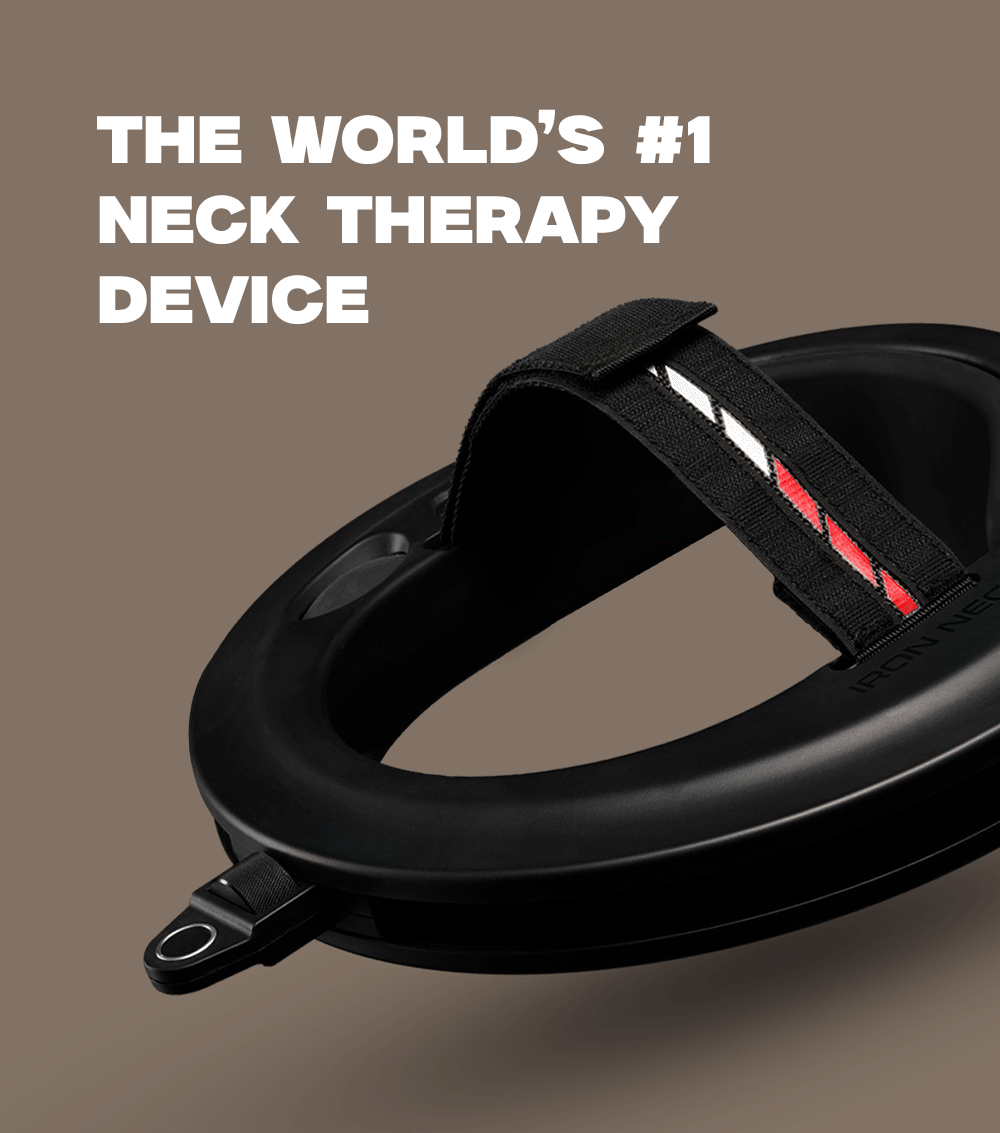
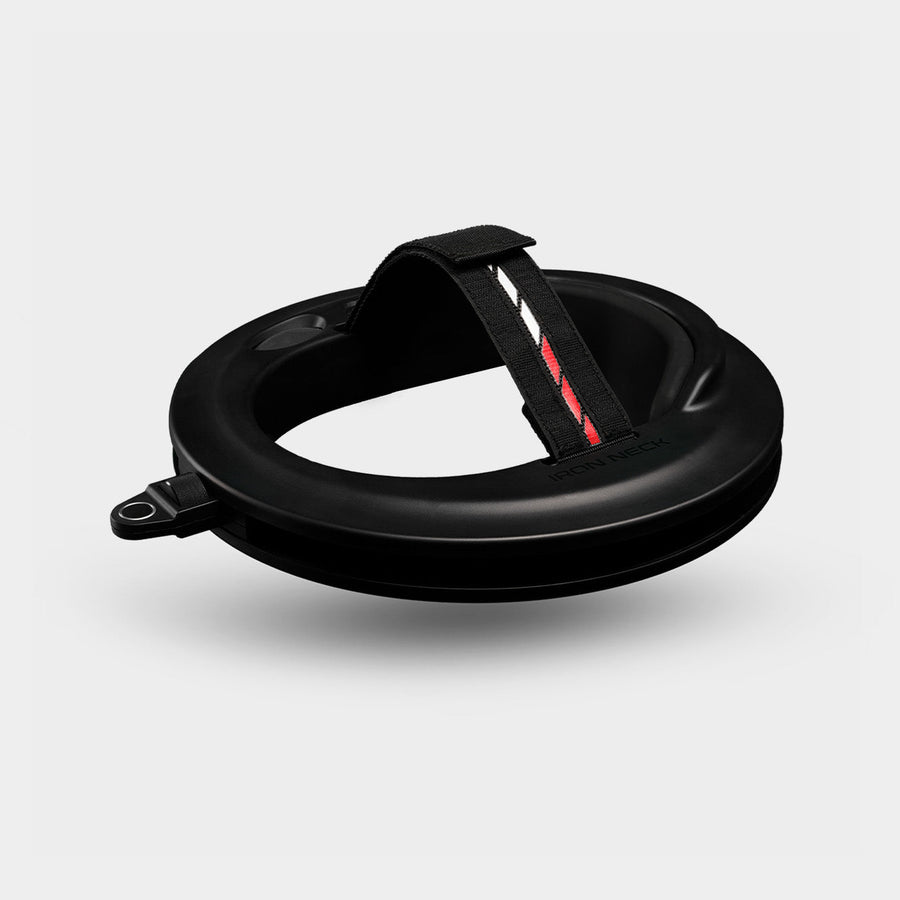
Train this program with the Iron Neck 3.0 Pro

The 360 degree resistance head unit this program is built around, with the anchor and bands you need to train every direction from day one.

Iron Neck 3.0 Pro
Iron Neck 3.0 Pro $599.00
Set your resistance

Light, medium, or heavy?

We call for an effort level instead of a specific weight, because the right resistance depends on you, the movement, and where you are in your training. For the sets and reps listed on each exercise, pick the resistance that makes the last few reps feel like the level shown.

Light

You finish the set with several clean reps still in the tank. The work stays easy and fully controlled from the first rep to the last.

Medium

You could manage a few more reps at the end, but not many. The final reps take real effort while your form holds.

Heavy

You reach the last prescribed rep with little or nothing left. Completing every rep with good form is genuinely hard.

These are starting points, not rules. Everyone is built differently, so adjust to fit you: size down if your form breaks before the final rep or a movement aggravates a symptom, and only size up once every rep feels smooth and pain free. When you are unsure, choose the lighter option.