

Look Left, Look Right
Every breath is a neck rotation, and building strength on both sides is what makes bilateral breathing feel natural instead of forced.
A swimmer's neck rotates for every breath, thousands of times per week, while triathletes add sighting lifts in open water and long stretches holding aero position on the bike. This program builds clean rotation and sagittal control first, extends it into the held and repeated patterns of race distance, then sharpens the reactive sighting and proprioception that open water demands. When the neck stops fatiguing, the stroke stops falling apart.

Build the rotational endurance for thousands of breathing cycles and the postural strength to sight open water and hold aero on the bike.
Build the rotational and front-to-back base every stroke cycle draws on. Clean, symmetrical rotation now is what prevents the one-sided breathing pattern that wears necks down.
Every breath is a neck rotation, and building strength on both sides is what makes bilateral breathing feel natural instead of forced.
Demo video coming soonFront-to-back control sets your head position in the water, the difference between a neutral bodyline and a lifted head dragging your hips down.
Demo video coming soonLong neutral holds build the quiet, steady head that anchors a streamlined bodyline off every wall.
Demo video coming soonSlow full-range spins build endurance through rotation, the base for a stroke that repeats thousands of times without breaking down.
Advance whenAdvance when rotation is equal on both sides and all holds are steady for the full duration.
Extend strength into the held and repeated positions of racing. Tempo rotation, sighting mechanics, and aero endurance build the capacity to hold form deep into the back half.
Speed-varied rotation trains the neck across stroke rates, from easy warm-up pace to the faster turnover of a race finish.
Demo video coming soonThe slow controlled tempo mirrors a sighting cycle, lifting the eyes forward, holding just long enough to find the buoy, and returning to the water with control.
Demo video coming soonRetraction holds build the endurance that keeps your head up and eyes on the road through long stretches in aero position.
Demo video coming soonHeld rotation builds the strength to keep breathing to your open side through chop that forces you to stay turned longer than usual.
Advance whenAdvance when tempo work stays smooth at stroke rate and extended holds finish without shaking.
Sharpen the reactive and proprioceptive control open water demands. Cue reactions, fast direction changes, and eyes-closed work train a neck that navigates when the water gives you nothing to see.
Cue-based reaction trains the instant head lift of sighting a buoy mid-stroke without stalling your rhythm.
Demo video coming soonFast diagonal pulses build the quick repositioning of a turn buoy scrum, where contact and chop hit from every side.
Demo video coming soonSpinning with eyes closed builds the proprioception to know exactly where your head is in dark or murky water, when vision cannot help.
Eye tracking through movement trains the gaze stability that holds the shoreline or a landmark steady while chop moves your head.
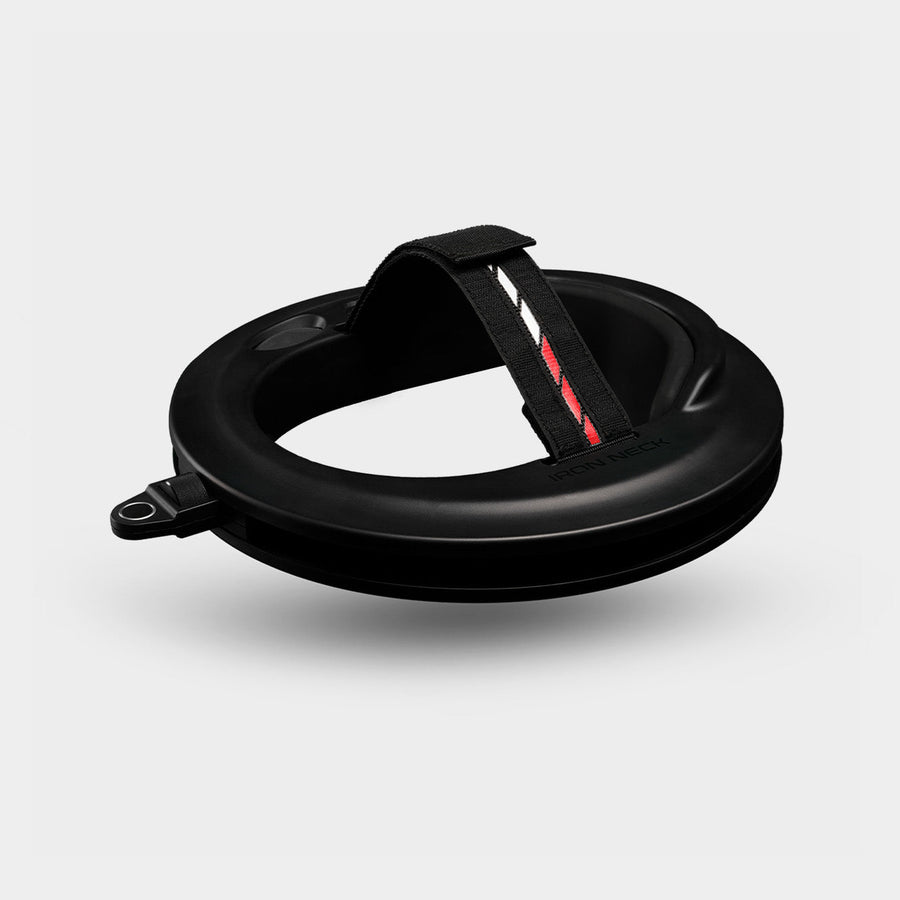
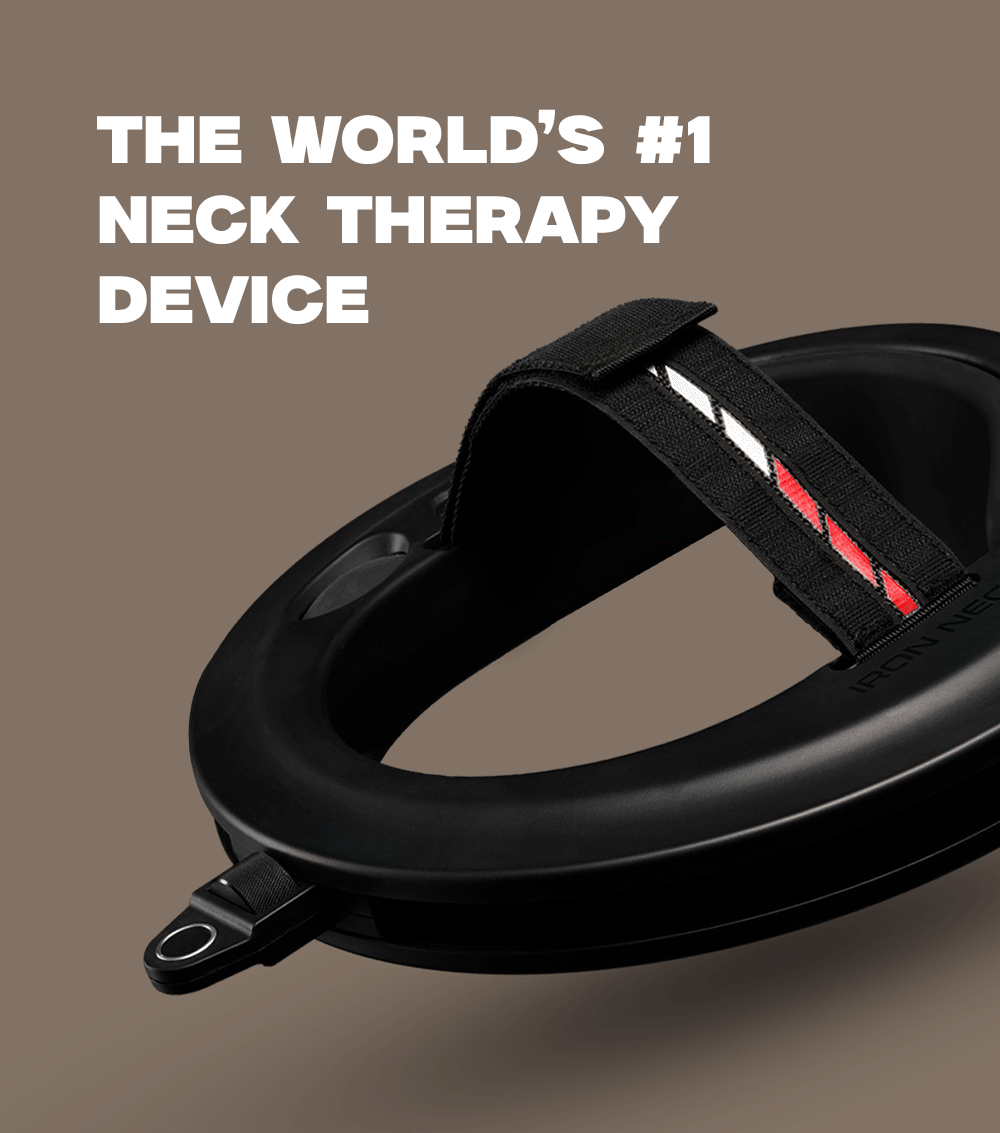
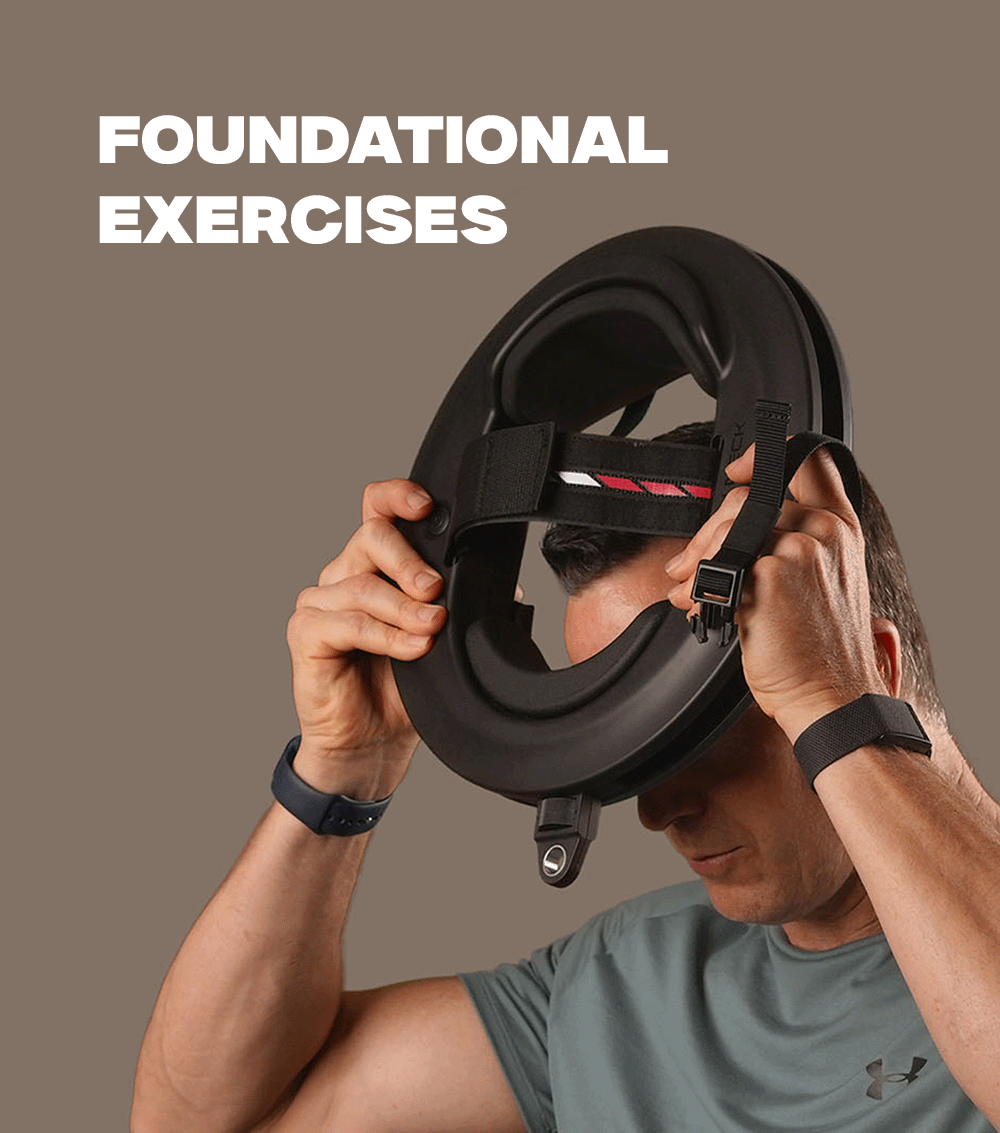
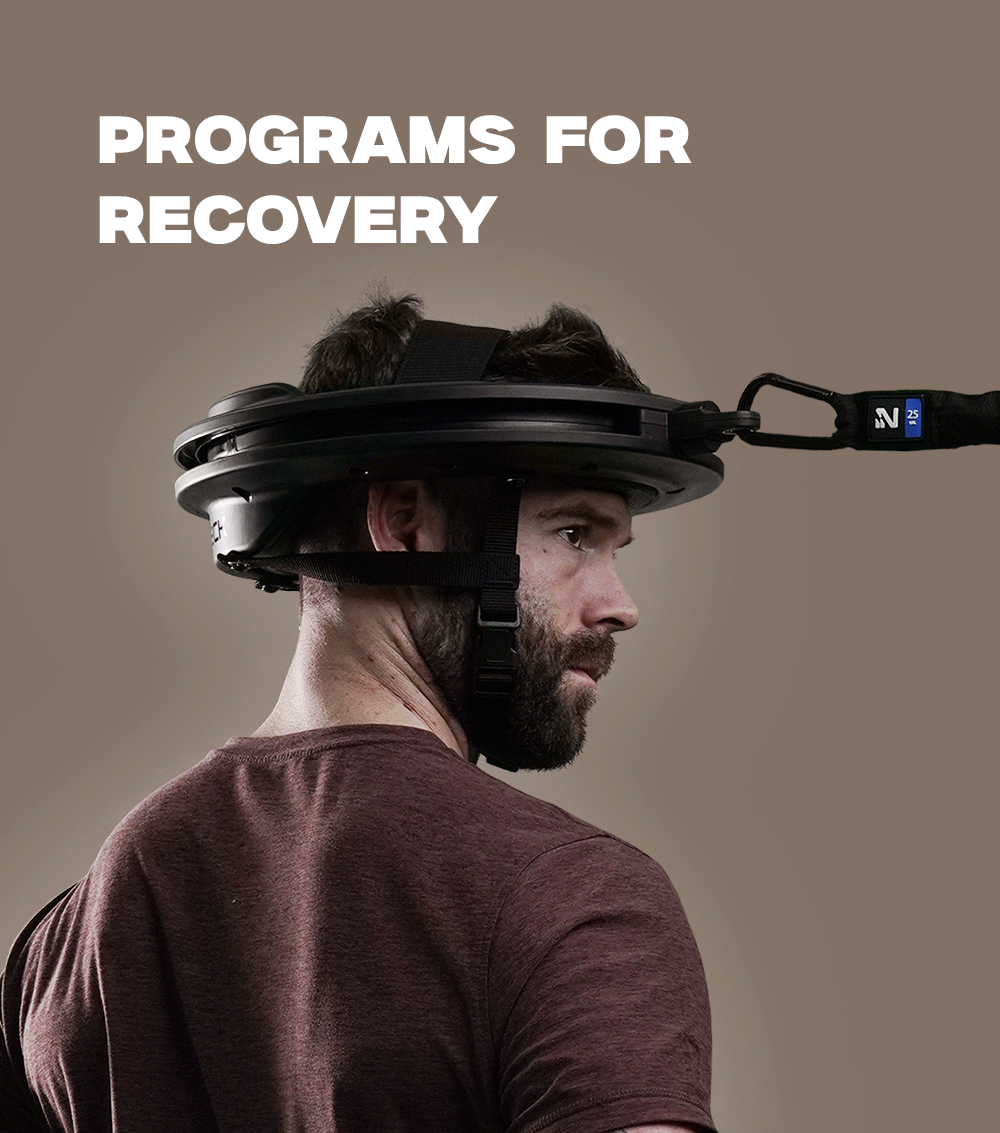
The 360 degree resistance head unit this program is built around, with the anchor and bands you need to train every direction from day one.

We call for an effort level instead of a specific weight, because the right resistance depends on you, the movement, and where you are in your training. For the sets and reps listed on each exercise, pick the resistance that makes the last few reps feel like the level shown.
You finish the set with several clean reps still in the tank. The work stays easy and fully controlled from the first rep to the last.
You could manage a few more reps at the end, but not many. The final reps take real effort while your form holds.
You reach the last prescribed rep with little or nothing left. Completing every rep with good form is genuinely hard.
These are starting points, not rules. Everyone is built differently, so adjust to fit you: size down if your form breaks before the final rep or a movement aggravates a symptom, and only size up once every rep feels smooth and pain free. When you are unsure, choose the lighter option.