

Demo video coming soonProtraction / Retraction
The chin-tucked, retracted position is the foundation of safe heading technique. This builds the strength to hold it at the moment of contact.
Every header transmits force through the cervical spine, and a stronger neck measurably reduces the head acceleration of each one. This program builds postural control first, then prepares the neck specifically for heading and aerial duels, and finishes with reactive, game-speed stability. It is the difference between attacking the ball and absorbing it.

Develop neck strength and control to reduce injury risk from heading, collisions, and whiplash-type motions.
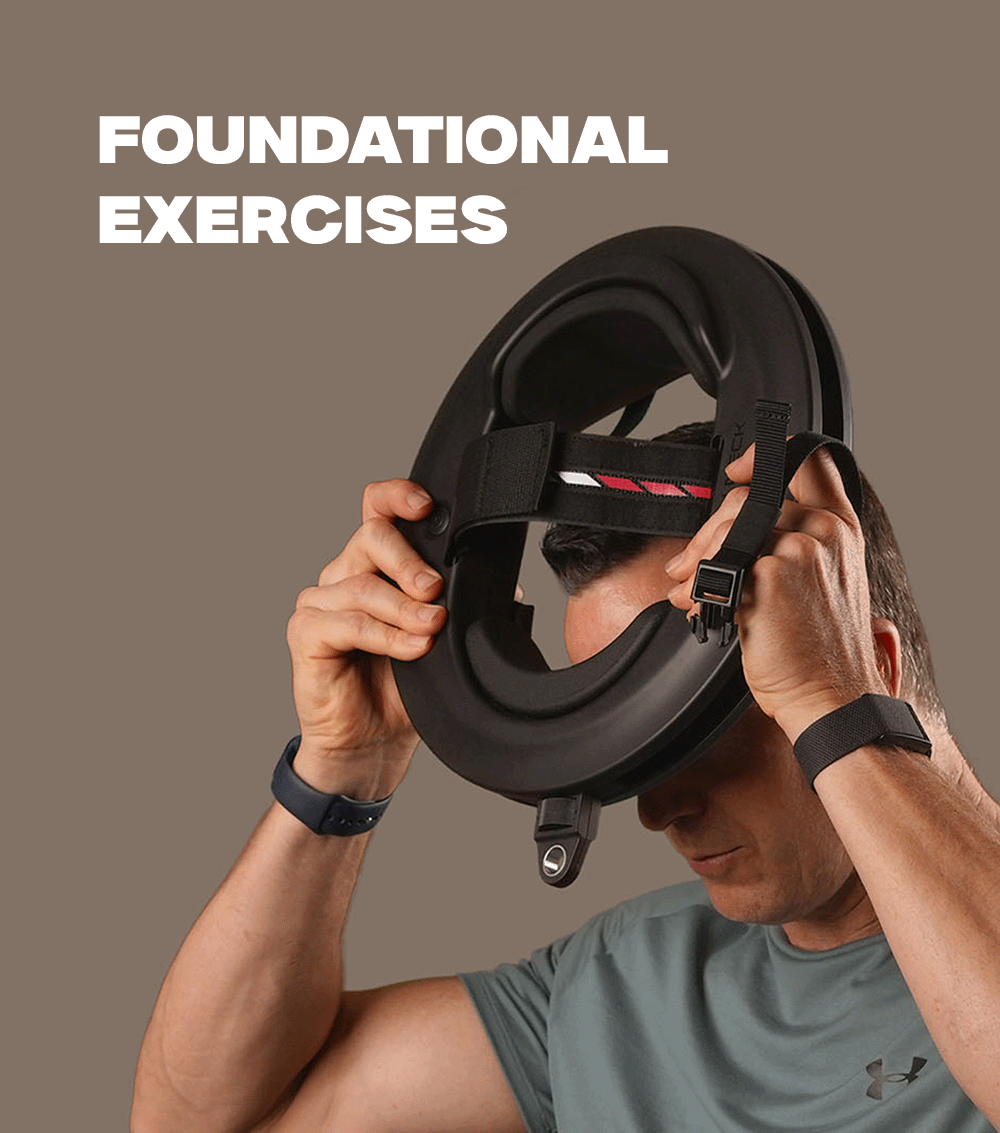
Build the aligned, controlled base that safe heading requires. The neck learns to hold clean positions and move through full range before any heading-specific load arrives.
Demo video coming soonThe chin-tucked, retracted position is the foundation of safe heading technique. This builds the strength to hold it at the moment of contact.
Demo video coming soonLight full-range spins build the head-body dissociation you use shielding the ball while scanning for the outlet pass.
Rotational strength powers the constant shoulder checks that let you receive under pressure with a full picture of the field.
Demo video coming soonStatic holds in multiple positions build the baseline brace that stiffens the neck before every header.
Advance whenAdvance when all movements are smooth and holds are steady for the full duration in every position.
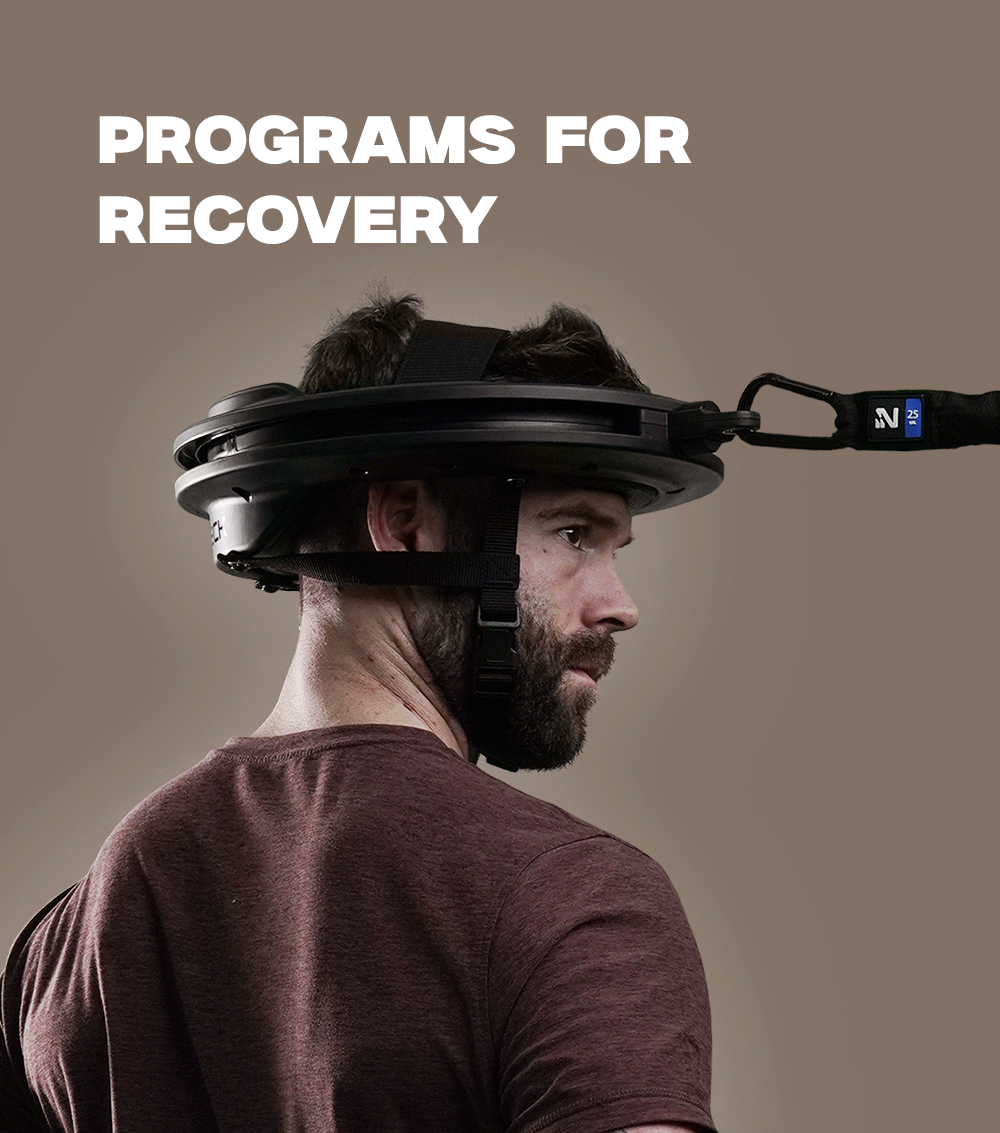
Load the specific patterns of aerial play. Diagonal paths, tempo control, and the first doses of perturbation prepare the neck for the forces of a contested header.
Demo video coming soonGlancing headers and flick-ons load the neck diagonally. This builds strength along those exact paths.
Small controlled figure eights sharpen the fine head adjustments you make tracking a cross as it bends toward you.
Demo video coming soonTempo-varied spins build rotational control for aerial duels where you turn in the air with an opponent on your back.
Demo video coming soonHolding steady against disruption mimics the shoulder-to-shoulder contact of a contested jump at the near post.
Advance whenAdvance when you tolerate perturbation holds with a steady head and complete all diagonal work without compensation.
Bring everything to match speed. Cue-driven reactions, fast pulses, and mid-movement disruption train the neck to stiffen instantly when the cross comes in.
Reacting to a visual or verbal cue trains the fast head turn of tracking a switched ball or a runner off your shoulder.
Demo video coming soonQuick diagonal pulses build the rapid pre-header stiffening that reduces head acceleration at ball contact.
Demo video coming soonPausing under load at end range builds strength in the extended neck positions of an attacking diving header.
Demo video coming soonDisruption mid-rotation replicates getting bumped in the air, training your neck to keep the head on line through contact.
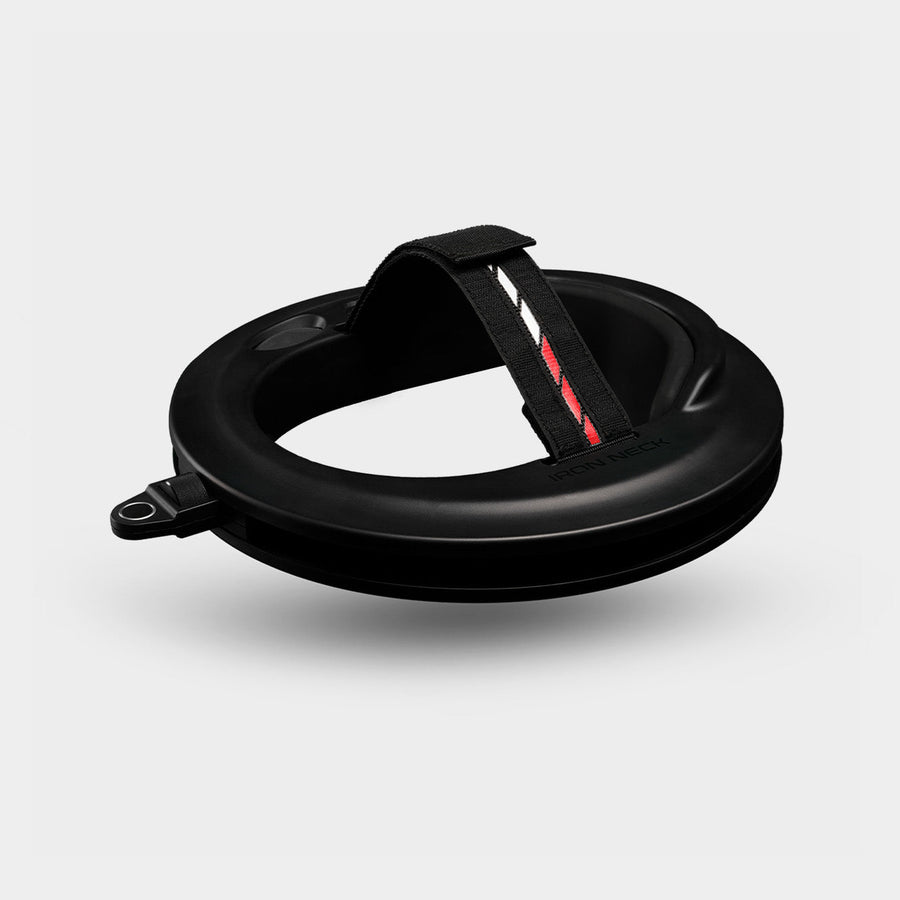
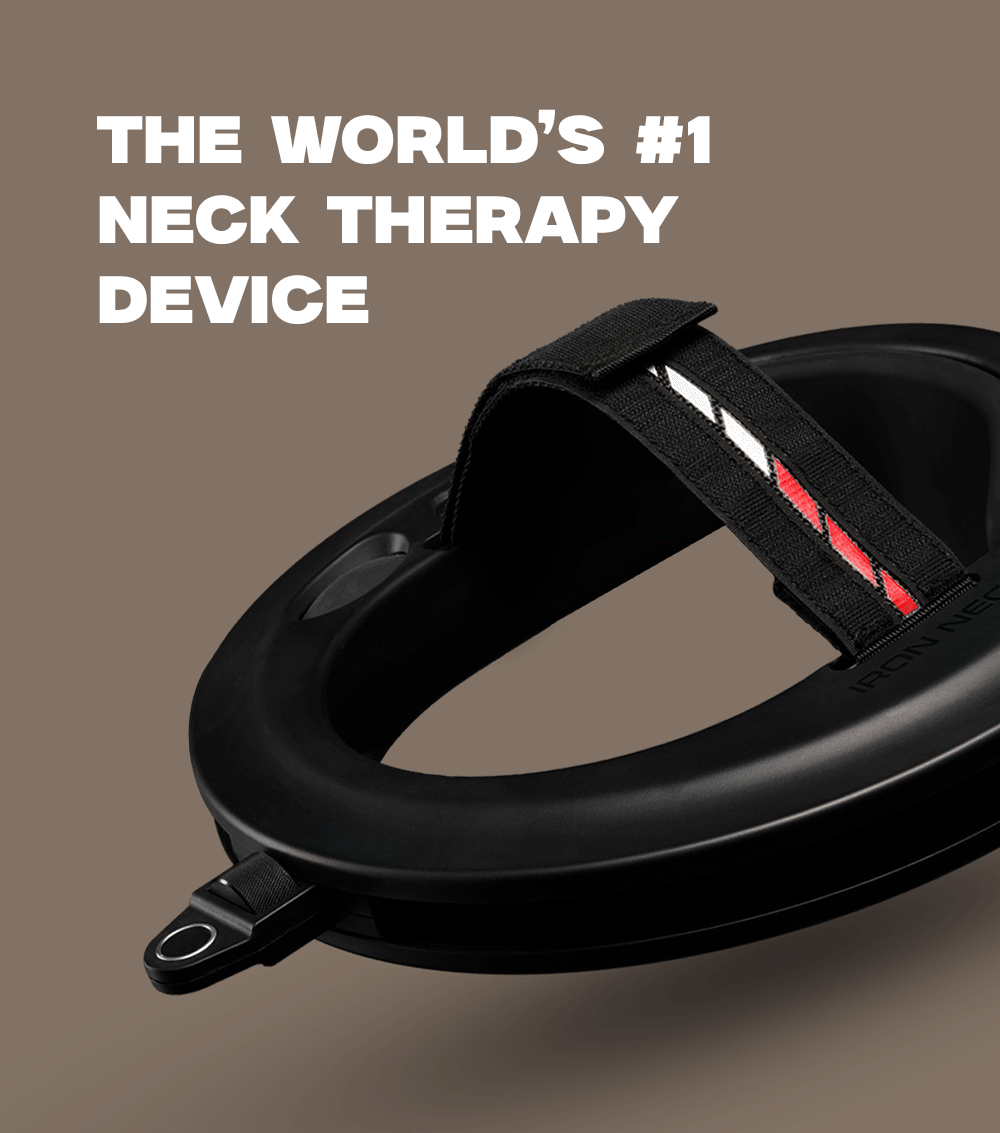
The 360 degree resistance head unit this program is built around, with the anchor and bands you need to train every direction from day one.

We call for an effort level instead of a specific weight, because the right resistance depends on you, the movement, and where you are in your training. For the sets and reps listed on each exercise, pick the resistance that makes the last few reps feel like the level shown.
You finish the set with several clean reps still in the tank. The work stays easy and fully controlled from the first rep to the last.
You could manage a few more reps at the end, but not many. The final reps take real effort while your form holds.
You reach the last prescribed rep with little or nothing left. Completing every rep with good form is genuinely hard.
These are starting points, not rules. Everyone is built differently, so adjust to fit you: size down if your form breaks before the final rep or a movement aggravates a symptom, and only size up once every rep feels smooth and pain free. When you are unsure, choose the lighter option.