

Strength & Longevity · Program 43

Balance & Fall Prevention

Balance runs on three inputs, the inner ear, the eyes, and position sense from the neck, and training the neck sharpens all three at once. This program starts with the gentlest movements in the catalog and progresses to eyes-closed control, gaze tracking, and quick reactions, the specific skills that help catch a stumble before it becomes a fall. It complements any leg-strength or tai chi practice you already do.

Focus · Older adults focused on balanceFrequency · 3x per weekSession · 10-15 min
Balance & Fall Prevention cover art
The goal

Train the head control, gaze stability, and reactive neck strength that the balance system depends on.

Who it is for
  • Older adults working to reduce fall risk
  • Anyone who feels unsteady turning their head while walking
  • People pairing this with leg-strength or balance classes

Steady Foundations

Begin with secure, gentle movements that rebuild the neck's position sense without challenging balance at all. Confidence comes first, load comes later.

01Muscles worked in Wall Isometric PressDemo video coming soon

Wall Isometric Press

3 sets of 10 second presses each directionWall

Wall presses build supportive strength with your body braced against something solid, the safest possible start for anyone worried about steadiness.

How To
1Place your forehead, then each side of your head, lightly against a wall or a folded towel.
2Press gently for the prescribed time, keeping your neck long and your jaw relaxed.
Coaching Cues
Press lightly
this is not a maximum effort
Keep your neck long
Relax your jaw and shoulders
Ease off if symptoms increase
Muscles Activated
Deep neck flexors/extensorsSCM
02Muscles worked in Nod Yes / NoDemo video coming soon

Nod Yes / No (supine)

2 sets of 10 slow nods and 10 slow shakesNone

Practicing head movement lying down retrains the neck's position sensors with the balance challenge completely removed.

How To
1Lying on your back, nod your chin gently toward your chest and return, then turn your head slowly side to side.
2Keep the movement small, slow and pain free.
Coaching Cues
Keep the movement small
Move only as far as feels comfortable
The chin glides and never jams
Stop if you feel dizzy
Muscles Activated
Deep neck flexorsSuboccipitals
03

Look Left, Look Right

2 sets of 8 slow reps each sideAny direction

Slow loaded rotation rebuilds the head-turning confidence that unsteady walkers lose first, looking left and right without stopping.

How To
1Stand tall with your chest up and your chin level.
2Turn your head slowly to one side as far as you can go comfortably, hold for a moment, then return to center and repeat to the other side.
3Only your head moves.
Coaching Cues
Chin stays level as you rotate
Eyes lead the movement
Do not tilt your head
it is a turn and not a lean
Move with control and not momentum
Muscles Activated
SCMSplenius capitis/cervicisLongissimus capitis
04Muscles worked in Protraction / RetractionDemo video coming soon

Protraction / Retraction

2 sets of 8 repsFront & Back

A head carried forward shifts your whole center of gravity, and gently restacking it improves balance before a single balance drill.

How To
1Glide your head straight forward, reaching your chin outward, then glide it straight back as though making a double chin.
2Keep your eyes and chin level the entire time and move smoothly along a horizontal path.
Coaching Cues
Slide your head along an invisible shelf
Make a double chin
then get rid of it
No nodding
keep your eyes level throughout
Think forward and back
not up and down
Muscles Activated
SCMAnterior scaleneDeep neck flexorsSemispinalis cervicis

Advance whenAdvance when all movements feel steady and turning your head while standing feels completely secure.

Head Control in Motion

Progress to working resistance and moving-head control. The skills here, a stable head over a moving body, are the mechanics of every recovered stumble.

01Muscles worked in 360 SpinDemo video coming soon

360 Spin

2 sets of 3 slow rotations each directionFront

Keeping the head still while the body slowly turns beneath it is balance training in its purest form, inner ear and neck sensors working together.

How To
1Stand tall with your shoulders stacked over your hips and fix your eyes on a point straight ahead.
2Rotate your body in place, hips, torso and feet, while your head stays completely still.
3Move slowly through a full clockwise turn, then reverse and complete a full counterclockwise turn.
Coaching Cues
Head still
body turns
Move like a tank turret with your upper body rotating under a fixed head
Do not let your nose drift from its anchor point
Feel the resistance wrap around you as you rotate
Muscles Activated
SCMSplenius capitis/cervicisSemispinalis capitisMultifidus
02Muscles worked in Isometric HoldDemo video coming soon

Isometric Hold

3 sets of 12 second holds each directionFront

Braced holds build the steady platform the inner ear needs, because a wobbling head sends wobbling signals.

How To
1Set your head in the working position and hold it there against the band.
2Keep your chin level, breathe normally, and resist any drift for the full time prescribed.
Coaching Cues
Brace your neck without clenching your jaw
Keep breathing through the hold
Nothing moves but your ribs
End the set when your position starts to drift
Muscles Activated
Deep neck flexors/extensorsSCMSplenius
03Muscles worked in 360 SpinDemo video coming soon

360 Spin (small circle)

2 sets of 4 small circles each directionFront

Small continuous circles train smooth control through every direction, replacing the jerky head movements that can trigger unsteadiness.

How To
1Stand tall with your shoulders stacked over your hips and fix your eyes on a point straight ahead.
2Rotate your body in place, hips, torso and feet, while your head stays completely still.
3Move slowly through a full clockwise turn, then reverse and complete a full counterclockwise turn.
Coaching Cues
Head still
body turns
Move like a tank turret with your upper body rotating under a fixed head
Do not let your nose drift from its anchor point
Feel the resistance wrap around you as you rotate
Muscles Activated
SCMSplenius capitis/cervicisSemispinalis capitisMultifidus
04

Look Left, Look Right (with hold)

3 sets of 5 reps with 3 second end holdsAny direction

Strong end-range rotation means looking fully over your shoulder at a curb or crosswalk no longer costs you your equilibrium.

How To
1Stand tall with your chest up and your chin level.
2Turn your head slowly to one side as far as you can go comfortably, hold for a moment, then return to center and repeat to the other side.
3Only your head moves.
Coaching Cues
Chin stays level as you rotate
Eyes lead the movement
Do not tilt your head
it is a turn and not a lean
Move with control and not momentum
Muscles Activated
SCMSplenius capitis/cervicisLongissimus capitis

Advance whenAdvance when Medium resistance feels comfortable and you can turn your head while walking without pausing.

Reflexes That Catch You

Train the fast, automatic responses that stop a stumble. Eyes-closed work, gaze tracking, and gentle unpredictability sharpen exactly the reflexes falls exploit.

01Muscles worked in 360 SpinDemo video coming soon

360 Spin (eyes closed)

2 sets of 3 rotations each direction, eyes closedFront

Closing the eyes forces the neck's position sensors to carry the load alone, strengthening the backup system balance falls back on in the dark.

How To
1Stand tall with your shoulders stacked over your hips and fix your eyes on a point straight ahead.
2Rotate your body in place, hips, torso and feet, while your head stays completely still.
3Move slowly through a full clockwise turn, then reverse and complete a full counterclockwise turn.
Coaching Cues
Head still
body turns
Move like a tank turret with your upper body rotating under a fixed head
Do not let your nose drift from its anchor point
Feel the resistance wrap around you as you rotate
Muscles Activated
SCMSplenius capitis/cervicisSemispinalis capitisMultifidus
02

Figure Eights (eye tracking)

2 sets of 3 figure eights with eye trackingFront or Back

Keeping the gaze locked while the head moves trains the eye-neck reflex that holds the world steady as you walk and turn.

How To
1Draw a sideways figure eight in the air with your nose.
2Nod down and to one side, loop up and around in a smooth curve, cross the midline and continue into a mirrored curve on the other side.
3Keep the motion flowing, then repeat in the opposite direction.
Coaching Cues
Paint a sideways eight in the air with your nose
Let your head flow and not jerk
Stay loose in the shoulders and spine
Make it smooth and continuous like cursive writing
Muscles Activated
SCMSpleniusLongissimusDeep flexors/extensorsSuboccipitals
03

Look Left, Look Right (reactive, cue-based)

3 sets of 8 cued turnsAny direction

Turning quickly to a cue trains the rapid head response that leads a balance recovery, speed in the service of safety.

How To
1Stand tall with your chest up and your chin level.
2Turn your head slowly to one side as far as you can go comfortably, hold for a moment, then return to center and repeat to the other side.
3Only your head moves.
Coaching Cues
Chin stays level as you rotate
Eyes lead the movement
Do not tilt your head
it is a turn and not a lean
Move with control and not momentum
Muscles Activated
SCMSplenius capitis/cervicisLongissimus capitis
04Muscles worked in Protraction / RetractionDemo video coming soon

Protraction / Retraction (with perturbation)

2 sets of 8 reps with light perturbationFront & Back

Gentle unexpected nudges teach the neck to correct automatically, the same reflex that steadies you when a sidewalk surprises your foot.

How To
1Glide your head straight forward, reaching your chin outward, then glide it straight back as though making a double chin.
2Keep your eyes and chin level the entire time and move smoothly along a horizontal path.
Coaching Cues
Slide your head along an invisible shelf
Make a double chin
then get rid of it
No nodding
keep your eyes level throughout
Think forward and back
not up and down
Muscles Activated
SCMAnterior scaleneDeep neck flexorsSemispinalis cervicis
Get the gear

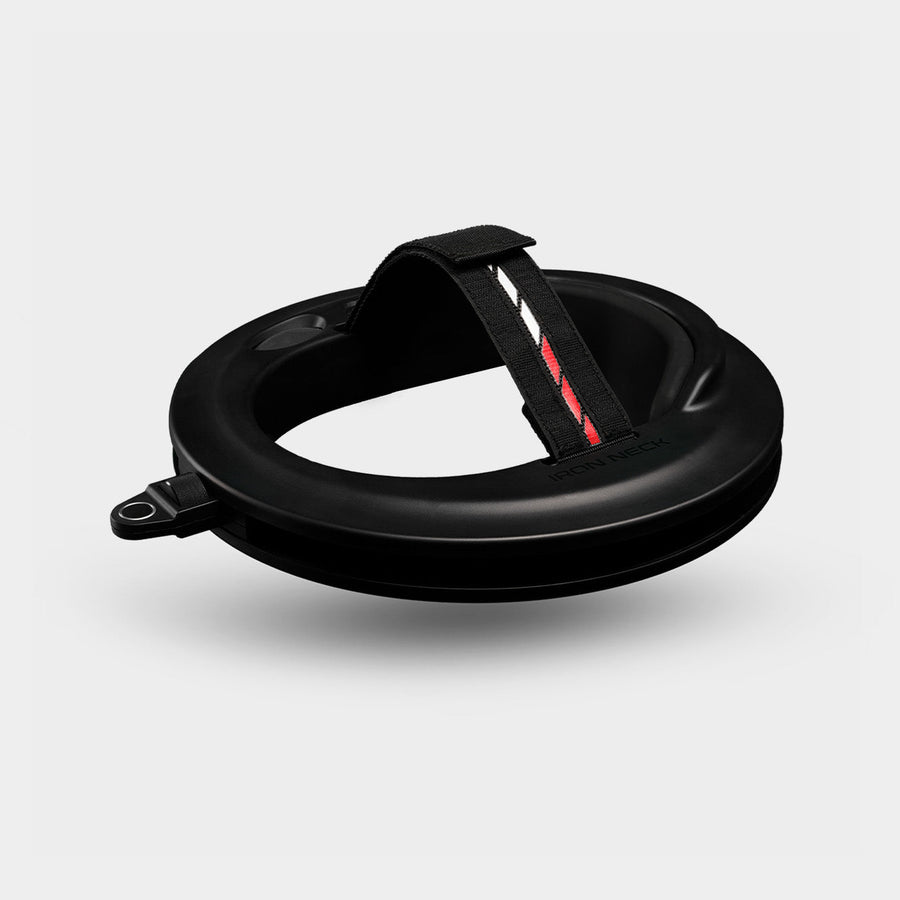
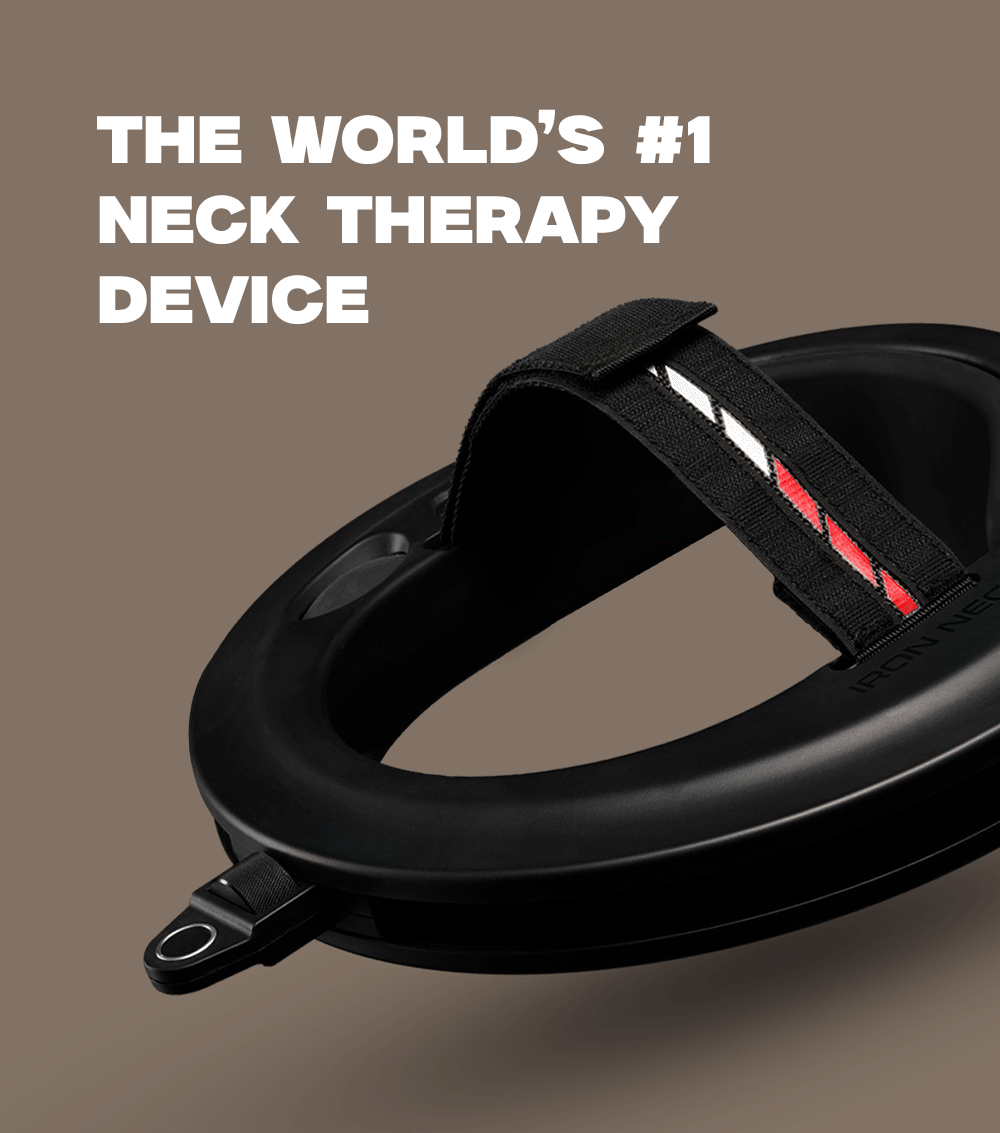
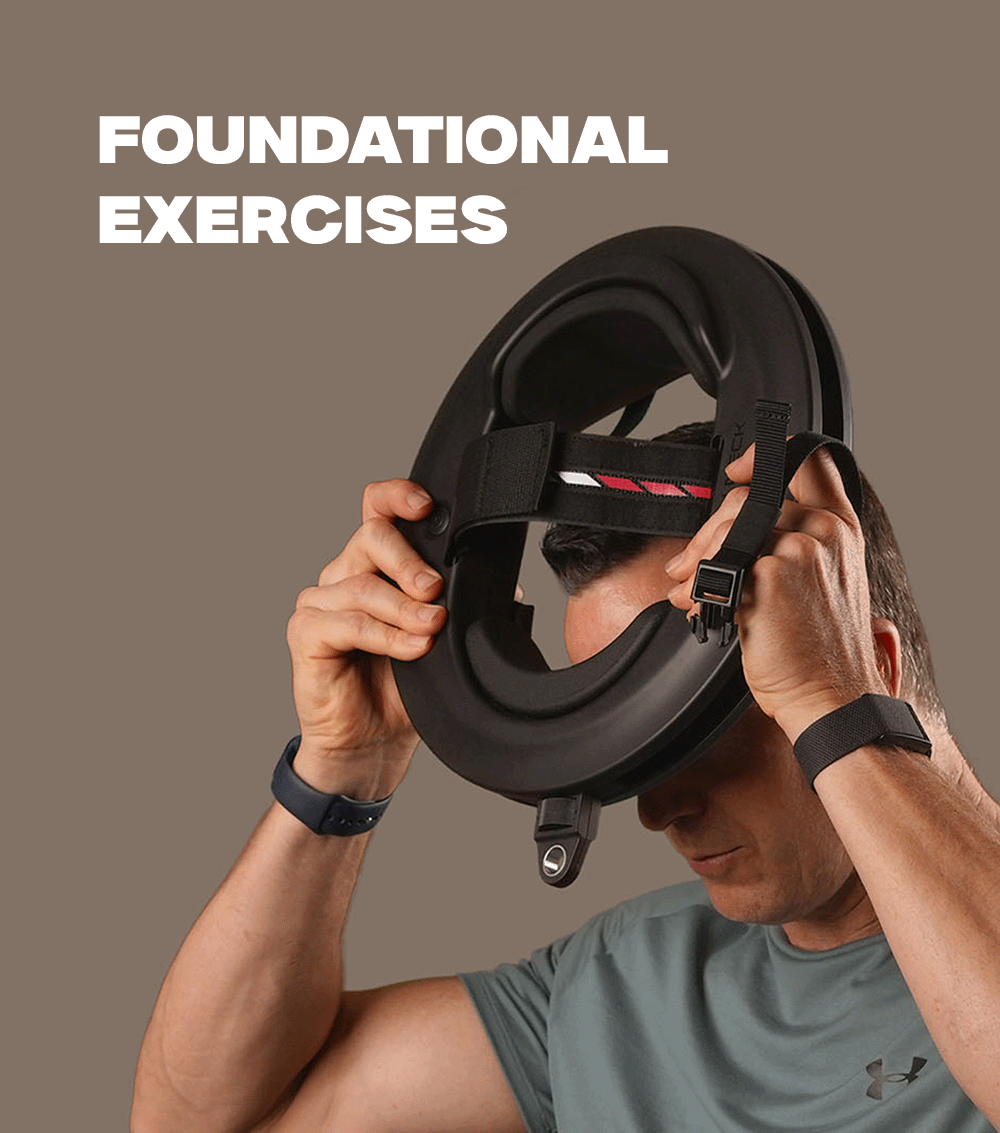
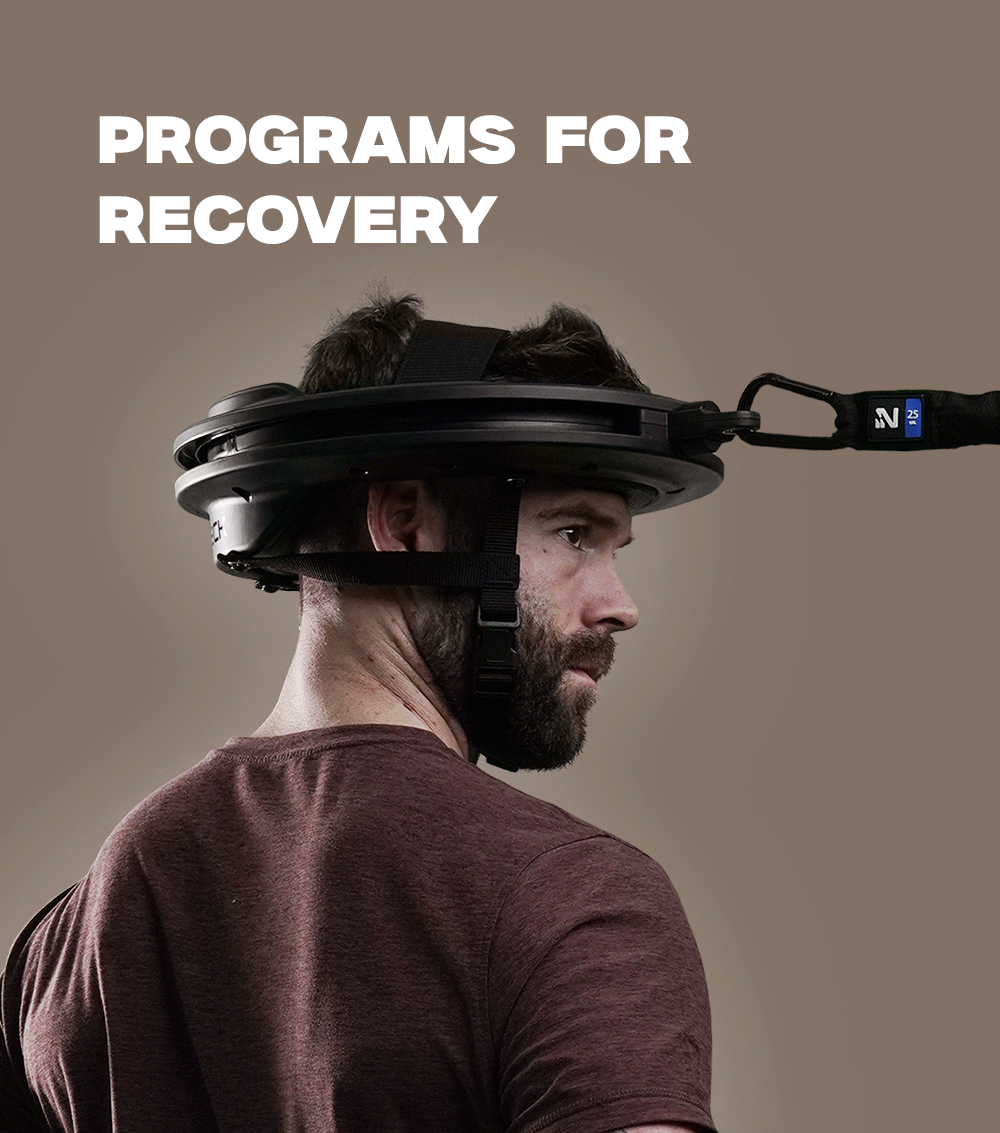
Train this program with the Iron Neck 3.0 Pro

The 360 degree resistance head unit this program is built around, with the anchor and bands you need to train every direction from day one.

Iron Neck 3.0 Pro
Iron Neck 3.0 Pro $599.00
Set your resistance

Light, medium, or heavy?

We call for an effort level instead of a specific weight, because the right resistance depends on you, the movement, and where you are in your training. For the sets and reps listed on each exercise, pick the resistance that makes the last few reps feel like the level shown.

Light

You finish the set with several clean reps still in the tank. The work stays easy and fully controlled from the first rep to the last.

Medium

You could manage a few more reps at the end, but not many. The final reps take real effort while your form holds.

Heavy

You reach the last prescribed rep with little or nothing left. Completing every rep with good form is genuinely hard.

These are starting points, not rules. Everyone is built differently, so adjust to fit you: size down if your form breaks before the final rep or a movement aggravates a symptom, and only size up once every rep feels smooth and pain free. When you are unsure, choose the lighter option.