

Demo video coming soonProtraction / Retraction
Wind blast pushes the helmet straight back while a tuck drags it forward, and this movement strengthens the exact axis that battle is fought on.
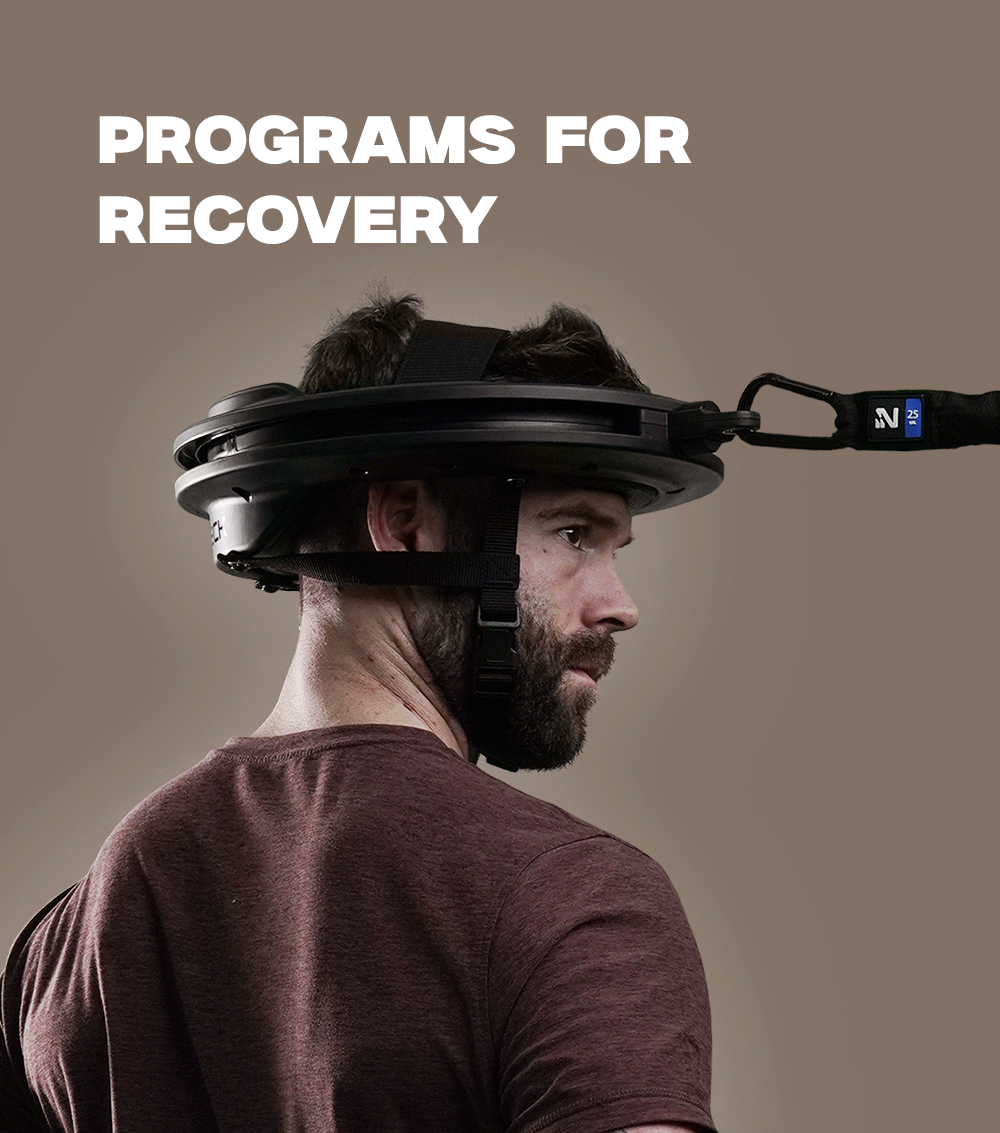
At highway speed, wind blast turns a three-pound helmet into a constant backward pull that your neck fights for every mile of a ride. This program builds the long-duration endurance that all-day rides demand, then adds the reactive strength that matters in the moments riders train for but hope never come. Sport riders in a tuck, cruisers sitting upright, and adventure riders standing on pegs all load the neck differently, and all three get covered.

Build the endurance to carry a helmet against wind blast all day and the resilience to protect the neck if things go wrong.
Build the foundational strength that carries a helmet comfortably. Front-to-back control leads because wind blast is a sagittal-plane fight.
Demo video coming soonWind blast pushes the helmet straight back while a tuck drags it forward, and this movement strengthens the exact axis that battle is fought on.
Demo video coming soonRiding is one long isometric for the neck, and braced holds in every direction are the most direct training for it.
Head checks at speed happen against wind pressure, and rotational strength keeps them quick and complete instead of shortened and risky.
Demo video coming soonHolding the head stable while the body leans and counter-steers beneath it is the core skill of every corner you ride.
Advance whenAdvance when a two-hour ride produces no neck fatigue and all holds complete without shaking.
Stretch capacity toward the demands of a full riding day. Holds get long, tempos get slow, and time under tension becomes the main training variable.
Demo video coming soonLong retraction holds directly train the chin-tucked posture that fights wind blast for hours at freeway speed.
Demo video coming soonSlow continuous spins build the aerobic quality of neck endurance, the difference between mile 50 and mile 300 feeling the same.
A proper head check at speed is a hold at end range against wind pressure, and this makes that hold strong on both sides.
Demo video coming soonScanning from mirrors to road surface to horizon runs diagonal paths all day, and higher-rep diagonals build endurance along them.
Advance whenAdvance when your longest regular ride no longer produces next-day neck stiffness.
Add the protective layer, end-range strength and reflexive stiffness. A neck that reacts fast and holds strong at its limits is the best passive safety equipment you can build.
Demo video coming soonIn a get-off, the helmeted head gets thrown toward its end ranges, and Heavy isometrics there are strength exactly where the stakes are highest.
Demo video coming soonPerturbed bracing mirrors the surprise jolts of pothole strikes and gusting crosswinds, training the neck to stiffen before you consciously react.
Reacting instantly to a horn or a flash in a mirror is a survival skill on two wheels, trained here with resistance behind it.
Demo video coming soonQuick diagonal pulses build the rapid-fire stiffening that limits head whip when the bike moves suddenly underneath you.
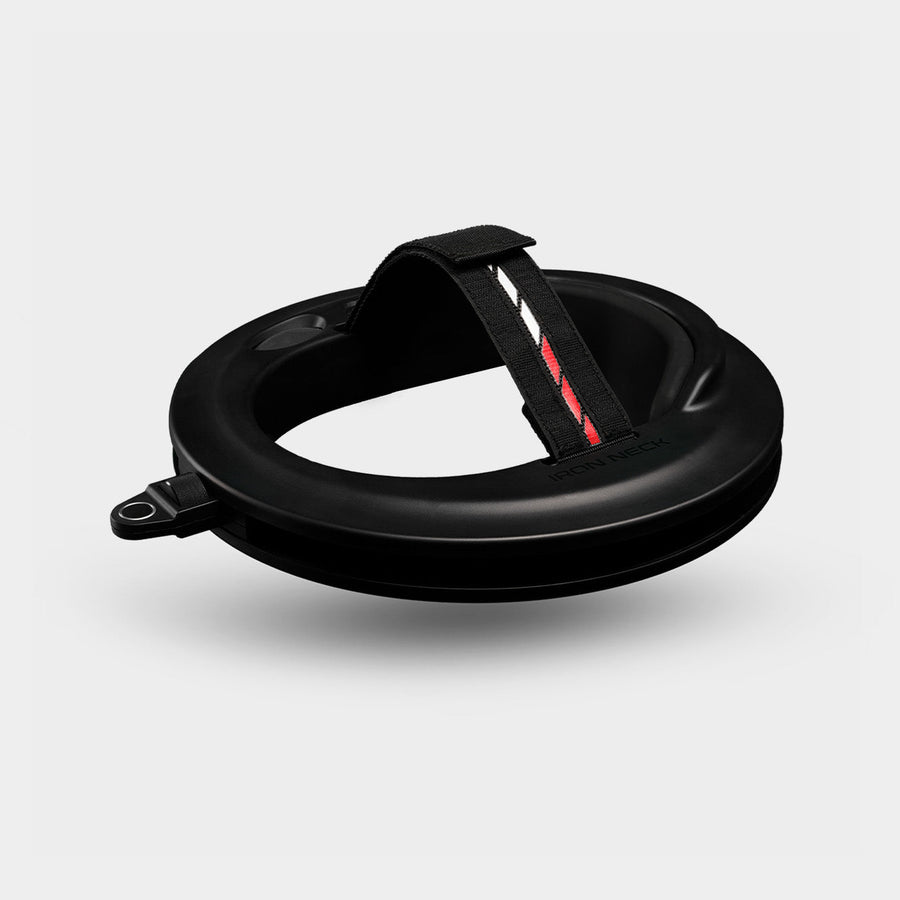
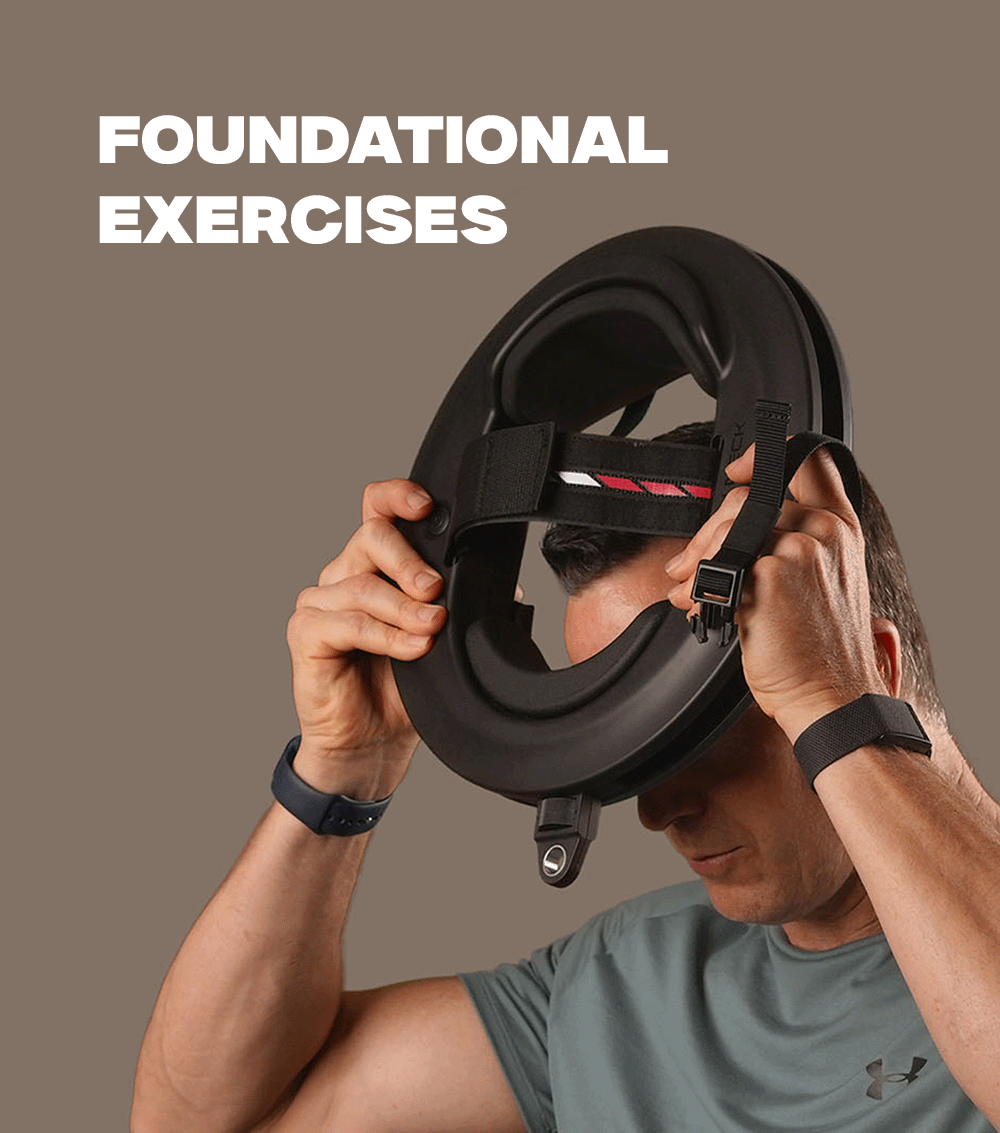
The 360 degree resistance head unit this program is built around, with the anchor and bands you need to train every direction from day one.

We call for an effort level instead of a specific weight, because the right resistance depends on you, the movement, and where you are in your training. For the sets and reps listed on each exercise, pick the resistance that makes the last few reps feel like the level shown.
You finish the set with several clean reps still in the tank. The work stays easy and fully controlled from the first rep to the last.
You could manage a few more reps at the end, but not many. The final reps take real effort while your form holds.
You reach the last prescribed rep with little or nothing left. Completing every rep with good form is genuinely hard.
These are starting points, not rules. Everyone is built differently, so adjust to fit you: size down if your form breaks before the final rep or a movement aggravates a symptom, and only size up once every rep feels smooth and pain free. When you are unsure, choose the lighter option.