

Look Left, Look Right
Every traffic scan and check-six starts with strong, full rotation, and building it unloaded first means it will survive when G multiplies the cost.
Under sustained G, a four-pound helmet with a display mounted on it can load the neck with forty pounds or more, often while the head is turned to check six. This program builds the strength to survive that math, the endurance for long sorties, and the speed to keep the scan moving under load. It applies equally to fighter crews, helicopter pilots flying night vision, and aerobatic pilots.

Strengthen the neck to handle G-loading, helmet systems, and constant visual scanning in the cockpit.
Build clean strength through the rotation and check-six patterns before load climbs. The habits formed here, level chin and tall spine, are the same ones that protect you under G.
Every traffic scan and check-six starts with strong, full rotation, and building it unloaded first means it will survive when G multiplies the cost.
Demo video coming soonKeeping the head stable while the body moves beneath it is precisely what flying the aircraft while scanning demands.
Demo video coming soonG forces drive the helmeted head down and forward, and sagittal strength is the first line of resistance against it.
Demo video coming soonMost G-related neck injuries happen with the head turned, so static strength in rotation is the single most protective quality a pilot can build.
Advance whenAdvance when full rotation is strong and symmetrical and rotated holds no longer produce strain.
Push strength toward Heavy in the positions that G-loading punishes, full rotation and end range. Holds lengthen to match the sustained nature of a turning fight or a long scan.
A check-six is not a glance, it is a sustained hold at end range, and this builds the endurance to keep it there under load.
Demo video coming soonLooking high over a shoulder or down into the cockpit traces diagonal paths, and strengthening them covers the transitions between instruments and sky.
Demo video coming soonPausing under Heavy tension at each quarter builds strength at every angle of the scan, because G does not wait for a convenient head position.
Demo video coming soonEnd-range isometrics harden the extreme positions where a helmeted head under G has the least mechanical advantage and the most to lose.
Advance whenAdvance when Heavy paused rotations feel controlled and long rotated holds stay steady without compensation.
Add speed and disruption so strength shows up mid-maneuver, not just in the gym. Reactive turns and perturbed holds simulate the unpredictable loading of turbulence and hard onset G.
Snapping the head to a called threat sector under resistance trains the fast, strong reorientation an air-to-air scan runs on.
Demo video coming soonPerturbed bracing mimics turbulence and G onset, load that arrives without warning while the neck must hold position anyway.
Demo video coming soonRapid diagonal pulses train the quick stiffening that protects the neck during hard onset, when load spikes faster than a deliberate brace can form.
Demo video coming soonDisruption mid-rotation is the closest simulation of scanning through turbulence, forcing corrections while the movement continues.
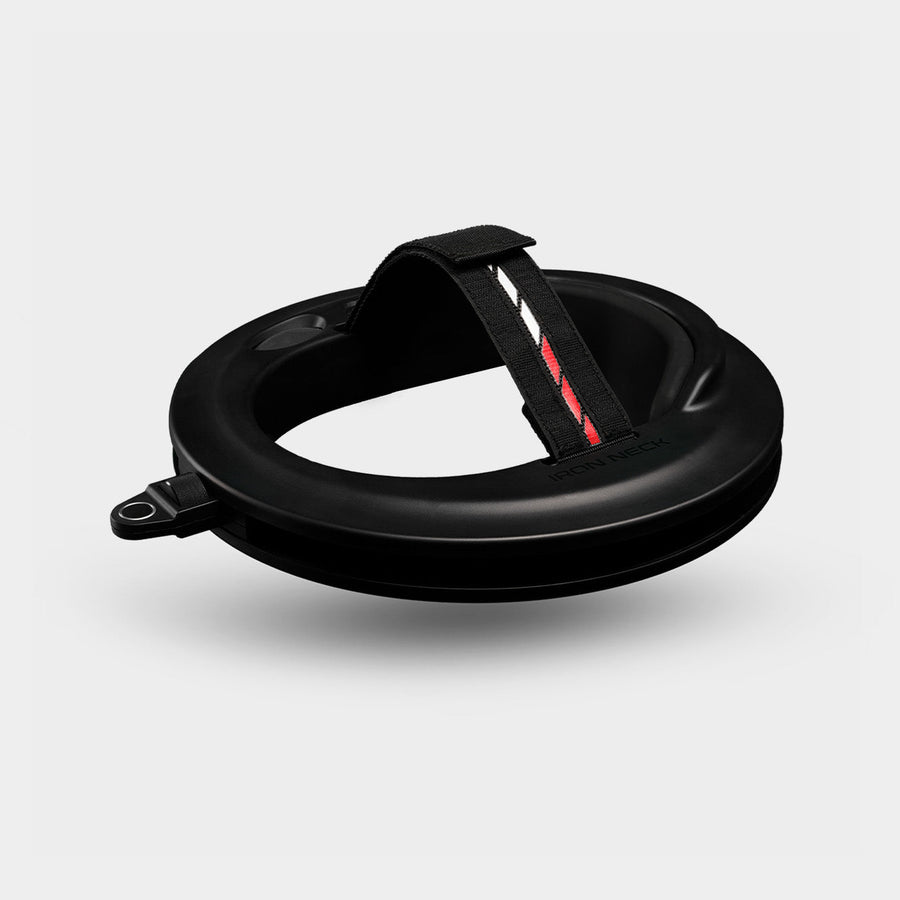
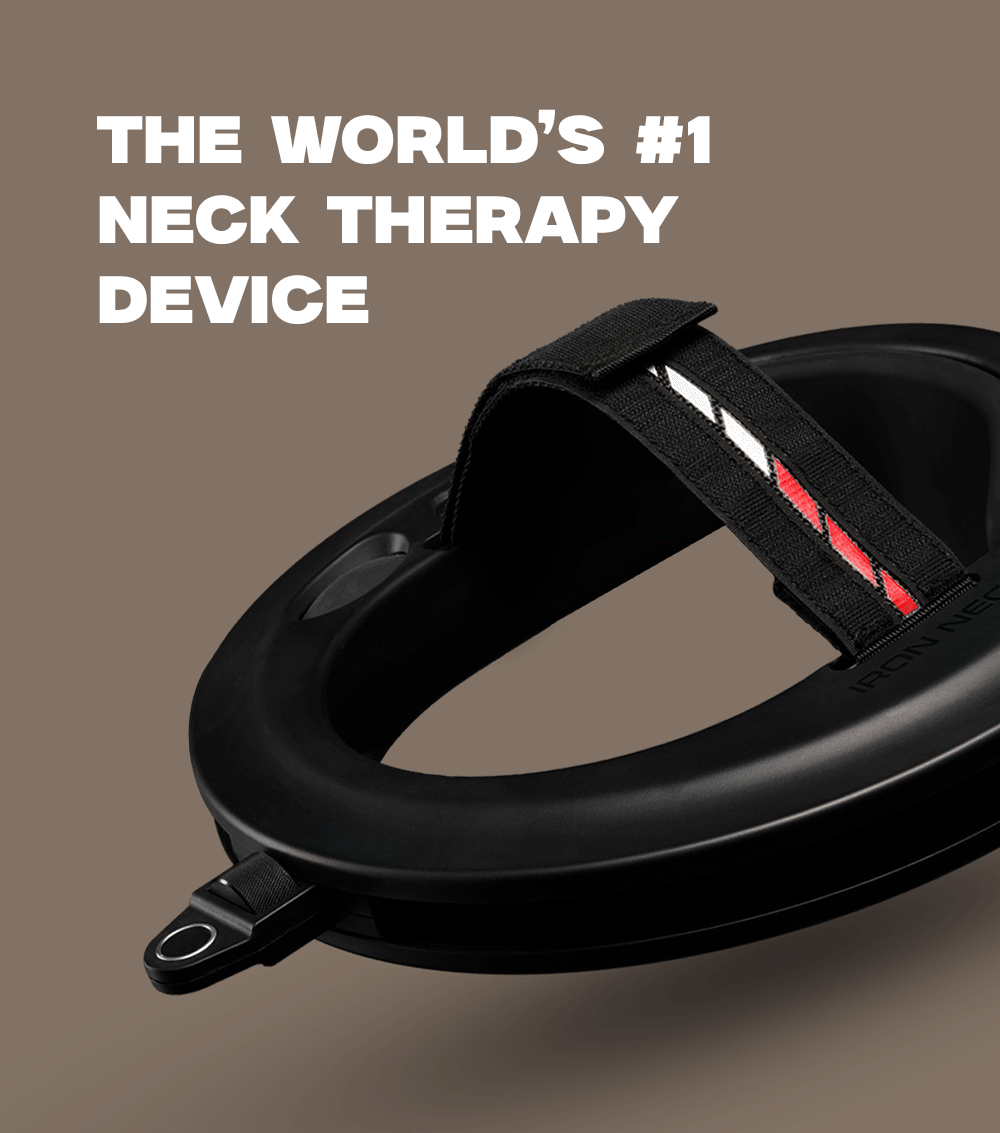
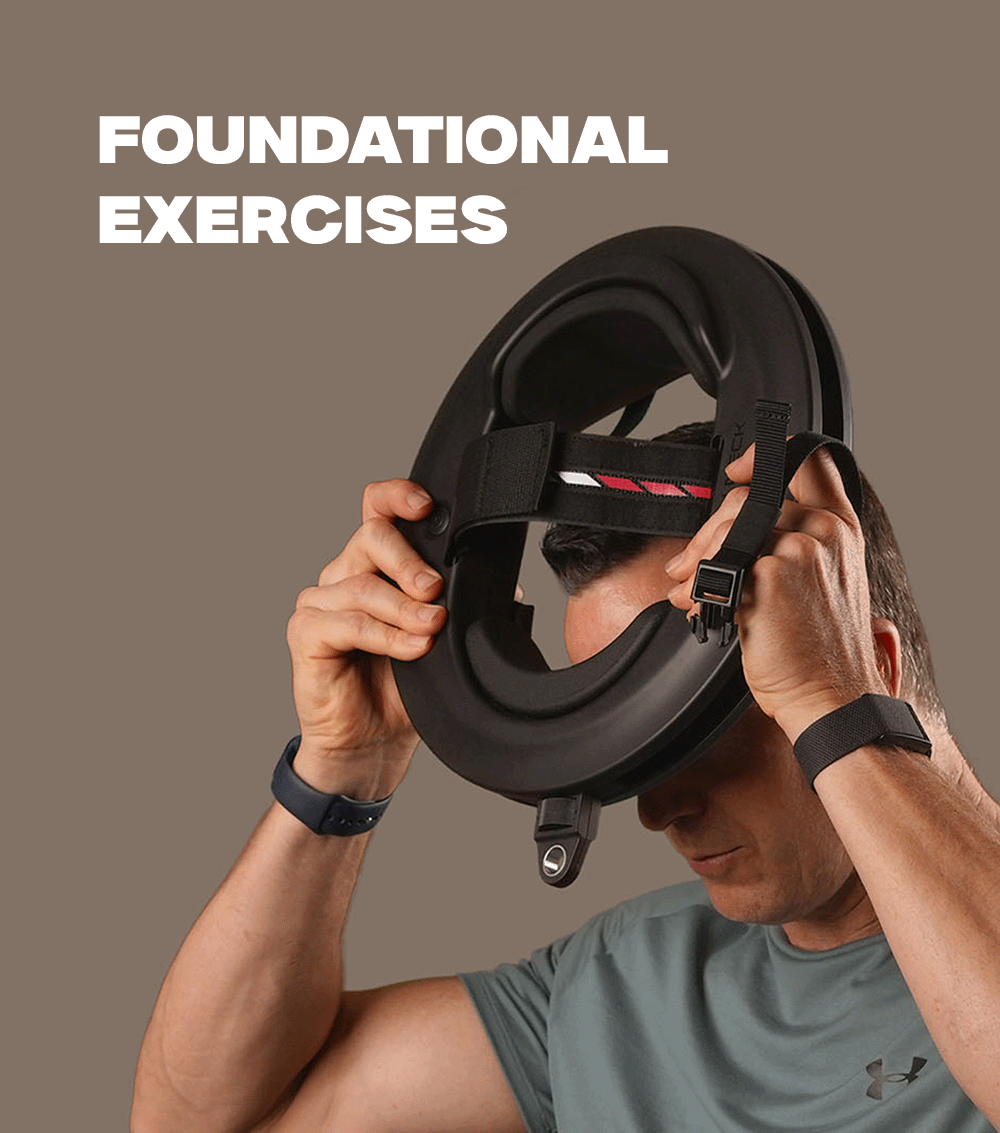
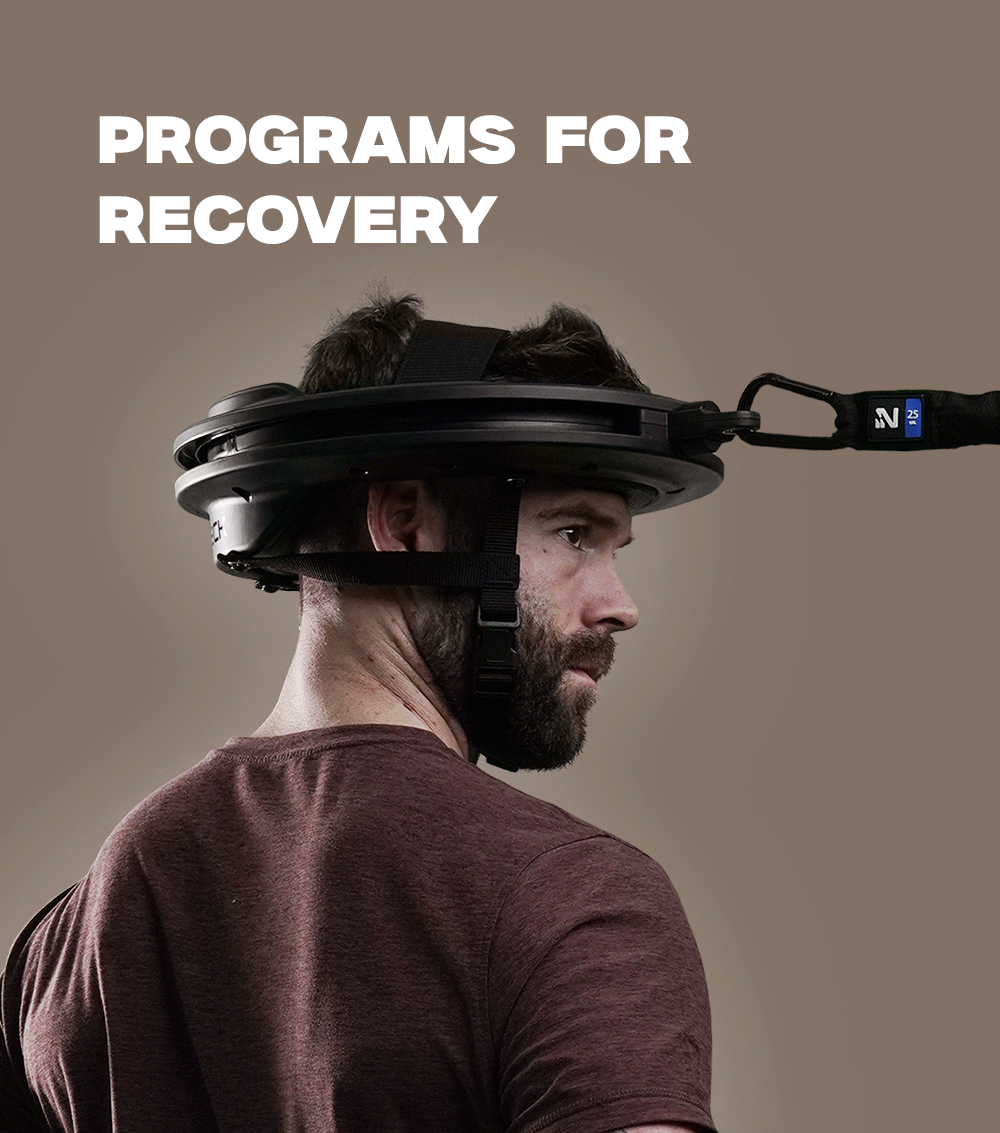
The 360 degree resistance head unit this program is built around, with the anchor and bands you need to train every direction from day one.

We call for an effort level instead of a specific weight, because the right resistance depends on you, the movement, and where you are in your training. For the sets and reps listed on each exercise, pick the resistance that makes the last few reps feel like the level shown.
You finish the set with several clean reps still in the tank. The work stays easy and fully controlled from the first rep to the last.
You could manage a few more reps at the end, but not many. The final reps take real effort while your form holds.
You reach the last prescribed rep with little or nothing left. Completing every rep with good form is genuinely hard.
These are starting points, not rules. Everyone is built differently, so adjust to fit you: size down if your form breaks before the final rep or a movement aggravates a symptom, and only size up once every rep feels smooth and pain free. When you are unsure, choose the lighter option.