

Demo video coming soon360 Spin (light tension)
A light full circle audits every direction of motion at once, exposing any residual weak or guarded sector before loading begins.
A healed neck and a barbell-ready neck are two different things, and the gap between them is where re-injuries happen. This program rebuilds the bracing capacity, isometric strength, and end-range control that squats, deadlifts, and overhead work demand from the neck, in grades that let recovering tissue keep up. It is written for lifters cleared to train who want a deliberate on-ramp instead of a hopeful one.

Bridge the gap between a healed neck and heavy training with a graded progression that restores bracing strength, load tolerance, and confidence under the bar.
Re-establish clean movement and light load tolerance before any gym demands. This baseline confirms the neck is genuinely ready to progress.
Demo video coming soonA light full circle audits every direction of motion at once, exposing any residual weak or guarded sector before loading begins.
Demo video coming soonGliding re-establishes the head-neutral position lifters must hold under the bar, rebuilt here without any bar in sight.
Controlled rotation confirms the injured area tolerates the head turns that spotting, racking, and technique checks require.
Advance whenAdvance when every drill is smooth and symptom-free while normal life includes no neck complaints.
Rebuild the isometric bracing that lifting actually asks of the neck. Under a barbell the neck's job is to hold position against force, so that is what gets trained.
Demo video coming soonNeutral bracing is the exact demand of a heavy squat or deadlift walkout, rebuilt here at a dose the recovering neck controls.
Demo video coming soonRetraction holds restore the packed-neck position that protects the cervical spine under axial load.
Demo video coming soonHolding a fixed head at each quarter turn rebuilds the anti-rotation stability that keeps the neck neutral when a lift gets ugly.
Advance whenAdvance when holds are rock solid at full duration with zero symptoms during or after gym sessions.
Push volume and range so the neck can absorb real training stress. This phase runs alongside your return to moderate gym loads.
Demo video coming soonRotational isometrics rebuild the turned-head strength that protects the neck when form breaks or a spotter call makes you look sideways mid-rep.
Demo video coming soonFull-range diagonals prove the healed tissue tolerates combined planes, the motion cocktail a heavy carry or awkward rack pull can force.
Demo video coming soonSlow circles under tension build the endurance that keeps neck position from degrading across a long training session.
Advance whenAdvance when full-range and isometric work is strong while gym lifts progress without any neck awareness.
Finish with loaded end-range and eccentric strength that exceeds pre-injury levels. The neck returns to the platform stronger than it left.
Demo video coming soonLoaded end-range isometrics harden the positions a maximal lift can push the head toward, closing the last gap re-injury could exploit.
Demo video coming soonEyes-closed rotation confirms position sense is fully restored, so the neck holds neutral by feel when your eyes are fixed on the wall mid-lift.
Demo video coming soonModerate-load eccentric gliding builds the lengthening-under-tension strength that shields the neck when heavy weight shifts unexpectedly.
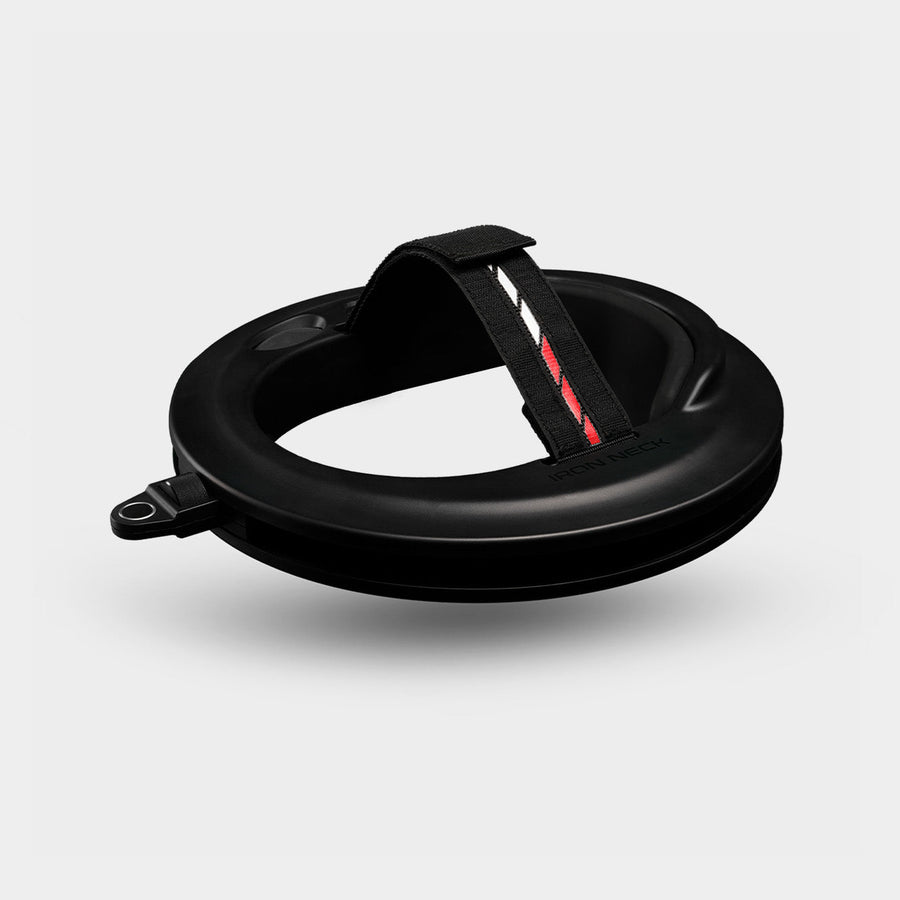
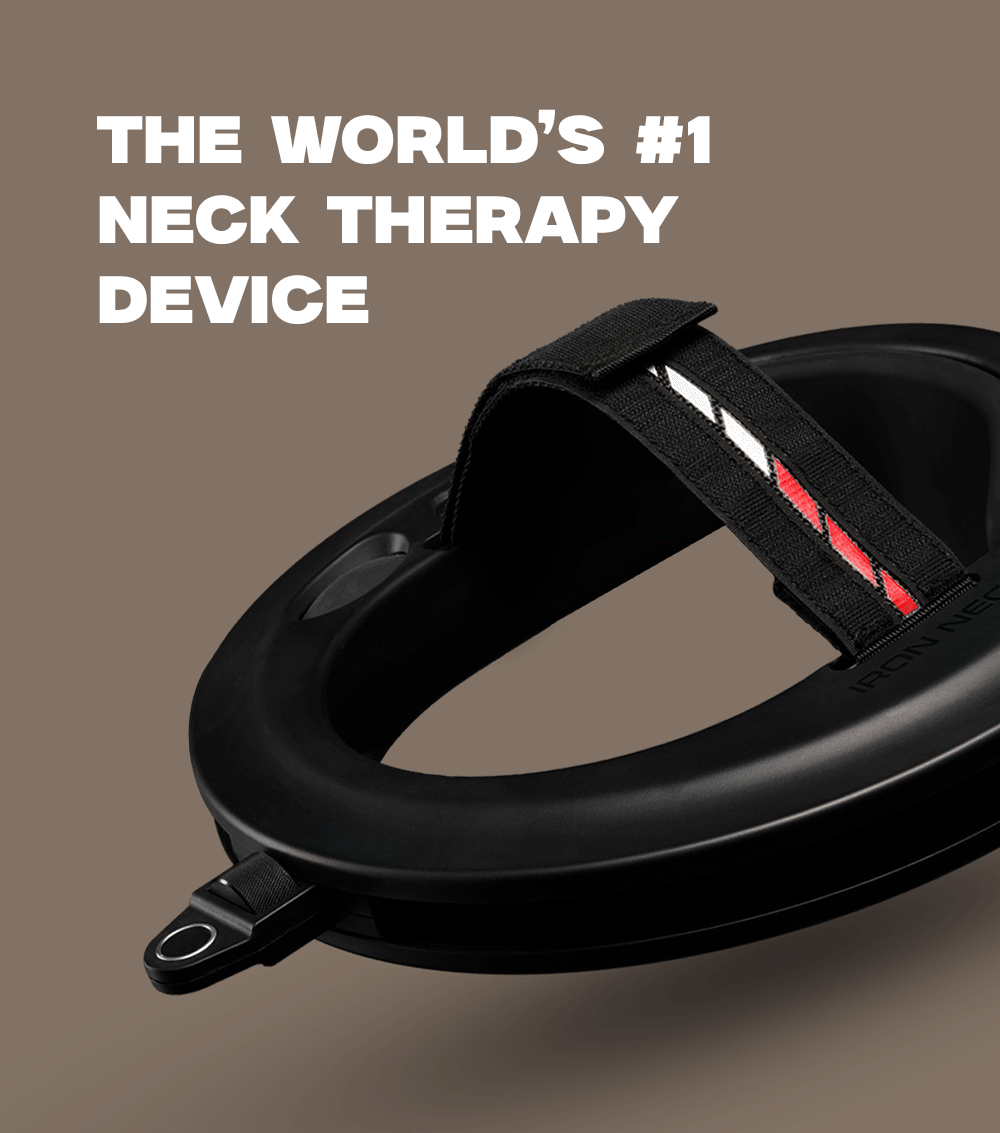
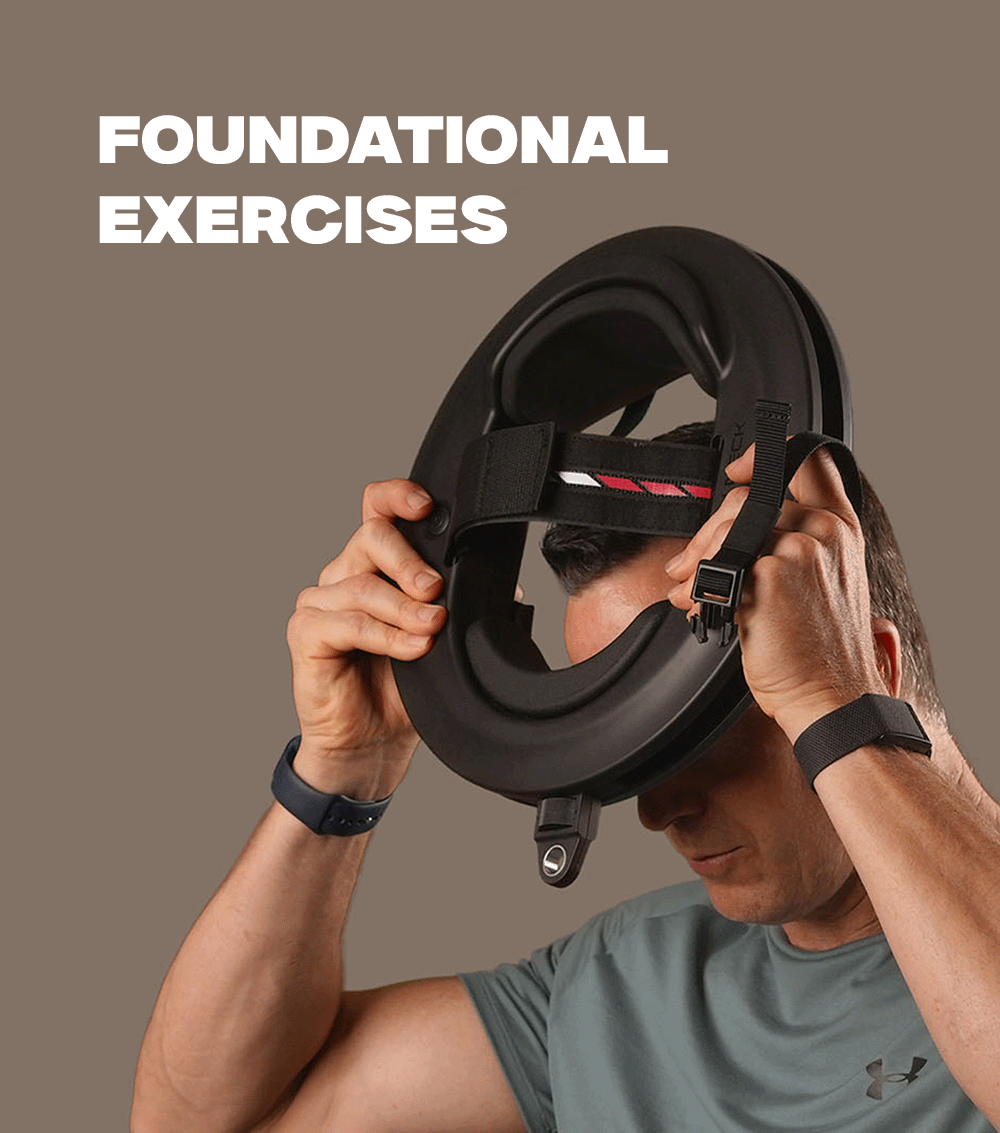
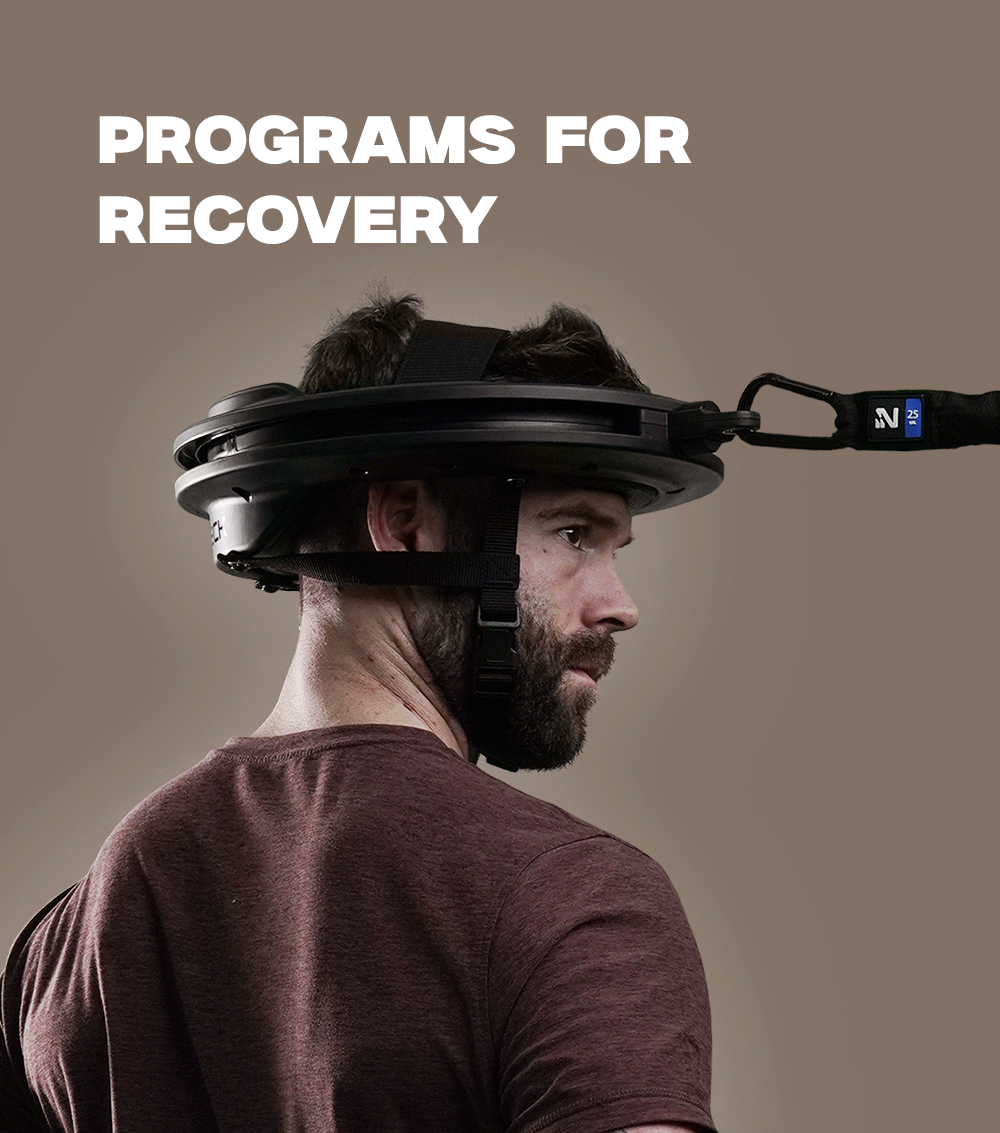
The 360 degree resistance head unit this program is built around, with the anchor and bands you need to train every direction from day one.

We call for an effort level instead of a specific weight, because the right resistance depends on you, the movement, and where you are in your training. For the sets and reps listed on each exercise, pick the resistance that makes the last few reps feel like the level shown.
You finish the set with several clean reps still in the tank. The work stays easy and fully controlled from the first rep to the last.
You could manage a few more reps at the end, but not many. The final reps take real effort while your form holds.
You reach the last prescribed rep with little or nothing left. Completing every rep with good form is genuinely hard.
These are starting points, not rules. Everyone is built differently, so adjust to fit you: size down if your form breaks before the final rep or a movement aggravates a symptom, and only size up once every rep feels smooth and pain free. When you are unsure, choose the lighter option.