

Demo video coming soonProtraction / Retraction
Easy gliding releases the suboccipital grip that refers tension into the head, addressing the neck's contribution to the migraine cascade.
Most migraine sufferers carry a stiff, tender neck that both feeds attacks and flares during them. This program works on the cervical side of the migraine equation, using low-intensity movement and gradual strengthening to reduce the tension load the neck contributes. Everything is dosed conservatively because in a migraine-prone system, gentle and consistent beats hard and occasional every time.

Reduce the neck tension that triggers and accompanies migraines by restoring gentle motion, easing muscle guarding, and building calm postural strength.
Lower baseline neck tension with the gentlest possible movement. Sessions should feel calming, never like a workout that risks an attack.
Demo video coming soonEasy gliding releases the suboccipital grip that refers tension into the head, addressing the neck's contribution to the migraine cascade.
Demo video coming soonThe small circle moves every neck muscle at a dose deliberately below anything that could act as a trigger.
Gentle turns ease the rotational stiffness migraine sufferers accumulate from guarding through attack after attack.
Advance whenAdvance when sessions consistently leave the neck looser and never precede an attack within 24 hours.
Introduce holds and tempo at migraine-safe intensity. The neck learns to work steadily without the strain spikes a sensitized system punishes.
Demo video coming soonRetraction holds strengthen the posture that unloads the upper neck, reducing the drip-feed of nociceptive input a migraine brain amplifies.
Smooth tempo rotation trains relaxed movement, replacing the clenched turning style that keeps trigger-zone muscles tender.
Demo video coming soonBrief neutral bracing builds head support gradually, so posture improves without the sustained strain that could provoke an attack.
Advance whenAdvance after two weeks of full sessions with stable or improved attack frequency.
Build modest, real strength now that tolerance is proven. A stronger neck accumulates less tension per day, shrinking the trigger reservoir.
Demo video coming soonSlow diagonals reach the oblique suboccipital lines where premonitory neck tension concentrates, strengthening them at a careful pace.
Demo video coming soonExtended slow circles build endurance so the neck stops fatiguing into the end-of-day tightness that so often precedes an attack.
Comfortable end-range holds keep full rotation available and calm, denying the guarded stiffness that feeds the trigger cycle.
Advance whenAdvance when this volume feels easy and neck tension no longer builds noticeably between sessions.
Maintain a low-tension neck as a standing defense. This routine runs between attacks indefinitely and pauses during them.
Demo video coming soonEyes-closed circles maintain smooth, well-calibrated movement, keeping the neck a quiet neighbor to a reactive nervous system.
Demo video coming soonConservative full-range diagonals preserve complete mobility so stiffness never rebuilds to trigger-threshold levels.
Demo video coming soonSlow eccentric gliding maintains the deep flexor strength that keeps head weight off the pain-referring upper cervical tissues.
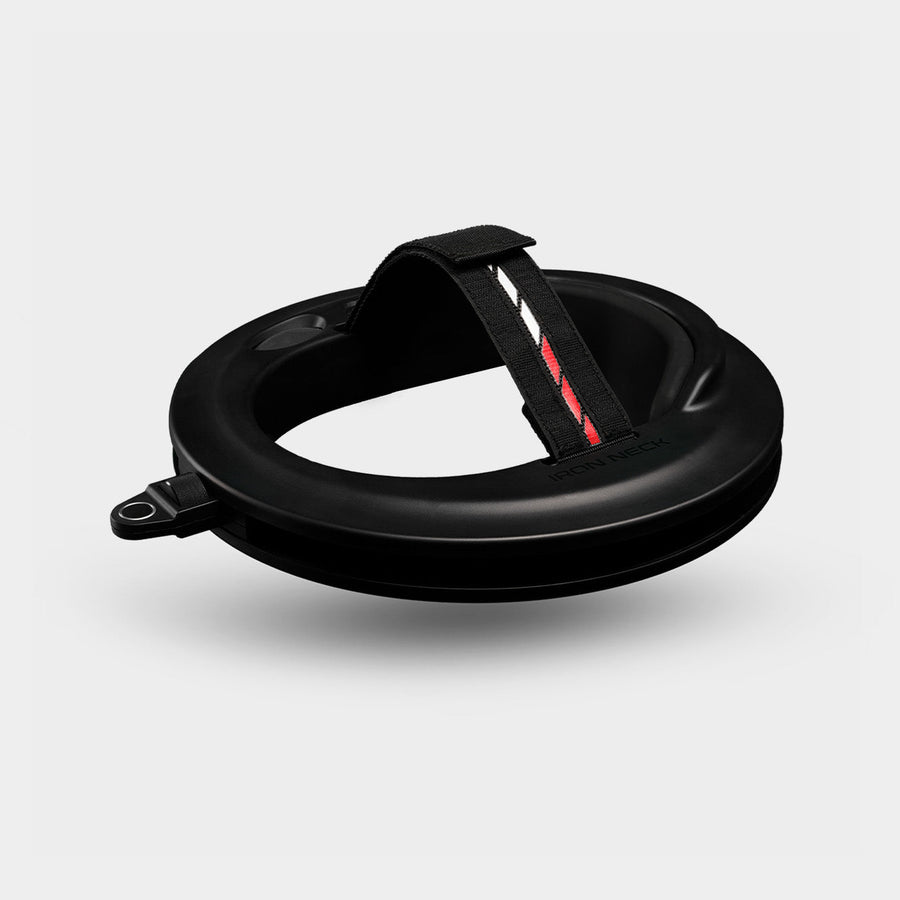
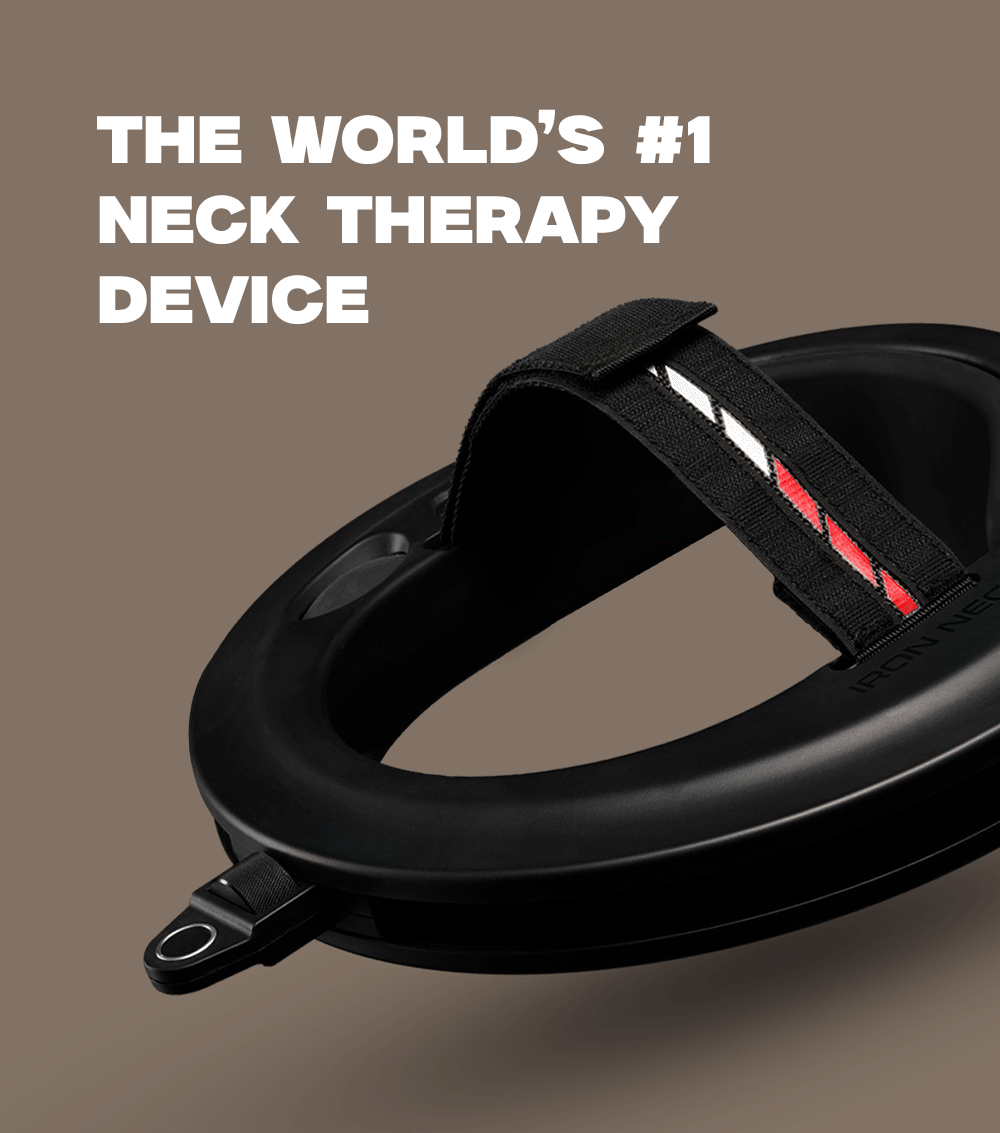
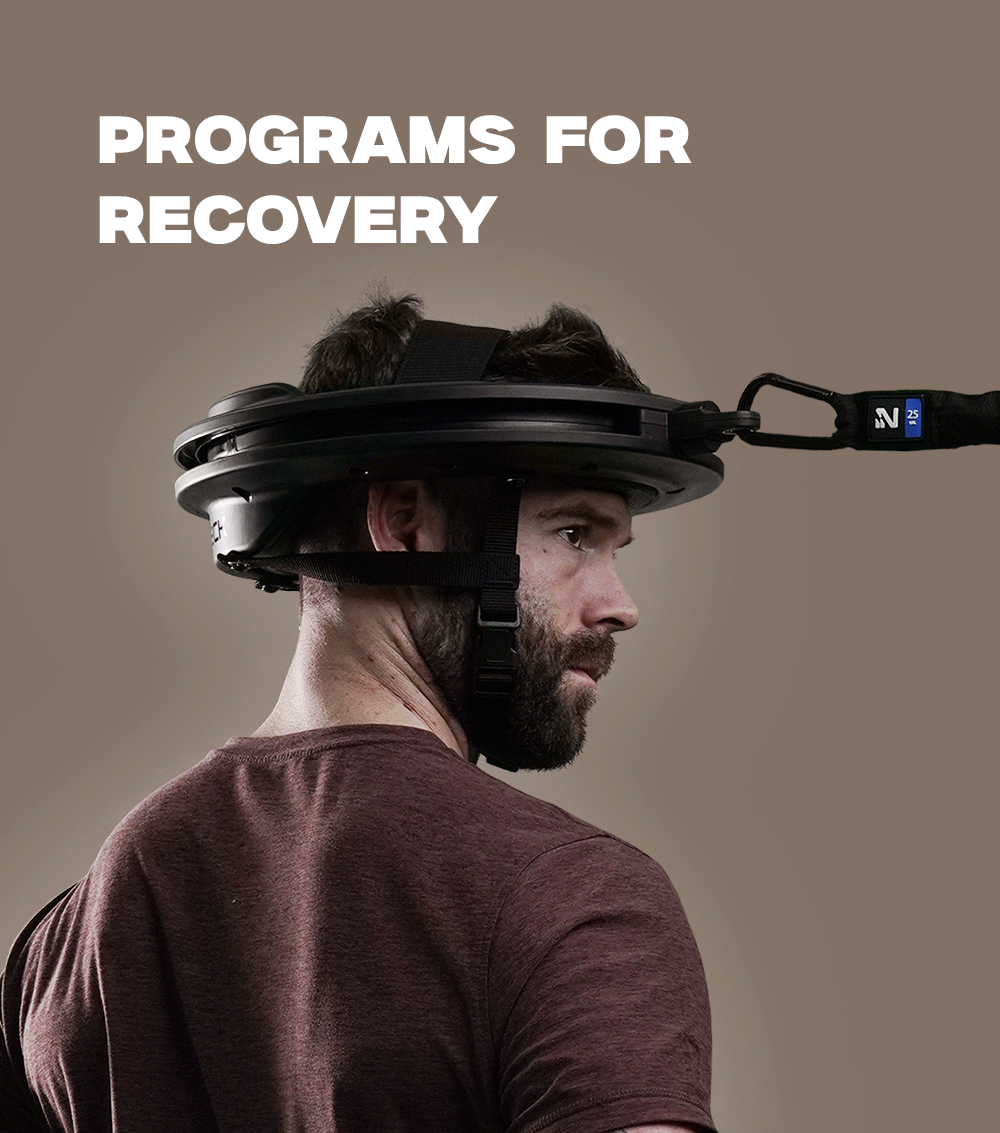
The 360 degree resistance head unit this program is built around, with the anchor and bands you need to train every direction from day one.

We call for an effort level instead of a specific weight, because the right resistance depends on you, the movement, and where you are in your training. For the sets and reps listed on each exercise, pick the resistance that makes the last few reps feel like the level shown.
You finish the set with several clean reps still in the tank. The work stays easy and fully controlled from the first rep to the last.
You could manage a few more reps at the end, but not many. The final reps take real effort while your form holds.
You reach the last prescribed rep with little or nothing left. Completing every rep with good form is genuinely hard.
These are starting points, not rules. Everyone is built differently, so adjust to fit you: size down if your form breaks before the final rep or a movement aggravates a symptom, and only size up once every rep feels smooth and pain free. When you are unsure, choose the lighter option.