


Rehab & Recovery · Program 15

Chronic Non-Specific Neck Pain

Neck pain that has lasted months without a clear diagnosis usually reflects a neck that has become weak, guarded, and sensitive rather than damaged. This program rebuilds capacity gradually, using graded exposure to movement and load that recalibrates the pain system while the muscles get genuinely stronger. Progress is measured in what you can do without payback, and each phase expands that territory.

Focus · Persistent neck painFrequency · 3-4x per weekSession · 10-15 min
Chronic Non-Specific Neck Pain cover art
The goal

Break the cycle of persistent neck pain by rebuilding movement confidence, graded strength, and the capacity to handle daily load without flare-ups.

Who it is for
  • Neck pain persisting beyond three months without a specific diagnosis
  • Flare-ups after normal activities like driving, working, or sleeping
  • Cleared of serious pathology and ready for active rehabilitation

Movement Reintroduction

Re-establish easy, non-threatening movement in every direction. The pain system learns through repetition that motion is safe again.

01Muscles worked in 360 SpinDemo video coming soon

360 Spin (small circle)

1 small circle each directionFront

A small, easy circle delivers movement in every direction at a dose too low to threaten a sensitized system, the ideal first exposure.

How To
1Stand tall with your shoulders stacked over your hips and fix your eyes on a point straight ahead.
2Rotate your body in place, hips, torso and feet, while your head stays completely still.
3Move slowly through a full clockwise turn, then reverse and complete a full counterclockwise turn.
Coaching Cues
Head still
body turns
Move like a tank turret with your upper body rotating under a fixed head
Do not let your nose drift from its anchor point
Feel the resistance wrap around you as you rotate
Muscles Activated
SCMSplenius capitis/cervicisSemispinalis capitisMultifidus
02Muscles worked in Protraction / RetractionDemo video coming soon

Protraction / Retraction

2 sets of 8 repsFront & Back

Rhythmic gliding restores the basic forward-back motion chronic pain patients unconsciously ration, rebuilding it as an everyday resource.

How To
1Glide your head straight forward, reaching your chin outward, then glide it straight back as though making a double chin.
2Keep your eyes and chin level the entire time and move smoothly along a horizontal path.
Coaching Cues
Slide your head along an invisible shelf
Make a double chin
then get rid of it
No nodding
keep your eyes level throughout
Think forward and back
not up and down
Muscles Activated
SCMAnterior scaleneDeep neck flexorsSemispinalis cervicis
03

Look Left, Look Right

2 sets of 6 reps each sideAny direction

Repeated comfortable turns chip away at the guarded rotation that makes shoulder checks and conversations a source of dread.

How To
1Stand tall with your chest up and your chin level.
2Turn your head slowly to one side as far as you can go comfortably, hold for a moment, then return to center and repeat to the other side.
3Only your head moves.
Coaching Cues
Chin stays level as you rotate
Eyes lead the movement
Do not tilt your head
it is a turn and not a lean
Move with control and not momentum
Muscles Activated
SCMSplenius capitis/cervicisLongissimus capitis

Advance whenAdvance when sessions feel comfortable and everyday movement provokes noticeably less soreness.

Confidence + Capacity

Add sustained effort and holds so the neck starts building real strength. Graded success here directly reduces the sensitivity driving the pain.

01Muscles worked in 360 SpinDemo video coming soon

360 Spin (slow tempo)

2 slow rotations each directionFront

Slow continuous circles extend working time gradually, expanding load tolerance without the spikes that trigger flare-ups.

How To
1Stand tall with your shoulders stacked over your hips and fix your eyes on a point straight ahead.
2Rotate your body in place, hips, torso and feet, while your head stays completely still.
3Move slowly through a full clockwise turn, then reverse and complete a full counterclockwise turn.
Coaching Cues
Head still
body turns
Move like a tank turret with your upper body rotating under a fixed head
Do not let your nose drift from its anchor point
Feel the resistance wrap around you as you rotate
Muscles Activated
SCMSplenius capitis/cervicisSemispinalis capitisMultifidus
02Muscles worked in Protraction / RetractionDemo video coming soon

Protraction / Retraction (with hold)

2 sets of 6 reps with 3 second holdsFront & Back

Retraction holds build the postural support weak in nearly every chronic neck pain case, addressing a root cause rather than a symptom.

How To
1Glide your head straight forward, reaching your chin outward, then glide it straight back as though making a double chin.
2Keep your eyes and chin level the entire time and move smoothly along a horizontal path.
Coaching Cues
Slide your head along an invisible shelf
Make a double chin
then get rid of it
No nodding
keep your eyes level throughout
Think forward and back
not up and down
Muscles Activated
SCMAnterior scaleneDeep neck flexorsSemispinalis cervicis
03

Look Left, Look Right (tempo)

2 sets of 6 reps each sideAny direction

Rotating at varied speeds rebuilds trust in quick head movement, one of the first abilities chronic pain takes away.

How To
1Stand tall with your chest up and your chin level.
2Turn your head slowly to one side as far as you can go comfortably, hold for a moment, then return to center and repeat to the other side.
3Only your head moves.
Coaching Cues
Chin stays level as you rotate
Eyes lead the movement
Do not tilt your head
it is a turn and not a lean
Move with control and not momentum
Muscles Activated
SCMSplenius capitis/cervicisLongissimus capitis

Advance whenAdvance when longer efforts complete without flare-ups in the following 48 hours.

Progressive Loading

Train like an athlete in miniature, with multiplanar work and honest effort. A genuinely stronger neck gives the pain system fewer reasons to alarm.

01Muscles worked in DiagonalsDemo video coming soon

Diagonals (slow tempo)

2 sets of 4 reps each diagonalFront or Back

Slow diagonals load the oblique patterns everyday life uses constantly, converting fragile movements back into strong ones.

How To
1Start by looking down toward one armpit.
2Trace a diagonal path upward with your eyes and nose until you are looking above the opposite shoulder, then return along the same path.
3Finish your reps on one side before switching to the opposite diagonal.
Coaching Cues
Draw an X in your field of view with your nose
Follow a diagonal line with your eyes
Use full range but keep it smooth
Feel your neck twist and lengthen
Muscles Activated
SCMSplenius capitisScalenesSuboccipitals
02Muscles worked in 360 SpinDemo video coming soon

360 Spin (quarter pauses)

1 set each direction with pauses at each quarterFront

Quarter pauses demand focused effort at specific angles, replacing vague apprehension with precise, confident control.

How To
1Stand tall with your shoulders stacked over your hips and fix your eyes on a point straight ahead.
2Rotate your body in place, hips, torso and feet, while your head stays completely still.
3Move slowly through a full clockwise turn, then reverse and complete a full counterclockwise turn.
Coaching Cues
Head still
body turns
Move like a tank turret with your upper body rotating under a fixed head
Do not let your nose drift from its anchor point
Feel the resistance wrap around you as you rotate
Muscles Activated
SCMSplenius capitis/cervicisSemispinalis capitisMultifidus
03Muscles worked in Isometric HoldDemo video coming soon

Isometric Hold (in rotation)

3 sets of 20 second holds each sideFront

Rotational isometrics build the holding strength that lets long drives and desk days pass without the familiar ache.

How To
1Set your head in the working position and hold it there against the band.
2Keep your chin level, breathe normally, and resist any drift for the full time prescribed.
Coaching Cues
Brace your neck without clenching your jaw
Keep breathing through the hold
Nothing moves but your ribs
End the set when your position starts to drift
Muscles Activated
SCMSplenius capitis/cervicisLongissimus capitis

Advance whenAdvance when diagonal and isometric work feels like training rather than therapy, with no symptom cost.

Self-Managed Strength

Own a routine strong enough to keep the pain cycle broken. This phase is designed to run indefinitely on your own terms.

01Muscles worked in DiagonalsDemo video coming soon

Diagonals (full range)

2 sets of 6 reps each diagonalFront or Back

Loaded full-range diagonals mark the distance traveled, a movement that once felt risky now trained with resistance.

How To
1Start by looking down toward one armpit.
2Trace a diagonal path upward with your eyes and nose until you are looking above the opposite shoulder, then return along the same path.
3Finish your reps on one side before switching to the opposite diagonal.
Coaching Cues
Draw an X in your field of view with your nose
Follow a diagonal line with your eyes
Use full range but keep it smooth
Feel your neck twist and lengthen
Muscles Activated
SCMSplenius capitisScalenesSuboccipitals
02Muscles worked in 360 SpinDemo video coming soon

360 Spin (eyes closed)

1 rotation each directionFront

Eyes-closed circles maintain refined control and give you a weekly self-check that movement quality is holding.

How To
1Stand tall with your shoulders stacked over your hips and fix your eyes on a point straight ahead.
2Rotate your body in place, hips, torso and feet, while your head stays completely still.
3Move slowly through a full clockwise turn, then reverse and complete a full counterclockwise turn.
Coaching Cues
Head still
body turns
Move like a tank turret with your upper body rotating under a fixed head
Do not let your nose drift from its anchor point
Feel the resistance wrap around you as you rotate
Muscles Activated
SCMSplenius capitis/cervicisSemispinalis capitisMultifidus
03Muscles worked in Protraction / RetractionDemo video coming soon

Protraction / Retraction (tempo 3-1-3)

2 sets of 8 repsFront & Back

Moderate-load tempo gliding keeps the deep flexors strong, the structural change that separates lasting recovery from a lucky quiet spell.

How To
1Glide your head straight forward, reaching your chin outward, then glide it straight back as though making a double chin.
2Keep your eyes and chin level the entire time and move smoothly along a horizontal path.
Coaching Cues
Slide your head along an invisible shelf
Make a double chin
then get rid of it
No nodding
keep your eyes level throughout
Think forward and back
not up and down
Muscles Activated
SCMAnterior scaleneDeep neck flexorsSemispinalis cervicis
Get the gear

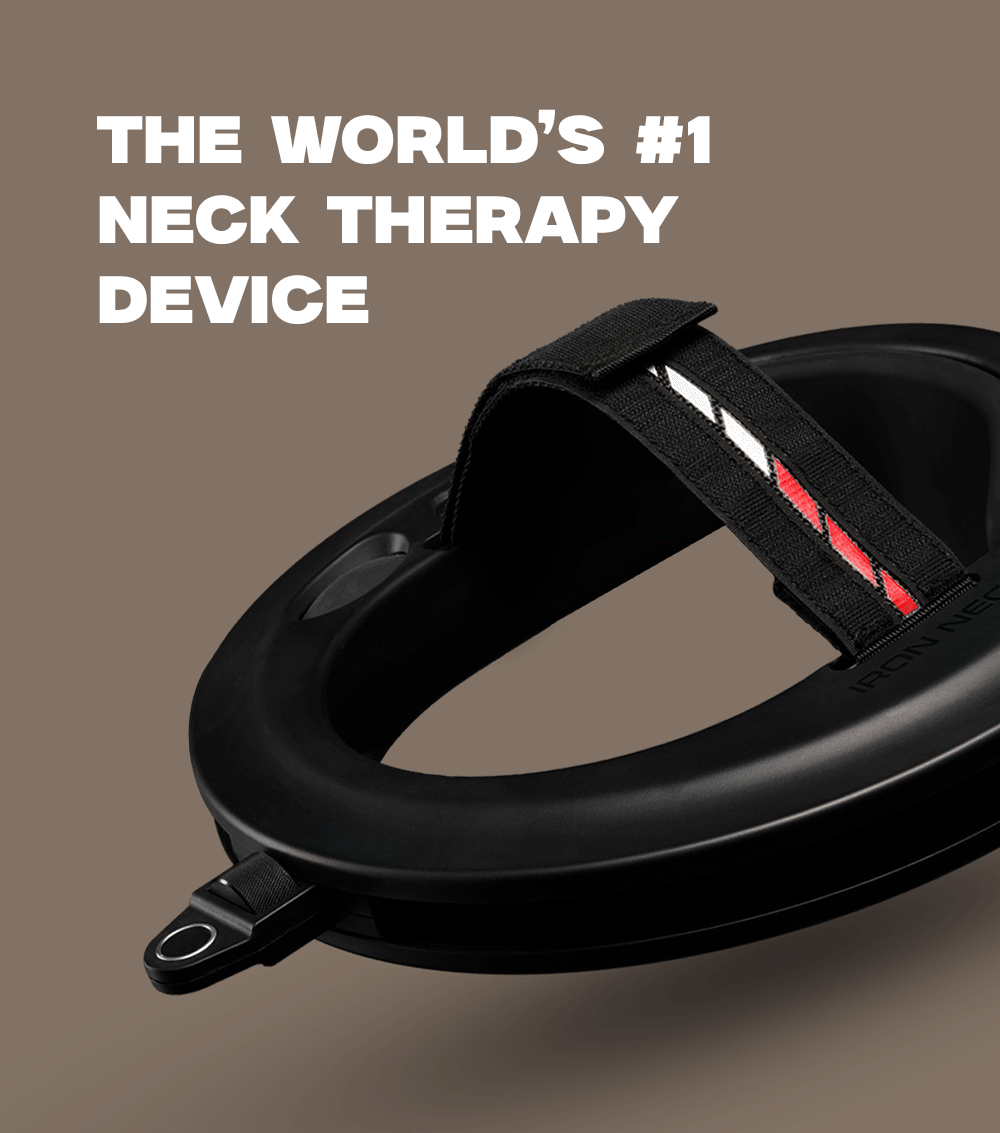
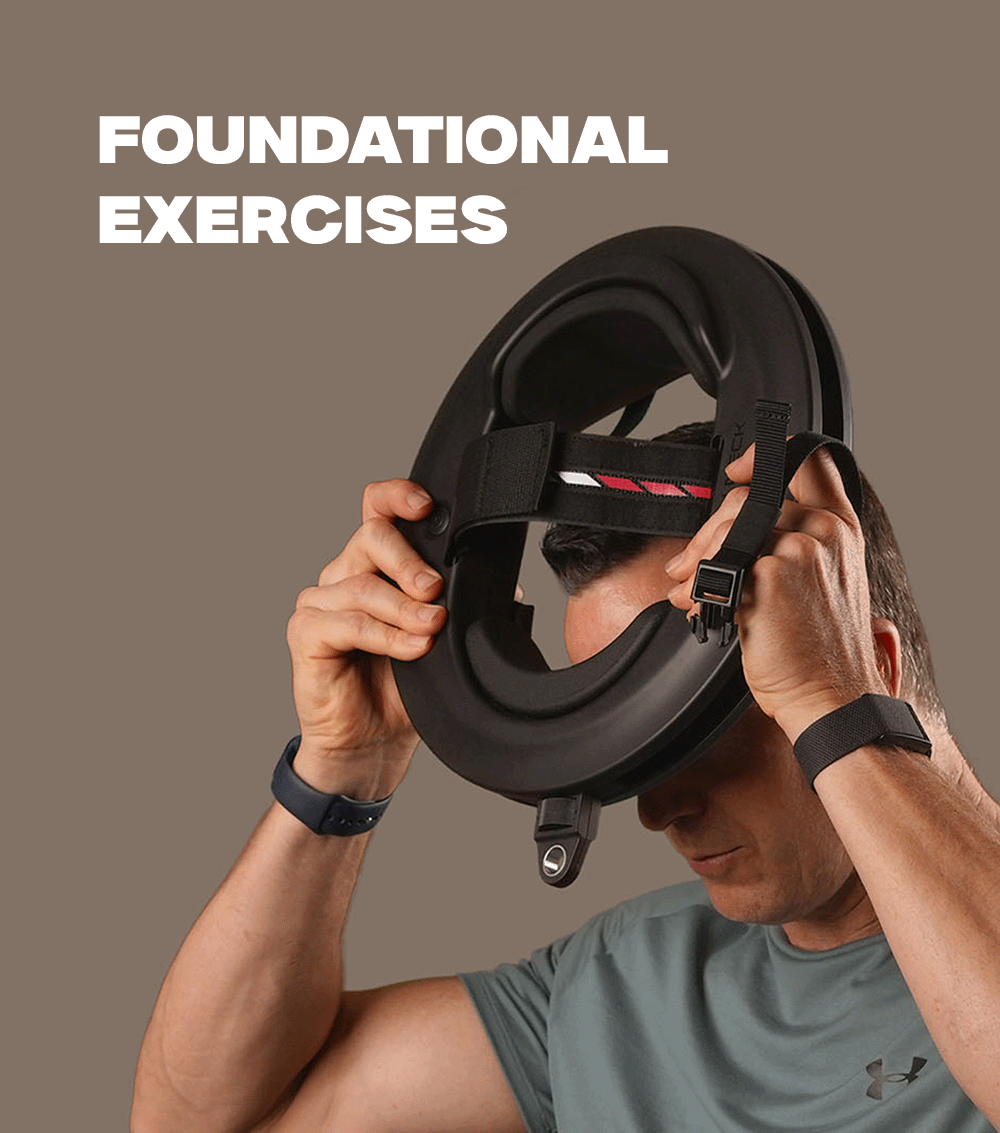
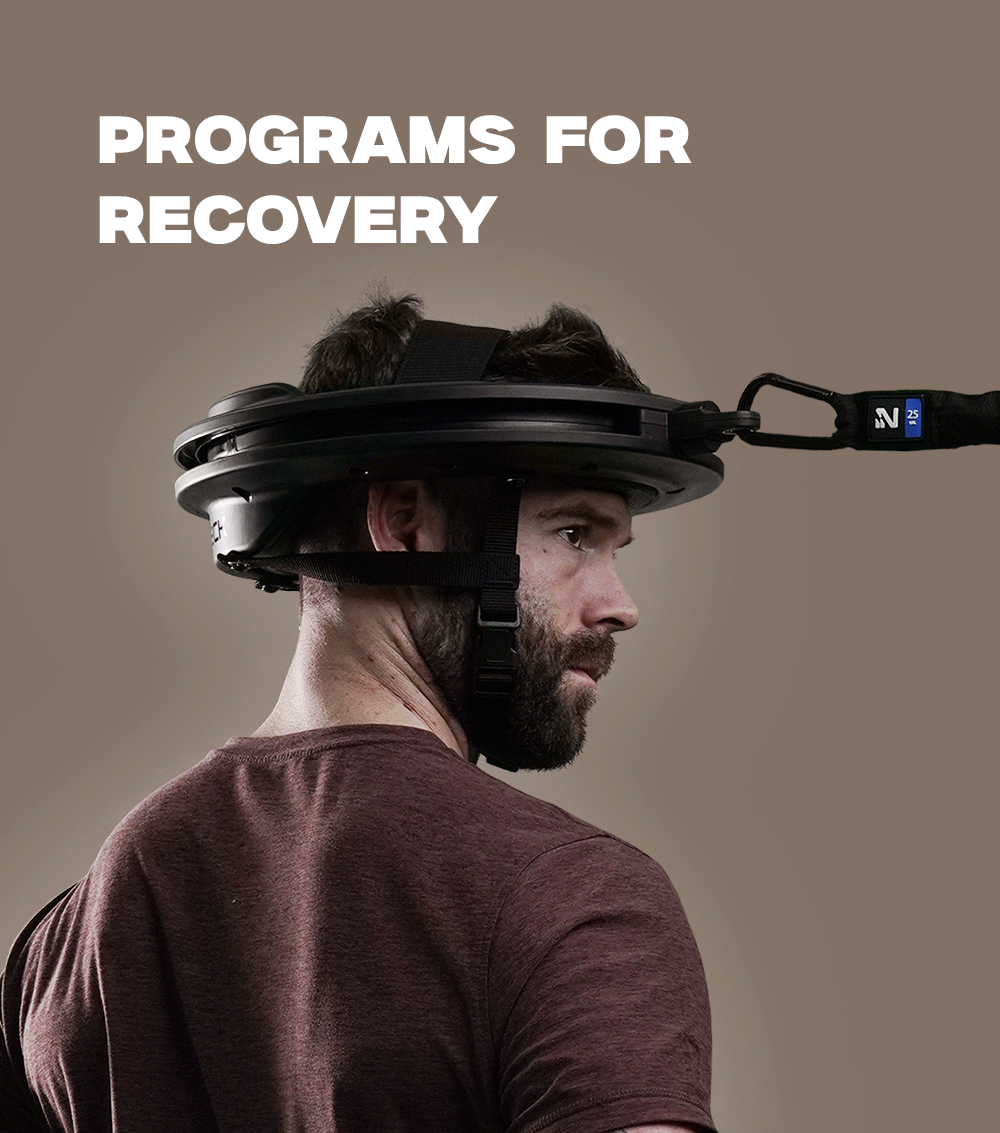
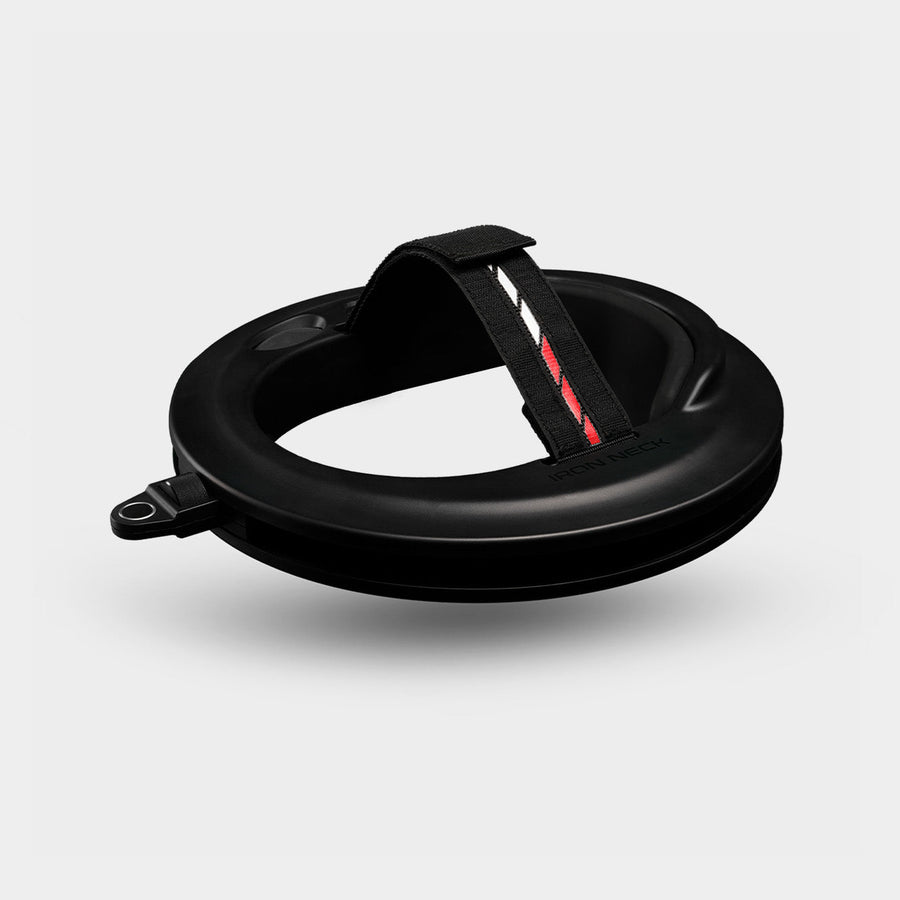
Train this program with the Iron Neck 3.0 Pro

The 360 degree resistance head unit this program is built around, with the anchor and bands you need to train every direction from day one.

Iron Neck 3.0 Pro
Iron Neck 3.0 Pro $599.00
Set your resistance

Light, medium, or heavy?

We call for an effort level instead of a specific weight, because the right resistance depends on you, the movement, and where you are in your training. For the sets and reps listed on each exercise, pick the resistance that makes the last few reps feel like the level shown.

Light

You finish the set with several clean reps still in the tank. The work stays easy and fully controlled from the first rep to the last.

Medium

You could manage a few more reps at the end, but not many. The final reps take real effort while your form holds.

Heavy

You reach the last prescribed rep with little or nothing left. Completing every rep with good form is genuinely hard.

These are starting points, not rules. Everyone is built differently, so adjust to fit you: size down if your form breaks before the final rep or a movement aggravates a symptom, and only size up once every rep feels smooth and pain free. When you are unsure, choose the lighter option.