


Demo video coming soonNod Yes / No (supine)
Lying down removes the head's weight so the strained deep flexors can reactivate without triggering the guarding a whiplashed neck defaults to.
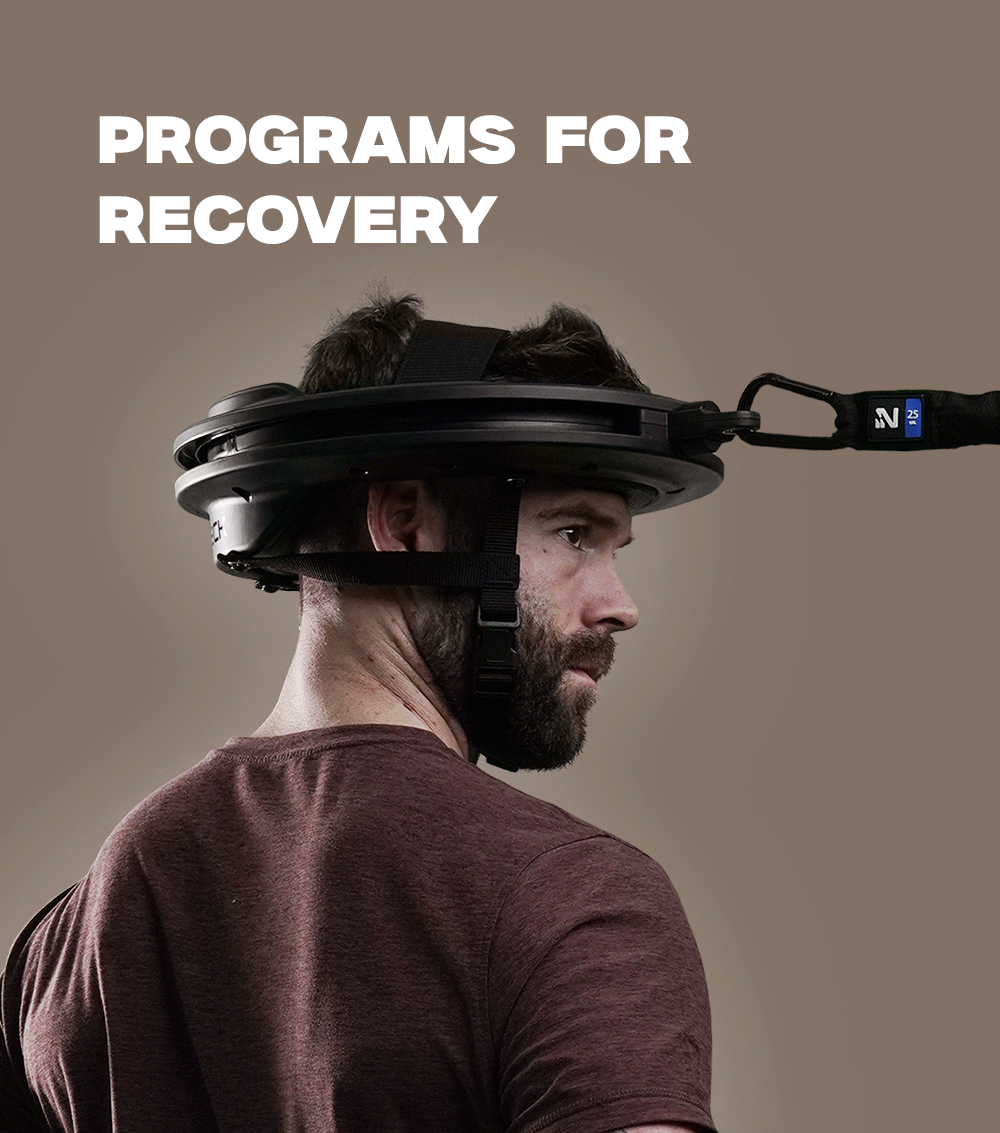
Whiplash leaves the neck stiff, sensitive, and hesitant to move long after the collision itself. This program starts with floor-based and wall-based drills that rebuild trust before the band ever loads the neck, then progresses through graded motion to full-range strength. The goal is a neck that moves freely and confidently again, without flinching.

Restore motion, reduce pain sensitivity, and rebuild neck control following trauma or an acceleration-deceleration injury.
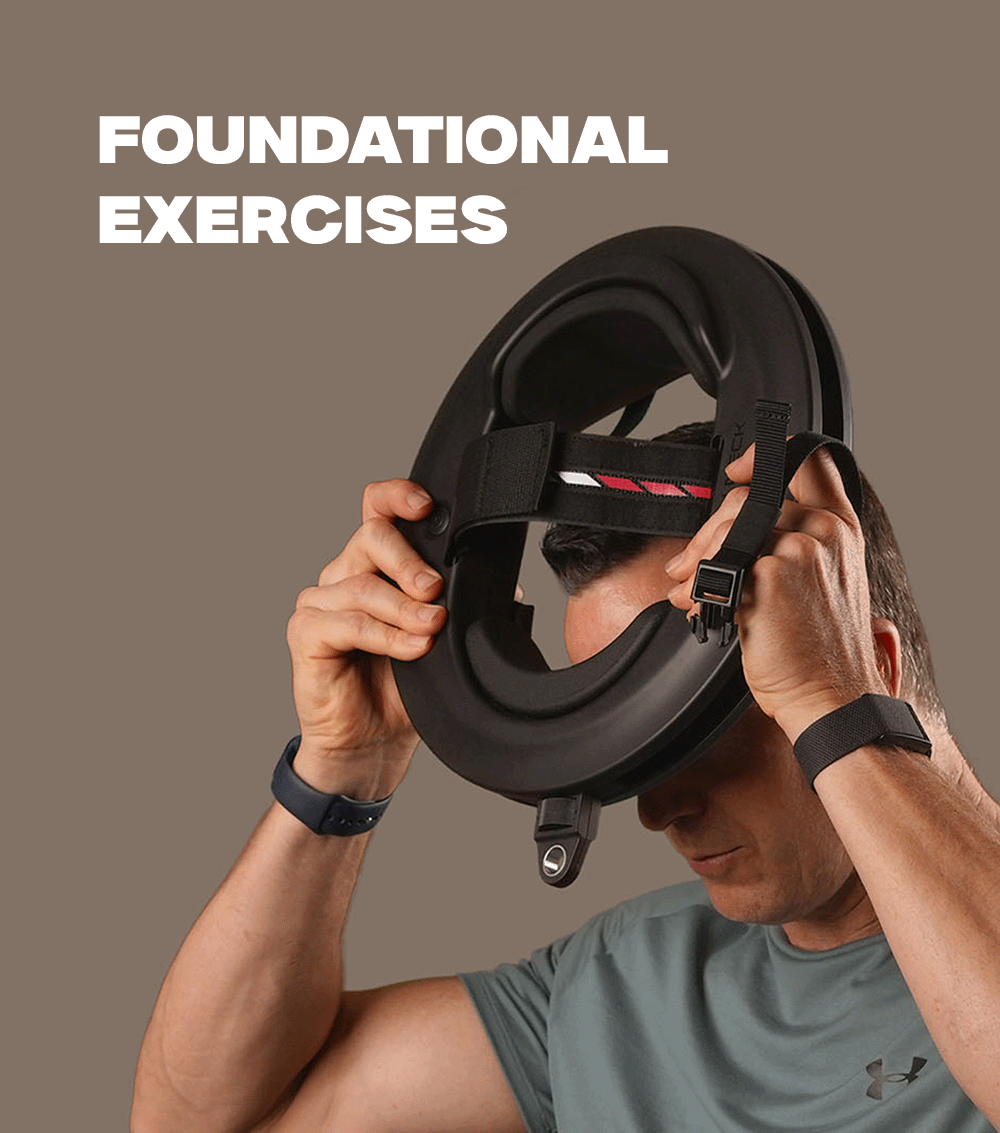
Calm the protective guarding and reintroduce movement at the lowest possible threat level. These entry drills rebuild tolerance before the device adds any resistance.
Demo video coming soonLying down removes the head's weight so the strained deep flexors can reactivate without triggering the guarding a whiplashed neck defaults to.
Demo video coming soonPressing into a fixed wall lets you produce force with zero movement, rebuilding confidence in muscles that trauma taught to brace and avoid.
Small, slow head turns reintroduce the rotation whiplash makes most threatening, shrinking the fear of movement while range returns.
Advance whenAdvance when supine nods and wall presses feel effortless and pain-free for a full week.
Move from desensitization to genuine control under light band load. The neck learns to hold alignment and glide smoothly through growing ranges.
Demo video coming soonForward and back gliding restores the sagittal control that acceleration-deceleration injury disrupts most directly.
Demo video coming soonA gentle full circle reintroduces every direction of load in one drill, mapping safe motion back onto a nervous system that expects pain.
Demo video coming soonRetraction holds rebuild the postural endurance that keeps a recovering neck from sagging into painful positions by afternoon.
Advance whenAdvance when banded gliding and rotation feel controlled with no symptom spike the next day.
Load the recovered range and add combined planes. Strength work here converts restored motion into resilience against everyday jolts and quick turns.
Demo video coming soonLonger time under tension through the full circle rebuilds the endurance whiplash strips from the stabilizing system.
Demo video coming soonShallow diagonals restore the combined flexion-rotation patterns of real head movement while respecting still-sensitive end ranges.
Demo video coming soonIsometric strength at rotated positions rebuilds the bracing capacity that protects the neck the next time forces arrive unexpectedly.
Advance whenAdvance when diagonals and rotational holds are strong and daily activities no longer produce symptoms.
Restore full, reflexive control and keep it. This phase closes the gap between feeling recovered and being genuinely robust.
Demo video coming soonRemoving vision retrains the position sense whiplash disrupts, restoring the reflexive control that keeps the head steady during sudden movement.
Demo video coming soonFull-range diagonals confirm every combined plane is strong again, the final marker of complete recovery.
Demo video coming soonSlow eccentric gliding maintains deep flexor strength, the muscle group most weakened by whiplash and most protective against re-injury.
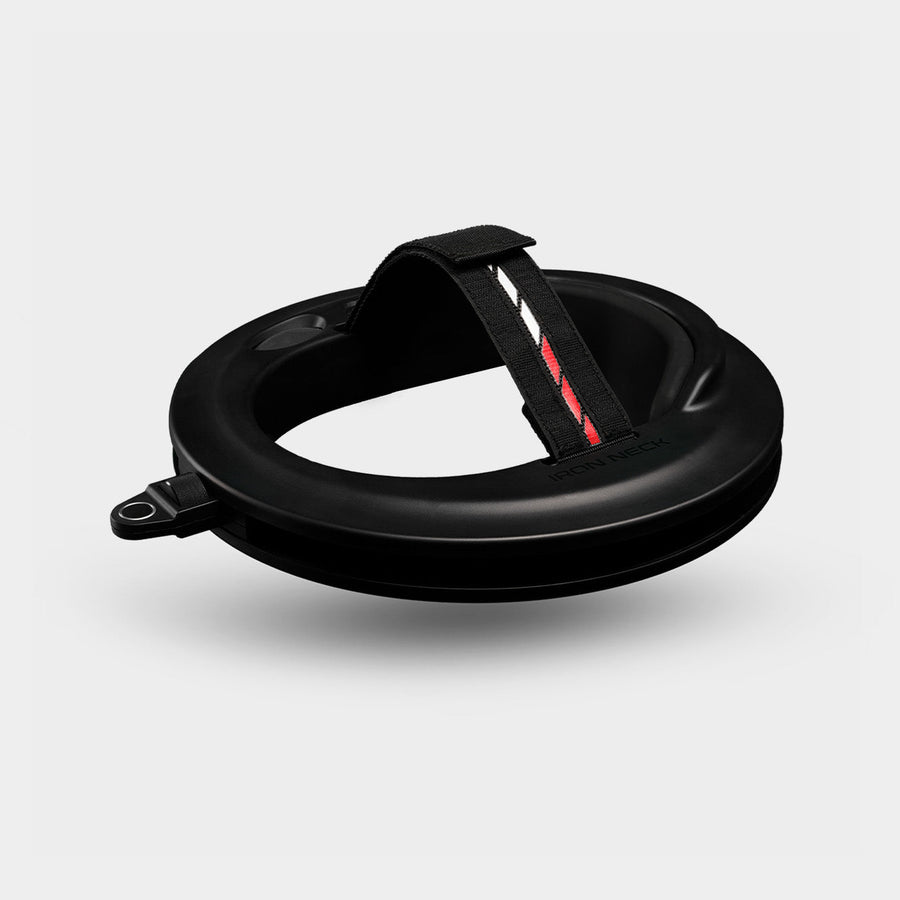
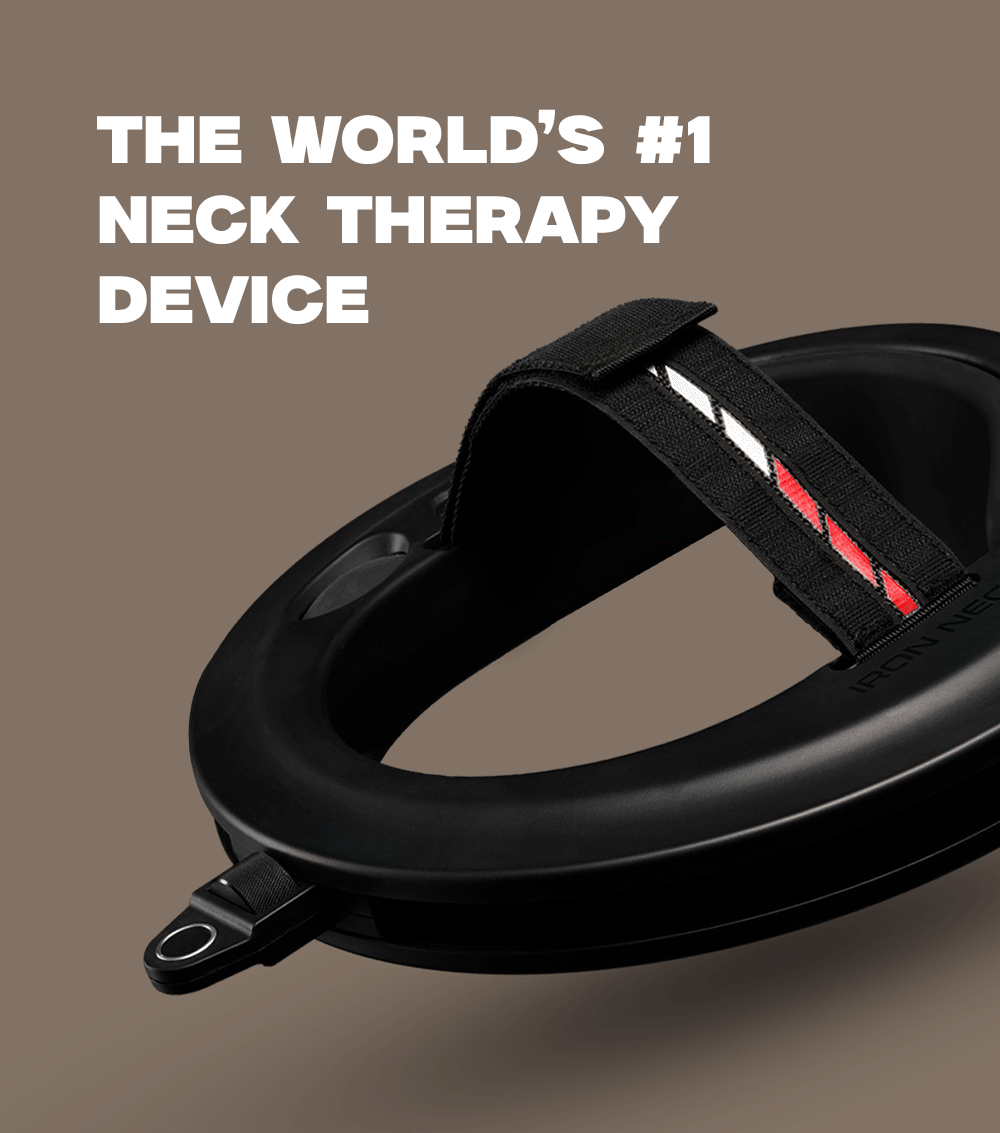
The 360 degree resistance head unit this program is built around, with the anchor and bands you need to train every direction from day one.

We call for an effort level instead of a specific weight, because the right resistance depends on you, the movement, and where you are in your training. For the sets and reps listed on each exercise, pick the resistance that makes the last few reps feel like the level shown.
You finish the set with several clean reps still in the tank. The work stays easy and fully controlled from the first rep to the last.
You could manage a few more reps at the end, but not many. The final reps take real effort while your form holds.
You reach the last prescribed rep with little or nothing left. Completing every rep with good form is genuinely hard.
These are starting points, not rules. Everyone is built differently, so adjust to fit you: size down if your form breaks before the final rep or a movement aggravates a symptom, and only size up once every rep feels smooth and pain free. When you are unsure, choose the lighter option.