


Demo video coming soonProtraction / Retraction
Retraction opens the foramen where the nerve root exits, directly reducing the compression behind the radiating symptoms.
Radiculopathy sends pain, numbness, or tingling from the neck down the arm when a nerve root gets compressed. This program uses gliding and gentle rotation to open neural space, then builds the alignment and strength that keep pressure off the nerve. Every progression is graded so the arm symptoms guide the pace, not the calendar.

Relieve nerve root compression and radiating symptoms by improving cervical alignment, increasing neural space, and strengthening the deep stabilizers.
Reduce nerve tension and reintroduce motion in ranges that keep symptoms out of the arm. Movement stays smooth, small, and well short of positions that provoke radiating pain.
Demo video coming soonRetraction opens the foramen where the nerve root exits, directly reducing the compression behind the radiating symptoms.
Demo video coming soonUltra-light full-circle loading feeds motion to every segment without the tension spikes that aggravate an irritated nerve.
Controlled rotation short of end range rebuilds turning tolerance in the exact motion radiculopathy makes threatening.
Advance whenAdvance when arm symptoms stay quiet during and for 24 hours after every session.
Strengthen the neck in mid-range positions while keeping neural tension low. Segment-by-segment control replaces the guarding that has built up around the symptomatic level.
Demo video coming soonQuarter pauses build strength at controlled mid-range angles, deliberately avoiding the end-range positions that narrow the nerve's exit.
Demo video coming soonHolding retraction lengthens the time the nerve spends decompressed, training the posture that keeps the arm quiet.
Varying rotation speed under light load teaches the neck to move confidently without the protective bracing that adds compression.
Advance whenAdvance when tempo and pause work produce zero arm symptoms across two consecutive weeks.
Extend holding capacity and reintroduce combined planes conservatively. The nerve has calmed, so the priority shifts to building support that prevents recurrence.
Demo video coming soonShallow diagonals train multiplanar strength while staying well inside the range that keeps neural tension safe.
Demo video coming soonSlow full-circle work builds endurance and decompresses through movement, sustaining the gains from earlier gliding work.
Demo video coming soonNeutral bracing endurance keeps the head stacked over the spine for hours at a time, the position where the nerve root has the most room.
Advance whenAdvance when shallow diagonals and long holds feel strong with no tingling or heaviness afterward.
Consolidate full, confident motion and the strength to protect it. This routine becomes your ongoing defense against recurrence.
Demo video coming soonProgressing to full-range diagonals proves the nerve tolerates every plane again and keeps that hard-won range strong.
Demo video coming soonEyes-closed rotation refines position sense so the neck self-corrects before drifting into nerve-compressing postures.
Demo video coming soonOngoing retraction holds maintain the decompressed alignment that got the arm symptoms under control in the first place.
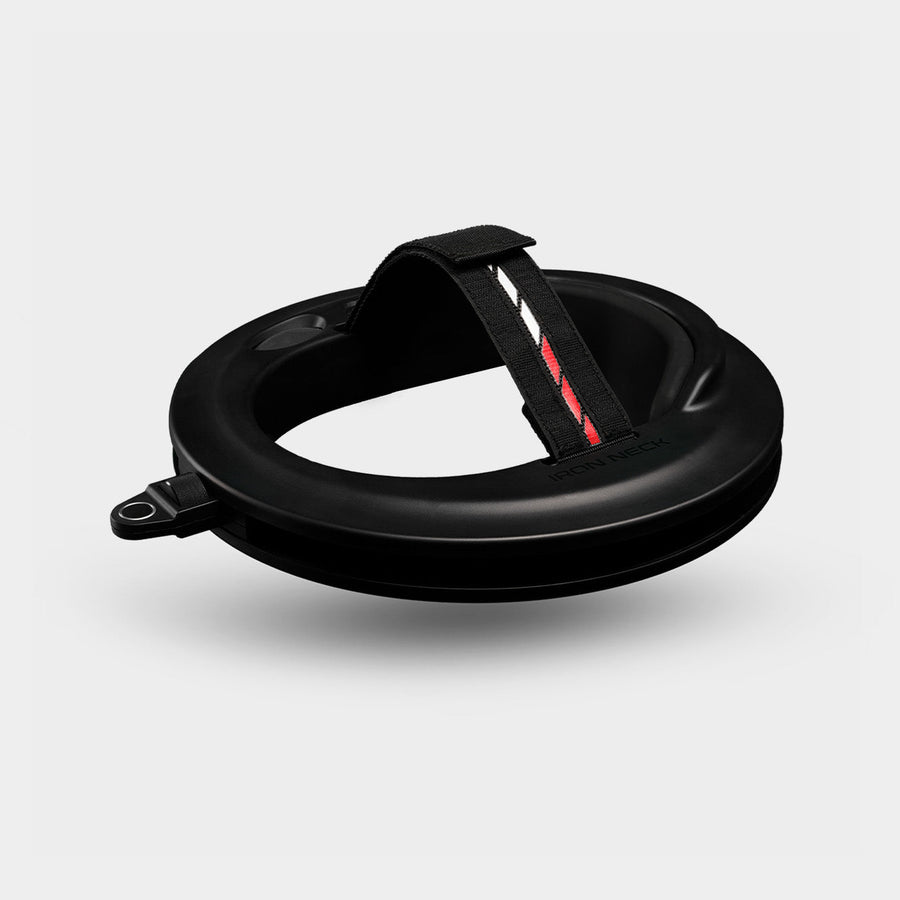
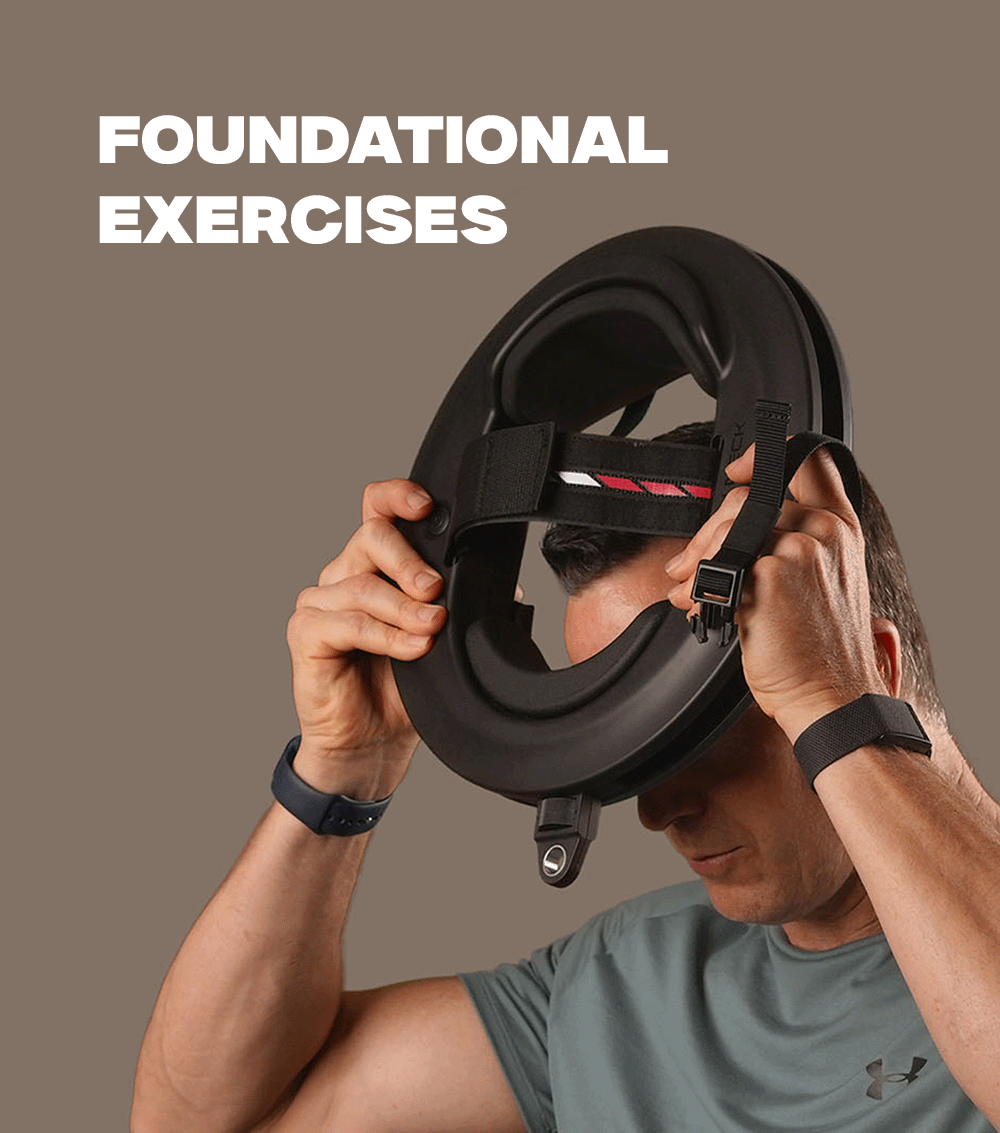
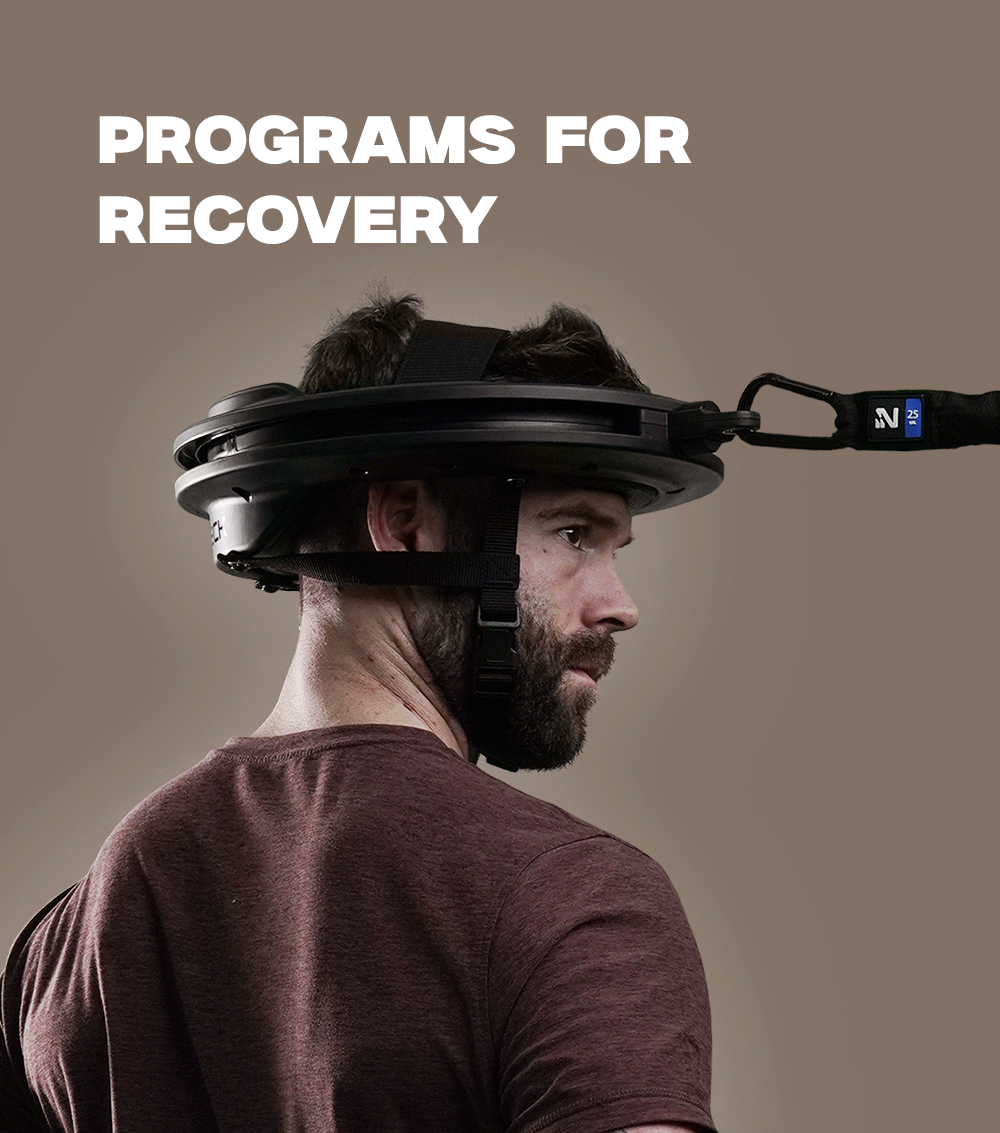
The 360 degree resistance head unit this program is built around, with the anchor and bands you need to train every direction from day one.

We call for an effort level instead of a specific weight, because the right resistance depends on you, the movement, and where you are in your training. For the sets and reps listed on each exercise, pick the resistance that makes the last few reps feel like the level shown.
You finish the set with several clean reps still in the tank. The work stays easy and fully controlled from the first rep to the last.
You could manage a few more reps at the end, but not many. The final reps take real effort while your form holds.
You reach the last prescribed rep with little or nothing left. Completing every rep with good form is genuinely hard.
These are starting points, not rules. Everyone is built differently, so adjust to fit you: size down if your form breaks before the final rep or a movement aggravates a symptom, and only size up once every rep feels smooth and pain free. When you are unsure, choose the lighter option.