

Protraction / Retraction
Front-to-back strength is the direct counter to the forward head whip of catching a downhill edge.
Snow sports injuries happen fast, an edge catch or washed landing loads the neck violently before you can think. This program builds the strength base and terrain-absorption control, loads end-range and rotational positions at strength resistance, and finishes with the reactive perturbation work that trains your brace to fire automatically. The neck you build in the gym is the one that shows up in the half-second before impact.

Build the neck strength and reflexive bracing that protect the head through falls, edge catches, and high-speed terrain changes.
Build balanced strength and the steady brace that absorbs normal terrain. Front-to-back control leads because that is the axis an edge catch punishes first.
Front-to-back strength is the direct counter to the forward head whip of catching a downhill edge.
The neutral brace stabilizes your head through chatter, chop, and the constant vibration of hard snow at speed.
Rotational strength powers the uphill look before you drop in and the constant scanning of a crowded run.
Slow spins build controlled rotation strength, keeping your vision stable while your board or skis swing beneath you.
Advance whenAdvance when all movement is smooth at Medium resistance and holds show no drift.
Load the positions crashes and hard terrain actually create. End-range, diagonal, and rotated-hold work build strength where a fall puts your neck, not just where it sits in a lift line.
End-range strength front and back is your protection when a landing comes up short and drives your chin down.
Falls load the neck at angles. Diagonal strength covers the oblique whip of a highside into the flat.
Rotated holds build strength for carving position, where your head stays turned down the fall line while your body works across it.
Postural holds build the endurance to keep your head up and reading terrain through a full top-to-bottom run.
Advance whenAdvance when end-range and diagonal work is solid at Heavy resistance without compensation.
Train the automatic brace. Perturbation, disruption mid-movement, and fast pulses build the reflexive stiffening that protects your neck in falls you never saw starting.
Unpredictable perturbation trains the reflexive brace that fires when the snow grabs an edge and everything goes sideways.
Disruption mid-spin trains head recovery while rotating, exactly the situation of a spinning, tumbling fall.
Fast diagonal pulses build the instant stiffening that catches your head when a landing kicks or a rut snaps the skis.
Cue-based reaction sharpens the quick scan that spots a merging rider or a dropped obstacle in time to avoid the crash entirely.
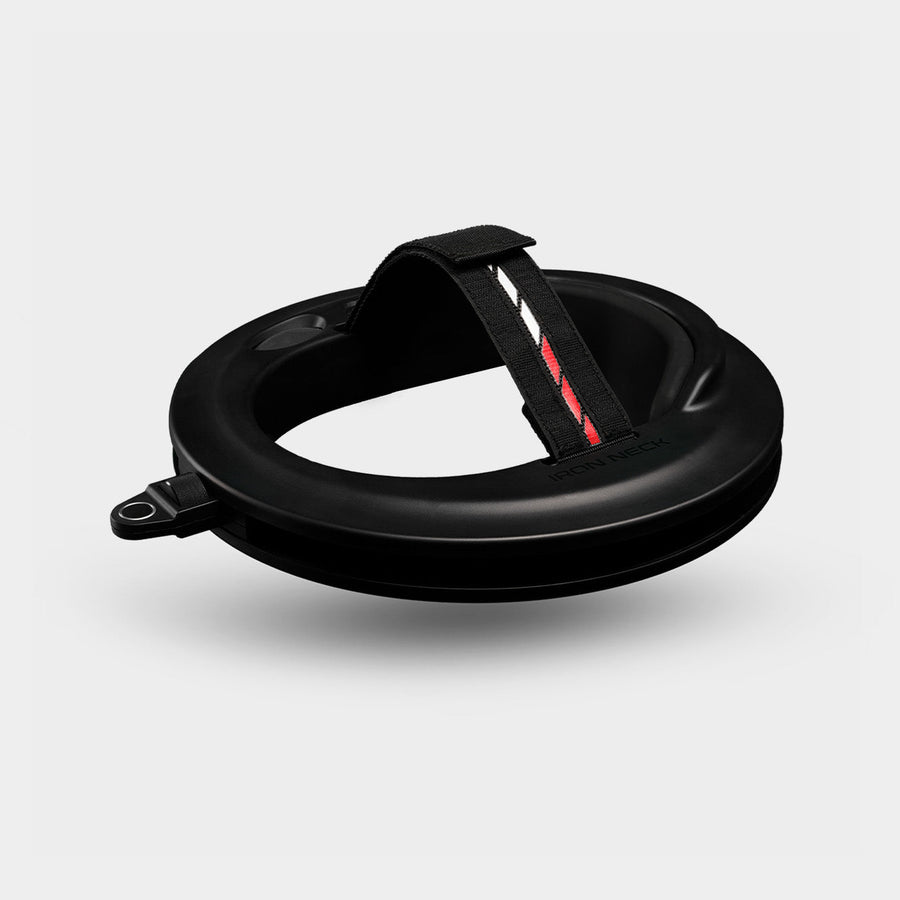
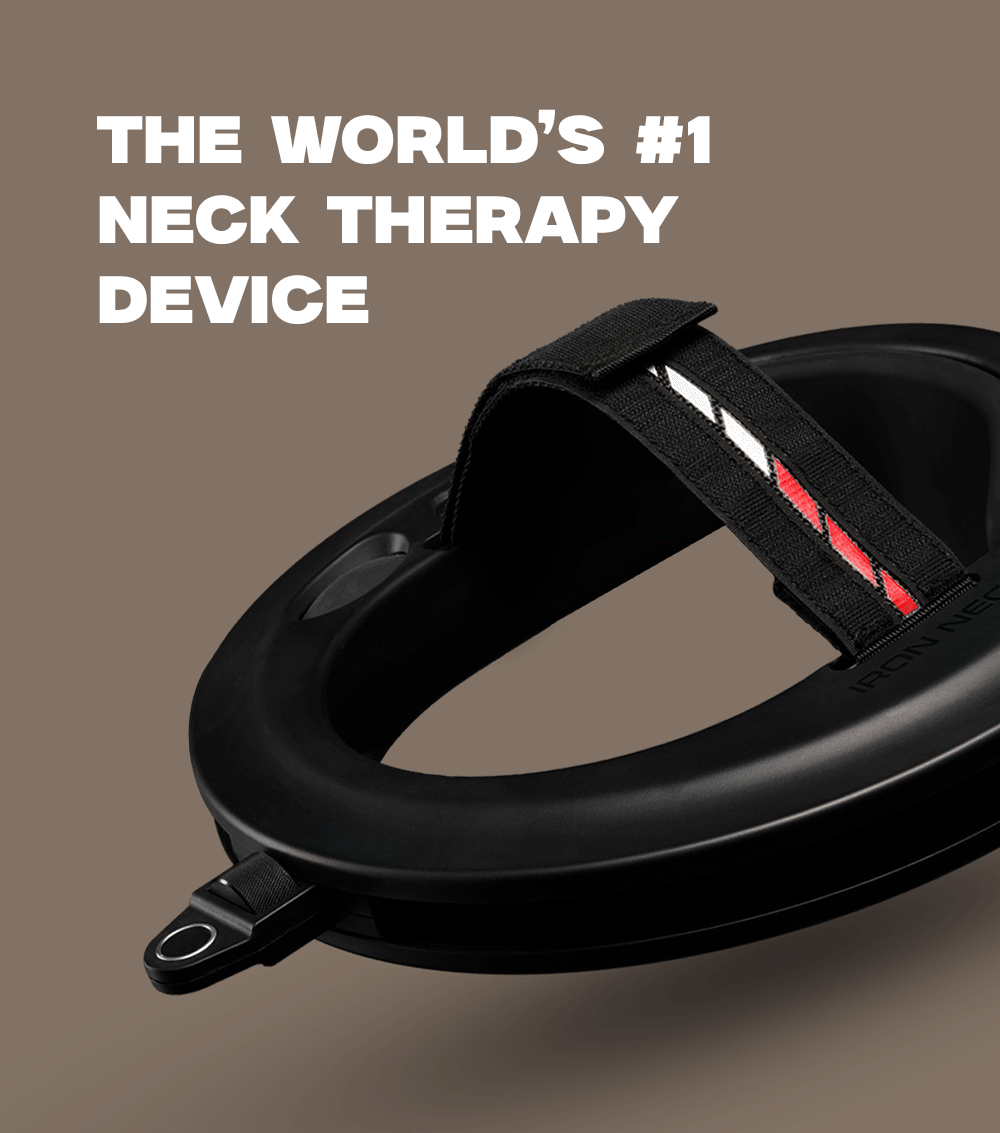
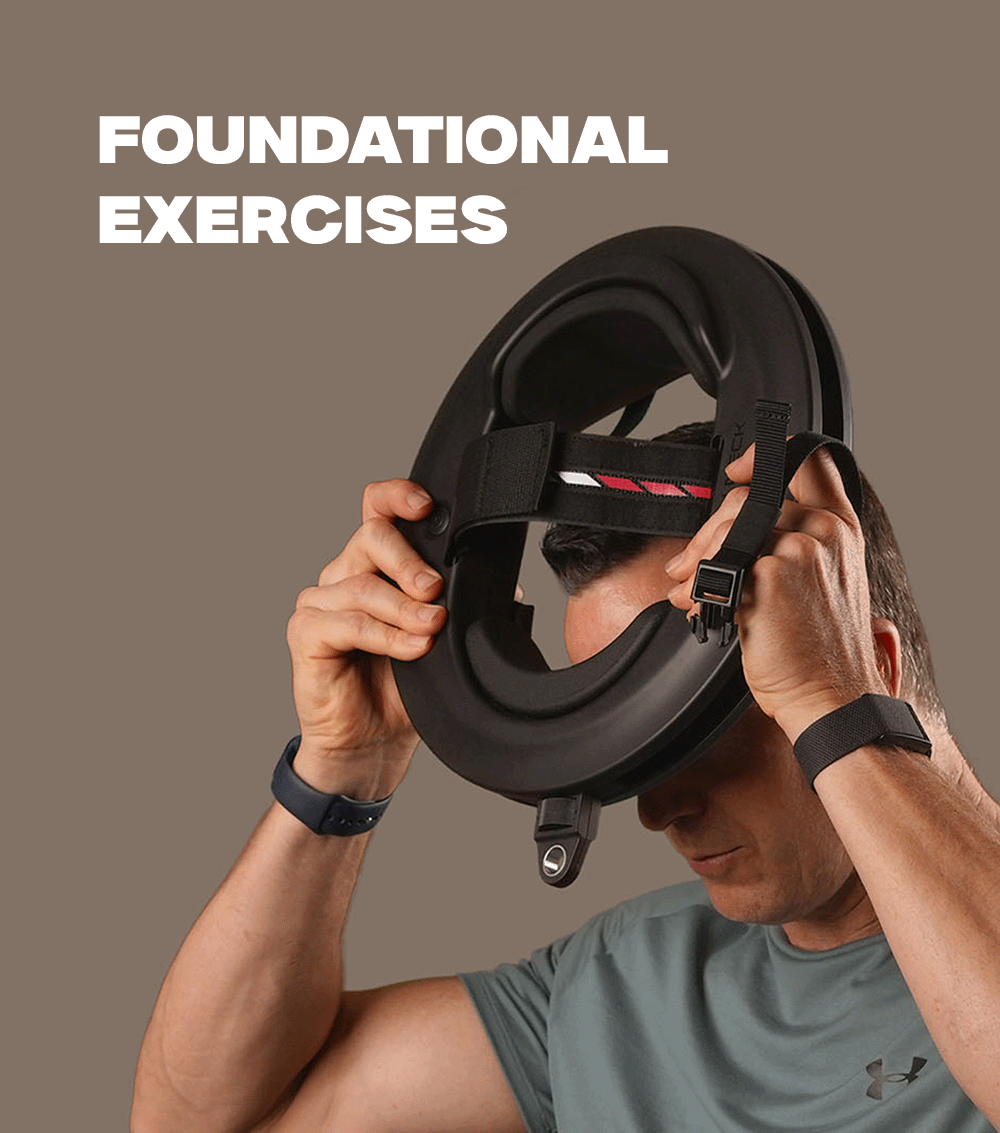
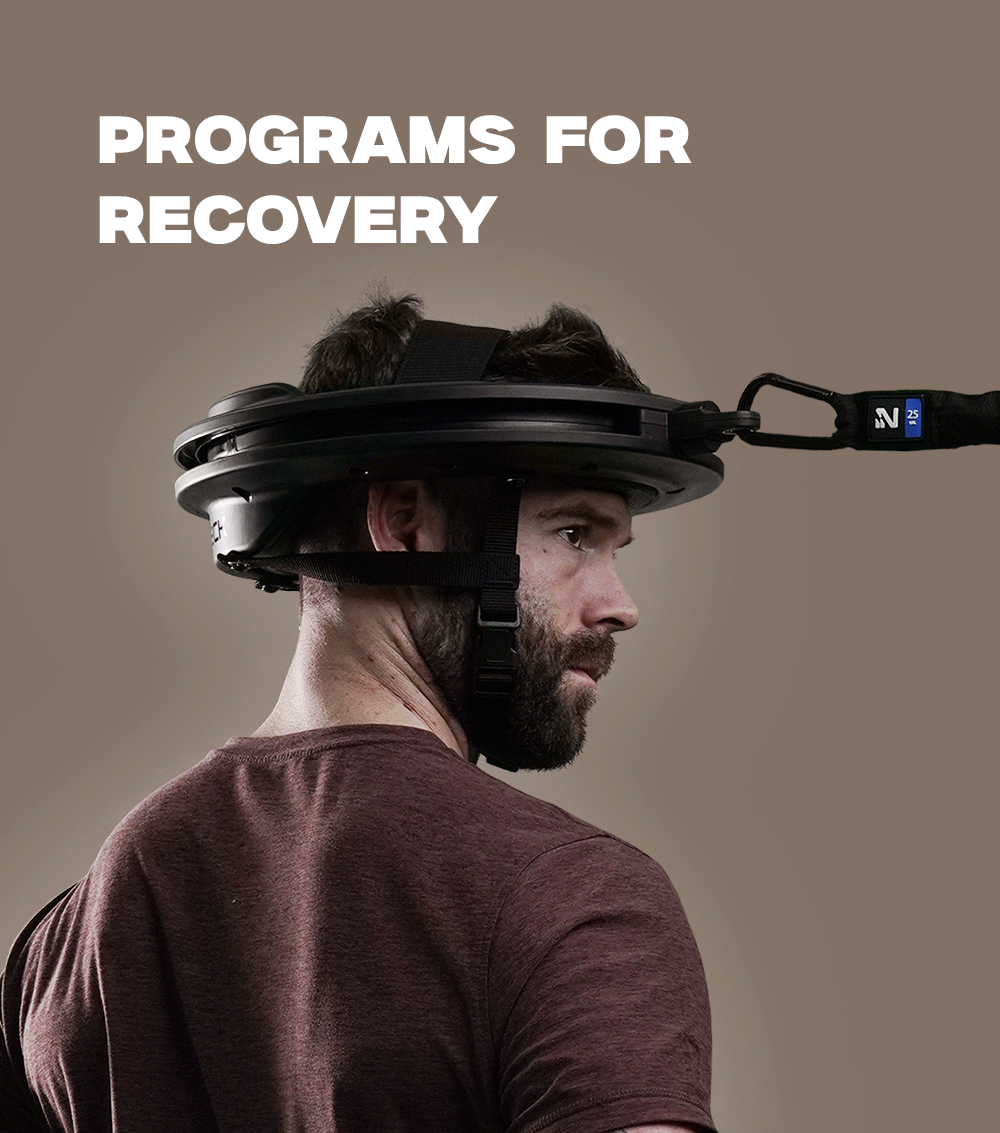
The 360 degree resistance head unit this program is built around, with the anchor and bands you need to train every direction from day one.

We call for an effort level instead of a specific weight, because the right resistance depends on you, the movement, and where you are in your training. For the sets and reps listed on each exercise, pick the resistance that makes the last few reps feel like the level shown.
You finish the set with several clean reps still in the tank. The work stays easy and fully controlled from the first rep to the last.
You could manage a few more reps at the end, but not many. The final reps take real effort while your form holds.
You reach the last prescribed rep with little or nothing left. Completing every rep with good form is genuinely hard.
These are starting points, not rules. Everyone is built differently, so adjust to fit you: size down if your form breaks before the final rep or a movement aggravates a symptom, and only size up once every rep feels smooth and pain free. When you are unsure, choose the lighter option.