


Sport Specific · Program 67

Basketball Court Vision & Contact

Basketball necks do two jobs, constant high-speed scanning to read the floor and absorbing contact on drives, screens, and rebounds. This program builds rotational range and strength first, layers in court-pattern control and endurance, and finishes with reactive vision work and contact bracing. Better court vision is partly a neck quality, and so is finishing through a body.

Focus · BasketballFrequency · 2-3x per weekSession · 15-20 min
Basketball Court Vision & Contact cover art
The goal

Sharpen scanning speed and build the contact tolerance to finish through bumps, screens, and rebounds.

Who it is for
  • Guards who scan the full floor in transition
  • Bigs who rebound and absorb screen contact
  • Players who want to finish through contact without losing the ball

Scanning Range & Base Strength

Build full, fast rotational range and the base strength beneath it. A point guard's floor vision starts with a neck that turns freely and controls its position.

01

Look Left, Look Right

3 sets of 10 repsAny direction

Rotational strength and range power the constant head swivel of reading defenses and finding shooters in transition.

How To
1Stand tall with your chest up and your chin level.
2Turn your head slowly to one side as far as you can go comfortably, hold for a moment, then return to center and repeat to the other side.
3Only your head moves.
Coaching Cues
Chin stays level as you rotate
Eyes lead the movement
Do not tilt your head
it is a turn and not a lean
Move with control and not momentum
Muscles Activated
SCMSplenius capitis/cervicisLongissimus capitis
02

Protraction / Retraction

3 sets of 10 repsFront & Back

Front-to-back control keeps your head stable through hard stops, euro steps, and the deceleration of a drive.

How To
1Glide your head straight forward, reaching your chin outward, then glide it straight back as though making a double chin.
2Keep your eyes and chin level the entire time and move smoothly along a horizontal path.
Coaching Cues
Slide your head along an invisible shelf
Make a double chin
then get rid of it
No nodding
keep your eyes level throughout
Think forward and back
not up and down
Muscles Activated
SCMAnterior scaleneDeep neck flexorsSemispinalis cervicis
03

360 Spin

3 sets of 5 reps each directionFront

Anti-rotation control keeps your eyes on the rim when contact tries to turn your body mid-shot.

How To
1Stand tall with your shoulders stacked over your hips and fix your eyes on a point straight ahead.
2Rotate your body in place, hips, torso and feet, while your head stays completely still.
3Move slowly through a full clockwise turn, then reverse and complete a full counterclockwise turn.
Coaching Cues
Head still
body turns
Move like a tank turret with your upper body rotating under a fixed head
Do not let your nose drift from its anchor point
Feel the resistance wrap around you as you rotate
Muscles Activated
SCMSplenius capitis/cervicisSemispinalis capitisMultifidus
04

Isometric Hold

3 sets of 15 second holdsFront

The neutral brace is your armor for screen contact, keeping the head steady when you fight over a pick.

How To
1Set your head in the working position and hold it there against the band.
2Keep your chin level, breathe normally, and resist any drift for the full time prescribed.
Coaching Cues
Brace your neck without clenching your jaw
Keep breathing through the hold
Nothing moves but your ribs
End the set when your position starts to drift
Muscles Activated
Deep neck flexors/extensorsSCMSplenius

Advance whenAdvance when rotation is full and smooth both directions and holds are steady at Medium resistance.

Court-Pattern Strength & Endurance

Load the movement patterns of live play. Tempo rotation, diagonals, and body-turn work build the strength to scan and absorb contact deep into the fourth quarter.

01

Look Left, Look Right (tempo)

3 sets of 8 reps alternating speedsAny direction

Fast-to-slow rotation matches game scanning, snapping your head to find the outlet then settling to read the floor.

How To
1Stand tall with your chest up and your chin level.
2Turn your head slowly to one side as far as you can go comfortably, hold for a moment, then return to center and repeat to the other side.
3Only your head moves.
Coaching Cues
Chin stays level as you rotate
Eyes lead the movement
Do not tilt your head
it is a turn and not a lean
Move with control and not momentum
Muscles Activated
SCMSplenius capitis/cervicisLongissimus capitis
02

Diagonals

3 sets of 6 reps each diagonalFront or Back

Diagonal strength covers the angled head paths of tracking a lob or following a shot off the rim into rebounding position.

How To
1Start by looking down toward one armpit.
2Trace a diagonal path upward with your eyes and nose until you are looking above the opposite shoulder, then return along the same path.
3Finish your reps on one side before switching to the opposite diagonal.
Coaching Cues
Draw an X in your field of view with your nose
Follow a diagonal line with your eyes
Use full range but keep it smooth
Feel your neck twist and lengthen
Muscles Activated
SCMSplenius capitisScalenesSuboccipitals
03

Locked Neck, Body Turn

3 sets of 8 repsAny direction

A still head over a turning body is post footwork and pivot mechanics, sealing a defender while your eyes stay on the passer.

How To
1Lock your head in a forward facing position and rotate your torso side to side without letting your head follow.
2Your hips, spine and shoulders twist while your neck holds a stable, neutral position with your nose pointed forward.
Coaching Cues
Your head is the anchor
rotate underneath it
Think of your nose as a laser pointer and do not let the dot move
This is anti-rotation
fight the urge to turn your head
Use your core to rotate and not your neck
Muscles Activated
Deep neck flexors/extensorsSCMSpleniusMultifidus
04

Protraction / Retraction (with hold)

3 sets of 6 reps with 2 second holdsFront & Back

Postural holds build the endurance that keeps your head up and vision wide when your legs are gone late in games.

How To
1Glide your head straight forward, reaching your chin outward, then glide it straight back as though making a double chin.
2Keep your eyes and chin level the entire time and move smoothly along a horizontal path.
Coaching Cues
Slide your head along an invisible shelf
Make a double chin
then get rid of it
No nodding
keep your eyes level throughout
Think forward and back
not up and down
Muscles Activated
SCMAnterior scaleneDeep neck flexorsSemispinalis cervicis

Advance whenAdvance when tempo and diagonal work stays crisp at Medium resistance through the final set.

Reactive Vision & Contact Finishing

Bring vision and contact together at game speed. Cue-based reaction, eye tracking, fast pulses, and perturbation train a neck that scans instantly and braces automatically.

01

Look Left, Look Right (reactive, cue-based)

3 sets of 6 reps on cueAny direction

Cue-based head turns train the instant reaction of hearing a teammate call a switch and finding your new assignment.

How To
1Stand tall with your chest up and your chin level.
2Turn your head slowly to one side as far as you can go comfortably, hold for a moment, then return to center and repeat to the other side.
3Only your head moves.
Coaching Cues
Chin stays level as you rotate
Eyes lead the movement
Do not tilt your head
it is a turn and not a lean
Move with control and not momentum
Muscles Activated
SCMSplenius capitis/cervicisLongissimus capitis
02

Figure Eights (eye tracking)

2 sets of 4 repsFront or Back

Eye tracking through figure eights links gaze to neck control, the pairing that tracks a ball through traffic without losing your man.

How To
1Draw a sideways figure eight in the air with your nose.
2Nod down and to one side, loop up and around in a smooth curve, cross the midline and continue into a mirrored curve on the other side.
3Keep the motion flowing, then repeat in the opposite direction.
Coaching Cues
Paint a sideways eight in the air with your nose
Let your head flow and not jerk
Stay loose in the shoulders and spine
Make it smooth and continuous like cursive writing
Muscles Activated
SCMSpleniusLongissimusDeep flexors/extensorsSuboccipitals
03

Diagonals (dynamic pulses)

3 sets of 10 fast pulses per directionFront or Back

Fast diagonal pulses build the quick stiffening that keeps your head stable when you rise through contact for a rebound.

How To
1Start by looking down toward one armpit.
2Trace a diagonal path upward with your eyes and nose until you are looking above the opposite shoulder, then return along the same path.
3Finish your reps on one side before switching to the opposite diagonal.
Coaching Cues
Draw an X in your field of view with your nose
Follow a diagonal line with your eyes
Use full range but keep it smooth
Feel your neck twist and lengthen
Muscles Activated
SCMSplenius capitisScalenesSuboccipitals
04

Isometric Hold (with perturbation)

3 sets of 15 second holds per directionFront

Perturbation holds replicate the bumping of a box-out battle, training the brace that holds position without a whistle.

How To
1Set your head in the working position and hold it there against the band.
2Keep your chin level, breathe normally, and resist any drift for the full time prescribed.
Coaching Cues
Brace your neck without clenching your jaw
Keep breathing through the hold
Nothing moves but your ribs
End the set when your position starts to drift
Muscles Activated
Deep neck flexors/extensorsSCMSplenius
Get the gear

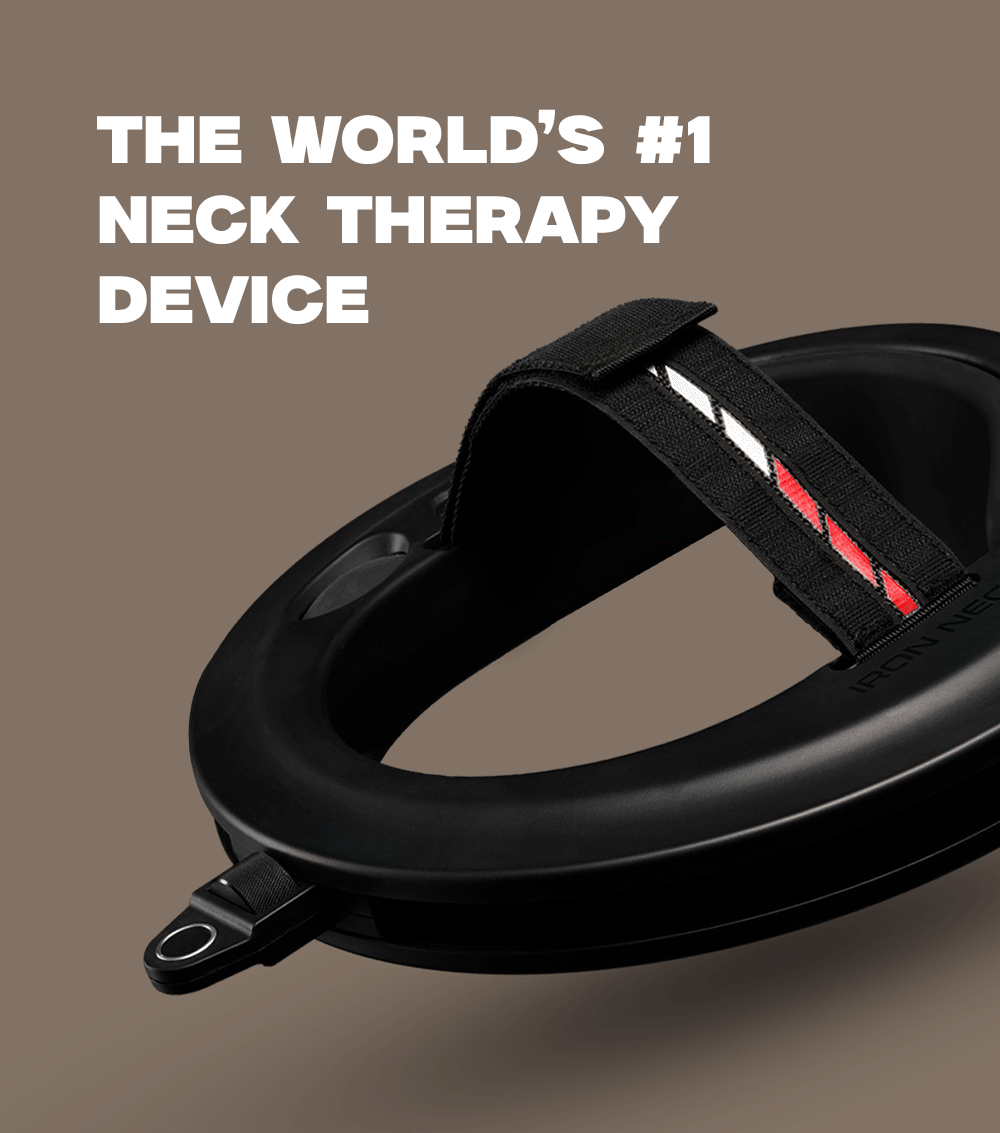
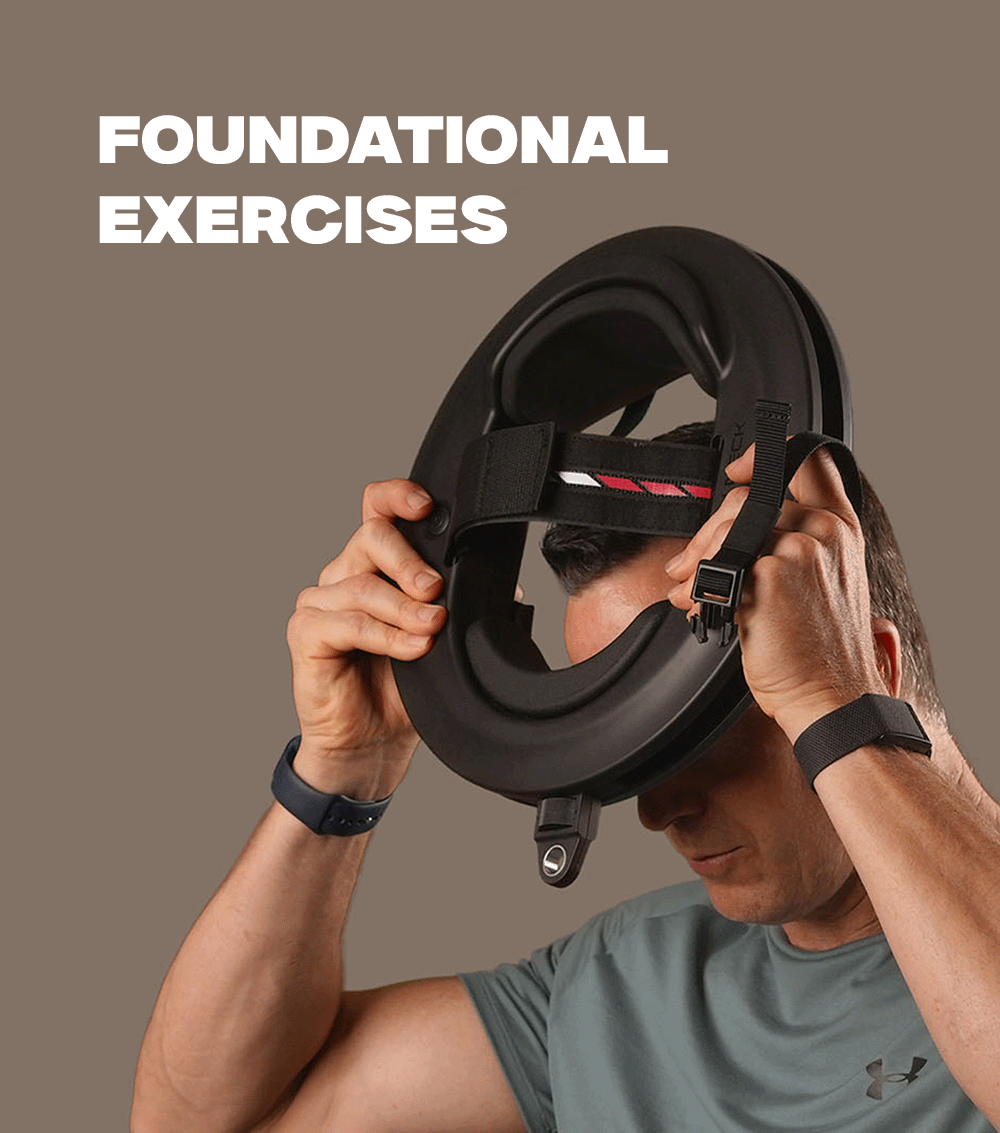
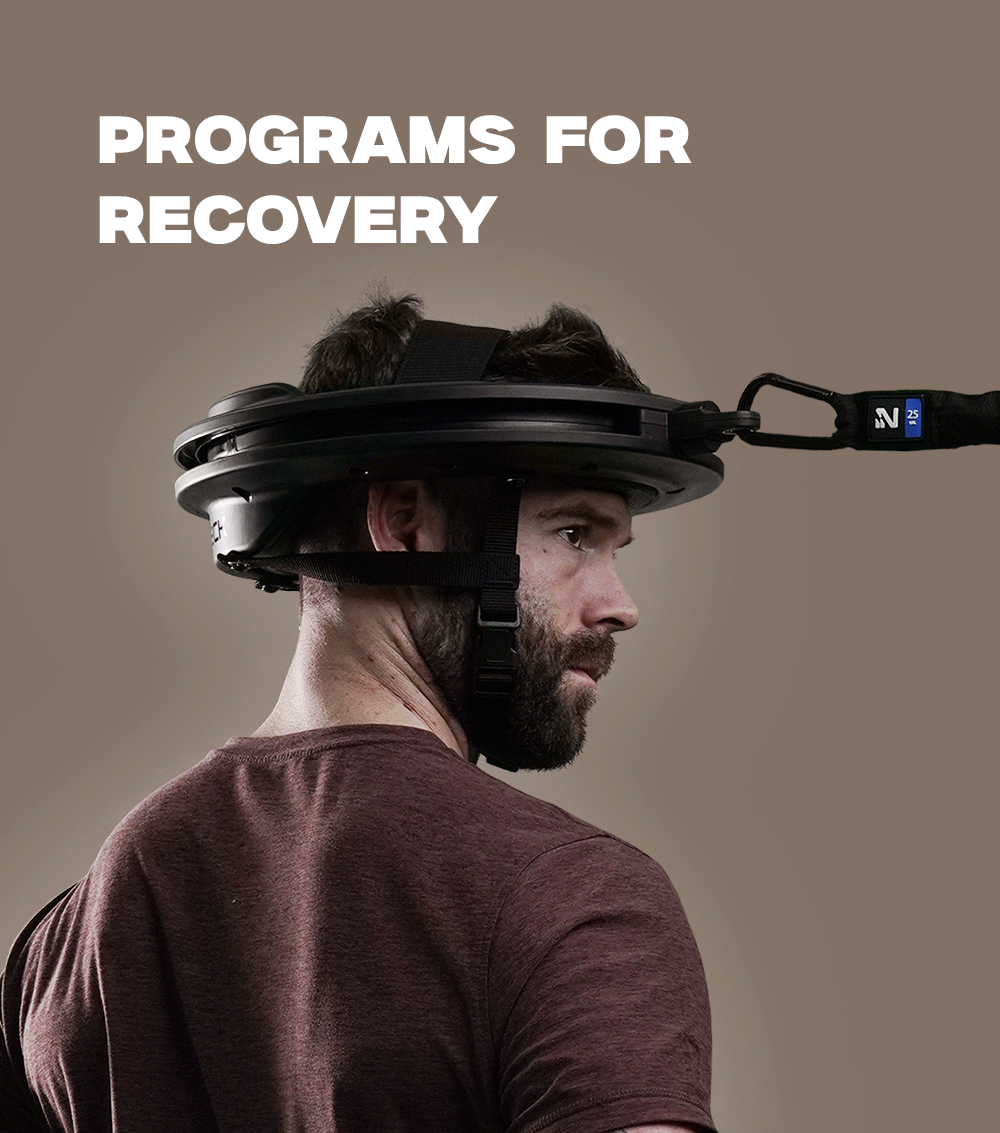
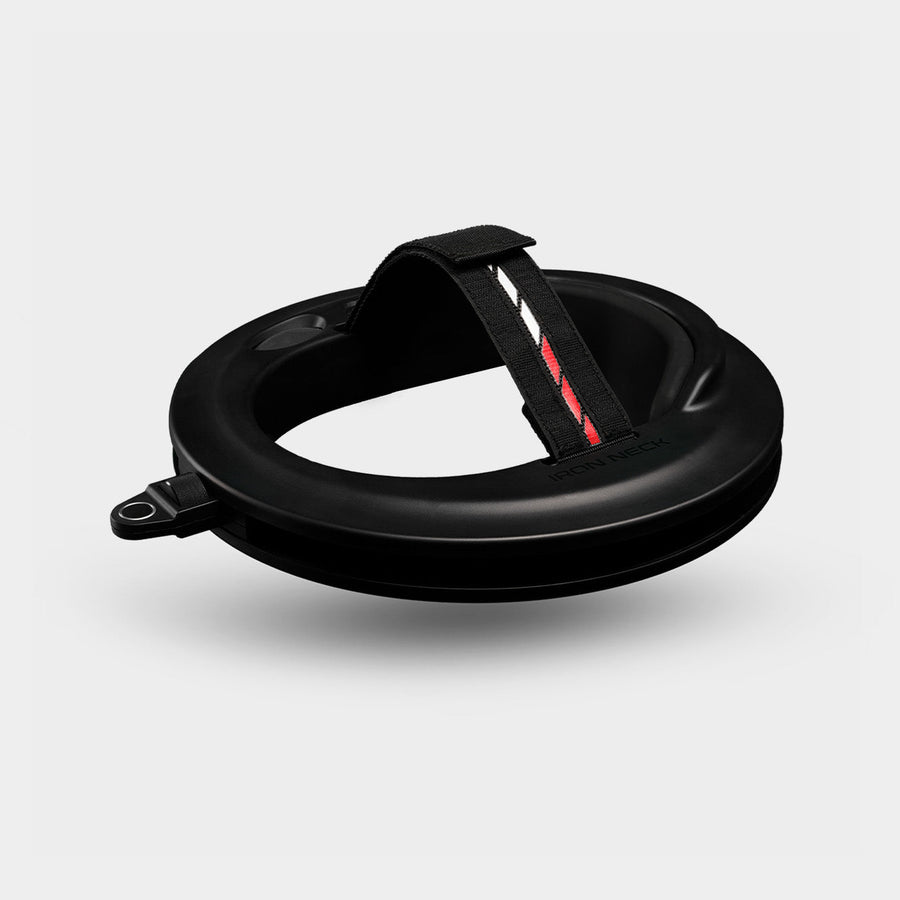
Train this program with the Iron Neck 3.0 Pro

The 360 degree resistance head unit this program is built around, with the anchor and bands you need to train every direction from day one.

Iron Neck 3.0 Pro
Iron Neck 3.0 Pro $599.00
Set your resistance

Light, medium, or heavy?

We call for an effort level instead of a specific weight, because the right resistance depends on you, the movement, and where you are in your training. For the sets and reps listed on each exercise, pick the resistance that makes the last few reps feel like the level shown.

Light

You finish the set with several clean reps still in the tank. The work stays easy and fully controlled from the first rep to the last.

Medium

You could manage a few more reps at the end, but not many. The final reps take real effort while your form holds.

Heavy

You reach the last prescribed rep with little or nothing left. Completing every rep with good form is genuinely hard.

These are starting points, not rules. Everyone is built differently, so adjust to fit you: size down if your form breaks before the final rep or a movement aggravates a symptom, and only size up once every rep feels smooth and pain free. When you are unsure, choose the lighter option.