

Isometric Hold
The neutral brace is your baseline against braking and acceleration G, coupling the helmet to your torso down every straight.
In a kart or race car, every corner pushes your helmeted head sideways with multiples of its own weight, and the load repeats for lap after lap with no rest. This program builds general strength, converts it into long-duration lateral holding capacity, and finishes with endurance under disruption for kerb strikes and traffic. When your neck gives up mid-stint, your vision and your lap times go with it, and this is the program that prevents it.

Build the lateral isometric endurance to hold your head upright against sustained cornering G through a full race stint.
Build balanced strength in every direction and the base bracing capacity that racing loads demand. Slow, controlled work establishes alignment before the long holds begin.
The neutral brace is your baseline against braking and acceleration G, coupling the helmet to your torso down every straight.
Rotational strength keeps mirror checks and apex scanning fast even when lateral load is trying to pin your head still.
Front-to-back strength handles the braking zones, where deceleration throws your helmet forward hardest of all.
Slow spins build controlled strength through rotation, keeping your eyes level and your horizon stable through direction changes.
Advance whenAdvance when all holds are steady for the full duration and movement is smooth in every direction.
Convert strength into the long-duration lateral holds that define motorsport. Hold times stretch toward corner-sequence length and end-range strength protects against peak loads.
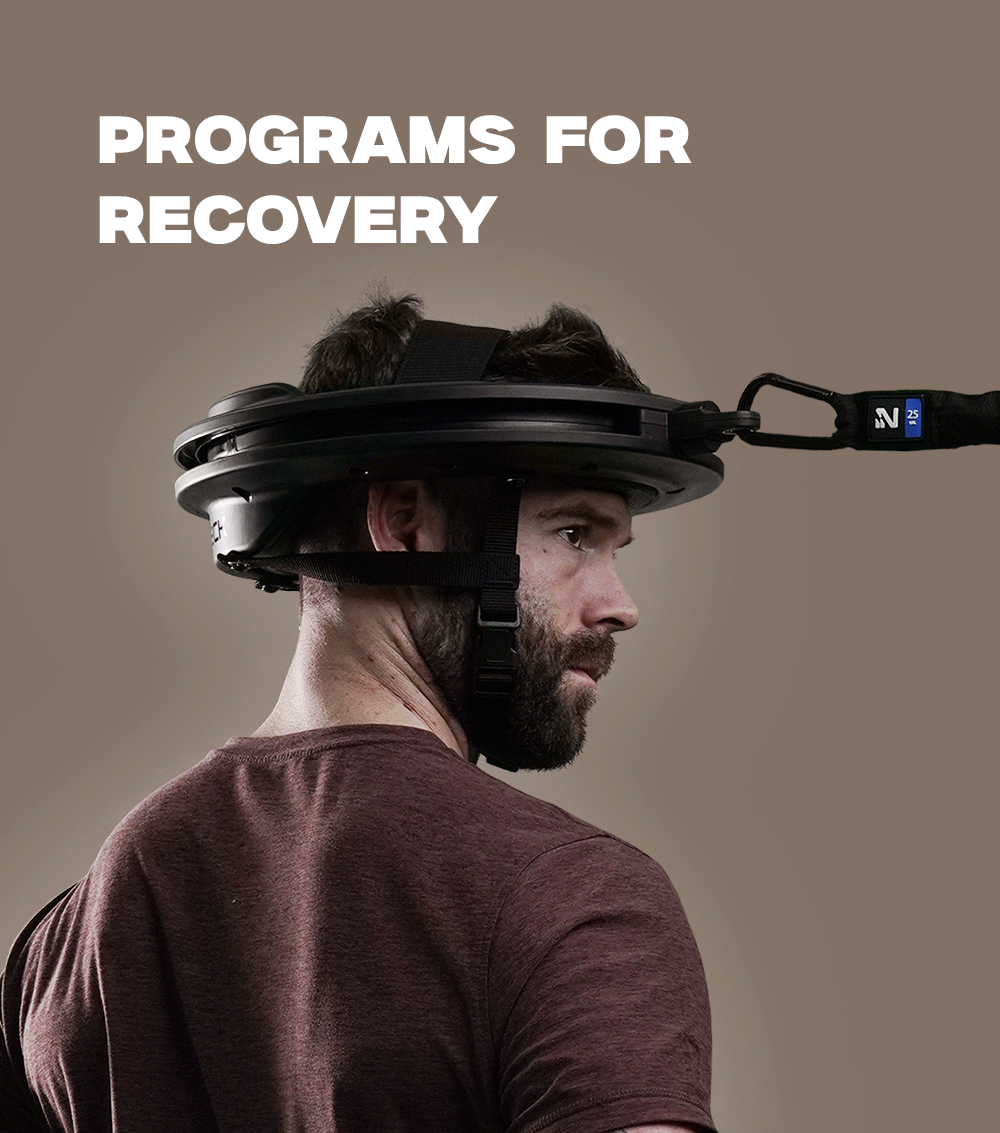
Long holds with the head loaded to the side are the sport itself, replicating the sustained lateral G of a fast corner sequence.
End-range rotational holds build strength for long carousel corners where your head stays turned and loaded for seconds at a time.
End-range strength front and back protects your neck at peak braking, the highest single load most drivers ever experience.
A locked head over a working body mirrors car control under load, steering and correcting while your head holds dead steady.
Advance whenAdvance when 20 second rotated holds are solid each side at Heavy resistance without shaking.
Endurance meets disruption. Long holds under perturbation, tempo rotation, and eye tracking train a neck that stays strong and a gaze that stays stable through traffic, kerbs, and the final laps.
Perturbation during long holds replicates kerb strikes and bumps mid-corner, when the load spikes without warning inside sustained G.
Paused positions through the spin build strength at every head angle a complex of corners drags you through.
Fast-to-slow rotation trains quick mirror checks that settle instantly back to a stable forward gaze in traffic.
Eye tracking under neck load trains stable vision while the head fights G, the skill that keeps your braking markers sharp on lap forty.
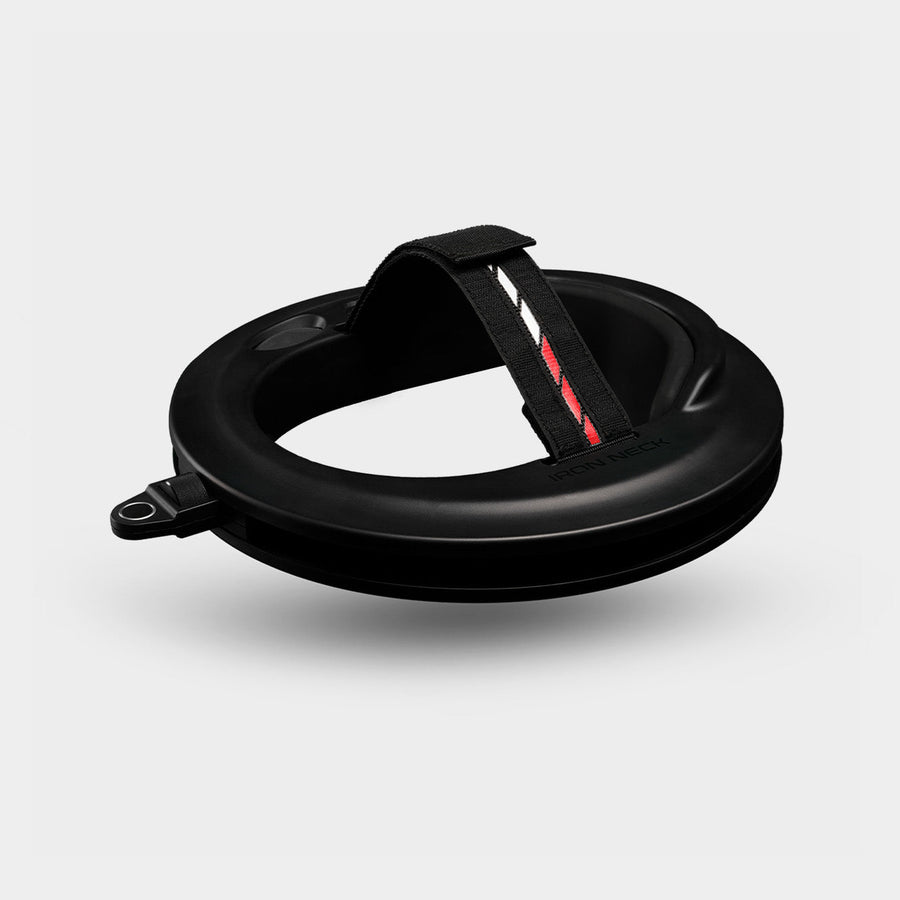
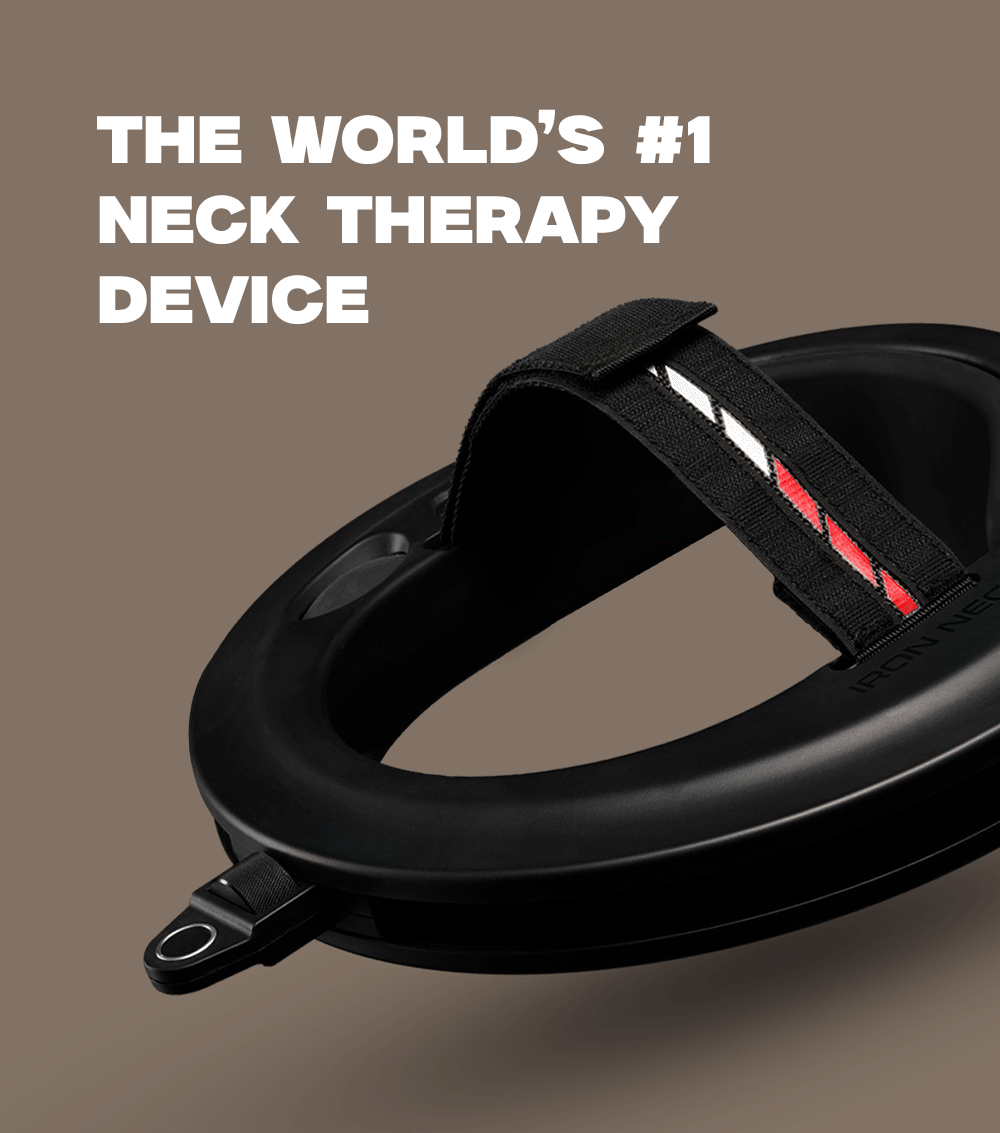
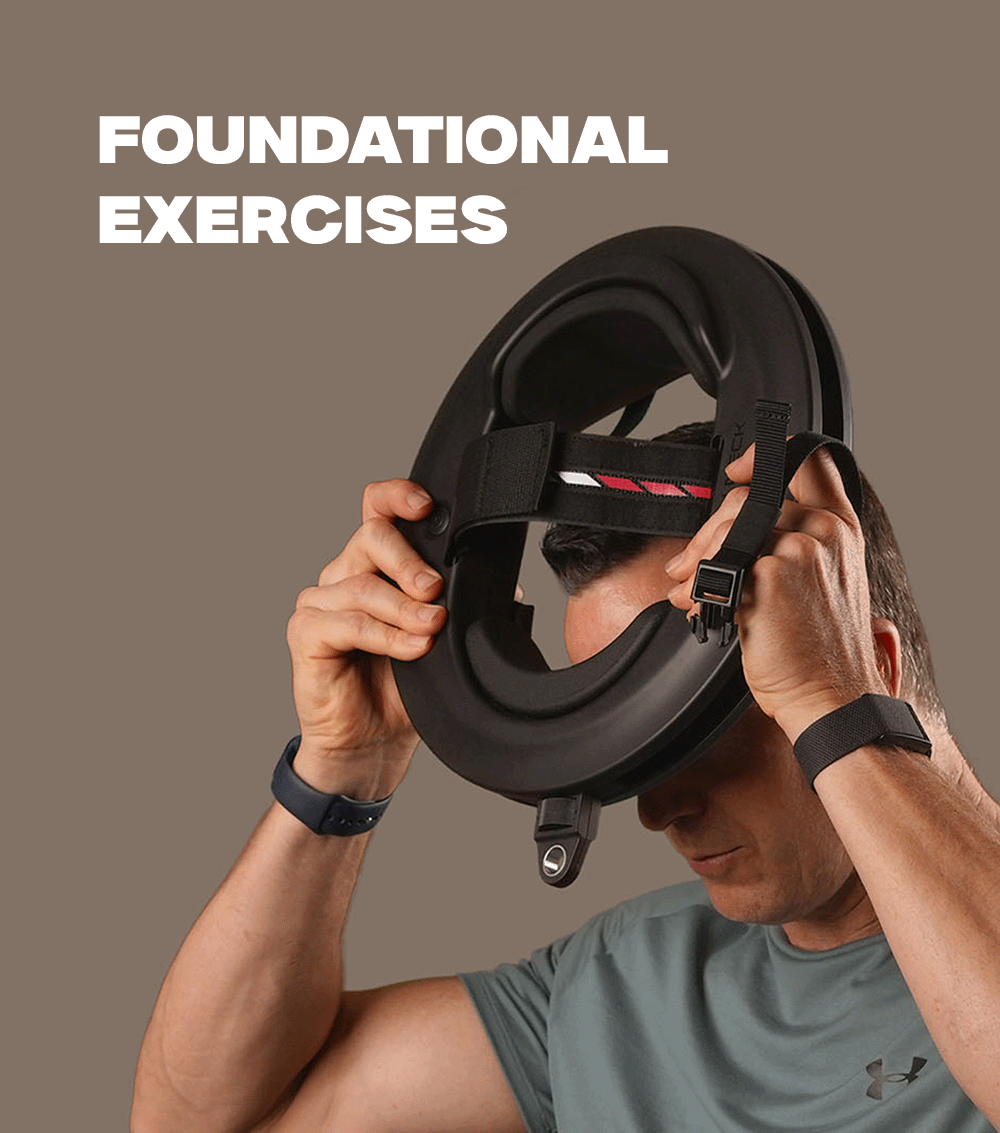
The 360 degree resistance head unit this program is built around, with the anchor and bands you need to train every direction from day one.

We call for an effort level instead of a specific weight, because the right resistance depends on you, the movement, and where you are in your training. For the sets and reps listed on each exercise, pick the resistance that makes the last few reps feel like the level shown.
You finish the set with several clean reps still in the tank. The work stays easy and fully controlled from the first rep to the last.
You could manage a few more reps at the end, but not many. The final reps take real effort while your form holds.
You reach the last prescribed rep with little or nothing left. Completing every rep with good form is genuinely hard.
These are starting points, not rules. Everyone is built differently, so adjust to fit you: size down if your form breaks before the final rep or a movement aggravates a symptom, and only size up once every rep feels smooth and pain free. When you are unsure, choose the lighter option.