

Protraction / Retraction
Braking bumps throw your helmeted head forward on every entrance. Front-to-back strength is the first thing a moto neck needs.
A motocross helmet turns every whoop section, braking bump, and hard landing into a load your neck absorbs, hundreds of times per moto. This program builds sagittal strength and holding capacity first, extends it into long-duration endurance, and finishes with the reactive control that handles kicked rears and cross-rutted landings. Arm pump gets the attention, but neck fatigue is what ruins your last five laps.

Build the neck endurance to control a helmeted head through whoops, braking bumps, and 30 plus minute motos.
Build the base strength to control a helmeted head against constant chop. Front-to-back control and steady holds come first because that is where braking bumps load you hardest.
Braking bumps throw your helmeted head forward on every entrance. Front-to-back strength is the first thing a moto neck needs.
Long neutral holds build the sustained brace of attack position, holding your head steady against chop for entire sections.
Rotational strength keeps head checks and line scanning crisp when the roost and the pace make everything harder.
Slow full-range spins build controlled strength through rotation, the base for keeping vision level through off-camber corners.
Advance whenAdvance when all holds are steady for the full duration and movement stays smooth at Medium resistance.
Extend strength into race duration. Long holds, end-range work, and full-range patterns build the capacity to hold your head up from the gate drop to the checkered flag.
Repeated holds build the endurance that keeps your chin from dropping in the final laps, when fatigue starts choosing your lines.
End-range strength protects you when a hard landing or g-out drives your helmet past its normal range.
Rotated holds build endurance for sustained ruts and long sweepers where your head stays turned into the corner under load.
Full-range diagonals build strength along the mixed vectors of jump faces and kicked landings that load the neck at angles.
Advance whenAdvance when extended holds are completed without shaking and end-range work is solid at Heavy resistance.
Train for the moments that are not in the plan. Perturbation, disruption mid-movement, fast pulses, and eye tracking prepare the neck for swaps, kicks, and cross-rutted chaos.
Unpredictable disruption during holds replicates a whoop section, where the bike hammers your head a different direction every impact.
Disruption mid-spin trains head recovery while already moving, exactly what happens when the rear end swaps mid-corner.
Fast diagonal pulses build the instant stiffening that catches your head when the front wheel knifes or a landing kicks sideways.
Eye tracking during figure eights trains vision and neck to work together, holding a smooth line focus while your head absorbs chop.
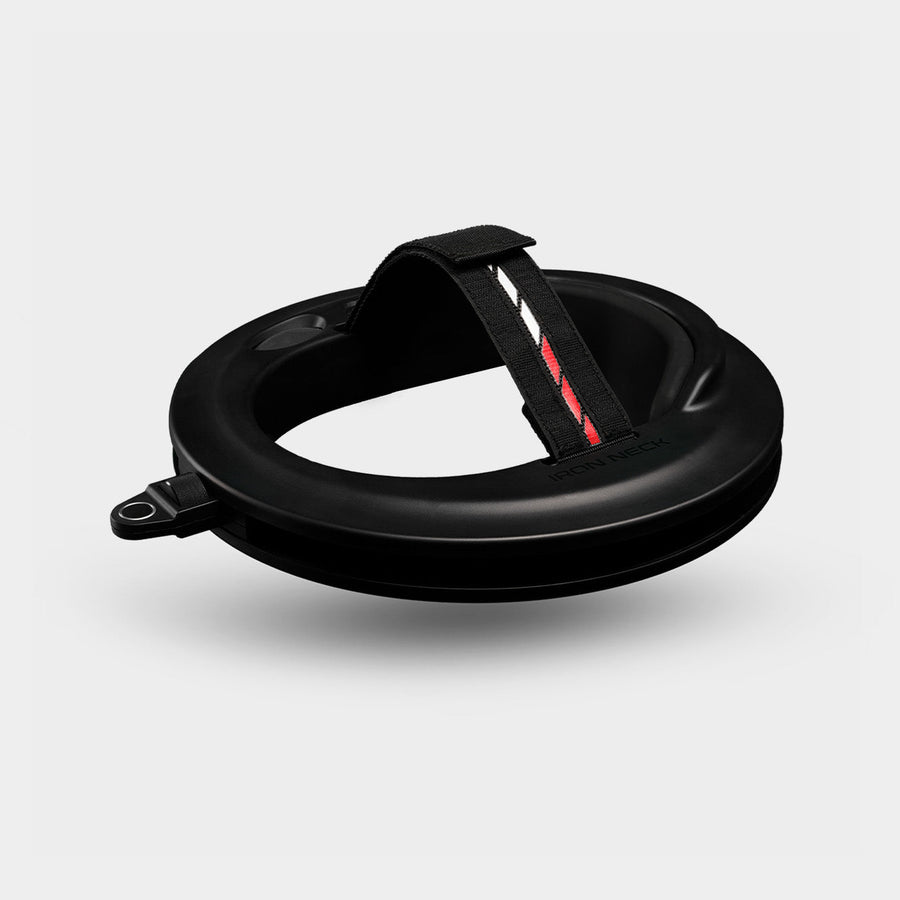
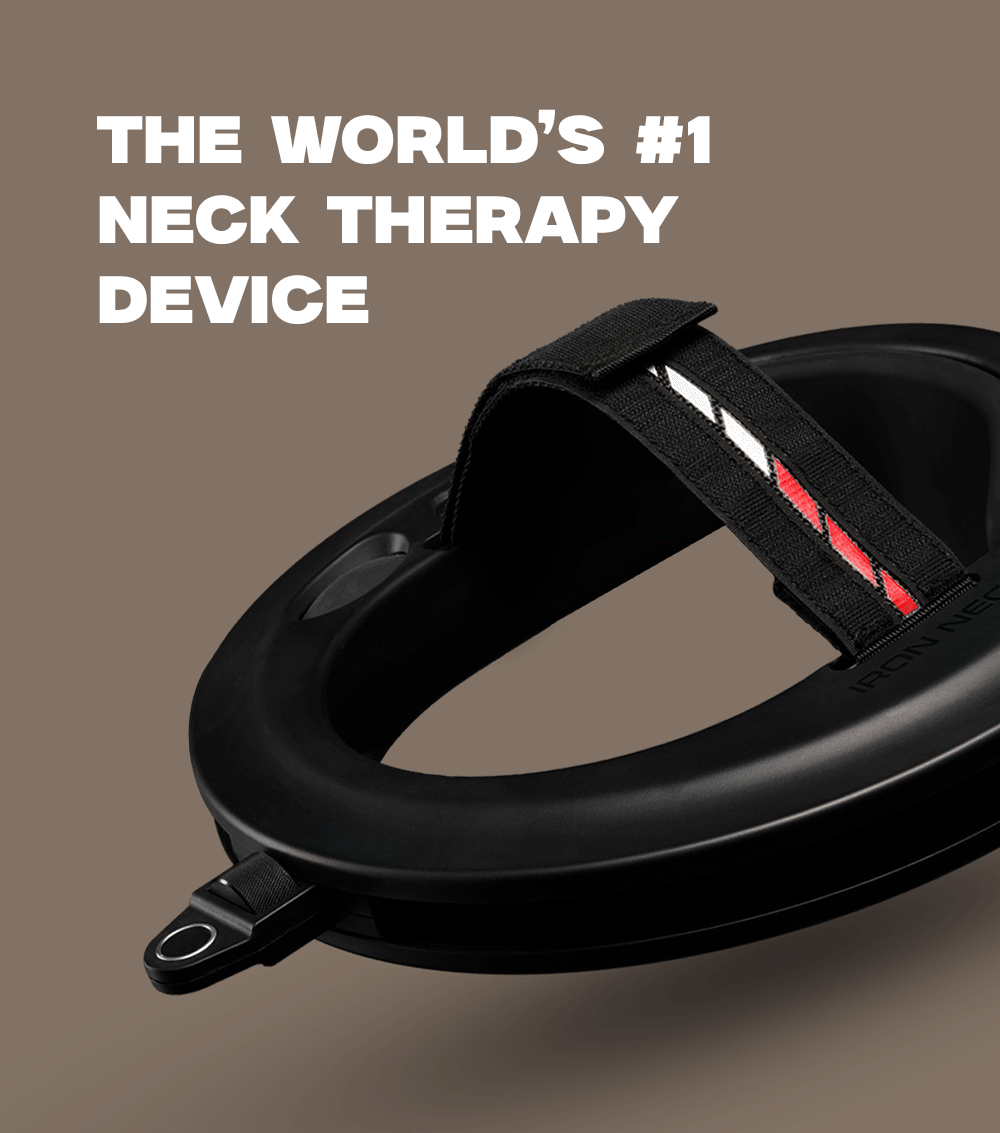
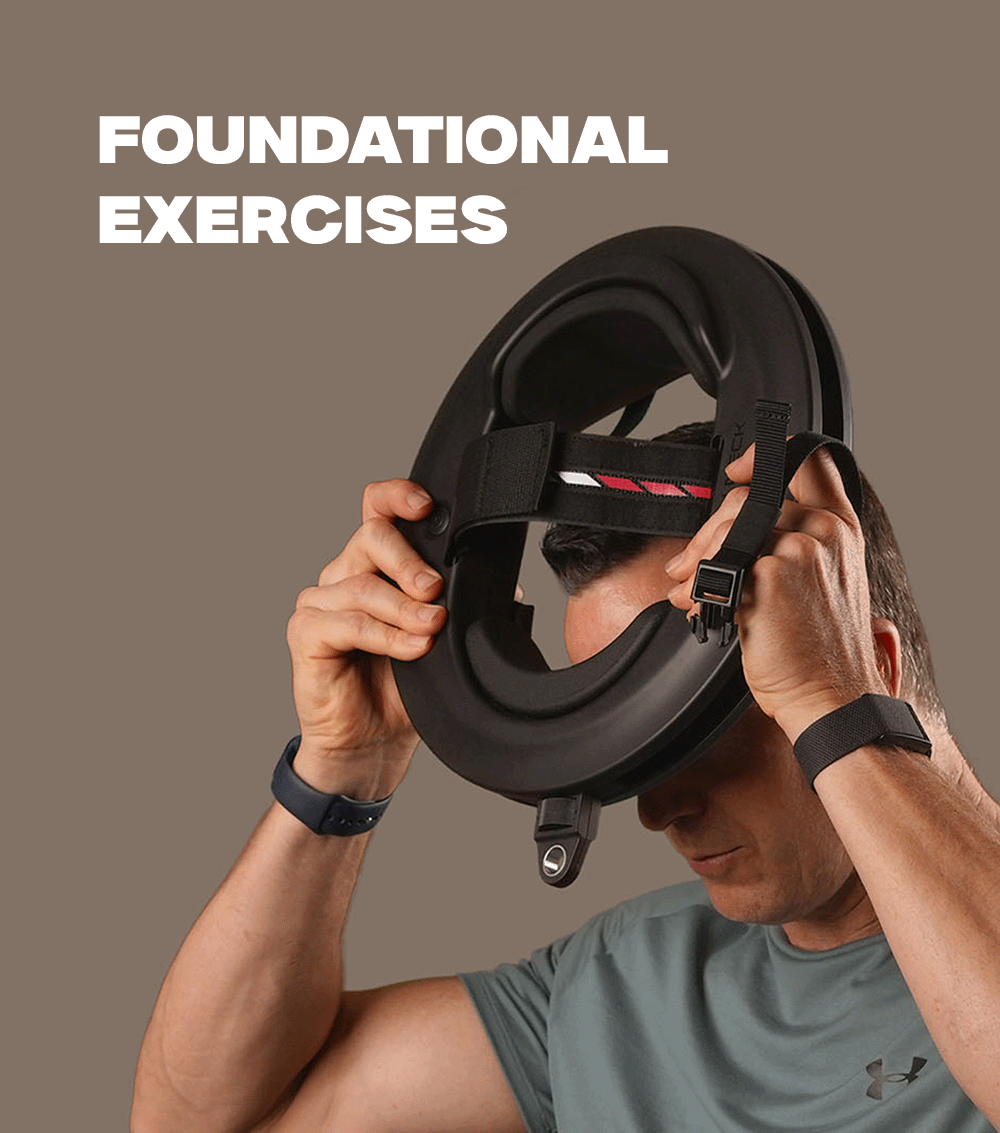
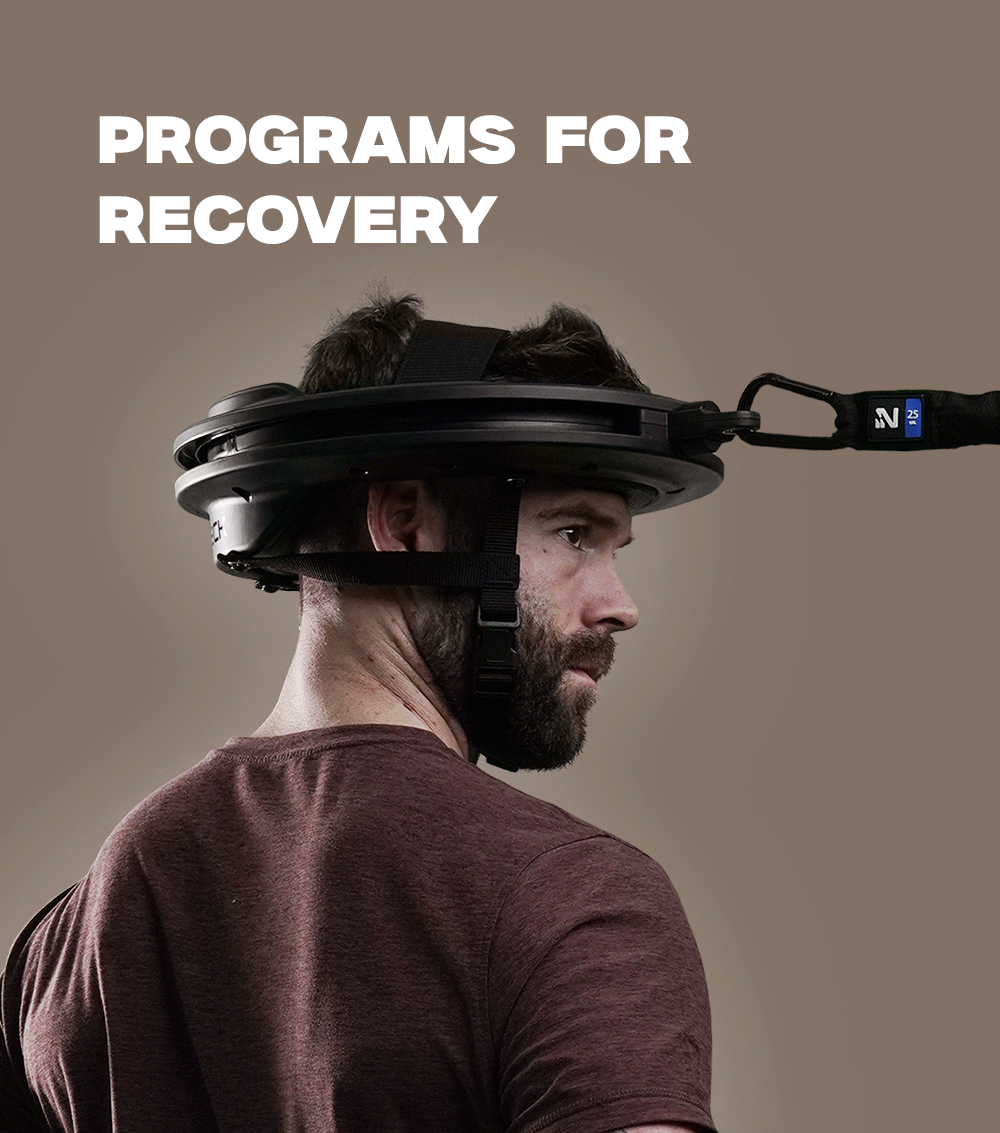
The 360 degree resistance head unit this program is built around, with the anchor and bands you need to train every direction from day one.

We call for an effort level instead of a specific weight, because the right resistance depends on you, the movement, and where you are in your training. For the sets and reps listed on each exercise, pick the resistance that makes the last few reps feel like the level shown.
You finish the set with several clean reps still in the tank. The work stays easy and fully controlled from the first rep to the last.
You could manage a few more reps at the end, but not many. The final reps take real effort while your form holds.
You reach the last prescribed rep with little or nothing left. Completing every rep with good form is genuinely hard.
These are starting points, not rules. Everyone is built differently, so adjust to fit you: size down if your form breaks before the final rep or a movement aggravates a symptom, and only size up once every rep feels smooth and pain free. When you are unsure, choose the lighter option.