

Isometric Hold
A scrum is a long isometric contest. Extended neutral holds build the base capacity to stay bound and square through the push.
Rugby asks the neck to do two brutal jobs, sustain enormous compressive force through a bound scrum and absorb repeated tackle collisions without a helmet. This program builds the isometric engine first, loads end-range and rotational strength through contact patterns, and finishes with reactive perturbation work at heavy resistance. Front rowers live on this strength, but every position on the pitch tackles.

Build the sustained bracing strength and collision resilience that scrummaging, tackling, and rucking demand.
Build the sustained neutral brace that scrummaging is made of, plus clean movement in every direction. Long holds and slow tempo teach the neck to produce force for extended periods.
A scrum is a long isometric contest. Extended neutral holds build the base capacity to stay bound and square through the push.
Front-to-back strength holds your spine in line at engagement, when the combined drive of sixteen players loads the front row.
Rotational strength powers the scanning you do in open play and resists the twist of a tackle that catches you side-on.
Slow-tempo spins build controlled strength through full rotation, the base for keeping your head safe in the chaos of a ruck.
Advance whenAdvance when long holds stay rock solid and slow-tempo movement shows no compensation.
Load the extreme positions of set-piece and contact play. End-range strength, rotational holds, and heavy locked-neck work build capacity where rugby actually puts your neck.
End-range isometric strength is front-row currency, protecting the neck when a scrum wheels and drives you past neutral.
Static strength with the head turned protects you in the tackle, where cheek-to-hip technique leaves your head rotated under load.
A locked head while the body drives against resistance is the mechanics of the leg drive through contact and the counter-ruck.
Slow heavy diagonals build strength along the angled force lines of a hit-and-spin carry or an off-center clear-out.
Advance whenAdvance when end-range and rotational holds are solid at Heavy resistance for every rep.
Make the brace reflexive. Perturbation at heavy loads, fast pulses, and disruption train the neck to stiffen instantly for the tackles and clear-outs that arrive without warning.
Perturbation under heavy load replicates the shifting, grinding forces of a maul where pressure never comes from one place.
Disruption mid-rotation trains head control through the spin of a dominant tackle, when you are being turned in the air.
Explosive diagonal pulses build the split-second stiffening that fires as you line up a front-on tackle.
Recovering alignment against sudden disruption rehearses taking a late shoulder or an unseen clear-out while your head stays on line.
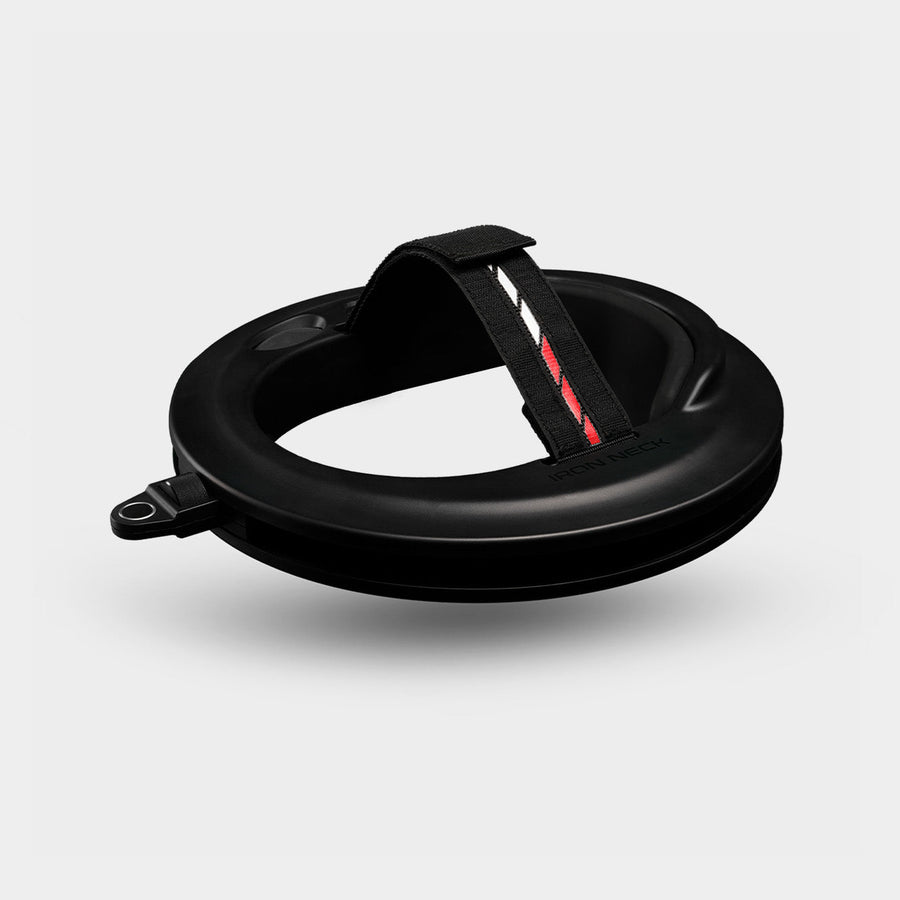
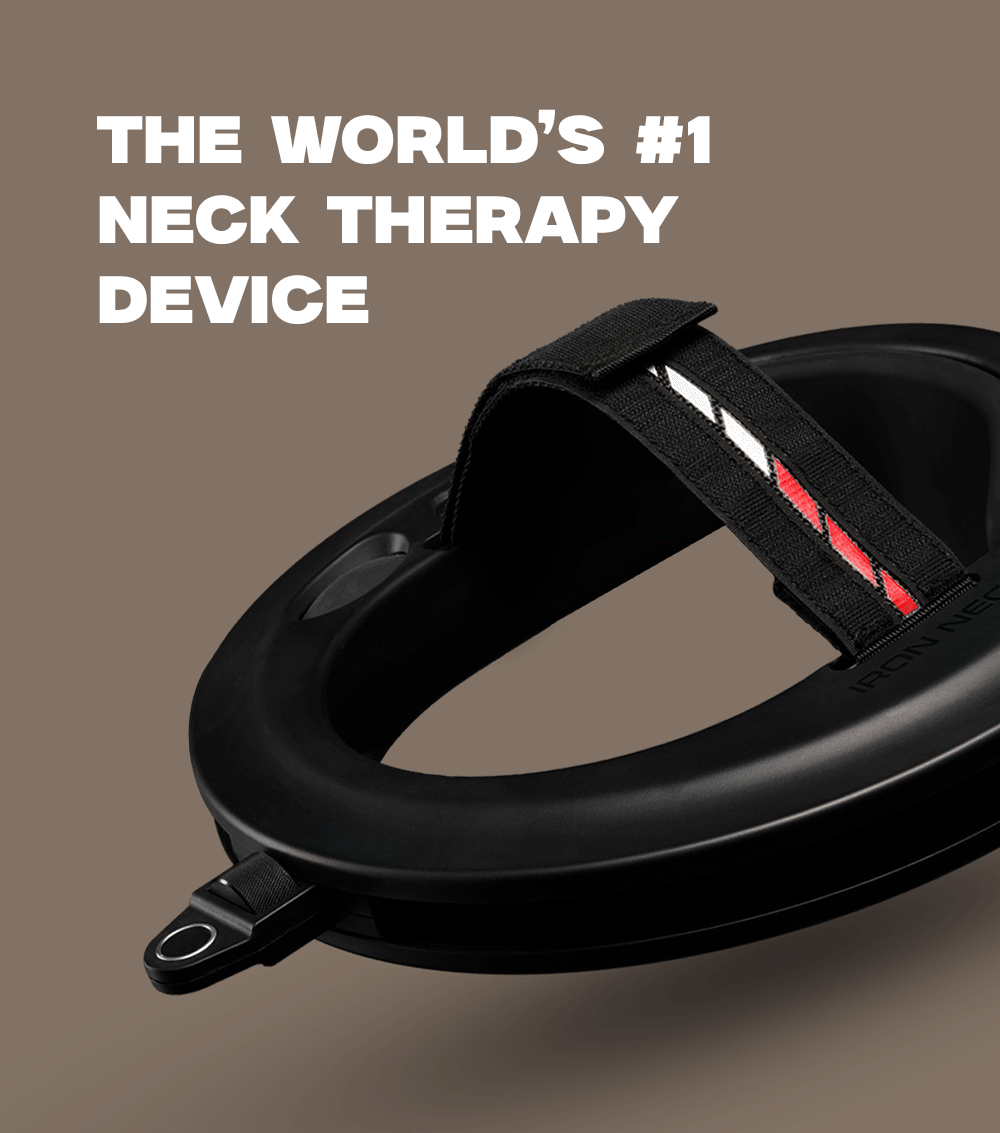
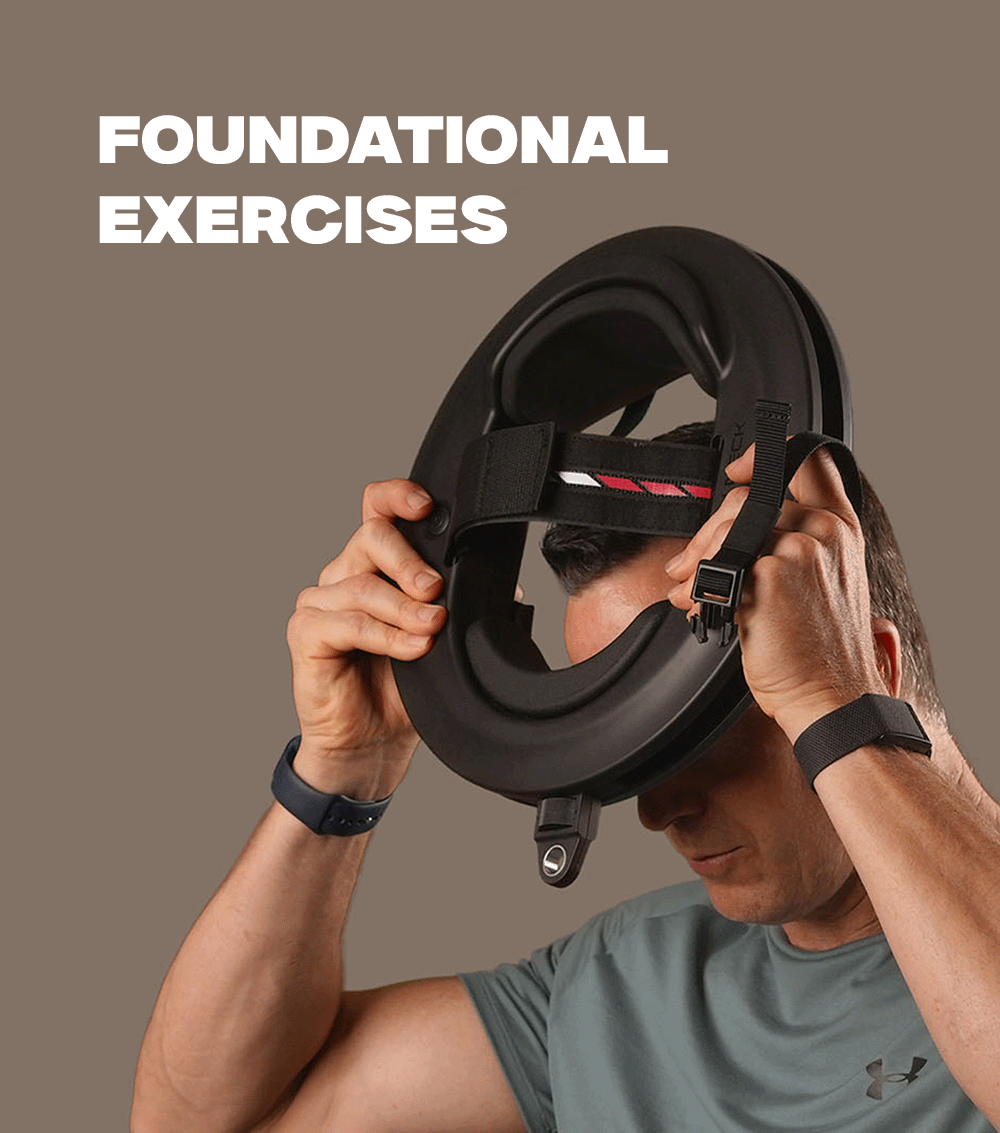
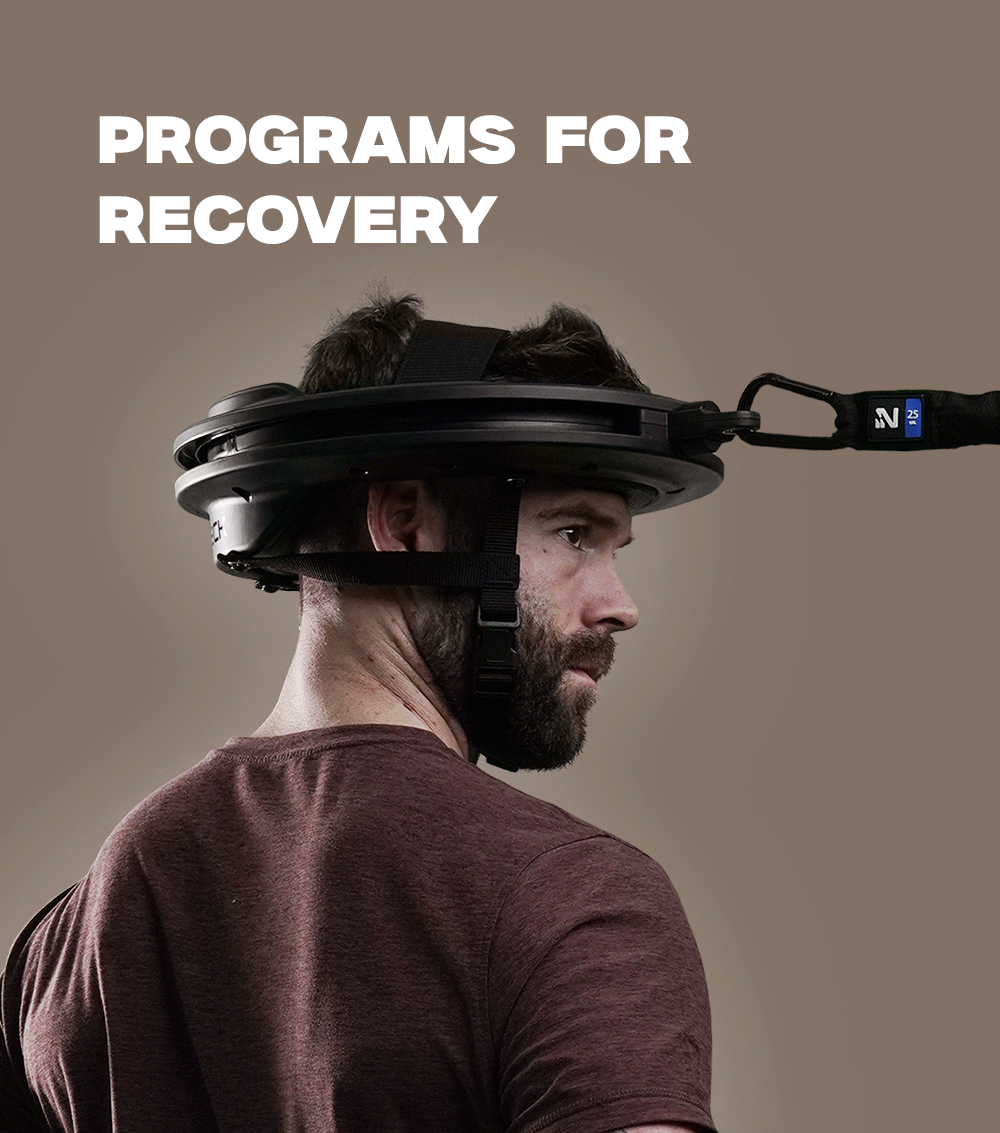
The 360 degree resistance head unit this program is built around, with the anchor and bands you need to train every direction from day one.

We call for an effort level instead of a specific weight, because the right resistance depends on you, the movement, and where you are in your training. For the sets and reps listed on each exercise, pick the resistance that makes the last few reps feel like the level shown.
You finish the set with several clean reps still in the tank. The work stays easy and fully controlled from the first rep to the last.
You could manage a few more reps at the end, but not many. The final reps take real effort while your form holds.
You reach the last prescribed rep with little or nothing left. Completing every rep with good form is genuinely hard.
These are starting points, not rules. Everyone is built differently, so adjust to fit you: size down if your form breaks before the final rep or a movement aggravates a symptom, and only size up once every rep feels smooth and pain free. When you are unsure, choose the lighter option.