

360 Spin
Anti-rotation control keeps your head stable when contact spins your body, the mechanism behind most hockey whiplash.
Hockey collisions arrive at the highest closing speeds in team sport, and half of them come from angles you never see. This program builds foundational strength and scanning control, loads the patterns of board battles and puck protection, and finishes with the reactive bracing that protects you when a check arrives blind-side. It also sharpens the constant head-on-a-swivel scanning that keeps you out of trouble in the first place.

Build the neck strength and reactive control to absorb open-ice contact, board battles, and the whiplash mechanics of unexpected checks.
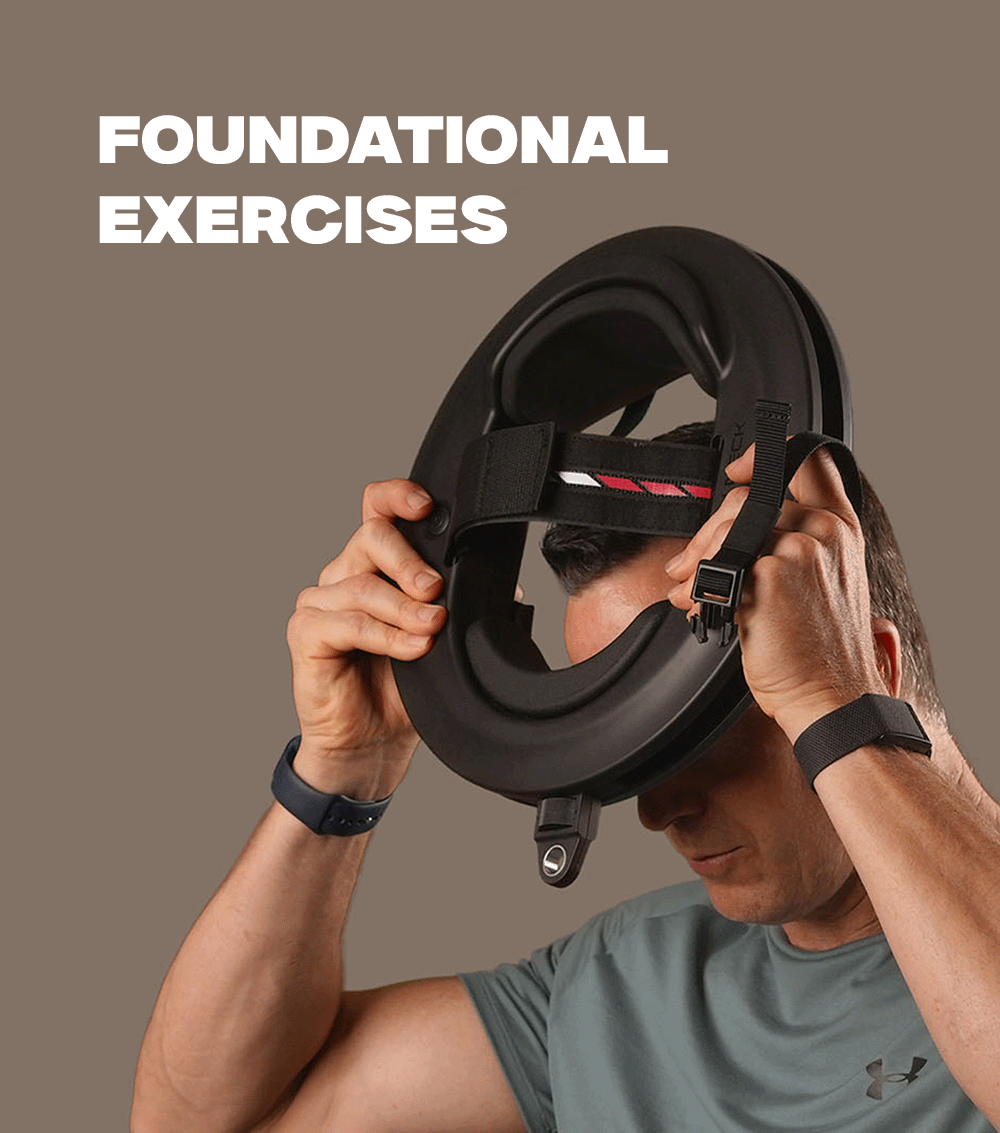
Build clean strength in the flexed skating posture and restore full scanning range. A hockey neck works from a forward-leaning position all game, and this phase makes that position strong.
Anti-rotation control keeps your head stable when contact spins your body, the mechanism behind most hockey whiplash.
Full rotational strength powers the shoulder checks that let you skate the puck out of trouble with a complete picture of the ice.
Front-to-back strength supports the head-up skating posture and resists the forward snap of contact against the boards.
The neutral brace is your baseline armor for incidental contact, keeping the head coupled to the torso through bumps and rubs.
Advance whenAdvance when full-range movement is smooth and holds are steady at Medium resistance.
Load the positions of physical hockey. Diagonals, locked-neck work, and endurance holds build strength for battles where your head is down, turned, and under pressure.
Checks land at angles. Diagonal strength covers the oblique force lines of a hit that arrives while you are turning.
Keeping the head still while the body rotates is puck protection posture, shielding with your frame while your eyes stay up ice.
End-position holds build endurance for extended board battles where your neck braces for five seconds at a time.
Static strength with the head turned protects you in the exact position of a wall battle, head rotated, body pinned.
Advance whenAdvance when diagonal and hold work is completed at Heavy resistance with no head drift.
Prepare for the contact you cannot see coming. Perturbation, cue-driven reaction, and fast pulses train the neck to stiffen reflexively at game speed.
Cue-based head turns train the rapid scan that spots the finishing check a half-second earlier, the difference between braced and blindsided.
Unpredictable perturbation builds the reflexive brace that fires when contact arrives from outside your field of vision.
Fast diagonal pulses match the violent, angled loading of open-ice contact at full skating speed.
Recovering alignment against front-to-back disruption rehearses absorbing a cross-check from behind without the head whipping.
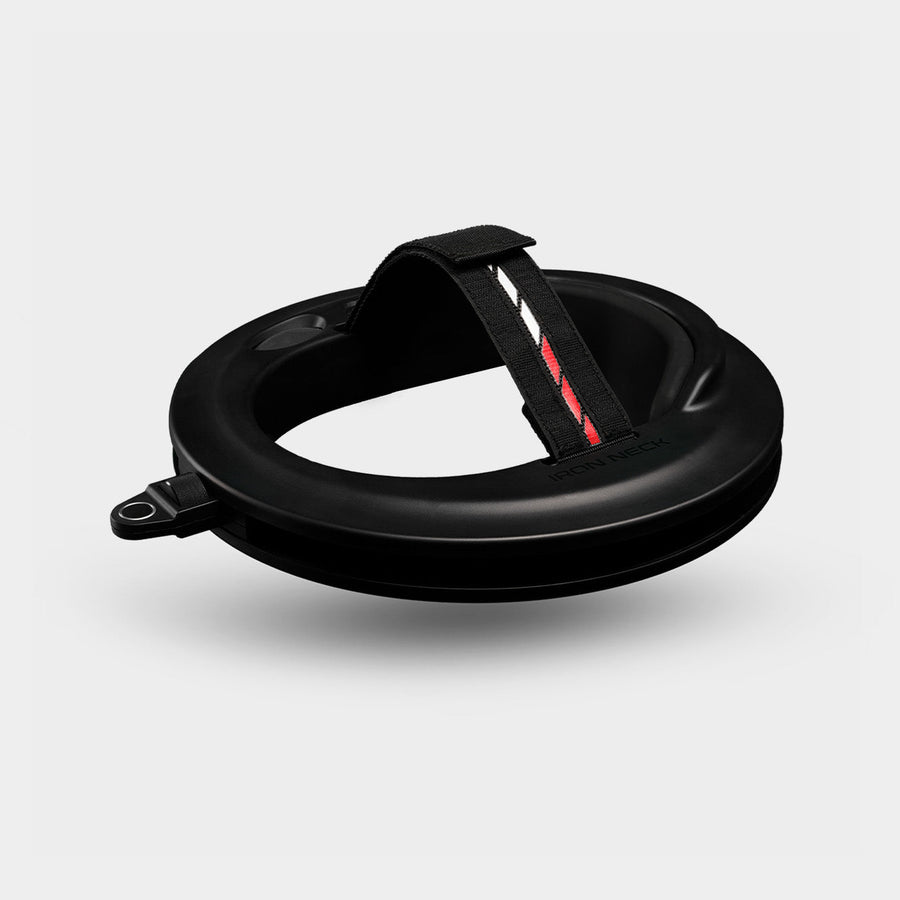
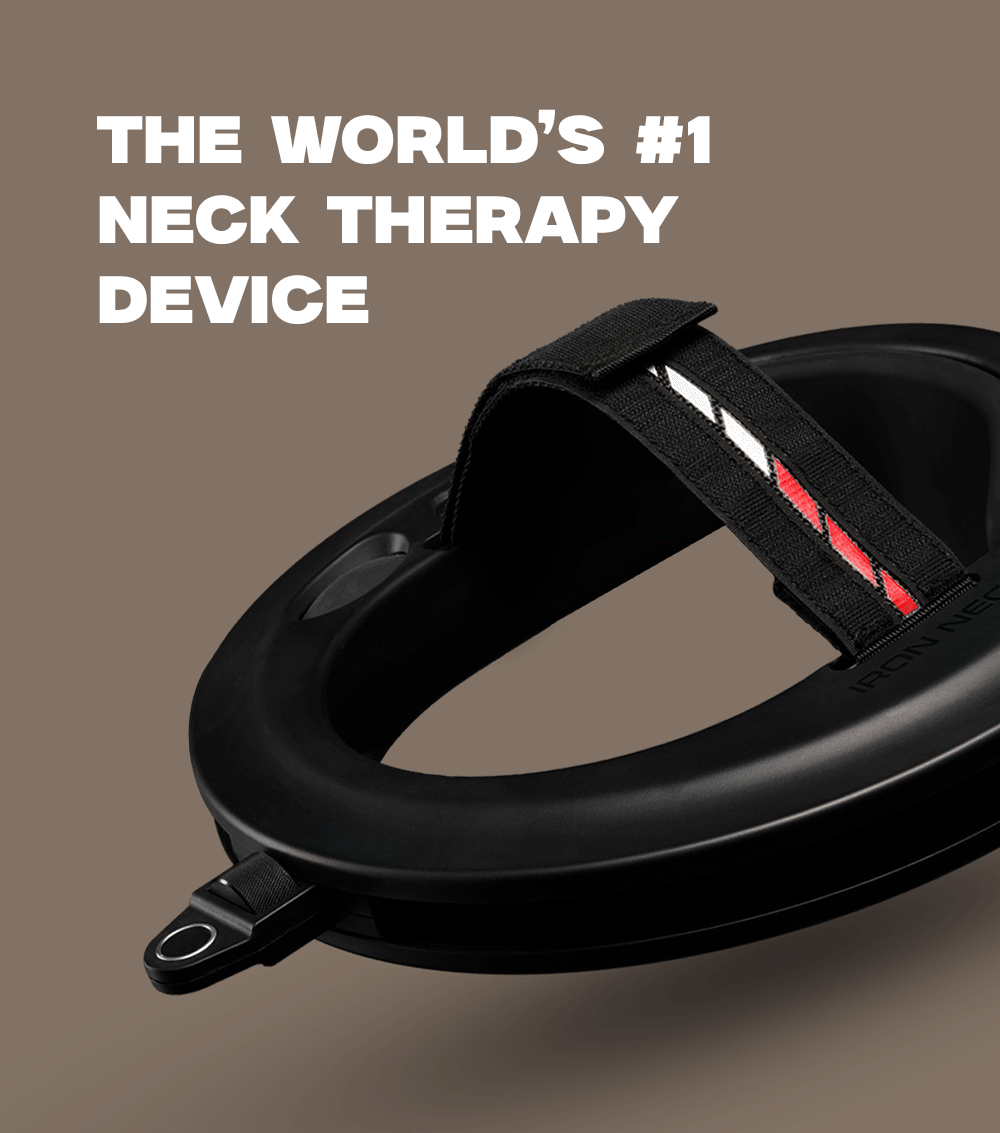
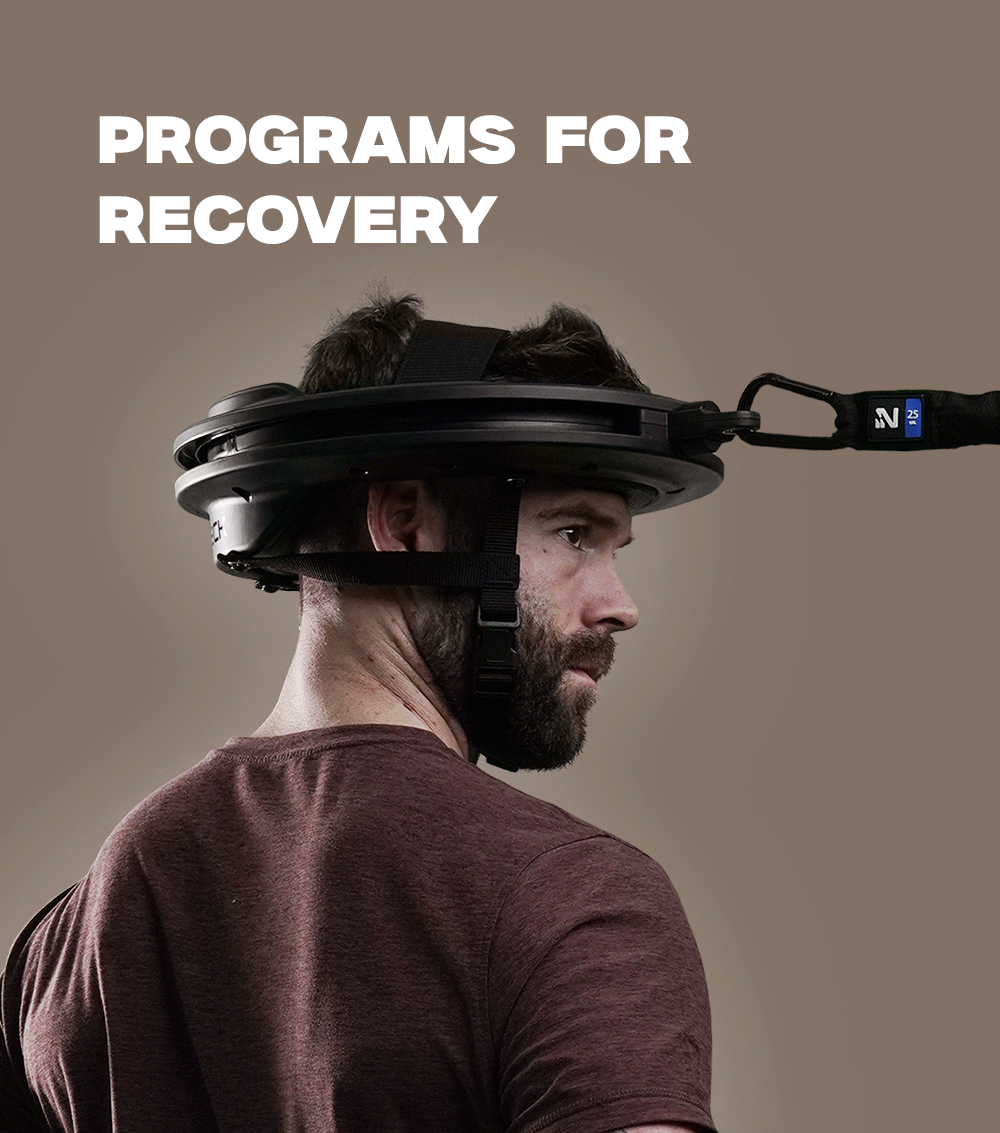
The 360 degree resistance head unit this program is built around, with the anchor and bands you need to train every direction from day one.

We call for an effort level instead of a specific weight, because the right resistance depends on you, the movement, and where you are in your training. For the sets and reps listed on each exercise, pick the resistance that makes the last few reps feel like the level shown.
You finish the set with several clean reps still in the tank. The work stays easy and fully controlled from the first rep to the last.
You could manage a few more reps at the end, but not many. The final reps take real effort while your form holds.
You reach the last prescribed rep with little or nothing left. Completing every rep with good form is genuinely hard.
These are starting points, not rules. Everyone is built differently, so adjust to fit you: size down if your form breaks before the final rep or a movement aggravates a symptom, and only size up once every rep feels smooth and pain free. When you are unsure, choose the lighter option.