

Protraction / Retraction
Postural alignment front to back sets the stable base your rotation fires from, keeping the head centered through the delivery.
Every high-velocity throw, serve, and shot whips rotational force up the kinetic chain, and the neck is the last link that has to control it. This program builds postural alignment and rotation awareness, loads the multiplanar strength of the throwing path, and finishes with the reactive speed of live competition. A stable head is what keeps your eyes on the target while your body rotates at full speed.

Improve rotational control, neck-torso coordination, and postural endurance for high-velocity throwing mechanics and injury prevention.
Establish the aligned posture and head-body separation that efficient throwing mechanics are built on. The neck learns to stay quiet while the torso rotates beneath it.
Postural alignment front to back sets the stable base your rotation fires from, keeping the head centered through the delivery.
A locked head over a rotating torso is the literal mechanics of a throw. This is the movement pattern, trained directly.
Low-tension spins build awareness of head position throughout rotation, the sense that keeps your eyes level mid-delivery.
Static holds in the positions of the throwing motion build the endurance to repeat clean mechanics deep into a game.
Advance whenAdvance when your head stays perfectly still through every body turn and all holds are steady.
Load the diagonal and rotational paths of the throwing motion. Strength expands across planes while tempo work builds the control that keeps mechanics consistent under load.
Diagonal patterns trace the exact oblique path force travels across your throwing motion from load to release.
Controlled figure eights build the fluid multiplanar coordination that ties head control to a full-body rotational sequence.
Pausing mid-spin builds strength at the 90 degree positions your neck passes through at maximum rotational velocity.
Slow 3-1-3 tempo builds the eccentric control that decelerates your head through the follow-through, where throwing injuries live.
Advance whenAdvance when all diagonal and paused work is completed at Medium resistance with a perfectly steady head.
Bring rotation to competition speed. Reactive cues, fast pulses, and disruption train the neck to control violent rotation and recover instantly for the next play.
Cue-based reaction trains the instant head snap of picking up a line drive or reacting to a serve return.
Fast diagonal pulses match the explosive neck loading of maximum-effort deliveries and overhead serves.
Disruption mid-spin trains recovery of head control while rotating, the skill that protects you on an off-balance throw.
End-range holds build strength where the follow-through carries your neck, protecting the extended finish position of a hard throw.
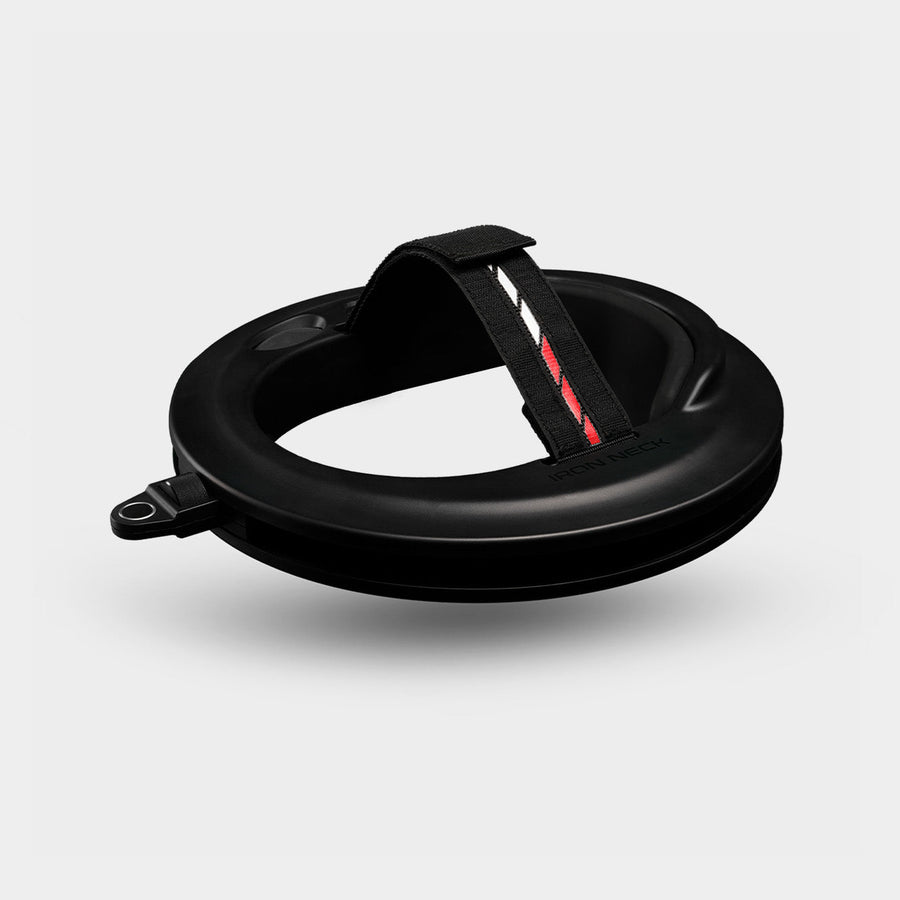
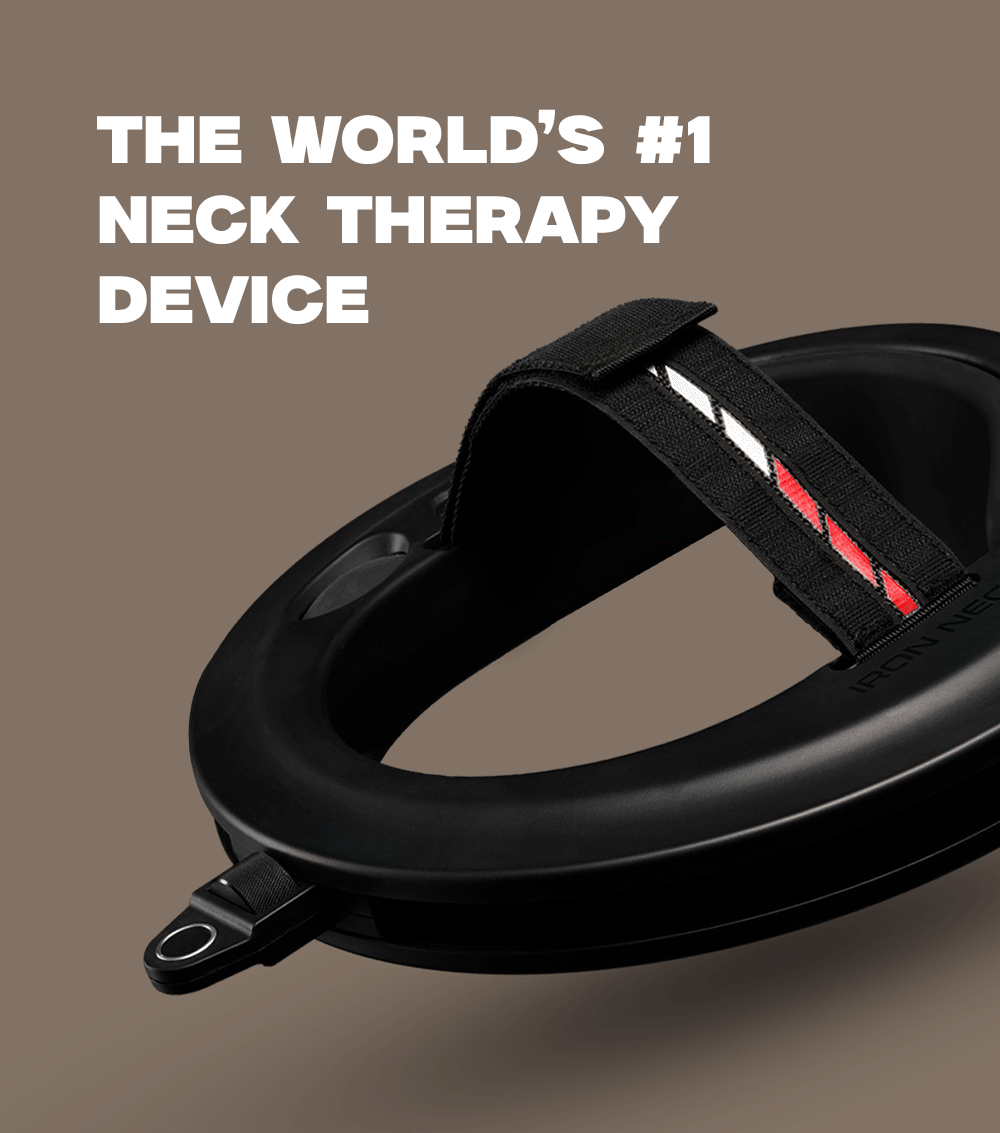
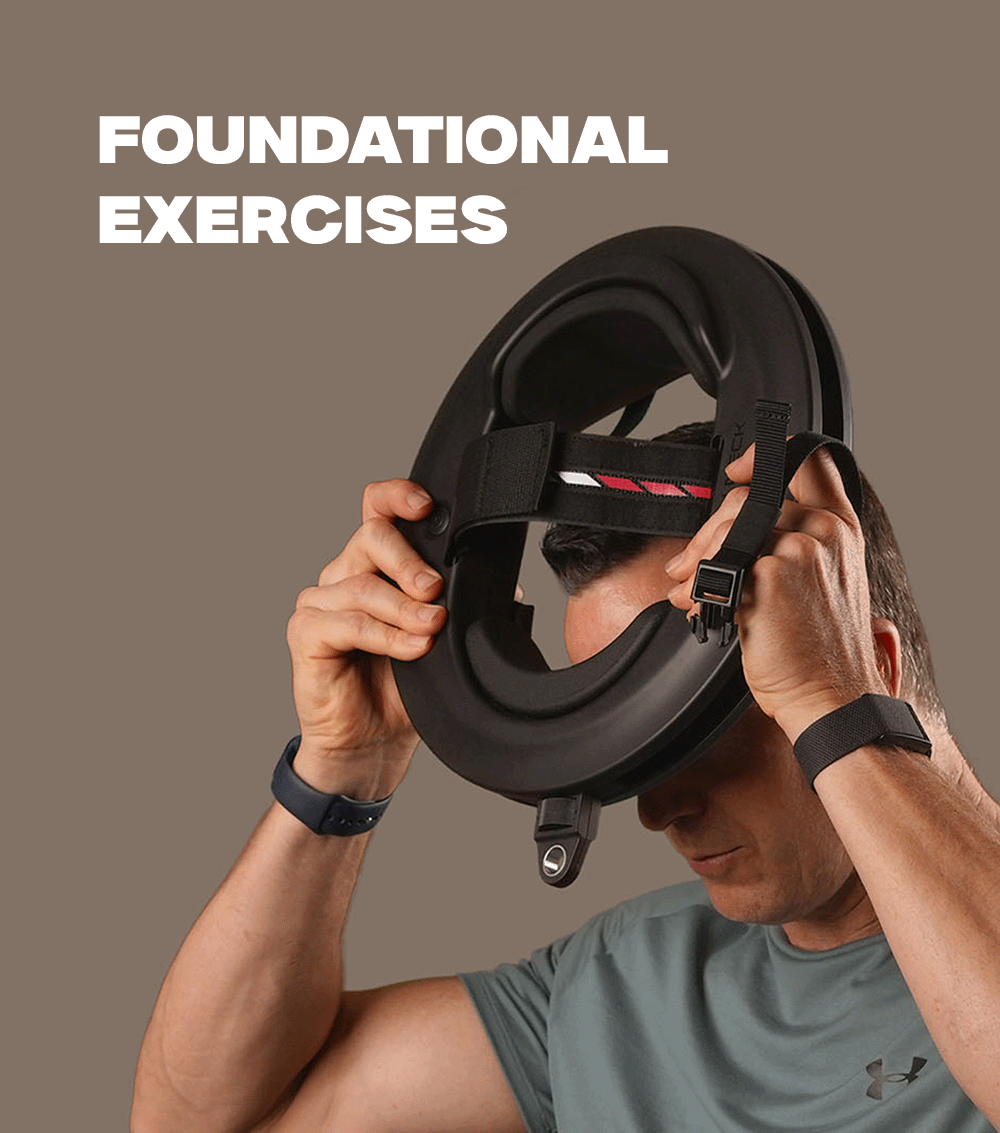
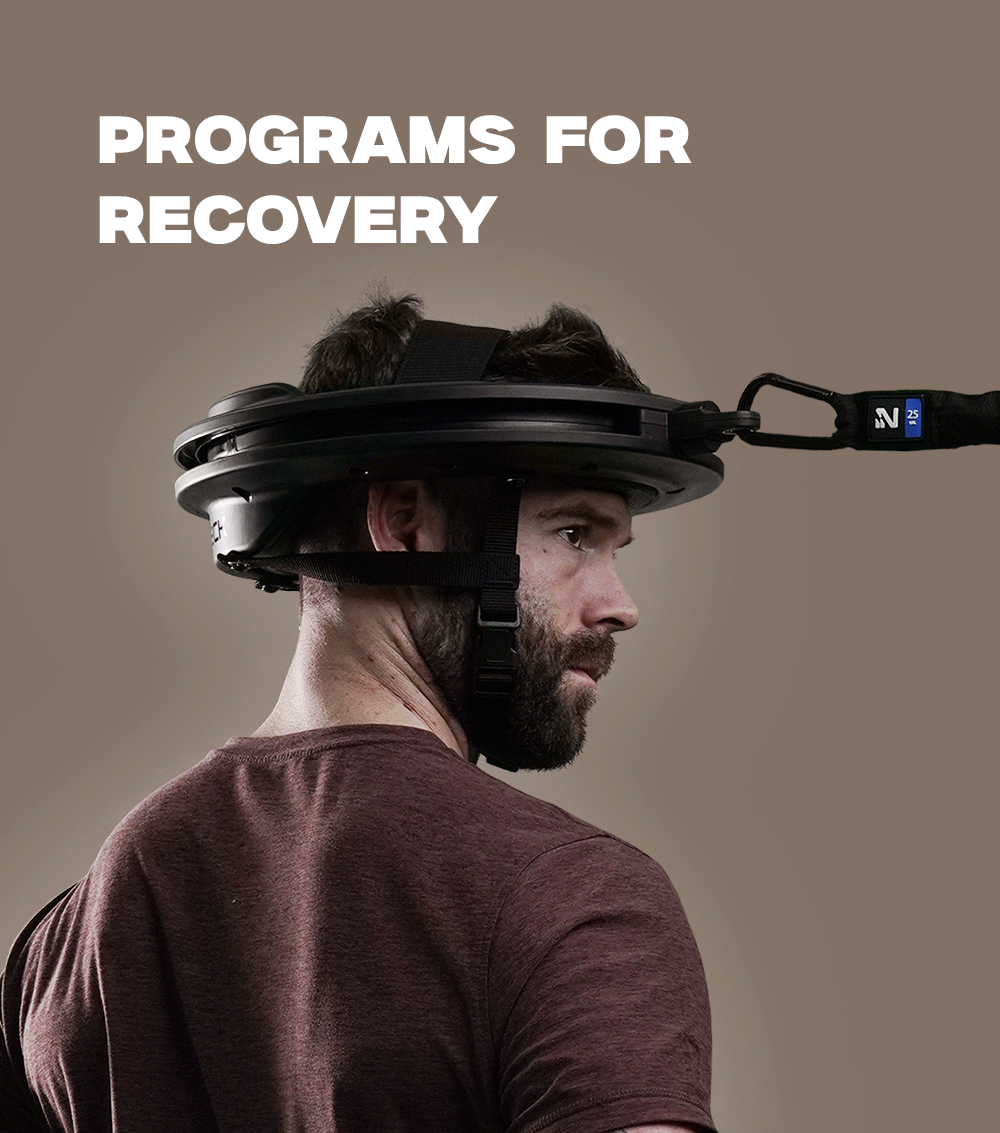
The 360 degree resistance head unit this program is built around, with the anchor and bands you need to train every direction from day one.

We call for an effort level instead of a specific weight, because the right resistance depends on you, the movement, and where you are in your training. For the sets and reps listed on each exercise, pick the resistance that makes the last few reps feel like the level shown.
You finish the set with several clean reps still in the tank. The work stays easy and fully controlled from the first rep to the last.
You could manage a few more reps at the end, but not many. The final reps take real effort while your form holds.
You reach the last prescribed rep with little or nothing left. Completing every rep with good form is genuinely hard.
These are starting points, not rules. Everyone is built differently, so adjust to fit you: size down if your form breaks before the final rep or a movement aggravates a symptom, and only size up once every rep feels smooth and pain free. When you are unsure, choose the lighter option.