

360 Spin (slow tempo)
Slow spins build the head-body separation that lets you run one direction while reading coverage in another.
Speed without vision is chaos, and vision runs through the neck. This program gives receivers, defensive backs, and quarterbacks the fluid range, rotational control, and reactive head speed that let you find the ball, feel the field, and take contact at full sprint. A skill player's neck is a performance tool first and a protective one second, and this trains both.

Improve cervical range of motion, rotational control, and visual tracking for performance and injury resistance at high speed.
Establish smooth, full-range movement in every plane at deliberate speed. Range earned here becomes usable speed later.
Slow spins build the head-body separation that lets you run one direction while reading coverage in another.
Full rotational range is a skill player's radar. This restores every degree you use locating a deep ball over your shoulder.
Front-to-back control keeps your head stable through route breaks and sudden decelerations.
A locked head over a turning body is exactly what happens at the top of a route when your eyes stay on the quarterback.
Advance whenAdvance when every movement is smooth through full range with no compensation or shaking.
Movement gets bigger, faster, and more varied. The neck learns to flow through extended ranges and changing tempos the way a route tree demands.
Extended-range diagonals match the head path of turning to find a fade thrown to the back corner.
Precise small-range figure eights refine the fine head adjustments you make settling under a punt or high throw.
Tempo-controlled spins build rotational endurance for plays where your head sweeps the field for four full seconds.
Fast-to-slow rotation mirrors game reality, snapping your head around on a scramble drill and then tracking smoothly.
Advance whenAdvance when you handle extended range and tempo changes with zero loss of smoothness.
React first, think later. Cue-driven head speed, fast pulses, and disruption tolerance turn the mobility you built into game-speed field vision.
Cue-based reaction is the ball-is-in-the-air skill, whipping your head around the instant the receiver's eyes tell you the throw is coming.
Fast diagonal pulses build the reactive stiffness that protects your neck when you get hit mid-air on a contested catch.
Tracking a visual target through figure eights trains eyes and neck to move as one unit, the core skill of playing the ball.
Recovering head position against disruption rehearses taking a jam at the line without losing sight of the field.
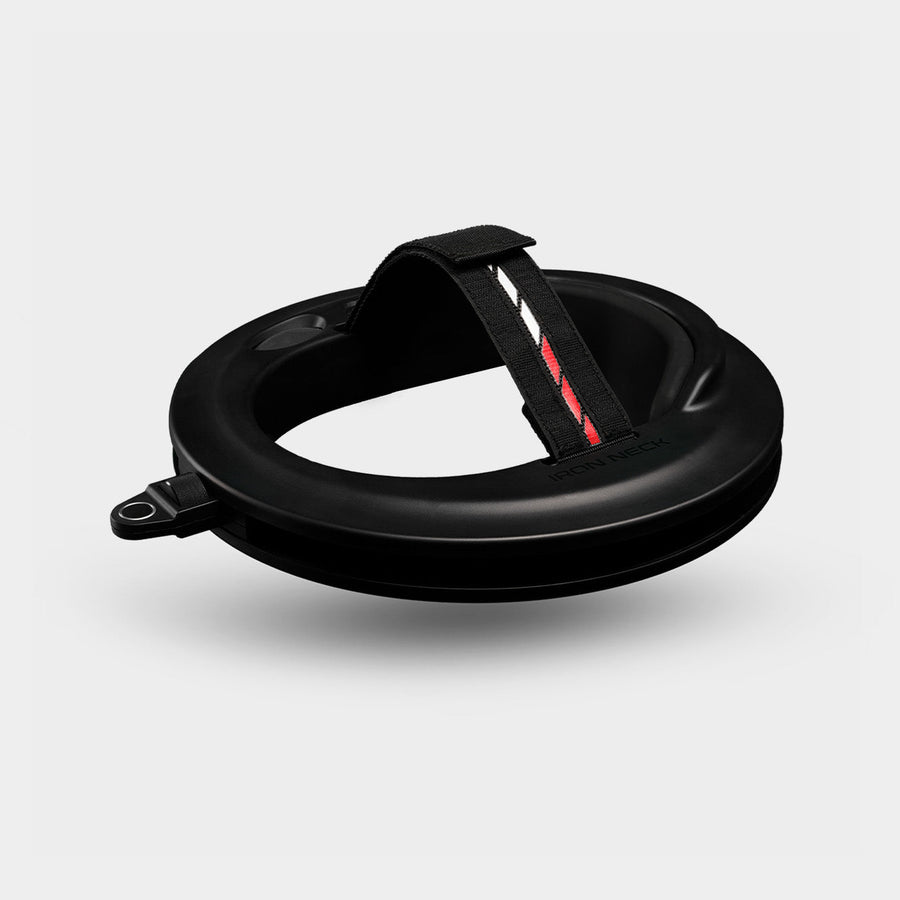
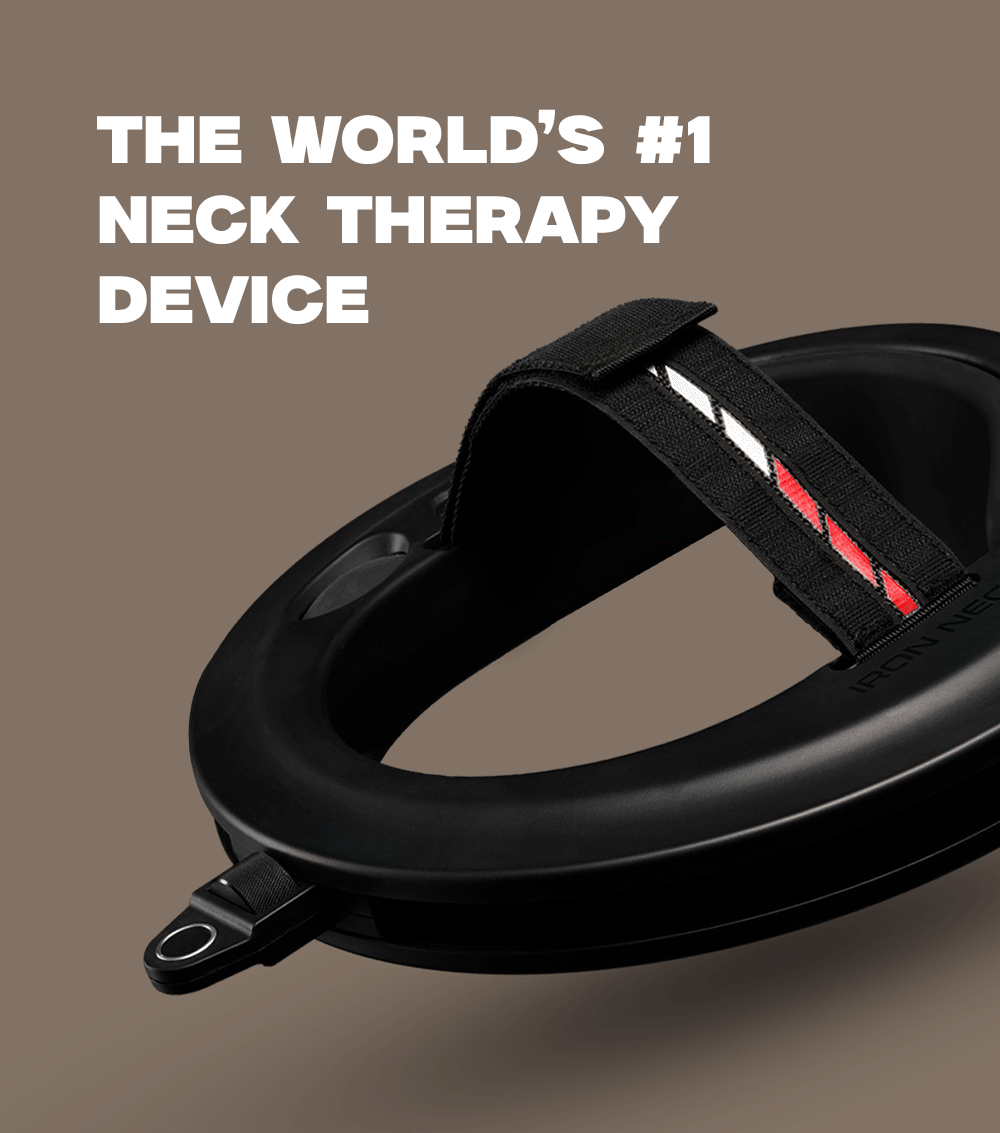
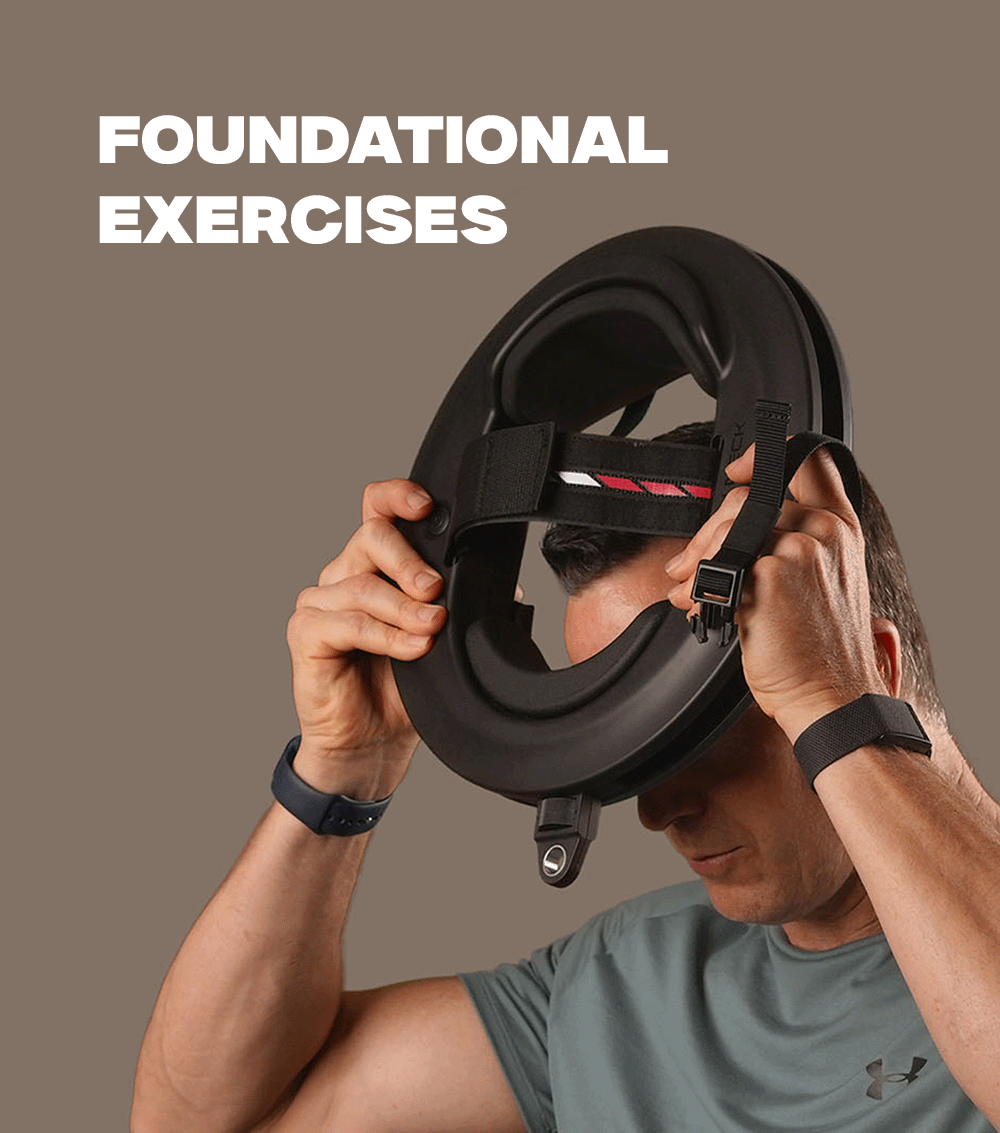
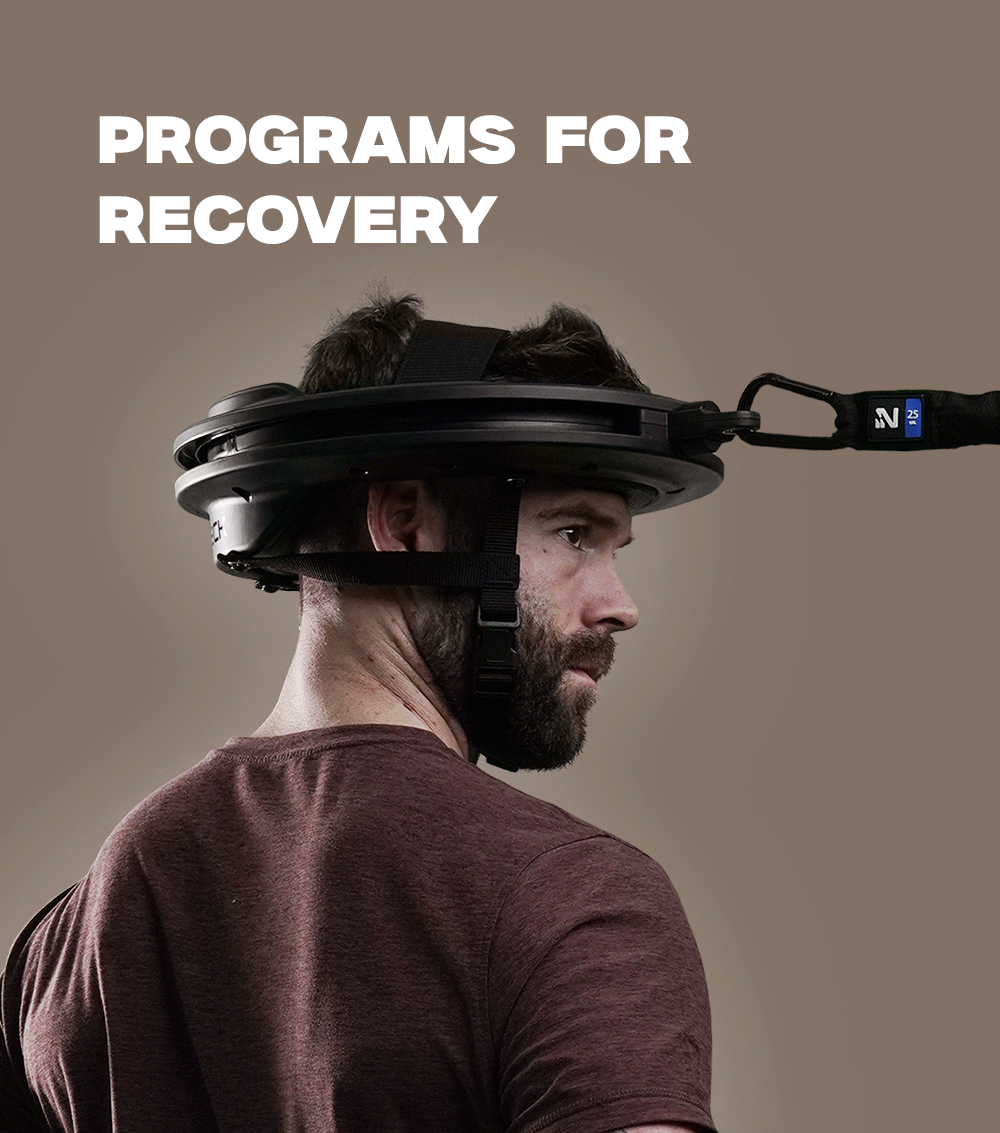
The 360 degree resistance head unit this program is built around, with the anchor and bands you need to train every direction from day one.

We call for an effort level instead of a specific weight, because the right resistance depends on you, the movement, and where you are in your training. For the sets and reps listed on each exercise, pick the resistance that makes the last few reps feel like the level shown.
You finish the set with several clean reps still in the tank. The work stays easy and fully controlled from the first rep to the last.
You could manage a few more reps at the end, but not many. The final reps take real effort while your form holds.
You reach the last prescribed rep with little or nothing left. Completing every rep with good form is genuinely hard.
These are starting points, not rules. Everyone is built differently, so adjust to fit you: size down if your form breaks before the final rep or a movement aggravates a symptom, and only size up once every rep feels smooth and pain free. When you are unsure, choose the lighter option.