

360 Spin (slow tempo)
Slow-tempo spins rebuild the head-body dissociation you need before a helmet goes back on.
Spring ball is where necks get caught unprepared, because contact returns before conditioning does. This progressive build restores motor control first, expands strength and endurance second, and sharpens reaction and bracing right as live periods begin. Follow the progression and your first padded practice is a checkpoint, not a shock.

Build progressive neck strength and movement competency during spring training to reduce injury risk and improve helmet tolerance.
Slow everything down and rebuild precise control before load or speed enter the picture. Quality of movement is the only metric that matters here.
Slow-tempo spins rebuild the head-body dissociation you need before a helmet goes back on.
Restores the clean scanning rotation that lets you check alignments and track receivers without neck stiffness stealing degrees.
Re-establishes front-to-back control so your head sits in a strong position under a helmet from day one of spring practice.
Reintroduces the core skill of football contact, a still head over a rotating, working body.
Advance whenAdvance when every movement is smooth through full range with no compensation or shaking.
Load climbs and planes multiply. The neck learns to produce and repeat force through diagonals, tempo changes, and varied speeds while staying below the red line.
Builds strength along the oblique paths a spring scrimmage collision actually takes, not just the textbook straight lines.
Low tension and high precision teach the neck to stay coordinated through small, continuous position changes under a helmet.
A controlled 2-2-2 tempo through the spin builds endurance at every angle of rotation, matching the sustained bracing of a long drive.
Alternating fast and slow rotation trains the neck to be quick when the play breaks and controlled when it does not.
Advance whenAdvance when you complete all circuits with effort below 7 out of 10 and no form breakdown at speed.
Everything becomes unpredictable. Cue-based reactions, fast pulses, and external disruption prepare the neck for live periods where contact arrives without warning.
Reacting to a callout trains the fast head turn you make when a coach shouts and the play flips to your side.
Quick diagonal pulses build the rapid stiffening response that protects you in the instant before spring-ball contact.
Eye tracking during figure eights links vision to neck control, the same pairing you use following a ball carrier through traffic.
Recovering alignment against light disruption rehearses what your neck does when a hand or shoulder bumps your helmet mid-play.
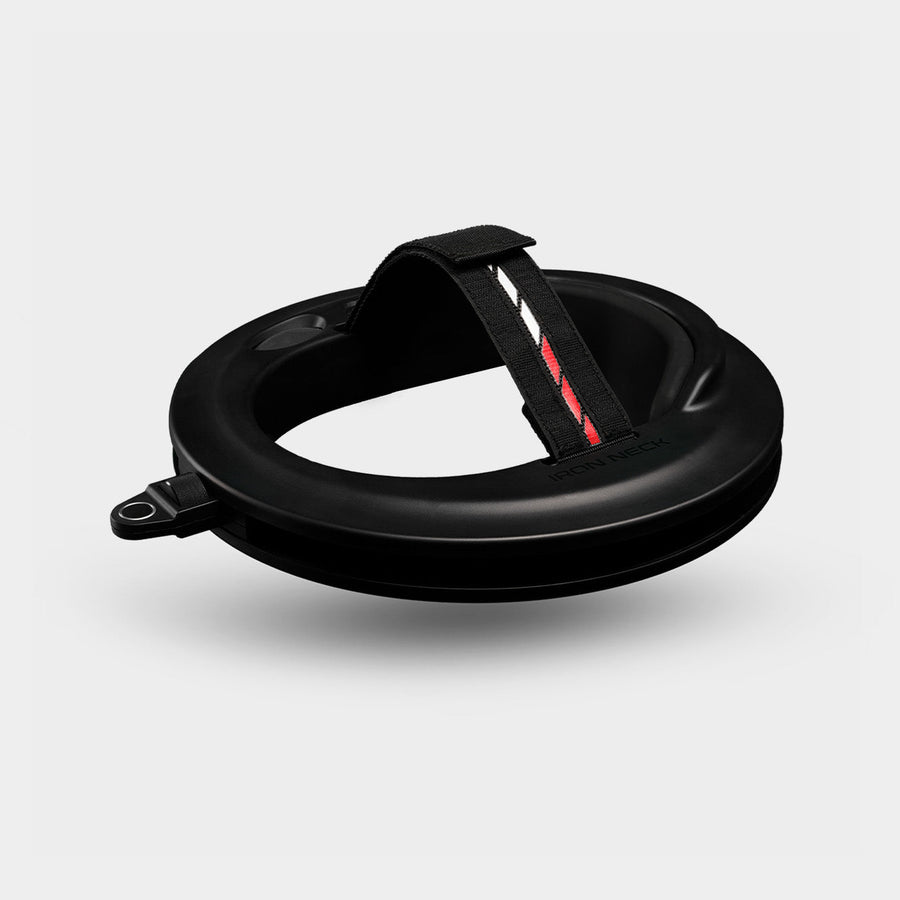
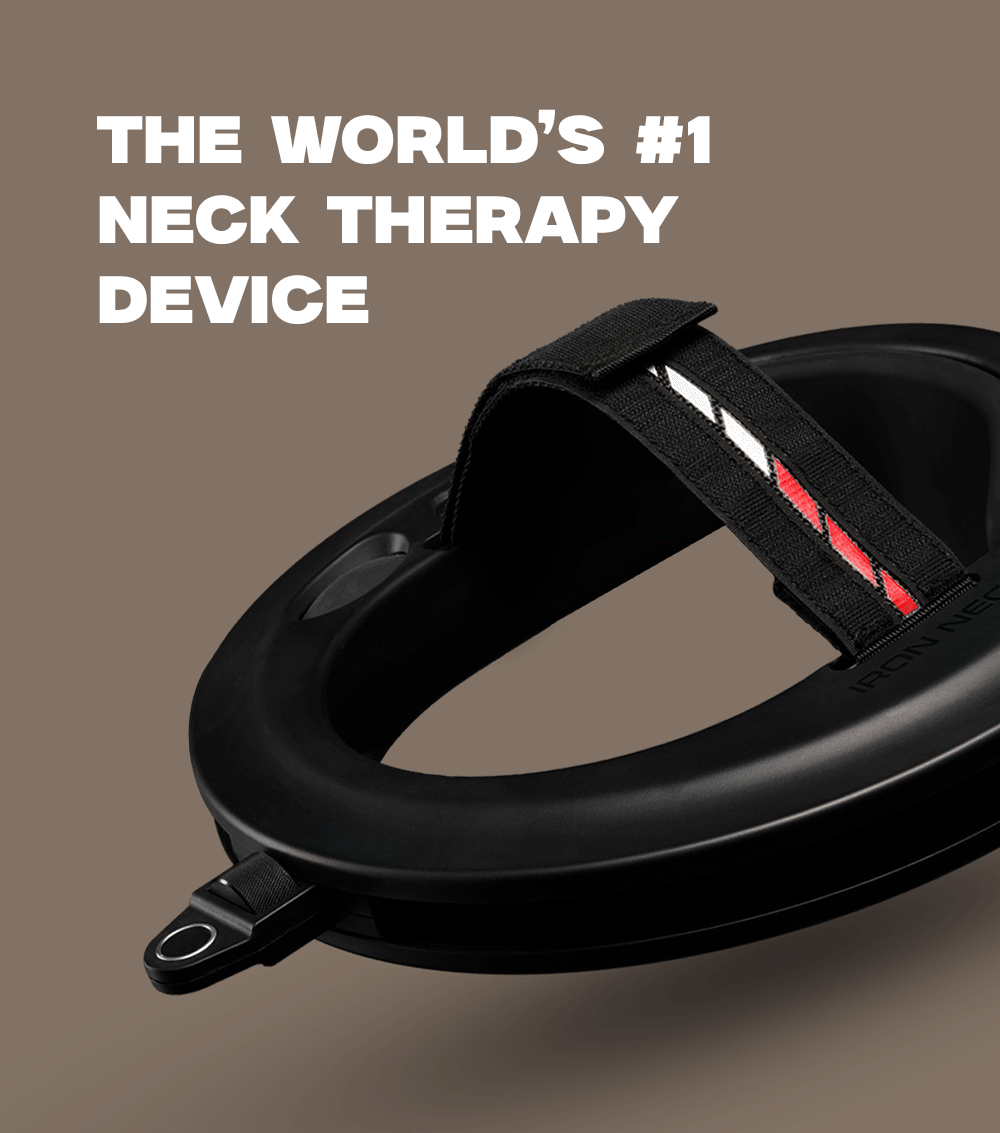
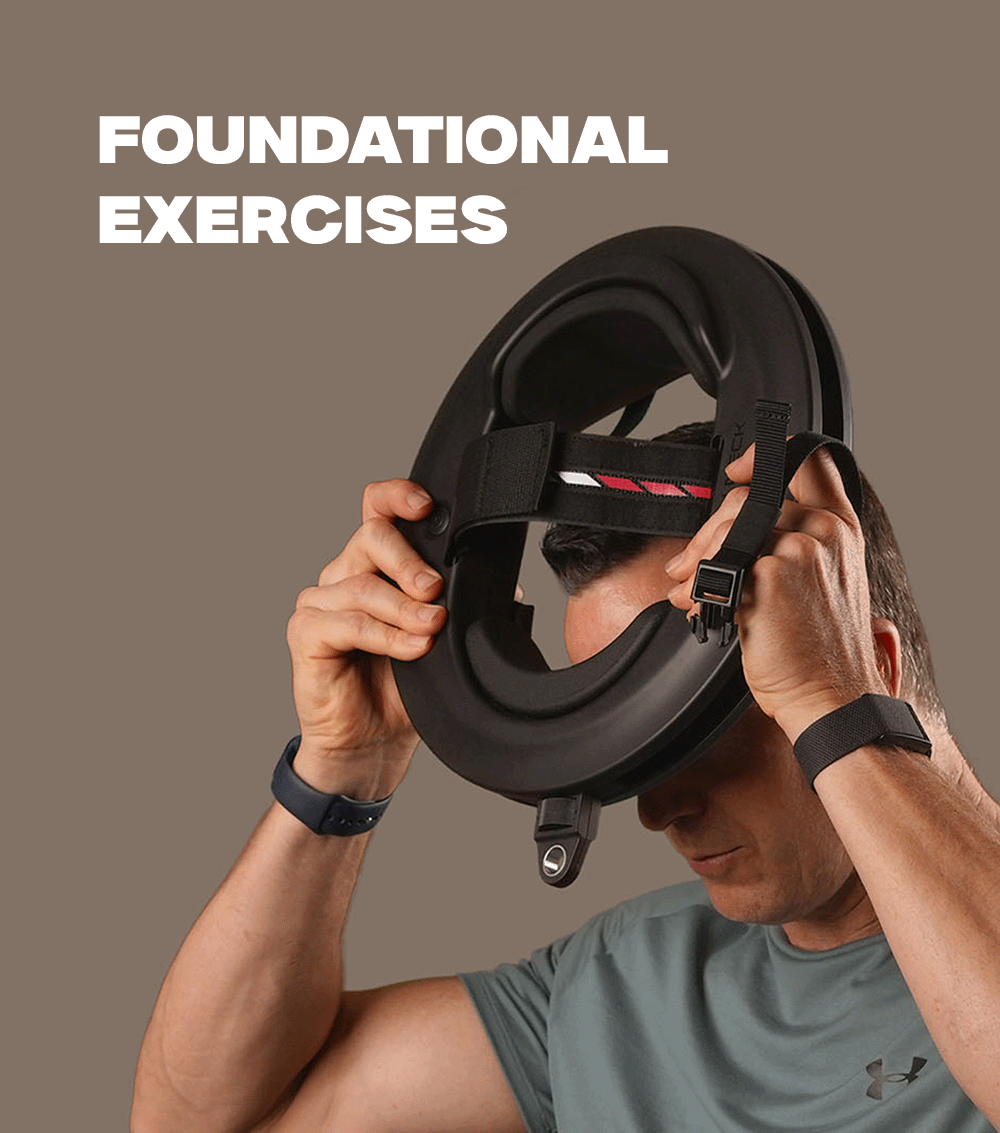
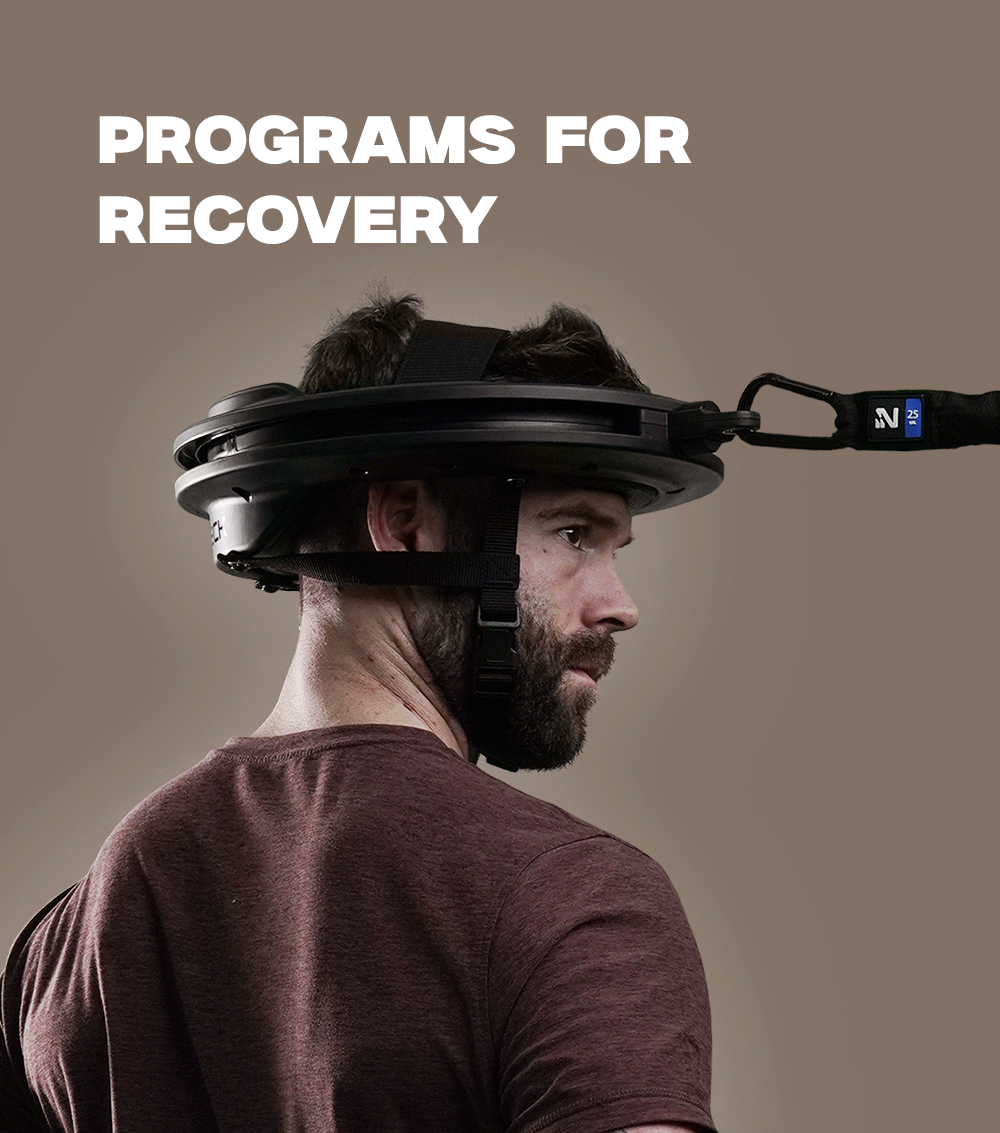
The 360 degree resistance head unit this program is built around, with the anchor and bands you need to train every direction from day one.

We call for an effort level instead of a specific weight, because the right resistance depends on you, the movement, and where you are in your training. For the sets and reps listed on each exercise, pick the resistance that makes the last few reps feel like the level shown.
You finish the set with several clean reps still in the tank. The work stays easy and fully controlled from the first rep to the last.
You could manage a few more reps at the end, but not many. The final reps take real effort while your form holds.
You reach the last prescribed rep with little or nothing left. Completing every rep with good form is genuinely hard.
These are starting points, not rules. Everyone is built differently, so adjust to fit you: size down if your form breaks before the final rep or a movement aggravates a symptom, and only size up once every rep feels smooth and pain free. When you are unsure, choose the lighter option.