


Strength & Longevity · Program 44

New Parent Posture Relief

New parenthood is an unplanned training program, hours of looking down at a feeding baby, one-armed car-seat carries, and floor-to-crib lifts on no sleep. This program undoes the looking-down accumulation and builds the strength the next few years of carrying will demand. Sessions are short and forgiving, built for people whose schedule belongs to someone eight pounds heavier every month.

Focus · New parentsFrequency · 3x per weekSession · 10-12 min
New Parent Posture Relief cover art
The goal

Relieve the feeding-and-carrying neck strain of early parenthood and build strength for the years of lifting ahead.

Who it is for
  • Parents of babies logging hours of feeding and rocking
  • Anyone with the classic look-down ache between the shoulder blades
  • Parents building strength for the toddler-carrying years ahead

Undo the Look-Down

Reverse the hours of downward gaze with retraction work and easy rotation. Short sessions that fit inside a nap window are the design constraint here.

01

Protraction / Retraction

3 sets of 12 repsFront & Back

Feeding posture parks your head down and forward for hours a day, and loaded retraction is the most direct reversal available.

How To
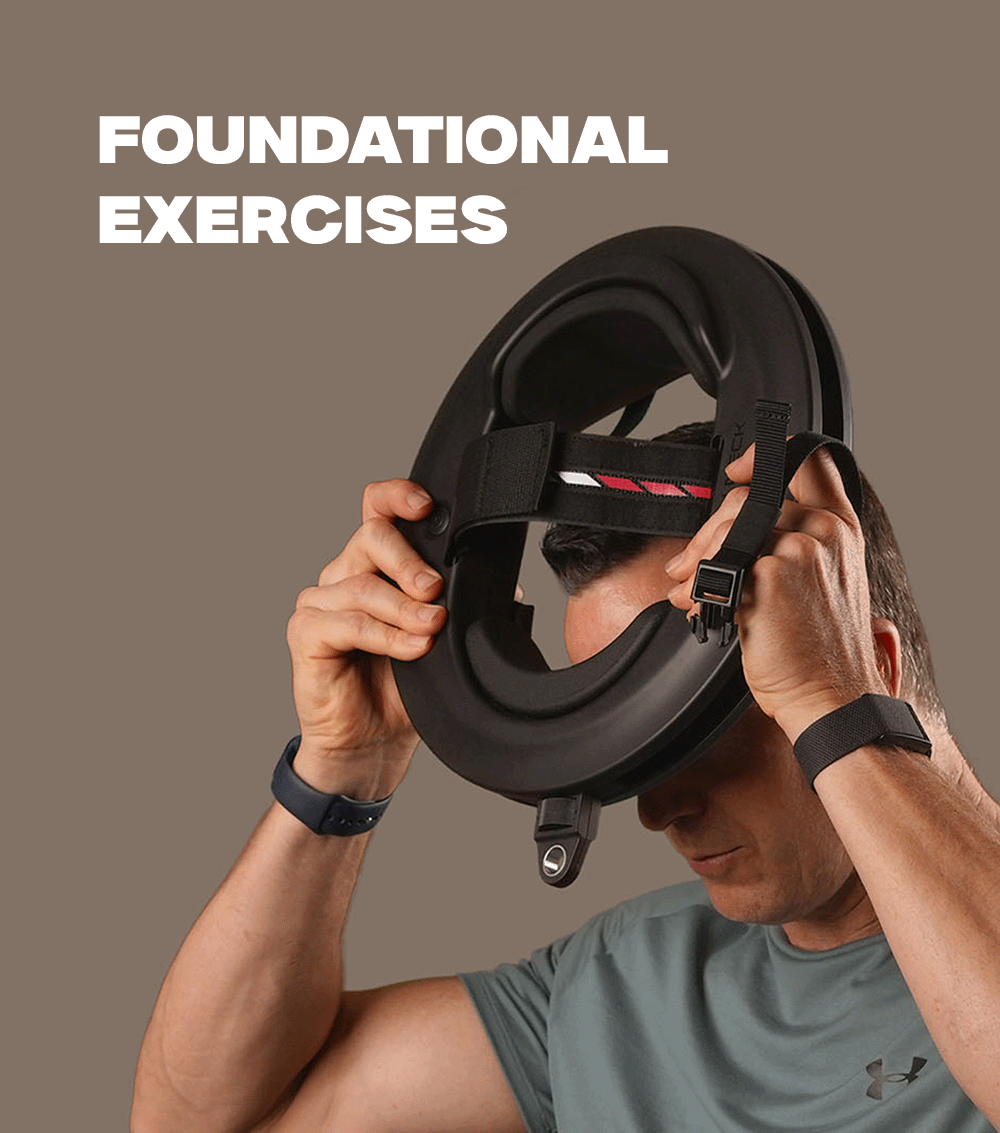
1Glide your head straight forward, reaching your chin outward, then glide it straight back as though making a double chin.
2Keep your eyes and chin level the entire time and move smoothly along a horizontal path.
Coaching Cues
Slide your head along an invisible shelf
Make a double chin
then get rid of it
No nodding
keep your eyes level throughout
Think forward and back
not up and down
Muscles Activated
SCMAnterior scaleneDeep neck flexorsSemispinalis cervicis
02

Look Left, Look Right

3 sets of 8 reps each sideAny direction

Easy strong rotation restores the range that gets lost when your gaze lives on one small person all day.

How To
1Stand tall with your chest up and your chin level.
2Turn your head slowly to one side as far as you can go comfortably, hold for a moment, then return to center and repeat to the other side.
3Only your head moves.
Coaching Cues
Chin stays level as you rotate
Eyes lead the movement
Do not tilt your head
it is a turn and not a lean
Move with control and not momentum
Muscles Activated
SCMSplenius capitis/cervicisLongissimus capitis
03

Protraction / Retraction (with hold)

3 sets of 8 reps with 3 second holdsFront & Back

Brief retraction holds build the endurance to sit taller through the next feed instead of folding over it.

How To
1Glide your head straight forward, reaching your chin outward, then glide it straight back as though making a double chin.
2Keep your eyes and chin level the entire time and move smoothly along a horizontal path.
Coaching Cues
Slide your head along an invisible shelf
Make a double chin
then get rid of it
No nodding
keep your eyes level throughout
Think forward and back
not up and down
Muscles Activated
SCMAnterior scaleneDeep neck flexorsSemispinalis cervicis
04

Isometric Hold

3 sets of 12 second holds each directionFront

All-direction bracing supports the awkward semi-twisted positions of rocking, burping, and reaching into a crib.

How To
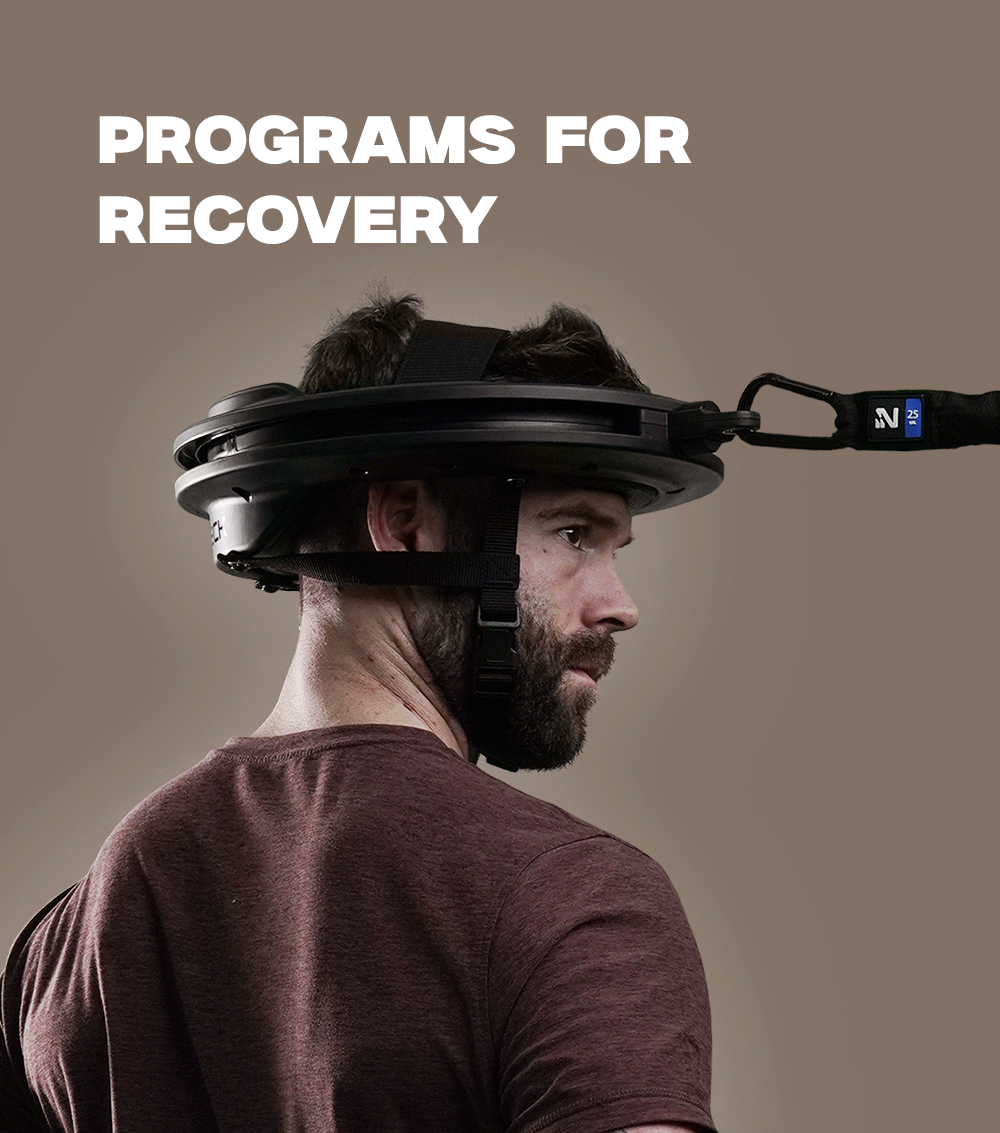
1Set your head in the working position and hold it there against the band.
2Keep your chin level, breathe normally, and resist any drift for the full time prescribed.
Coaching Cues
Brace your neck without clenching your jaw
Keep breathing through the hold
Nothing moves but your ribs
End the set when your position starts to drift
Muscles Activated
Deep neck flexors/extensorsSCMSplenius

Advance whenAdvance when the between-the-shoulder-blades ache eases and looking up and around feels free again.

Carrying Strength

Build strength for the load side of parenting, car seats, carriers, and a baby who prefers your left arm. Asymmetric-friendly patterns get priority.

01

360 Spin

3 sets of 4 rotations each directionFront

The spin builds even, all-direction stability to counter the one-sided loading of a baby who has a strong opinion about which hip to ride.

How To
1Stand tall with your shoulders stacked over your hips and fix your eyes on a point straight ahead.
2Rotate your body in place, hips, torso and feet, while your head stays completely still.
3Move slowly through a full clockwise turn, then reverse and complete a full counterclockwise turn.
Coaching Cues
Head still
body turns
Move like a tank turret with your upper body rotating under a fixed head
Do not let your nose drift from its anchor point
Feel the resistance wrap around you as you rotate
Muscles Activated
SCMSplenius capitis/cervicisSemispinalis capitisMultifidus
02

Diagonals

3 sets of 6 reps each diagonalFront or Back

The look down at a baby and back up at the world is a diagonal, repeated hundreds of times a day, and this makes it a strong one.

How To
1Start by looking down toward one armpit.
2Trace a diagonal path upward with your eyes and nose until you are looking above the opposite shoulder, then return along the same path.
3Finish your reps on one side before switching to the opposite diagonal.
Coaching Cues
Draw an X in your field of view with your nose
Follow a diagonal line with your eyes
Use full range but keep it smooth
Feel your neck twist and lengthen
Muscles Activated
SCMSplenius capitisScalenesSuboccipitals
03

Protraction / Retraction (tempo 3-1-3)

3 sets of 8 reps at 3-1-3 tempoFront & Back

Slow eccentric control trains the lowering half of parenting, easing a sleeping baby down without your head and neck bracing badly.

How To
1Glide your head straight forward, reaching your chin outward, then glide it straight back as though making a double chin.
2Keep your eyes and chin level the entire time and move smoothly along a horizontal path.
Coaching Cues
Slide your head along an invisible shelf
Make a double chin
then get rid of it
No nodding
keep your eyes level throughout
Think forward and back
not up and down
Muscles Activated
SCMAnterior scaleneDeep neck flexorsSemispinalis cervicis
04

Look Left, Look Right (with hold)

3 sets of 5 reps with 3 second end holdsAny direction

End-range rotation holds cover the over-the-shoulder checks on a crawling baby that happen dozens of times an hour.

How To
1Stand tall with your chest up and your chin level.
2Turn your head slowly to one side as far as you can go comfortably, hold for a moment, then return to center and repeat to the other side.
3Only your head moves.
Coaching Cues
Chin stays level as you rotate
Eyes lead the movement
Do not tilt your head
it is a turn and not a lean
Move with control and not momentum
Muscles Activated
SCMSplenius capitis/cervicisLongissimus capitis

Advance whenAdvance when a full day of carrying leaves your neck unremarkable, which is the goal.

Toddler-Proof

Prepare for the heavier, squirmier phase ahead. Perturbation training stands in for a wriggling toddler, and full-range work keeps the posture win permanent.

01

Protraction / Retraction (with perturbation)

3 sets of 8 reps with perturbationFront & Back

A toddler mid-carry is a perturbation generator, and training against unexpected pulls prepares your neck for every sudden lunge at something shiny.

How To
1Glide your head straight forward, reaching your chin outward, then glide it straight back as though making a double chin.
2Keep your eyes and chin level the entire time and move smoothly along a horizontal path.
Coaching Cues
Slide your head along an invisible shelf
Make a double chin
then get rid of it
No nodding
keep your eyes level throughout
Think forward and back
not up and down
Muscles Activated
SCMAnterior scaleneDeep neck flexorsSemispinalis cervicis
02

Figure Eights

3 sets of 5 figure eights each directionFront or Back

Flowing multiplanar movement is the antidote to a body that spends all day in three repeated positions.

How To
1Draw a sideways figure eight in the air with your nose.
2Nod down and to one side, loop up and around in a smooth curve, cross the midline and continue into a mirrored curve on the other side.
3Keep the motion flowing, then repeat in the opposite direction.
Coaching Cues
Paint a sideways eight in the air with your nose
Let your head flow and not jerk
Stay loose in the shoulders and spine
Make it smooth and continuous like cursive writing
Muscles Activated
SCMSpleniusLongissimusDeep flexors/extensorsSuboccipitals
03

Diagonals (full range)

3 sets of 5 reps each diagonalFront or Back

Full-range diagonal strength covers floor pickups and overhead lifts to the changing table, the complete arc of parent lifting.

How To
1Start by looking down toward one armpit.
2Trace a diagonal path upward with your eyes and nose until you are looking above the opposite shoulder, then return along the same path.
3Finish your reps on one side before switching to the opposite diagonal.
Coaching Cues
Draw an X in your field of view with your nose
Follow a diagonal line with your eyes
Use full range but keep it smooth
Feel your neck twist and lengthen
Muscles Activated
SCMSplenius capitisScalenesSuboccipitals
04

360 Spin (quarter pauses)

2 sets of 3 rotations with quarter pausesFront

Paused rotations keep real strength in a time-starved routine, because the carrying load only grows from here.

How To
1Stand tall with your shoulders stacked over your hips and fix your eyes on a point straight ahead.
2Rotate your body in place, hips, torso and feet, while your head stays completely still.
3Move slowly through a full clockwise turn, then reverse and complete a full counterclockwise turn.
Coaching Cues
Head still
body turns
Move like a tank turret with your upper body rotating under a fixed head
Do not let your nose drift from its anchor point
Feel the resistance wrap around you as you rotate
Muscles Activated
SCMSplenius capitis/cervicisSemispinalis capitisMultifidus
Get the gear

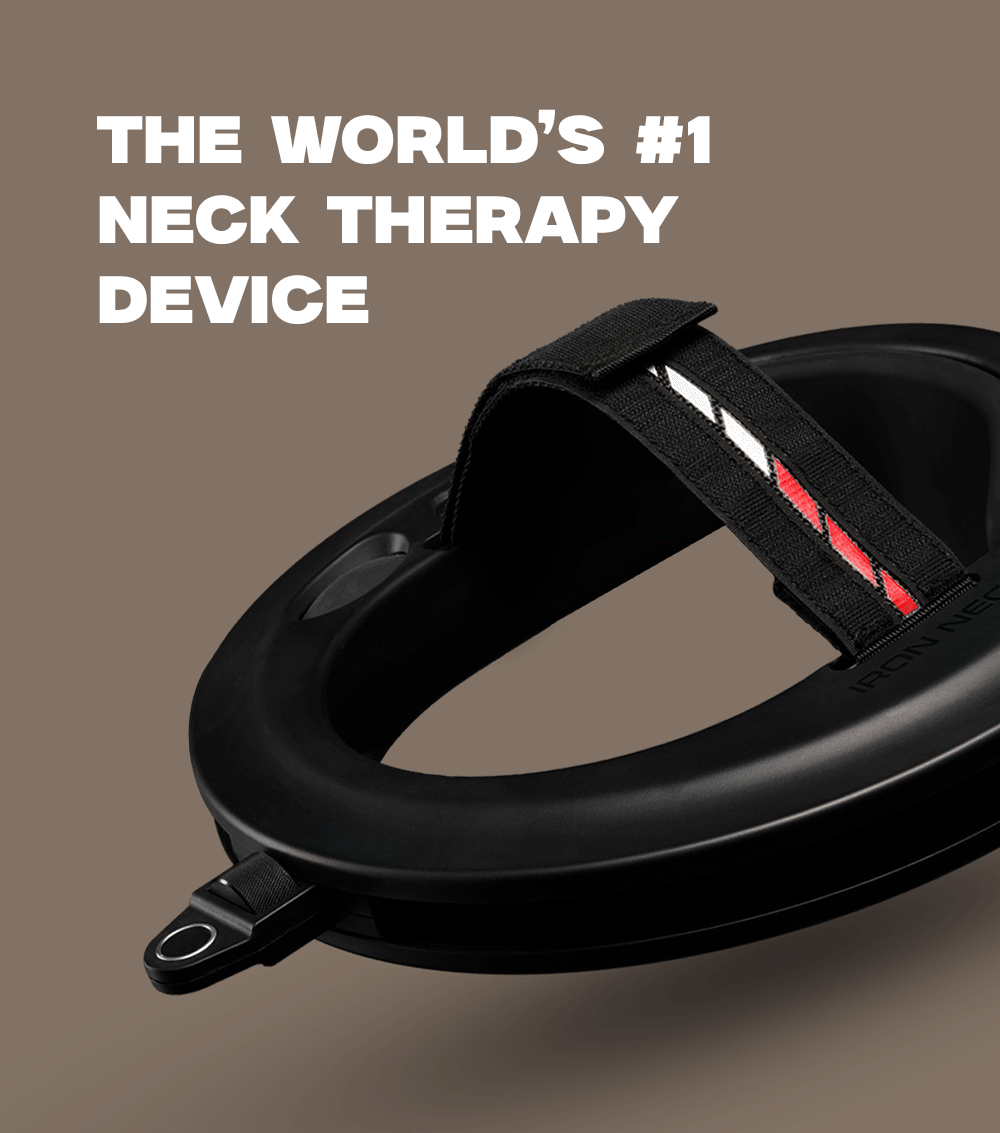
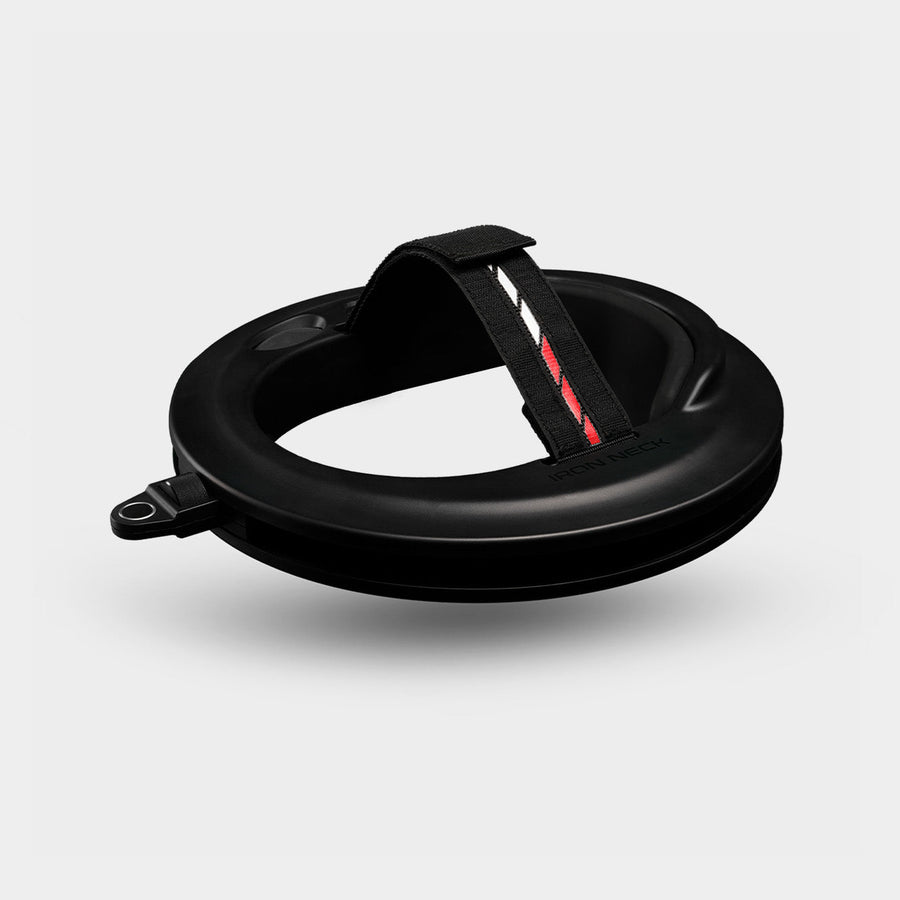
Train this program with the Iron Neck 3.0 Pro

The 360 degree resistance head unit this program is built around, with the anchor and bands you need to train every direction from day one.

Iron Neck 3.0 Pro
Iron Neck 3.0 Pro $599.00
Set your resistance

Light, medium, or heavy?

We call for an effort level instead of a specific weight, because the right resistance depends on you, the movement, and where you are in your training. For the sets and reps listed on each exercise, pick the resistance that makes the last few reps feel like the level shown.

Light

You finish the set with several clean reps still in the tank. The work stays easy and fully controlled from the first rep to the last.

Medium

You could manage a few more reps at the end, but not many. The final reps take real effort while your form holds.

Heavy

You reach the last prescribed rep with little or nothing left. Completing every rep with good form is genuinely hard.

These are starting points, not rules. Everyone is built differently, so adjust to fit you: size down if your form breaks before the final rep or a movement aggravates a symptom, and only size up once every rep feels smooth and pain free. When you are unsure, choose the lighter option.