

Protraction / Retraction
Hours in the drops build a forward-jutting head position, and this movement restores the neutral stack your neck returns to between rides.
Cycling puts the spine in flexion and then asks the neck to extend against gravity for hours so you can watch the road, a demand almost no other sport makes. This program builds the extension endurance that long rides drain, plus the rotation you need for shoulder checks in traffic. Riders on drop bars, aero bars, and long climbing days will feel the difference in the final hour of a ride first.

End ride-ending neck pain by building the extension endurance the riding position demands.
Rebuild neutral posture and free rotation off the bike before loading the riding position. Cyclists often arrive with the least rotation of any athlete, so it gets early attention.
Hours in the drops build a forward-jutting head position, and this movement restores the neutral stack your neck returns to between rides.
Retraction holds strengthen the tall alignment that counters the crane-necked riding posture before it hardens into your default.
A shortened shoulder check in traffic is a genuine hazard, and this rebuilds the free rotation that hours of fixed forward gaze erode.
Gentle continuous circles restore the movement variety that a fixed riding position starves the neck of.
Advance whenAdvance when rotation is full and easy both ways and post-ride stiffness starts to fade.
Train the specific demand of cycling, sustained extension under load. End-range holds and slow work build the capacity to watch the road for hours without the ache.
The extended head-up position of riding in the drops is an end-range hold, and training it directly is what finally fixes late-ride neck fade.
Slow spins build endurance through the full circle, giving the constantly-working extensors a trained base instead of a raw one.
Glancing from wheel to horizon to a rider beside you traces diagonals, and high-rep work makes those transitions smooth deep into a ride.
Rotated holds build the strength to look over a shoulder and hold it there while descending or riding in a pace line.
Advance whenAdvance when the final hour of a long ride feels the same as the first at the neck.
Finish with reactive control and full-range strength so rough roads, group rides, and long events cannot crack your position. This is where the endurance becomes durable.
Perturbed holds replicate rough pavement and gravel chatter, training the neck to absorb vibration without surrendering position.
Full-range diagonal strength protects the extremes, like the twisted look back over the shoulder in a hard-fought group finish.
Reacting to a shout of movement in a pace line requires an instant strong turn, and cue-based training builds exactly that.
Paused spins keep genuine strength in the finishing phase, because endurance without strength underneath it eventually fails anyway.
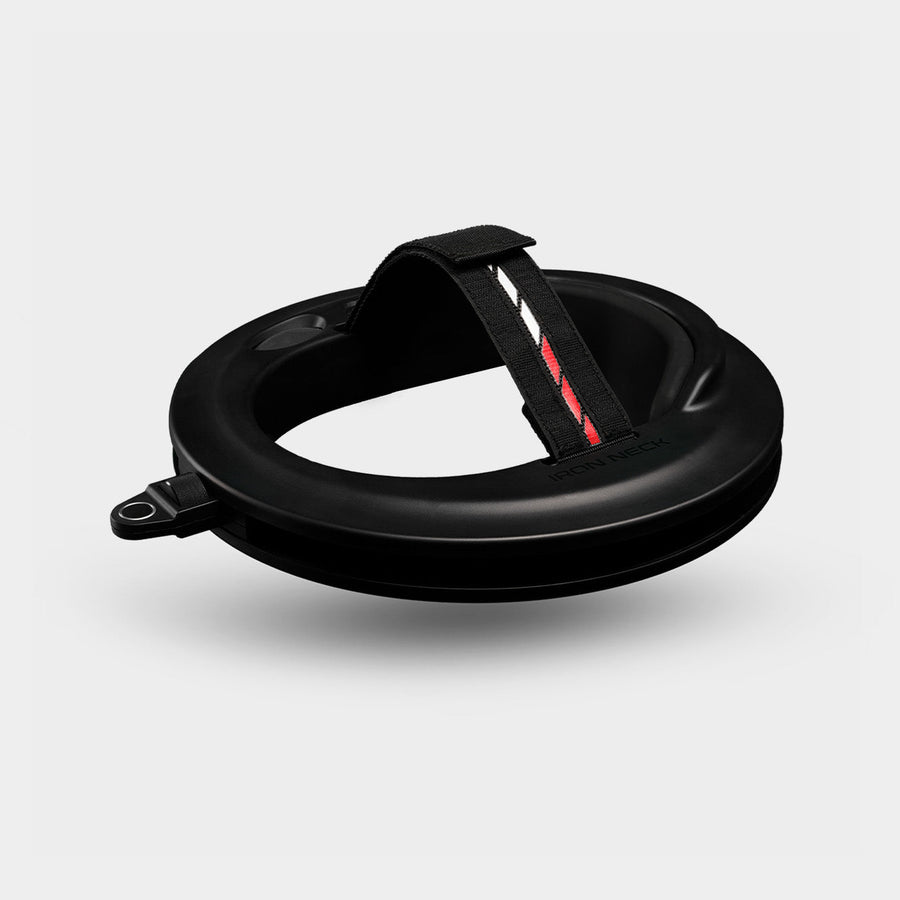
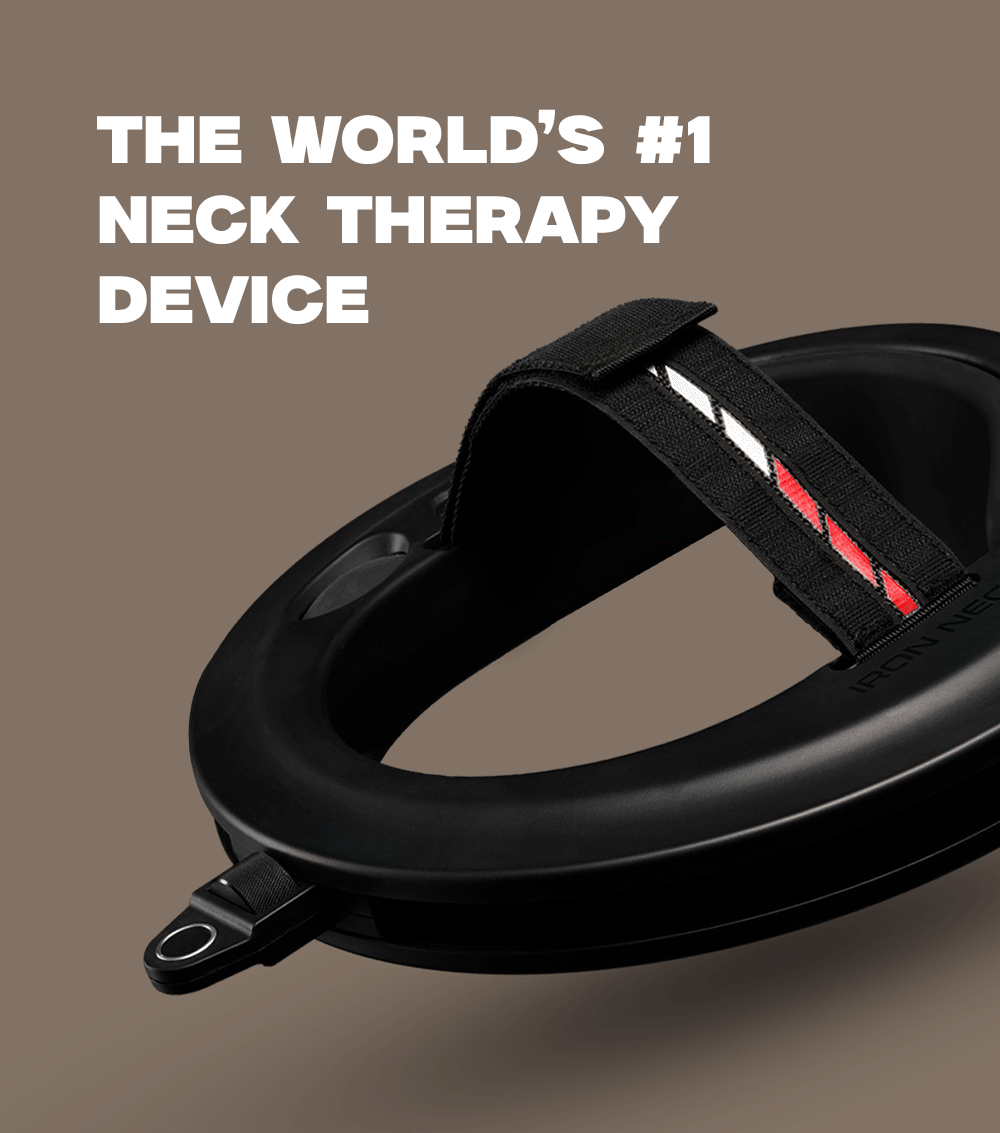
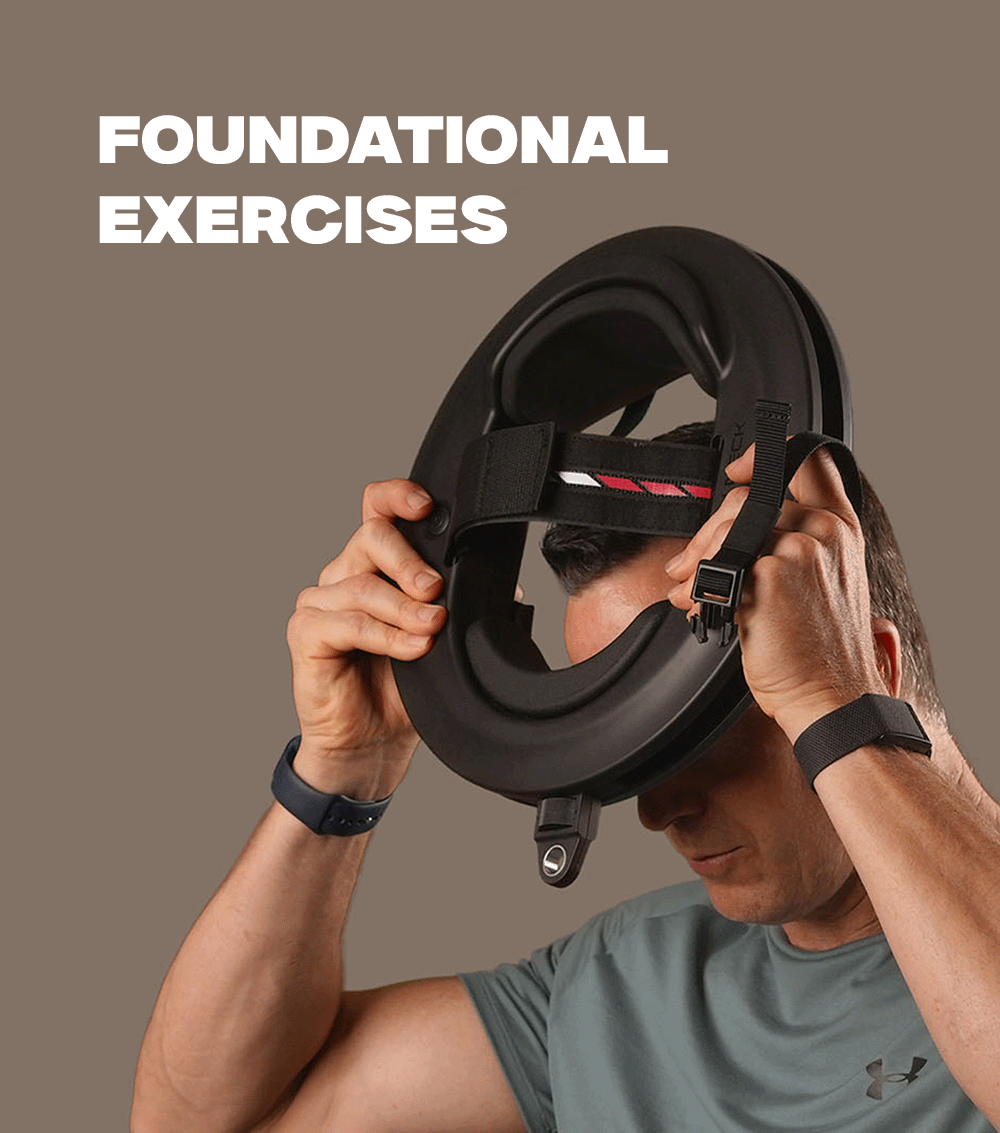
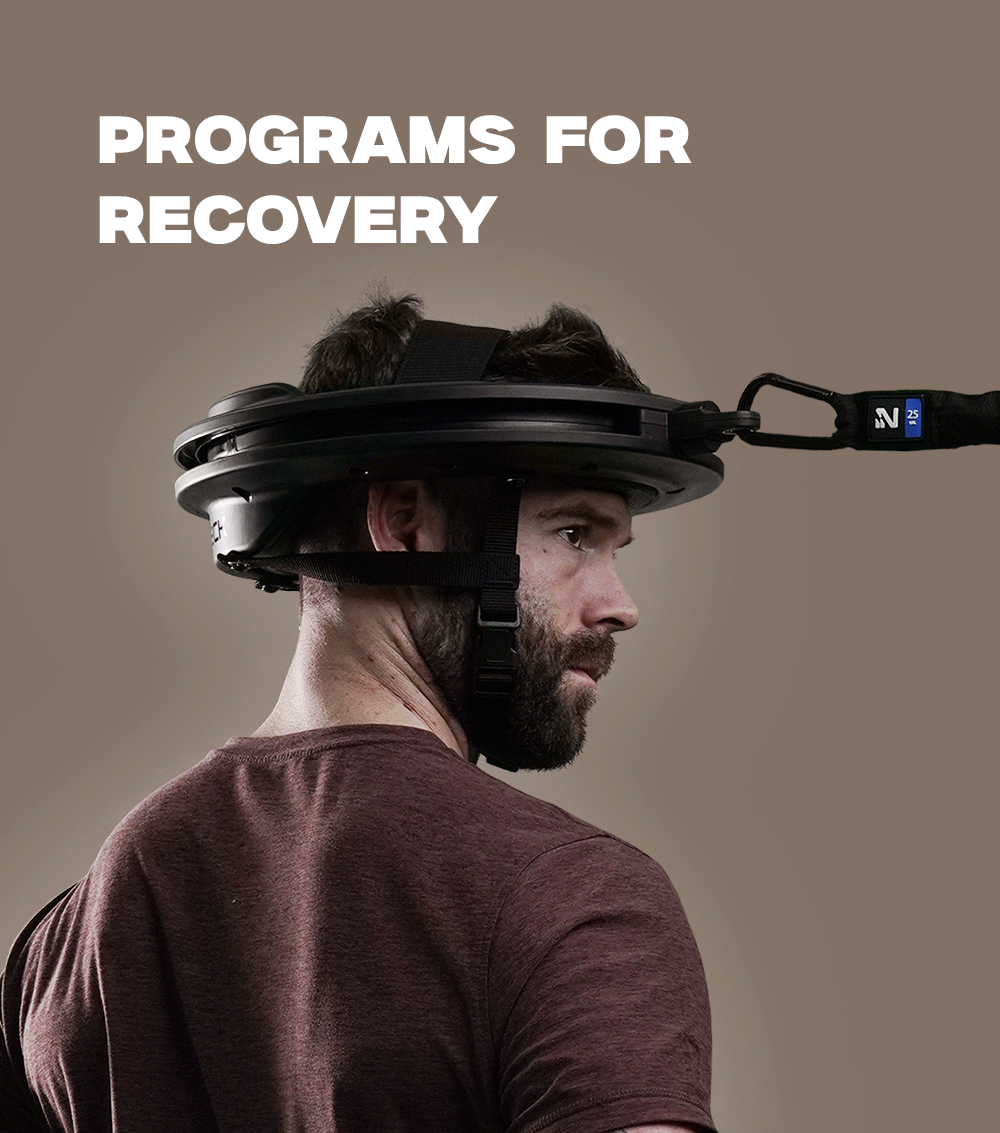
The 360 degree resistance head unit this program is built around, with the anchor and bands you need to train every direction from day one.

We call for an effort level instead of a specific weight, because the right resistance depends on you, the movement, and where you are in your training. For the sets and reps listed on each exercise, pick the resistance that makes the last few reps feel like the level shown.
You finish the set with several clean reps still in the tank. The work stays easy and fully controlled from the first rep to the last.
You could manage a few more reps at the end, but not many. The final reps take real effort while your form holds.
You reach the last prescribed rep with little or nothing left. Completing every rep with good form is genuinely hard.
These are starting points, not rules. Everyone is built differently, so adjust to fit you: size down if your form breaks before the final rep or a movement aggravates a symptom, and only size up once every rep feels smooth and pain free. When you are unsure, choose the lighter option.