


Strength & Longevity · Program 35

Motorcyclist Neck Endurance

At highway speed, wind blast turns a three-pound helmet into a constant backward pull that your neck fights for every mile of a ride. This program builds the long-duration endurance that all-day rides demand, then adds the reactive strength that matters in the moments riders train for but hope never come. Sport riders in a tuck, cruisers sitting upright, and adventure riders standing on pegs all load the neck differently, and all three get covered.

Focus · MotorcyclistsFrequency · 3x per weekSession · 15-20 min
Motorcyclist Neck Endurance cover art
The goal

Build the endurance to carry a helmet against wind blast all day and the resilience to protect the neck if things go wrong.

Who it is for
  • Riders doing multi-hour highway or touring days
  • Sport riders holding a tucked position against wind blast
  • Adventure and off-road riders absorbing constant chatter through the bars

Helmet-Ready Base

Build the foundational strength that carries a helmet comfortably. Front-to-back control leads because wind blast is a sagittal-plane fight.

01

Protraction / Retraction

3 sets of 12 repsFront & Back

Wind blast pushes the helmet straight back while a tuck drags it forward, and this movement strengthens the exact axis that battle is fought on.

How To
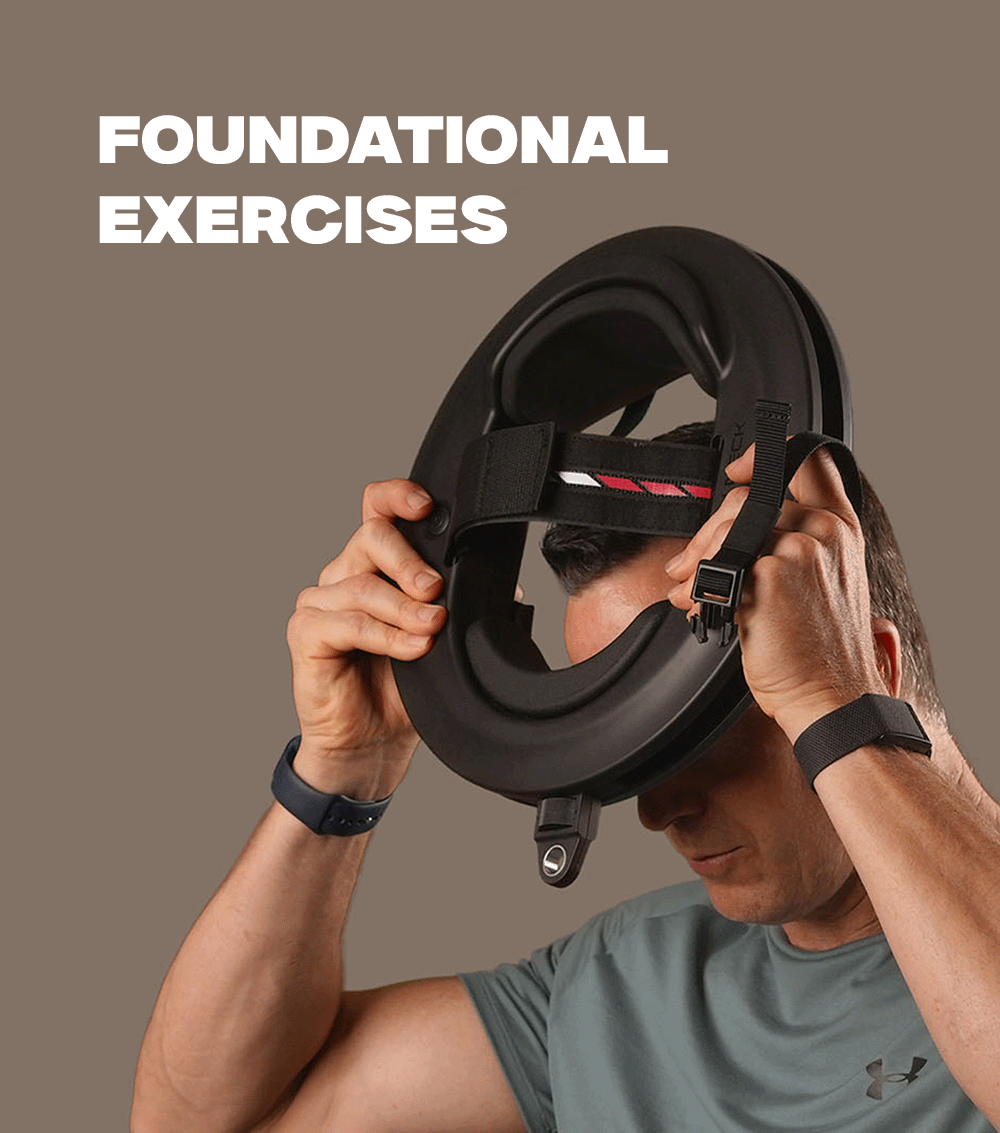
1Glide your head straight forward, reaching your chin outward, then glide it straight back as though making a double chin.
2Keep your eyes and chin level the entire time and move smoothly along a horizontal path.
Coaching Cues
Slide your head along an invisible shelf
Make a double chin
then get rid of it
No nodding
keep your eyes level throughout
Think forward and back
not up and down
Muscles Activated
SCMAnterior scaleneDeep neck flexorsSemispinalis cervicis
02

Isometric Hold

3 sets of 20 second holds each directionFront

Riding is one long isometric for the neck, and braced holds in every direction are the most direct training for it.

How To
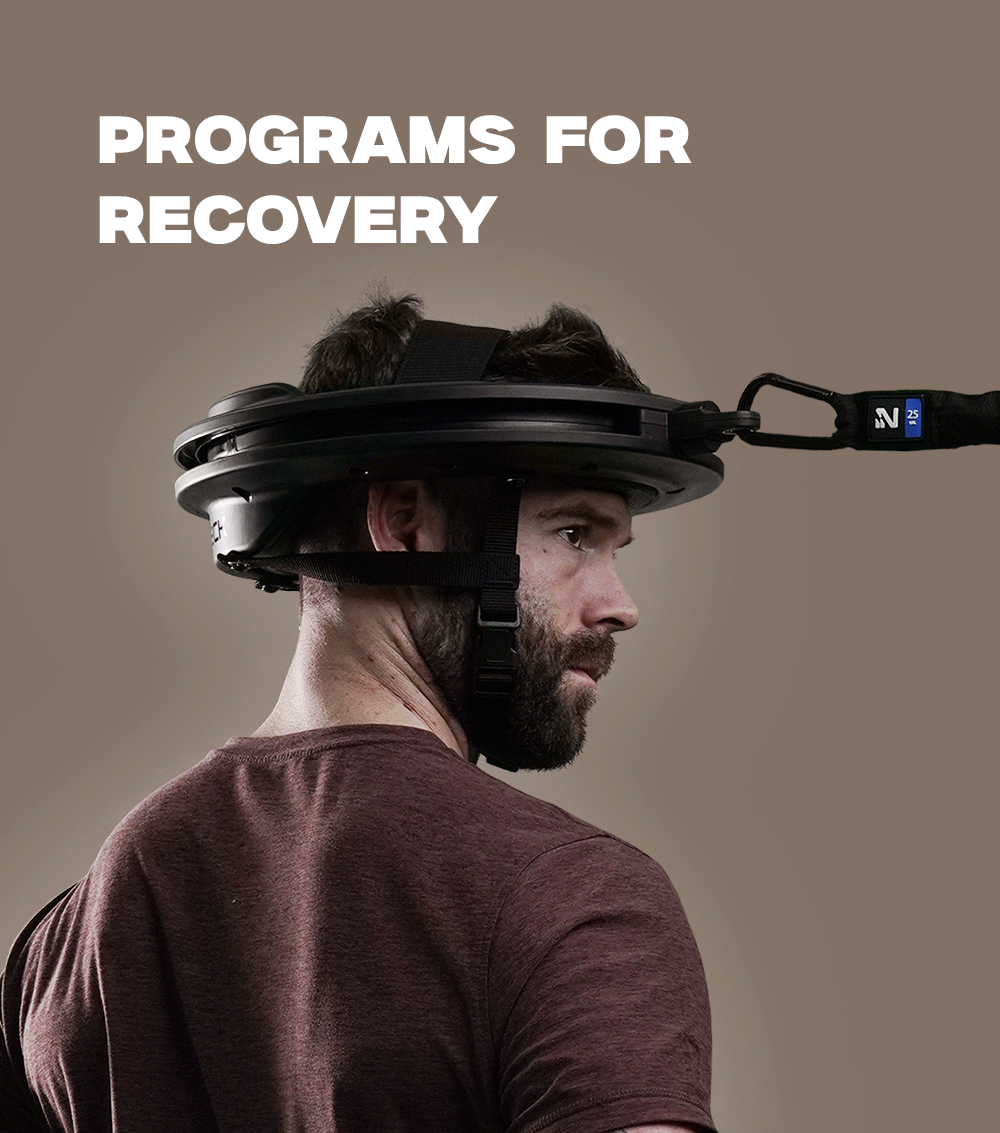
1Set your head in the working position and hold it there against the band.
2Keep your chin level, breathe normally, and resist any drift for the full time prescribed.
Coaching Cues
Brace your neck without clenching your jaw
Keep breathing through the hold
Nothing moves but your ribs
End the set when your position starts to drift
Muscles Activated
Deep neck flexors/extensorsSCMSplenius
03

Look Left, Look Right

3 sets of 10 reps each sideAny direction

Head checks at speed happen against wind pressure, and rotational strength keeps them quick and complete instead of shortened and risky.

How To
1Stand tall with your chest up and your chin level.
2Turn your head slowly to one side as far as you can go comfortably, hold for a moment, then return to center and repeat to the other side.
3Only your head moves.
Coaching Cues
Chin stays level as you rotate
Eyes lead the movement
Do not tilt your head
it is a turn and not a lean
Move with control and not momentum
Muscles Activated
SCMSplenius capitis/cervicisLongissimus capitis
04

360 Spin

3 sets of 4 rotations each directionFront

Holding the head stable while the body leans and counter-steers beneath it is the core skill of every corner you ride.

How To
1Stand tall with your shoulders stacked over your hips and fix your eyes on a point straight ahead.
2Rotate your body in place, hips, torso and feet, while your head stays completely still.
3Move slowly through a full clockwise turn, then reverse and complete a full counterclockwise turn.
Coaching Cues
Head still
body turns
Move like a tank turret with your upper body rotating under a fixed head
Do not let your nose drift from its anchor point
Feel the resistance wrap around you as you rotate
Muscles Activated
SCMSplenius capitis/cervicisSemispinalis capitisMultifidus

Advance whenAdvance when a two-hour ride produces no neck fatigue and all holds complete without shaking.

All-Day Endurance

Stretch capacity toward the demands of a full riding day. Holds get long, tempos get slow, and time under tension becomes the main training variable.

01

Protraction / Retraction (with hold)

3 sets of 20 second holdsFront & Back

Long retraction holds directly train the chin-tucked posture that fights wind blast for hours at freeway speed.

How To
1Glide your head straight forward, reaching your chin outward, then glide it straight back as though making a double chin.
2Keep your eyes and chin level the entire time and move smoothly along a horizontal path.
Coaching Cues
Slide your head along an invisible shelf
Make a double chin
then get rid of it
No nodding
keep your eyes level throughout
Think forward and back
not up and down
Muscles Activated
SCMAnterior scaleneDeep neck flexorsSemispinalis cervicis
02

360 Spin (slow tempo)

3 sets of 4 slow rotations each directionFront

Slow continuous spins build the aerobic quality of neck endurance, the difference between mile 50 and mile 300 feeling the same.

How To
1Stand tall with your shoulders stacked over your hips and fix your eyes on a point straight ahead.
2Rotate your body in place, hips, torso and feet, while your head stays completely still.
3Move slowly through a full clockwise turn, then reverse and complete a full counterclockwise turn.
Coaching Cues
Head still
body turns
Move like a tank turret with your upper body rotating under a fixed head
Do not let your nose drift from its anchor point
Feel the resistance wrap around you as you rotate
Muscles Activated
SCMSplenius capitis/cervicisSemispinalis capitisMultifidus
03

Look Left, Look Right (with hold)

3 sets of 6 reps with 5 second end holdsAny direction

A proper head check at speed is a hold at end range against wind pressure, and this makes that hold strong on both sides.

How To
1Stand tall with your chest up and your chin level.
2Turn your head slowly to one side as far as you can go comfortably, hold for a moment, then return to center and repeat to the other side.
3Only your head moves.
Coaching Cues
Chin stays level as you rotate
Eyes lead the movement
Do not tilt your head
it is a turn and not a lean
Move with control and not momentum
Muscles Activated
SCMSplenius capitis/cervicisLongissimus capitis
04

Diagonals

3 sets of 8 reps each diagonalFront or Back

Scanning from mirrors to road surface to horizon runs diagonal paths all day, and higher-rep diagonals build endurance along them.

How To
1Start by looking down toward one armpit.
2Trace a diagonal path upward with your eyes and nose until you are looking above the opposite shoulder, then return along the same path.
3Finish your reps on one side before switching to the opposite diagonal.
Coaching Cues
Draw an X in your field of view with your nose
Follow a diagonal line with your eyes
Use full range but keep it smooth
Feel your neck twist and lengthen
Muscles Activated
SCMSplenius capitisScalenesSuboccipitals

Advance whenAdvance when your longest regular ride no longer produces next-day neck stiffness.

Crash-Resilient

Add the protective layer, end-range strength and reflexive stiffness. A neck that reacts fast and holds strong at its limits is the best passive safety equipment you can build.

01

Protraction / Retraction (end-range hold)

3 sets of 15 second holds each end rangeFront & Back

In a get-off, the helmeted head gets thrown toward its end ranges, and Heavy isometrics there are strength exactly where the stakes are highest.

How To
1Glide your head straight forward, reaching your chin outward, then glide it straight back as though making a double chin.
2Keep your eyes and chin level the entire time and move smoothly along a horizontal path.
Coaching Cues
Slide your head along an invisible shelf
Make a double chin
then get rid of it
No nodding
keep your eyes level throughout
Think forward and back
not up and down
Muscles Activated
SCMAnterior scaleneDeep neck flexorsSemispinalis cervicis
02

Isometric Hold (with perturbation)

3 sets of 20 second holdsFront

Perturbed bracing mirrors the surprise jolts of pothole strikes and gusting crosswinds, training the neck to stiffen before you consciously react.

How To
1Set your head in the working position and hold it there against the band.
2Keep your chin level, breathe normally, and resist any drift for the full time prescribed.
Coaching Cues
Brace your neck without clenching your jaw
Keep breathing through the hold
Nothing moves but your ribs
End the set when your position starts to drift
Muscles Activated
Deep neck flexors/extensorsSCMSplenius
03

Look Left, Look Right (reactive, cue-based)

3 sets of 10 cued turnsAny direction

Reacting instantly to a horn or a flash in a mirror is a survival skill on two wheels, trained here with resistance behind it.

How To
1Stand tall with your chest up and your chin level.
2Turn your head slowly to one side as far as you can go comfortably, hold for a moment, then return to center and repeat to the other side.
3Only your head moves.
Coaching Cues
Chin stays level as you rotate
Eyes lead the movement
Do not tilt your head
it is a turn and not a lean
Move with control and not momentum
Muscles Activated
SCMSplenius capitis/cervicisLongissimus capitis
04

Diagonals (dynamic pulses)

3 sets of 10 pulses each diagonalFront or Back

Quick diagonal pulses build the rapid-fire stiffening that limits head whip when the bike moves suddenly underneath you.

How To
1Start by looking down toward one armpit.
2Trace a diagonal path upward with your eyes and nose until you are looking above the opposite shoulder, then return along the same path.
3Finish your reps on one side before switching to the opposite diagonal.
Coaching Cues
Draw an X in your field of view with your nose
Follow a diagonal line with your eyes
Use full range but keep it smooth
Feel your neck twist and lengthen
Muscles Activated
SCMSplenius capitisScalenesSuboccipitals
Get the gear

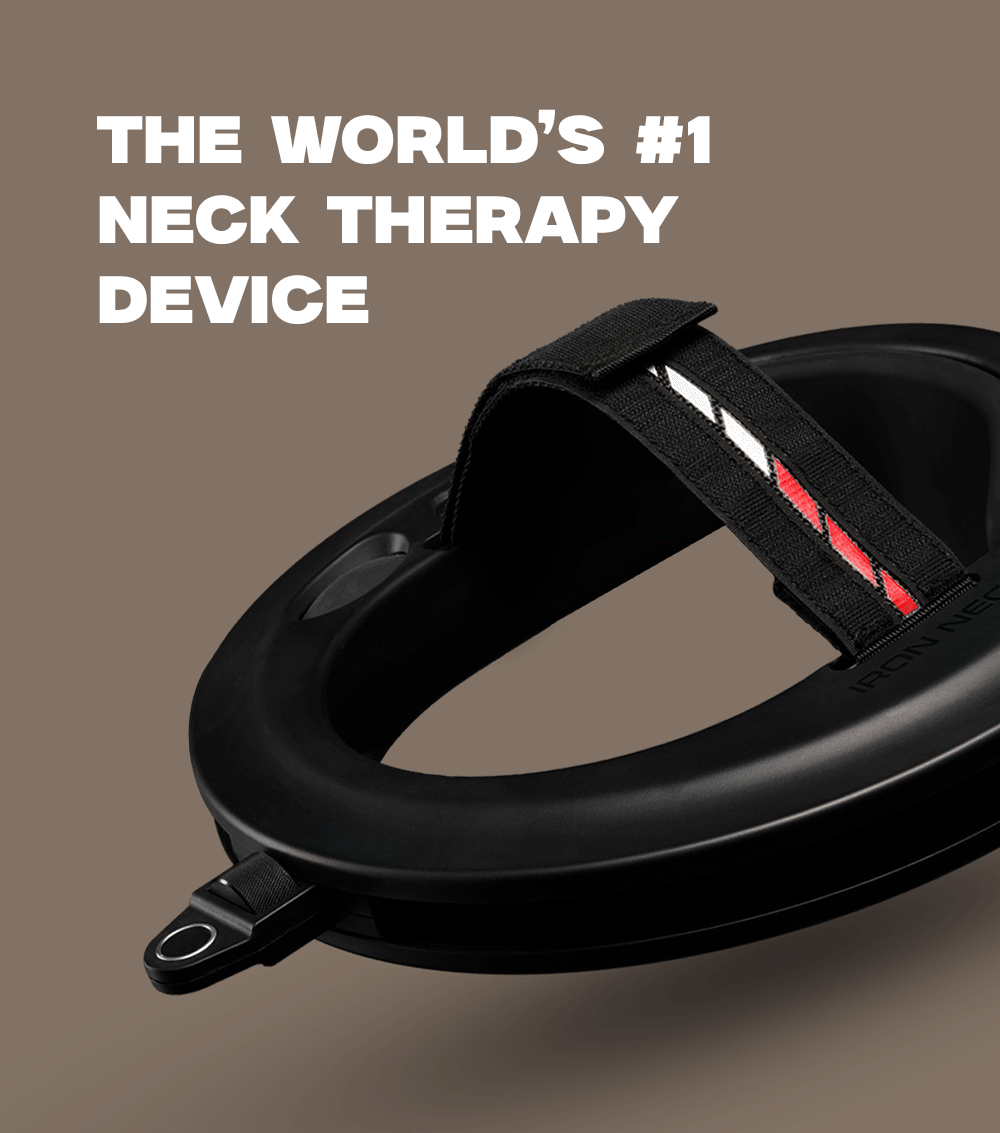
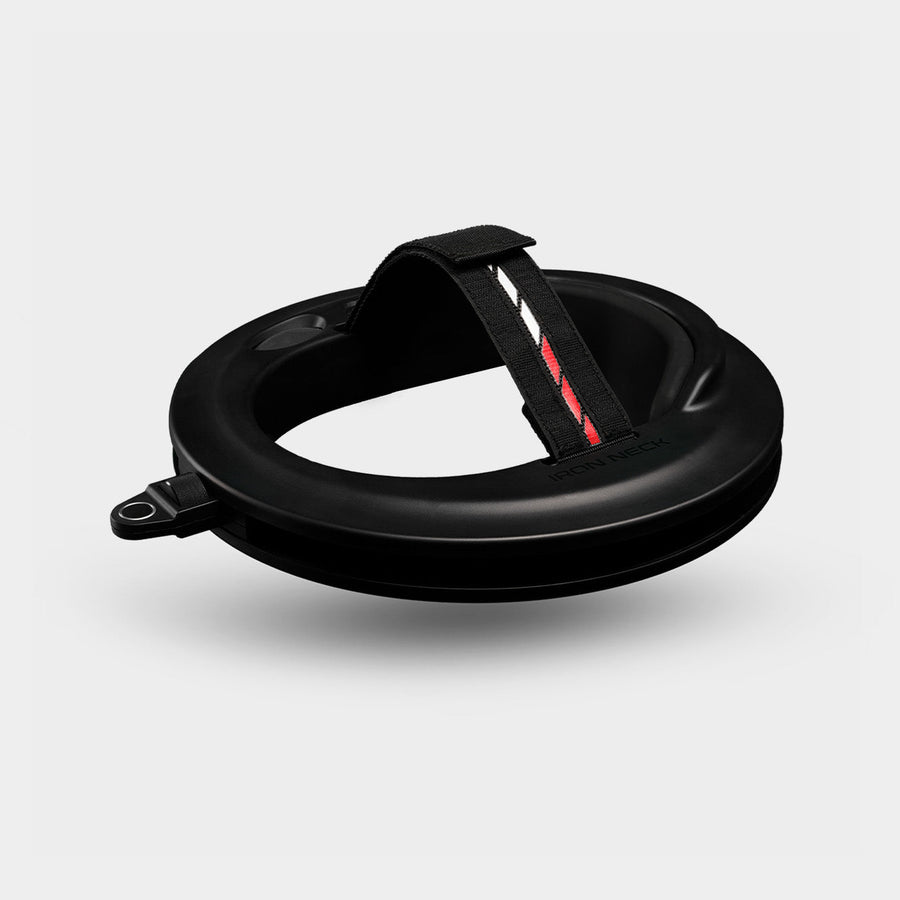
Train this program with the Iron Neck 3.0 Pro

The 360 degree resistance head unit this program is built around, with the anchor and bands you need to train every direction from day one.

Iron Neck 3.0 Pro
Iron Neck 3.0 Pro $599.00
Set your resistance

Light, medium, or heavy?

We call for an effort level instead of a specific weight, because the right resistance depends on you, the movement, and where you are in your training. For the sets and reps listed on each exercise, pick the resistance that makes the last few reps feel like the level shown.

Light

You finish the set with several clean reps still in the tank. The work stays easy and fully controlled from the first rep to the last.

Medium

You could manage a few more reps at the end, but not many. The final reps take real effort while your form holds.

Heavy

You reach the last prescribed rep with little or nothing left. Completing every rep with good form is genuinely hard.

These are starting points, not rules. Everyone is built differently, so adjust to fit you: size down if your form breaks before the final rep or a movement aggravates a symptom, and only size up once every rep feels smooth and pain free. When you are unsure, choose the lighter option.