

Wall Isometric Press
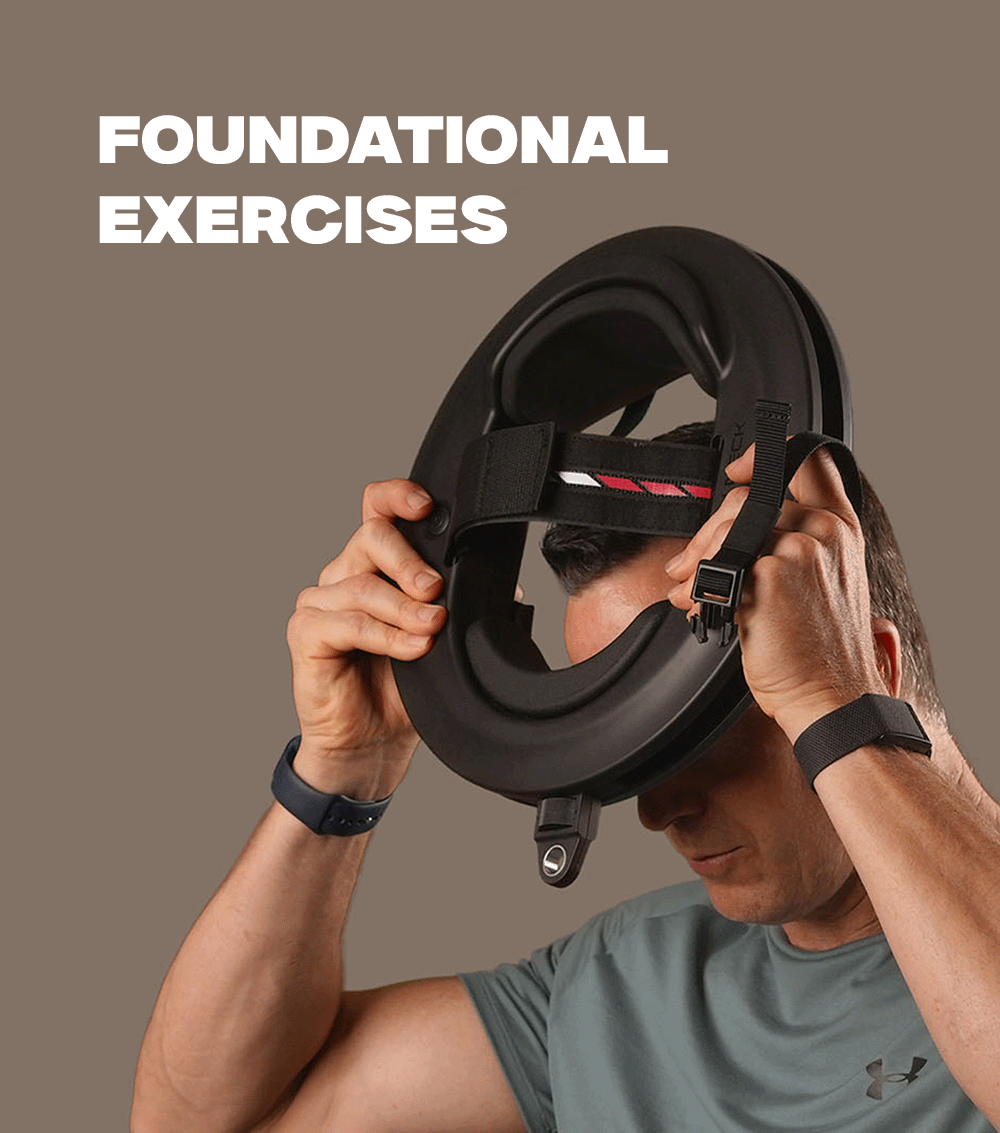
Pressing into a fixed wall lets a first-timer feel their neck muscles fire without anything moving, which builds the confidence to load real movement next.
Most people have never trained their neck a single day in their lives, so the first weeks are about learning what good tension feels like, not chasing fatigue. This program starts with the gentlest entries in the catalog, then walks you into the core movements at working resistance. In six to eight weeks you go from never-trained to owning every direction your head can move.

Build baseline neck strength and confident head control for people loading their neck for the first time.
Introduce load in the least intimidating way possible and teach the neck what deliberate tension feels like. The goal is familiarity and clean patterns, not effort.
Pressing into a fixed wall lets a first-timer feel their neck muscles fire without anything moving, which builds the confidence to load real movement next.
Lying down removes gravity from the equation, so you learn to activate the deep front-of-neck muscles that untrained necks almost never use.
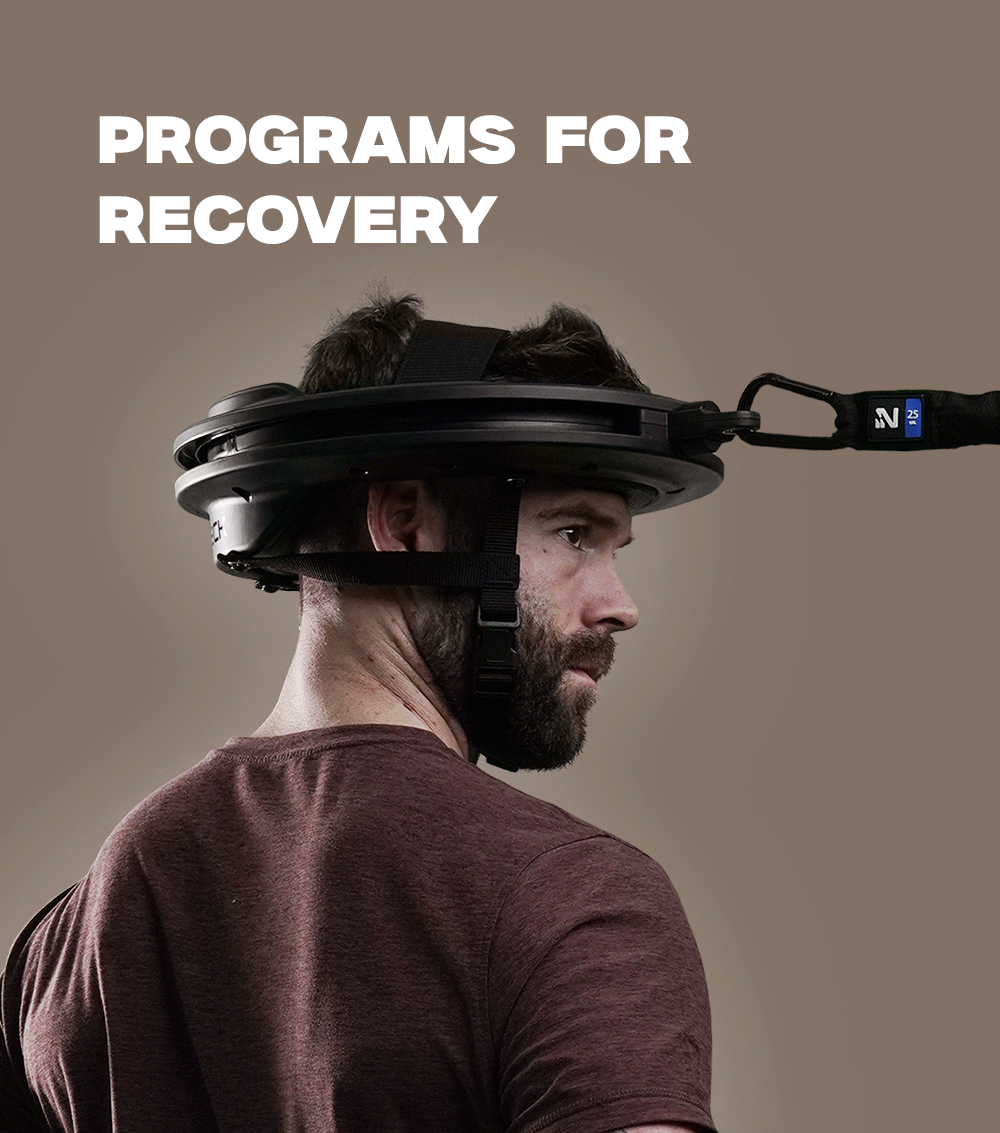
The light-tension spin teaches the signature Iron Neck skill, keeping your head perfectly still while your body turns, at a load anyone can manage on day one.
Gliding the head forward and back maps the movement most beginners have lost to phones and screens, and it is the pattern every later phase builds on.
Advance whenAdvance when every movement feels smooth and you finish sessions feeling worked but not sore.
Move to working resistance on the three core movements plus a static hold. Reps are moderate and every set should end with something left in the tank.
Now the full spin gets real load, forcing every muscle around your neck to work together to keep your nose pointed at one spot.
Rotation is the direction untrained necks are weakest in, and this builds the strength to turn your head against resistance with total control.
At working resistance this movement starts reversing the forward head drift that years of desks and screens built into you.
Static holds teach you to brace the neck like you brace your core, a skill that transfers to every lift and every jolt life throws at you.
Advance whenAdvance when you complete all sets at Medium with no shaking, breath holding, or form drift.
Add the diagonal plane, end-range holds, and paused rotations so your new strength covers every angle. Finishing this phase means you are ready for any intermediate program in the library.
Diagonals combine every basic pattern you have learned into one movement, the graduation exercise for a beginner neck.
Holding at the end of rotation builds strength exactly where new necks are least stable, the last few degrees of the turn.
Pausing at each quarter of the spin proves you own the whole circle, not just the momentum through it.
Pausing in the retracted position stamps in the tall, aligned head position you want to become your new default posture.
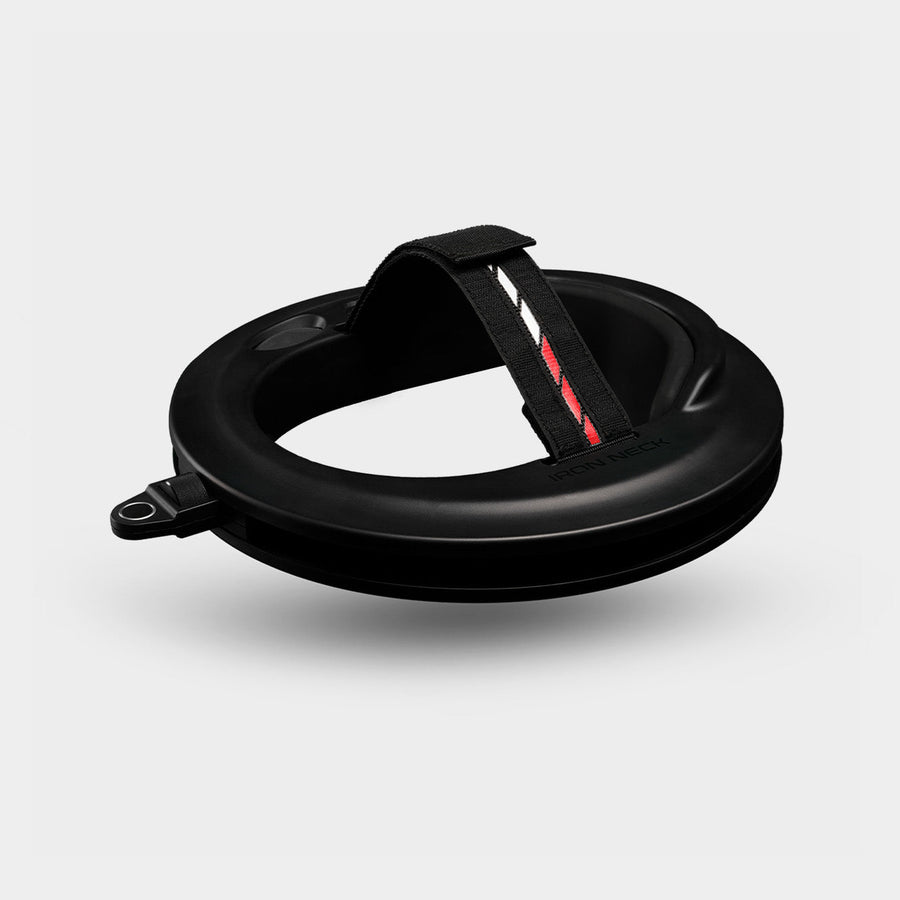
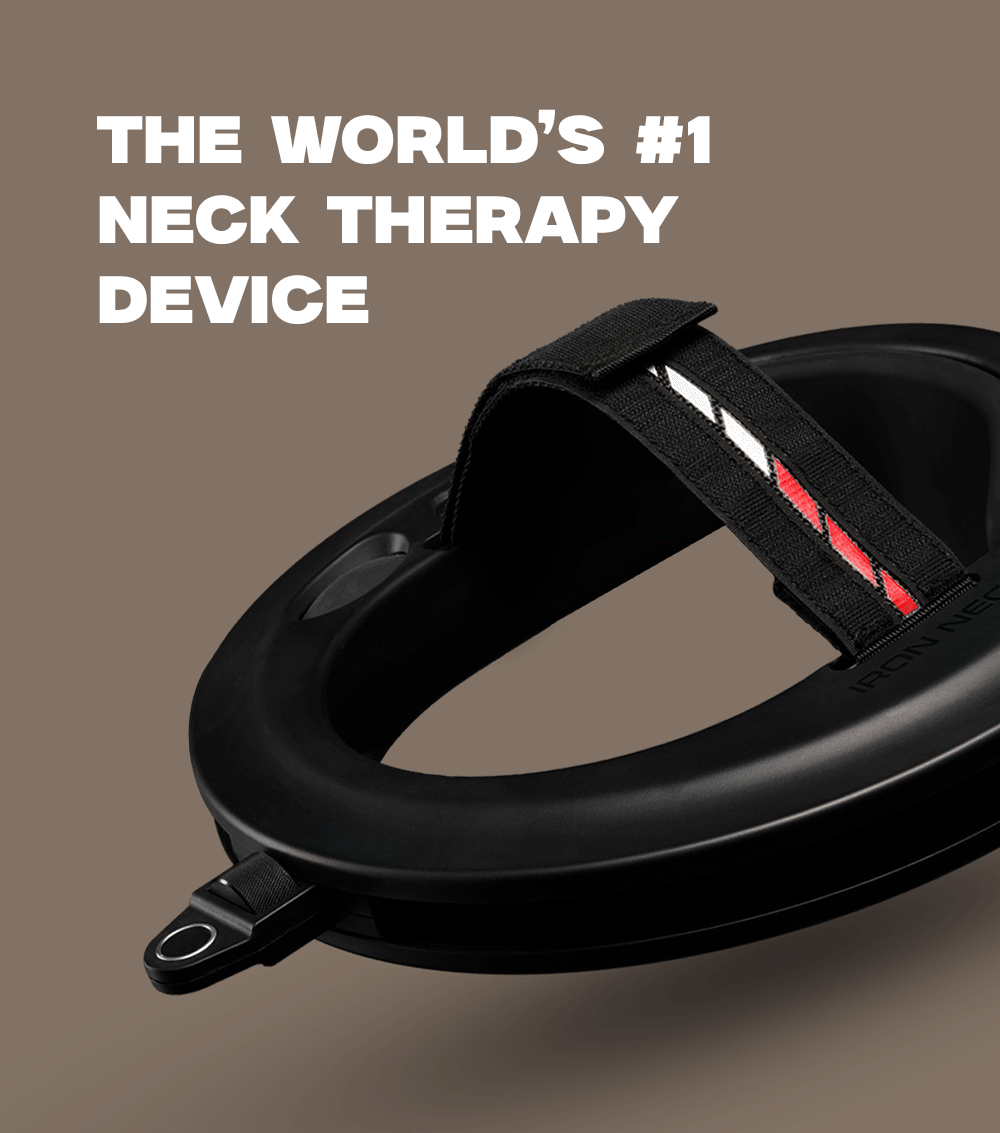
The 360 degree resistance head unit this program is built around, with the anchor and bands you need to train every direction from day one.

We call for an effort level instead of a specific weight, because the right resistance depends on you, the movement, and where you are in your training. For the sets and reps listed on each exercise, pick the resistance that makes the last few reps feel like the level shown.
You finish the set with several clean reps still in the tank. The work stays easy and fully controlled from the first rep to the last.
You could manage a few more reps at the end, but not many. The final reps take real effort while your form holds.
You reach the last prescribed rep with little or nothing left. Completing every rep with good form is genuinely hard.
These are starting points, not rules. Everyone is built differently, so adjust to fit you: size down if your form breaks before the final rep or a movement aggravates a symptom, and only size up once every rep feels smooth and pain free. When you are unsure, choose the lighter option.