

Nod Yes / No (supine)
Supine nodding delivers slow vestibular and cervical input with the head fully supported, the calmest possible recalibration signal.
When the neck's position sensors misfire, they feed the brain bad data and the result is dizziness, visual strain, or unsteadiness with head movement. This program recalibrates those sensors, starting with supported drills that pair head motion with steady input, then rebuilding the strength and proprioception that keep the signal clean. It suits dizziness a clinician has traced to the neck rather than the inner ear.

Reduce neck-driven dizziness and unsteadiness by restoring cervical proprioception, gentle motion, and deep stabilizer strength.
Reintroduce head movement at an intensity that informs the sensors without overwhelming them. Supported positions keep dizziness at the door.
Supine nodding delivers slow vestibular and cervical input with the head fully supported, the calmest possible recalibration signal.
Wall presses activate the neck muscles with zero head movement, strengthening the system without generating any motion signal to misread.
Small, slow turns with eyes fixed on a target re-pair neck motion with reliable visual input, retraining the reflex dizziness has corrupted.
Advance whenAdvance when entry drills produce no dizziness during or in the hour after each session.
Build smooth, controlled motion with the eyes anchored. Consistent, accurate sensory input starts overwriting the faulty signals.
The small circle asks the sensors to track the head through a gentle continuous arc, precise practice at a dizziness-safe dose.
Straight-line gliding gives the proprioceptors a simple, predictable path to master before more complex motion returns.
Holding at end rotation lets the sensors settle and report accurately from turned positions, the ones most likely to trigger the spins.
Advance whenAdvance when banded movement is smooth, symptom-free, and steady on your feet throughout.
Add sustained work and combined planes as symptom-free tolerance grows. The stabilizers strengthen while the sensory map fills back in.
Slow continuous circles demand uninterrupted position tracking, the endurance version of the recalibration earlier phases began.
Shallow diagonals feed the sensors combined-plane trajectories, restoring accuracy in the complex movements daily life is made of.
Isometric holds at rotated positions strengthen and steady the muscles whose spindles supply the head-position data itself.
Advance whenAdvance when slow circles and shallow diagonals are steady with no dizziness at any point in the day.
Finish the recalibration and prove it under the hardest conditions. Head movement becomes something you no longer think about.
Removing vision forces the cervical sensors to carry the whole navigation load, the definitive test and final training of the repaired signal.
Slow full diagonals confirm complex trajectories no longer confuse the system, converting recovered signal into everyday confidence.
Retraction holds maintain the postural alignment that keeps the upper cervical sensors reporting from a stable baseline.
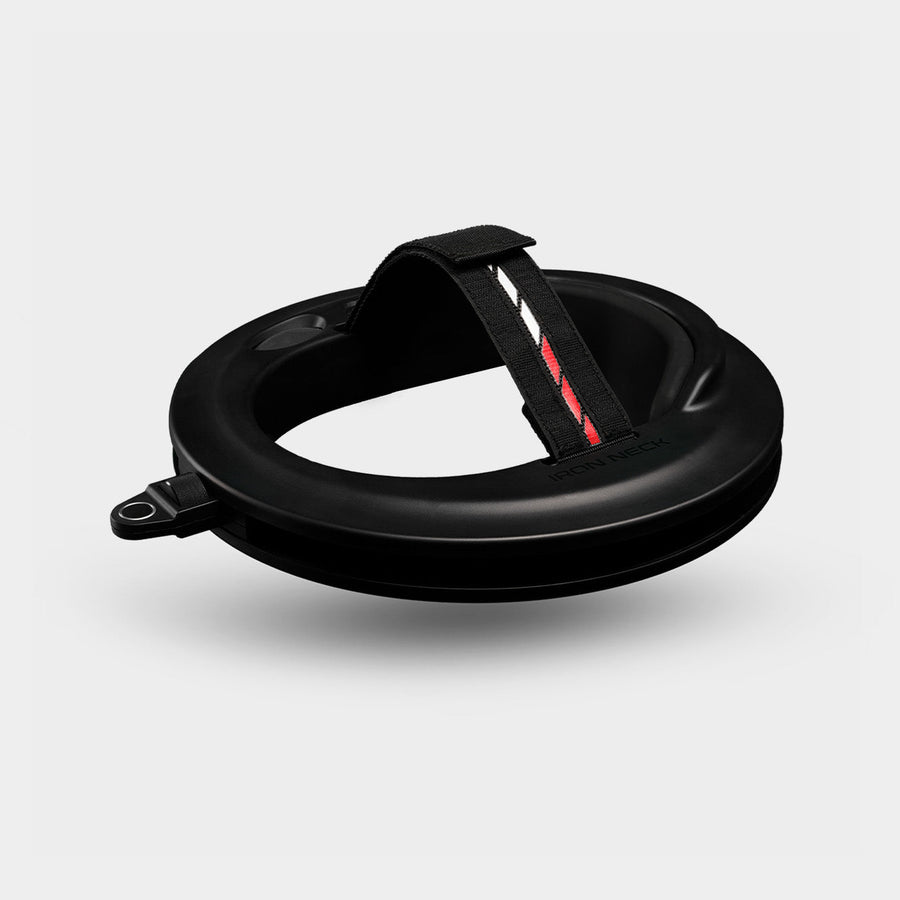
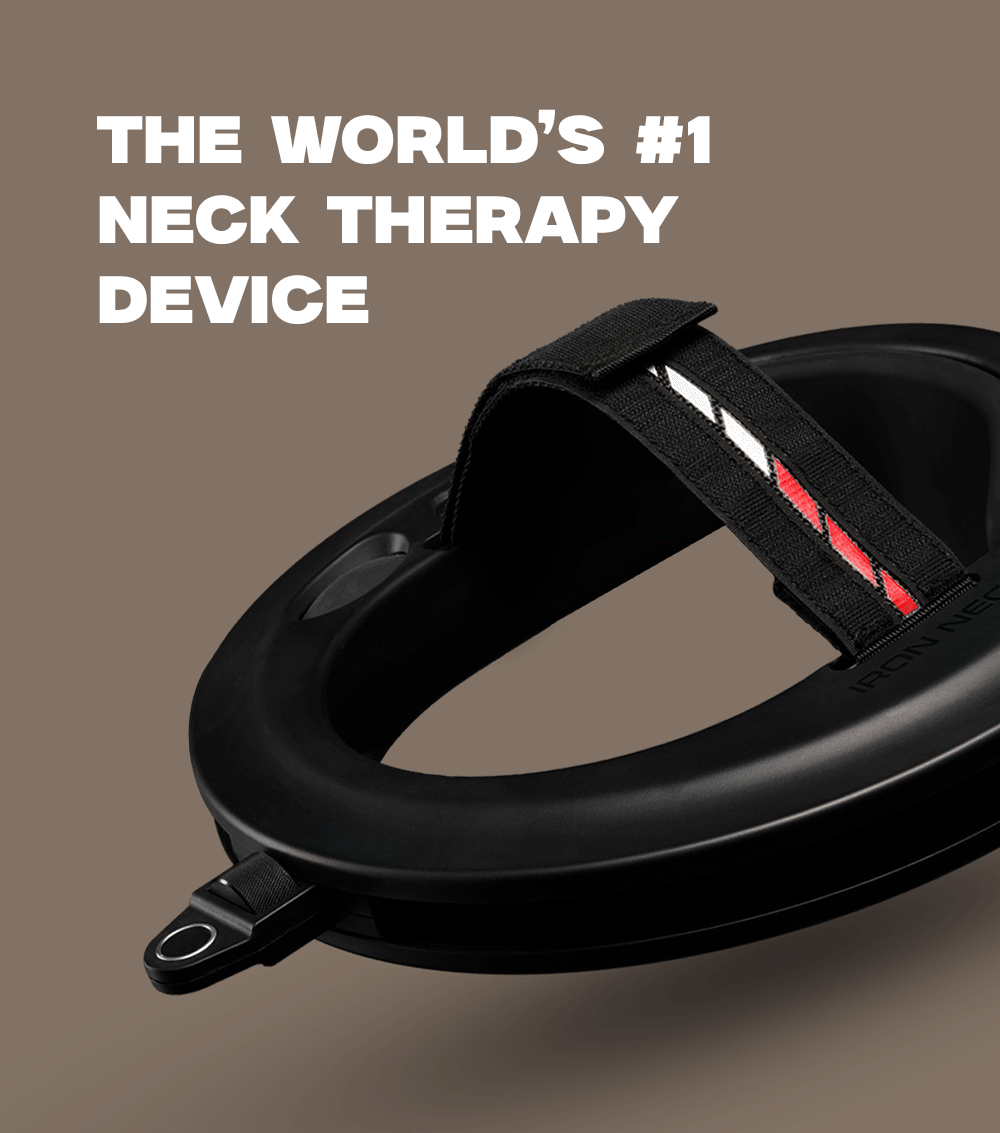
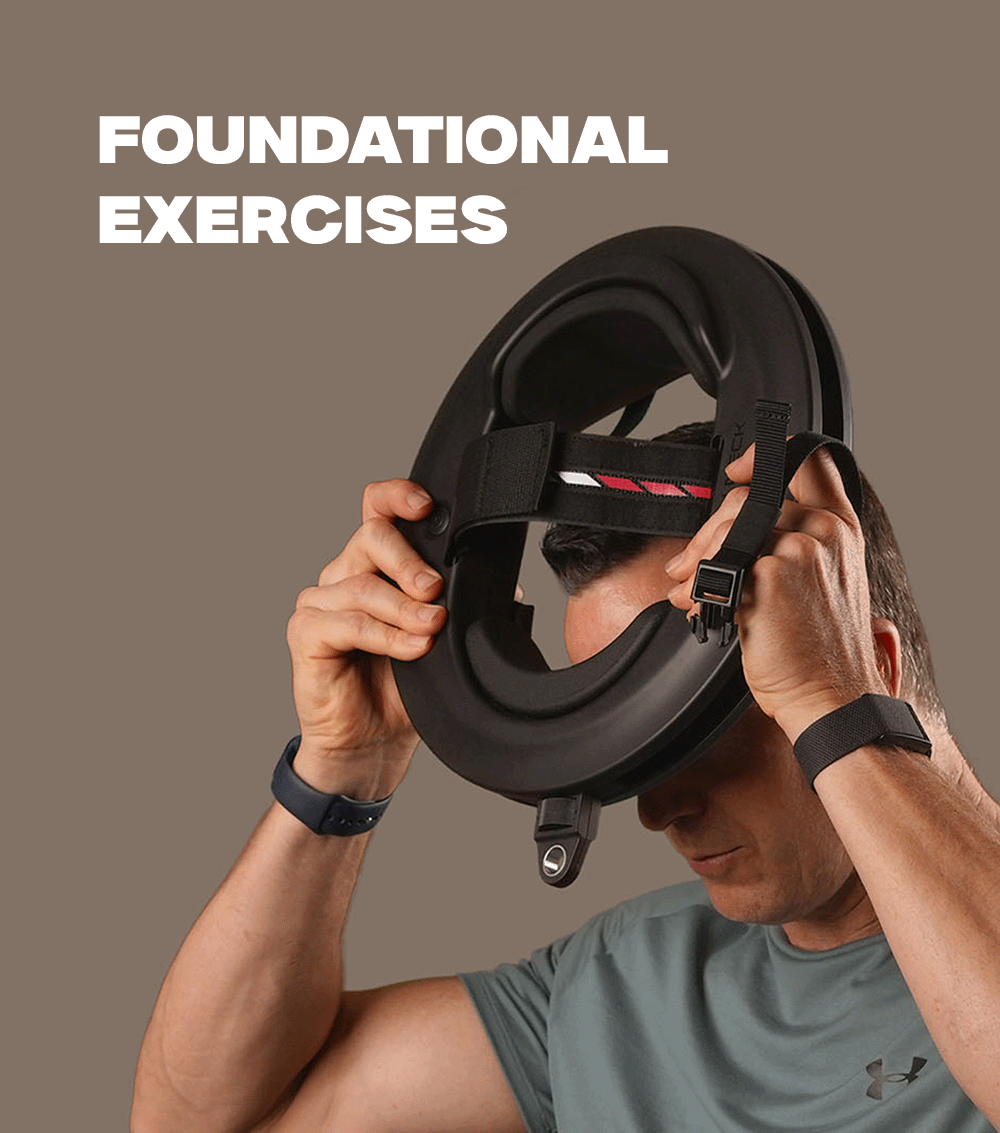
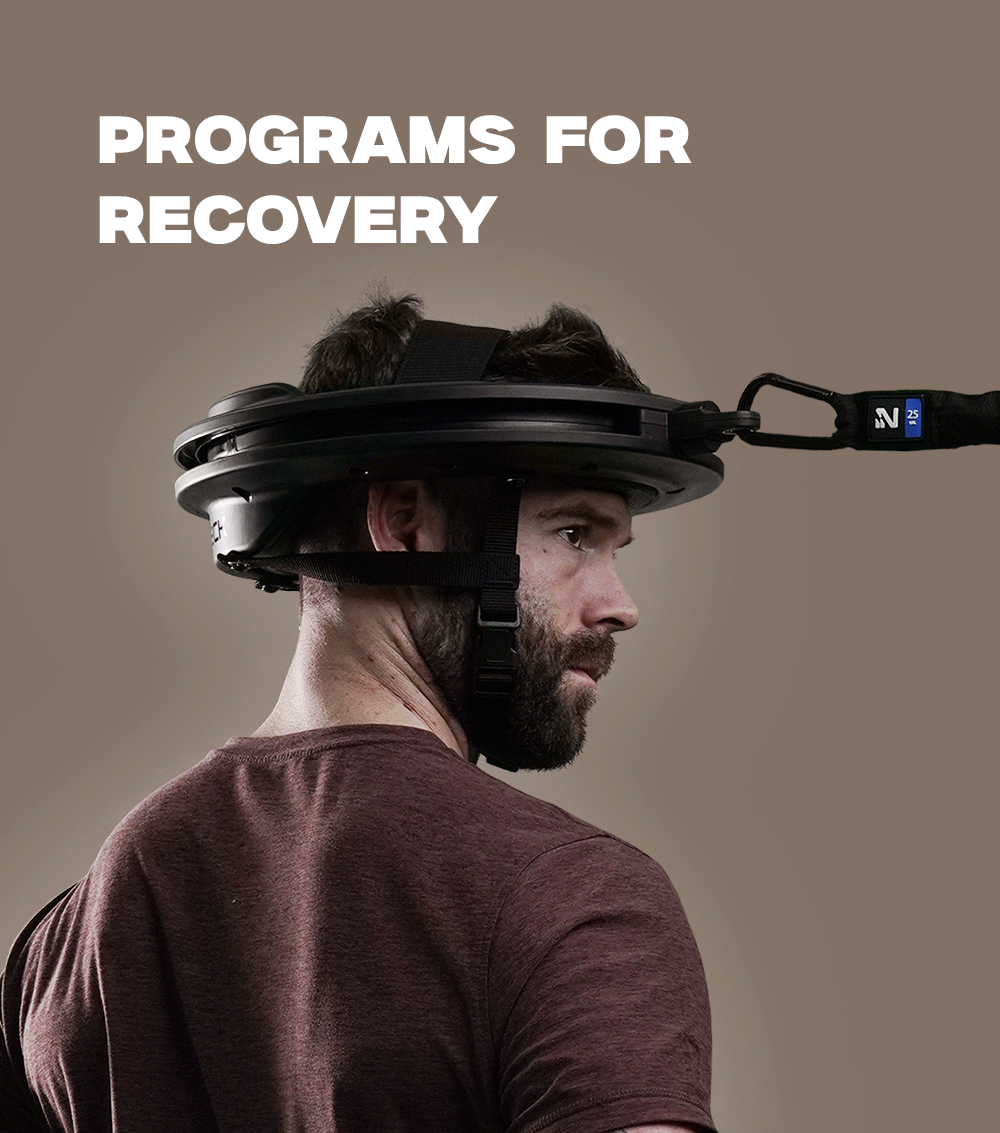
The 360 degree resistance head unit this program is built around, with the anchor and bands you need to train every direction from day one.

We call for an effort level instead of a specific weight, because the right resistance depends on you, the movement, and where you are in your training. For the sets and reps listed on each exercise, pick the resistance that makes the last few reps feel like the level shown.
You finish the set with several clean reps still in the tank. The work stays easy and fully controlled from the first rep to the last.
You could manage a few more reps at the end, but not many. The final reps take real effort while your form holds.
You reach the last prescribed rep with little or nothing left. Completing every rep with good form is genuinely hard.
These are starting points, not rules. Everyone is built differently, so adjust to fit you: size down if your form breaks before the final rep or a movement aggravates a symptom, and only size up once every rep feels smooth and pain free. When you are unsure, choose the lighter option.