

Protraction / Retraction
Retraction lifts the head off the scalenes, slackening the muscles that clamp the outlet and directly widening the nerve corridor.
Thoracic outlet syndrome pinches the nerves and blood vessels between the neck and shoulder, sending numbness, tingling, or heaviness down the arm. This program relieves pressure on that corridor by restoring cervical posture and rebalancing the scalenes and surrounding muscles that crowd it. As alignment improves and the neck gets stronger, the outlet opens and the arm symptoms recede.

Reduce nerve and vascular compression by improving posture, cervical alignment, and muscular balance between the neck and shoulder girdle.
Open the thoracic outlet by restoring head position and gentle motion. Every drill is chosen to reduce, never provoke, the arm symptoms.
Retraction lifts the head off the scalenes, slackening the muscles that clamp the outlet and directly widening the nerve corridor.
Easy rotation moves the scalenes through length changes that reduce their resting tone without the sustained stretch positions that can irritate the plexus.
A small, low-stress circle restores general motion while keeping the neck well clear of the extended angles that narrow the outlet.
Advance whenAdvance when sessions leave the arm quiet and baseline tingling episodes become less frequent.
Build endurance in the alignment that keeps the outlet open. The deep flexors take over head support so the scalenes can stop overworking.
Holding retraction trains the posture that keeps the outlet at maximum diameter, minute after minute.
Neutral bracing shifts head support to the deep stabilizers, relieving the scalenes of the postural duty that keeps them thick and tight.
Tempo-varied rotation builds relaxed, efficient turning so routine head movement stops recruiting the compressive overflow muscles.
Advance whenAdvance after two symptom-free weeks of hold work with no arm heaviness afterward.
Load the decompressed alignment and extend it across planes. Strength here makes the open-outlet posture the neck's default under fatigue.
Slow full circles build balanced endurance around the entire neck so no single muscle group tightens into the outlet space.
Shallow diagonals strengthen the oblique patterns connecting neck and shoulder girdle while staying inside nerve-safe range.
Rotational isometrics build side-to-side balance, correcting the asymmetric muscle tone that often narrows one outlet more than the other.
Advance whenAdvance when diagonal and hold work is strong with the arm fully quiet during and after training.
Keep the corridor open permanently with a sustainable routine. This phase maintains the posture, balance, and endurance that ended the symptoms.
Eyes-closed circles keep position sense sharp so the head does not drift back into the forward posture that compresses the outlet.
Full-range diagonals maintain supple strength through every plane, keeping the scalene region mobile rather than guarded.
Slow eccentric gliding preserves the deep flexor strength that holds the decompressed alignment through long days of desk or overhead work.
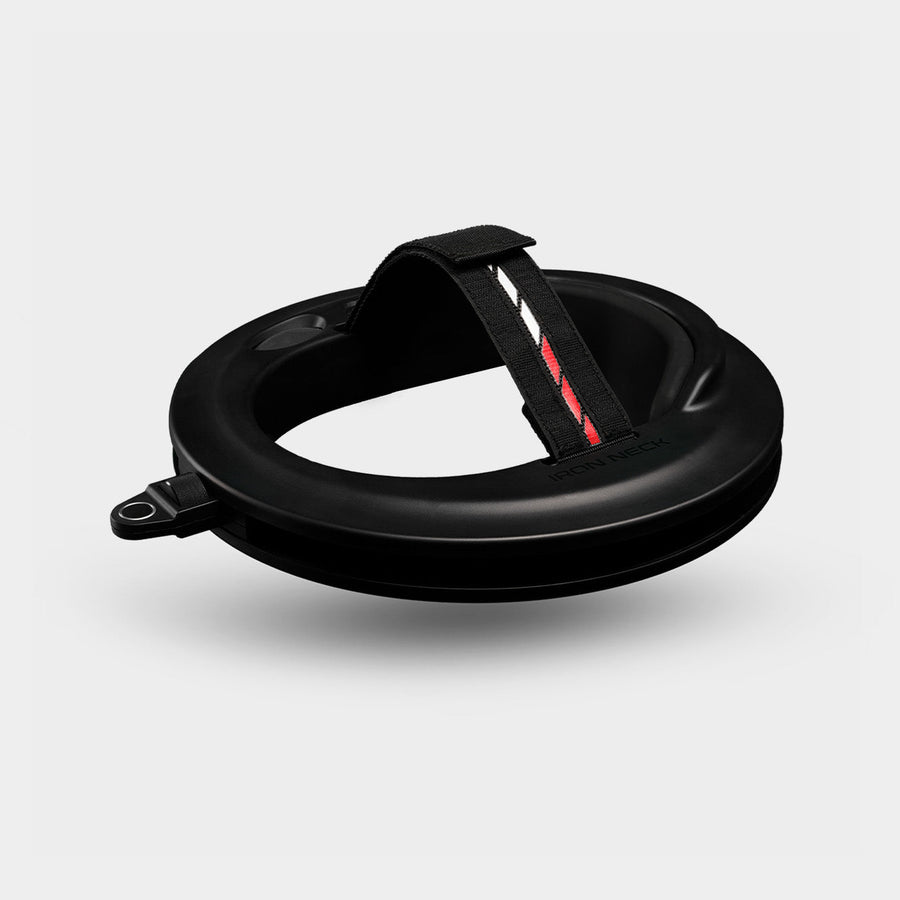
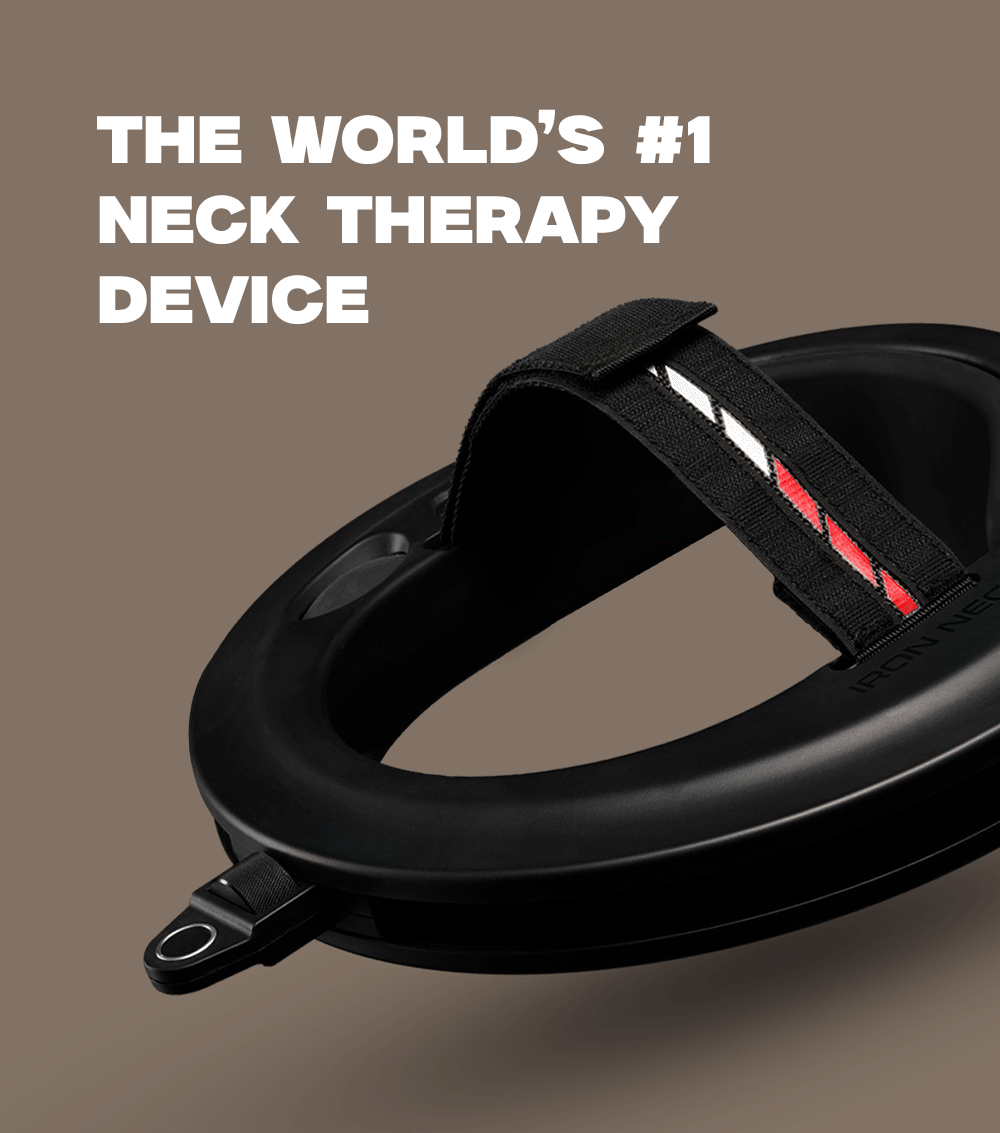
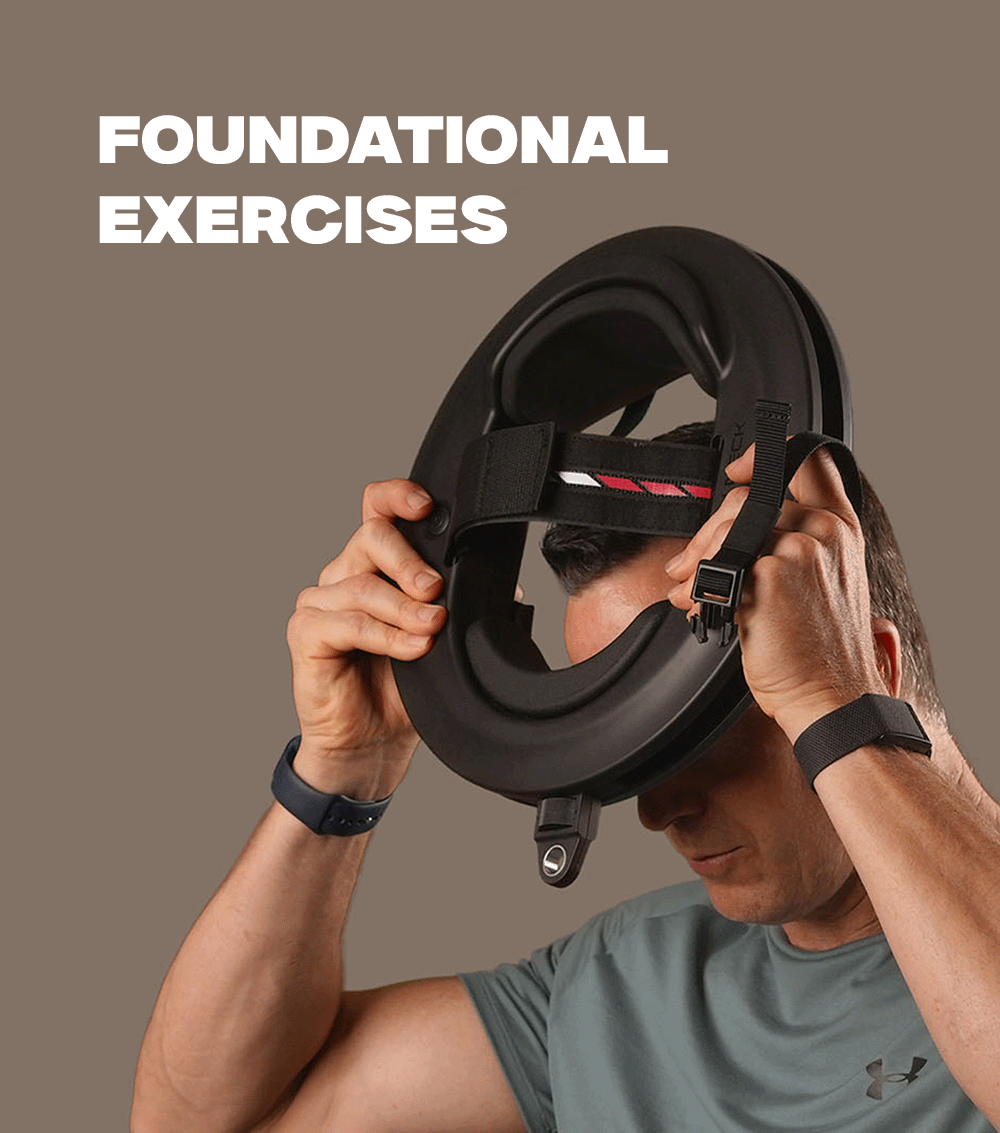
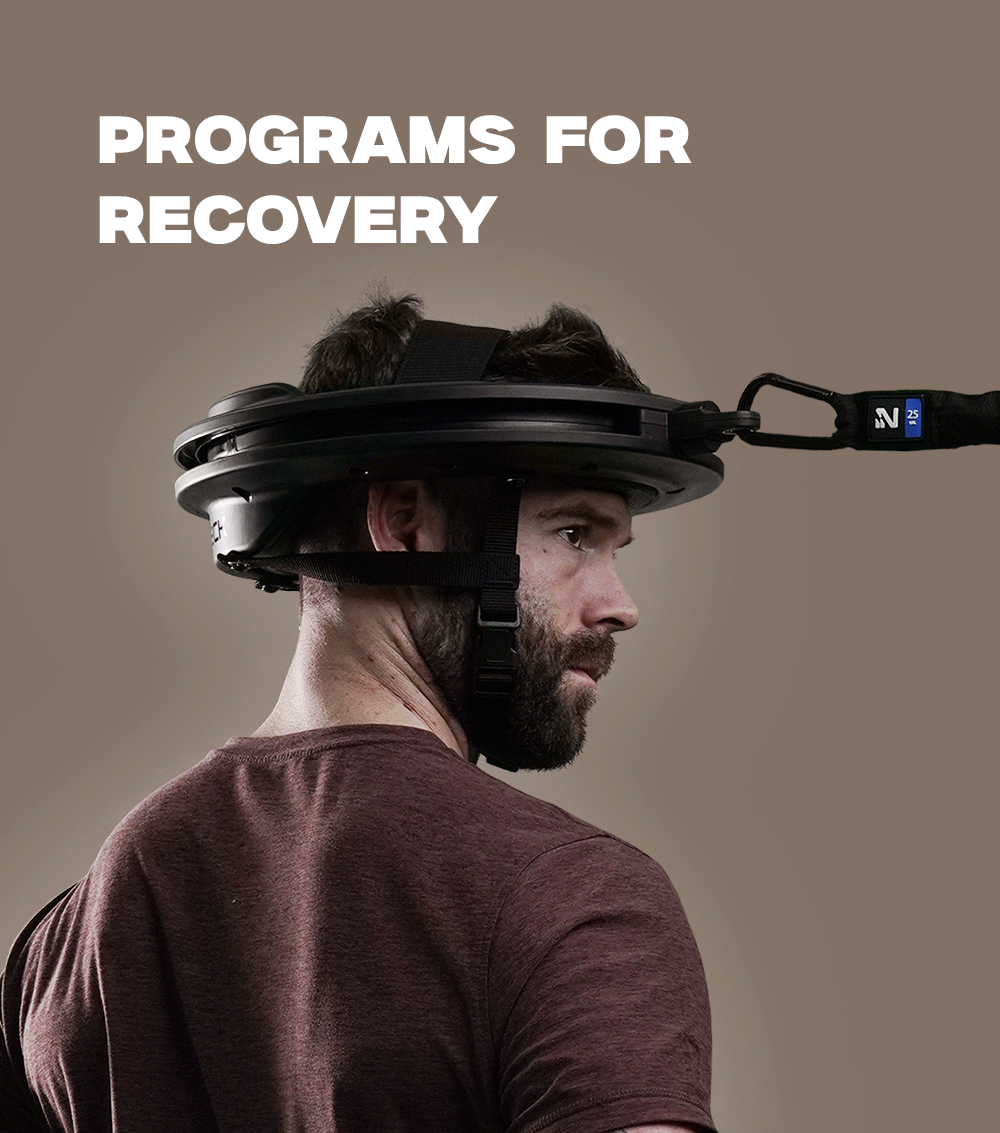
The 360 degree resistance head unit this program is built around, with the anchor and bands you need to train every direction from day one.

We call for an effort level instead of a specific weight, because the right resistance depends on you, the movement, and where you are in your training. For the sets and reps listed on each exercise, pick the resistance that makes the last few reps feel like the level shown.
You finish the set with several clean reps still in the tank. The work stays easy and fully controlled from the first rep to the last.
You could manage a few more reps at the end, but not many. The final reps take real effort while your form holds.
You reach the last prescribed rep with little or nothing left. Completing every rep with good form is genuinely hard.
These are starting points, not rules. Everyone is built differently, so adjust to fit you: size down if your form breaks before the final rep or a movement aggravates a symptom, and only size up once every rep feels smooth and pain free. When you are unsure, choose the lighter option.