

Nod Yes / No (supine)
With the head supported, the deep flexors can fire without the surface muscles guarding, restarting the stabilizing system instability shuts down.
After a concussion or ligament injury, the neck can feel loose, wobbly, and untrustworthy, with dizziness or a bobblehead sensation when support muscles fail to fire. This program rebuilds stability from the ground up, starting with supine and wall drills that reawaken the deep stabilizers before any band load arrives. Each phase restores another layer of strength and reflexive control until the neck feels solid again.

Improve cervical joint stability and proprioception by strengthening the deep neck musculature and enhancing neuromuscular control.
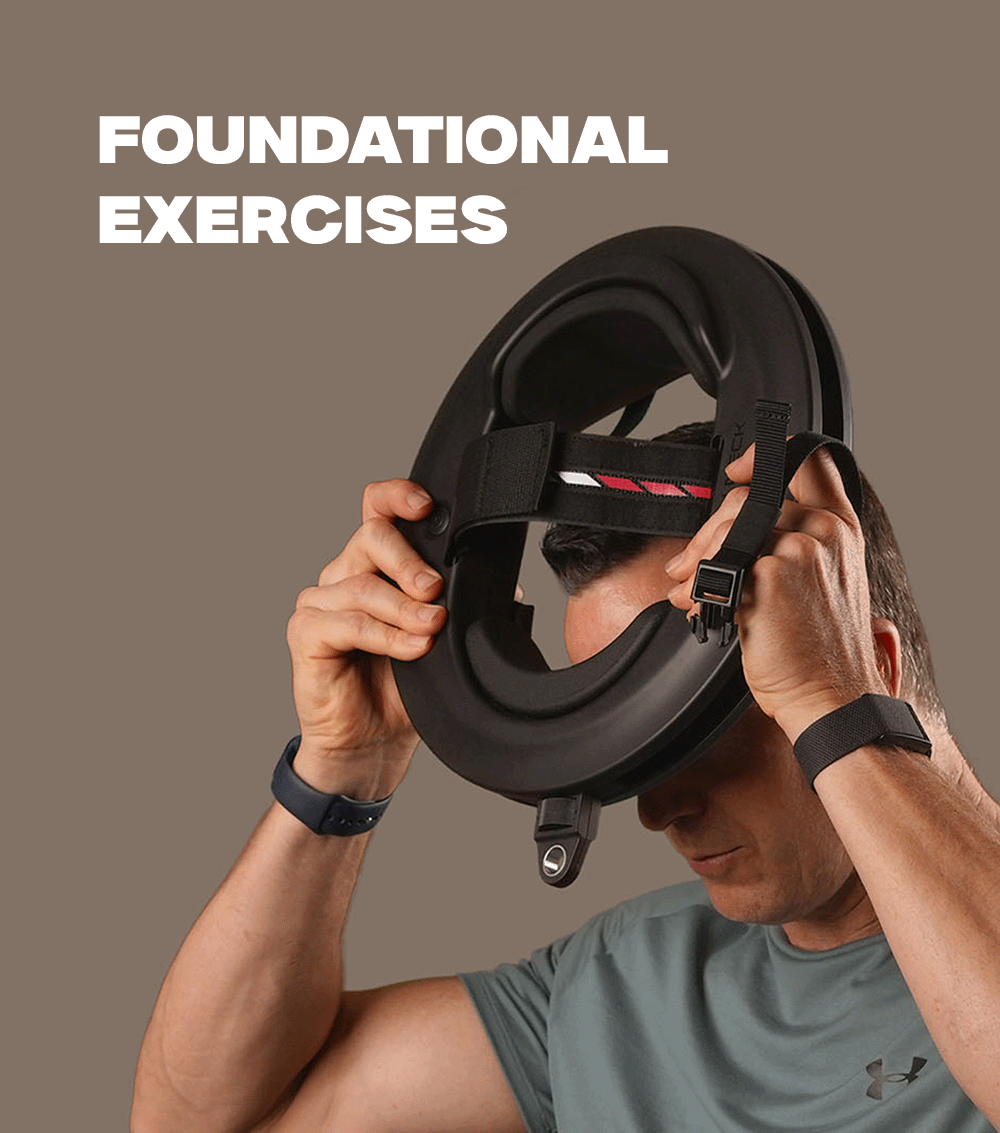
Reactivate the deep stabilizers in fully supported positions where nothing can go wrong. The nervous system relearns that the neck can produce force safely.
With the head supported, the deep flexors can fire without the surface muscles guarding, restarting the stabilizing system instability shuts down.
Pressing against an immovable wall builds force in perfect safety, giving an unstable neck its first proof that effort does not mean danger.
Short-range gliding reintroduces controlled motion in the single safest plane, rebuilding trust one smooth rep at a time.
Advance whenAdvance when supine nods and wall presses are steady, symptom-free, and feel almost boring.
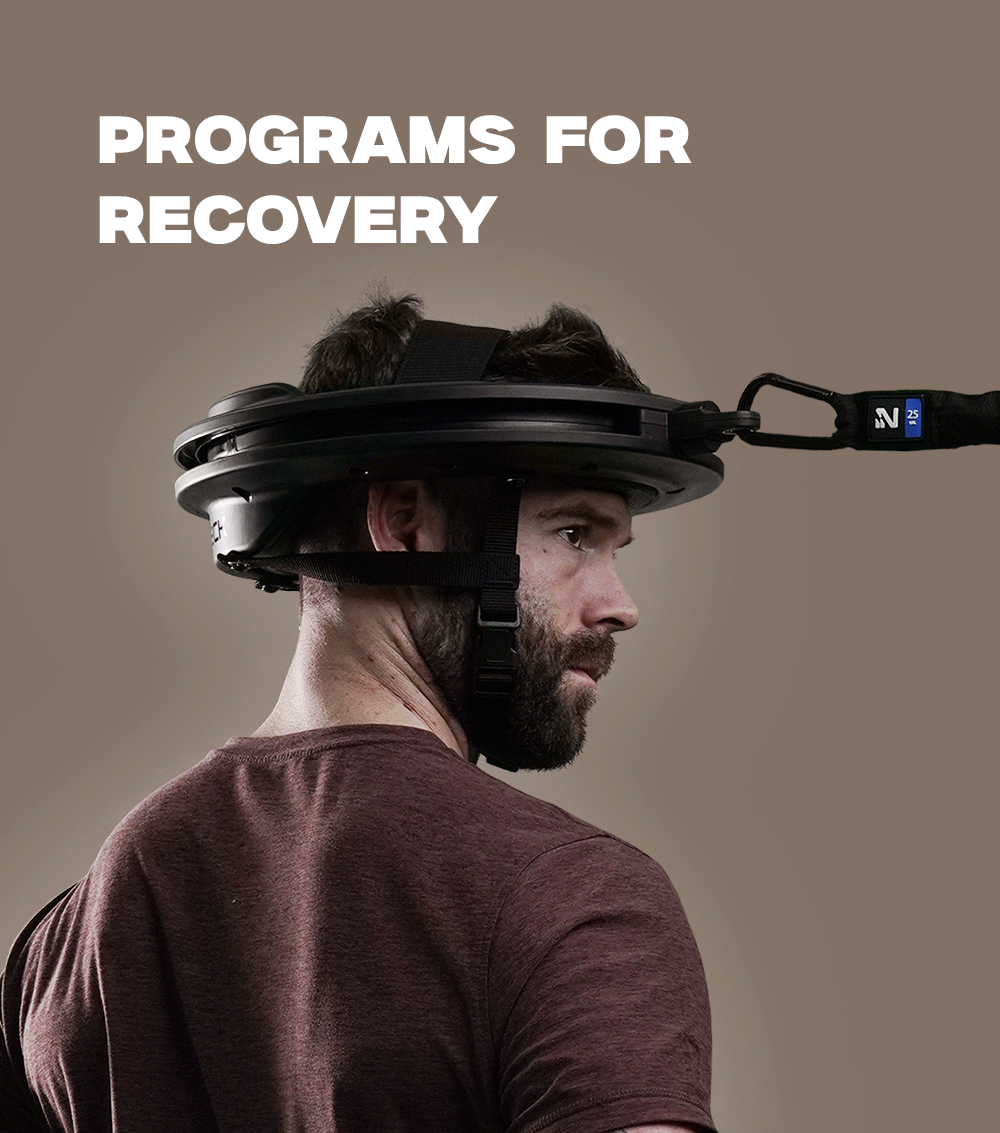
Bring the reactivated stabilizers under light band load in upright positions. Holding steady matters more here than moving far.
Neutral bracing against the band is the core skill of stability itself, training the neck to hold one position against a constant pull.
An ultra-light full circle asks the stabilizers to keep the head still while load direction changes around it, the exact demand instability fails.
Slow, small rotations rebuild controlled movement in the plane where a loose neck feels most untrustworthy.
Advance whenAdvance when banded holds and light rotation produce no dizziness or wobble during or after sessions.
Extend hold times and add conservative multiplanar work. The stabilizers now build the endurance to protect the neck all day, not just per rep.
Sustained slow circles demand continuous stabilizer engagement, converting flickers of activation into reliable endurance.
Isometrics at rotated positions strengthen the ligament-supporting muscles at the angles where instability symptoms usually surface.
Shallow diagonals introduce combined-plane control at a depth that challenges the stabilizers without outrunning them.
Advance whenAdvance when longer holds and shallow diagonals are steady with zero symptom carryover.
Restore the reflexive, automatic control a healthy neck runs on. Position sense and endurance work here make the stability self-sustaining.
Eyes-closed rotation forces the joint receptors to steer, directly retraining the proprioception that concussion and ligament injury degrade.
Retraction holds keep the deep flexors strong in the alignment that gives passive structures the most mechanical help.
Slow full diagonals confirm the stabilizers can guide the head through every combined plane without a wobble, the final test of the rebuild.
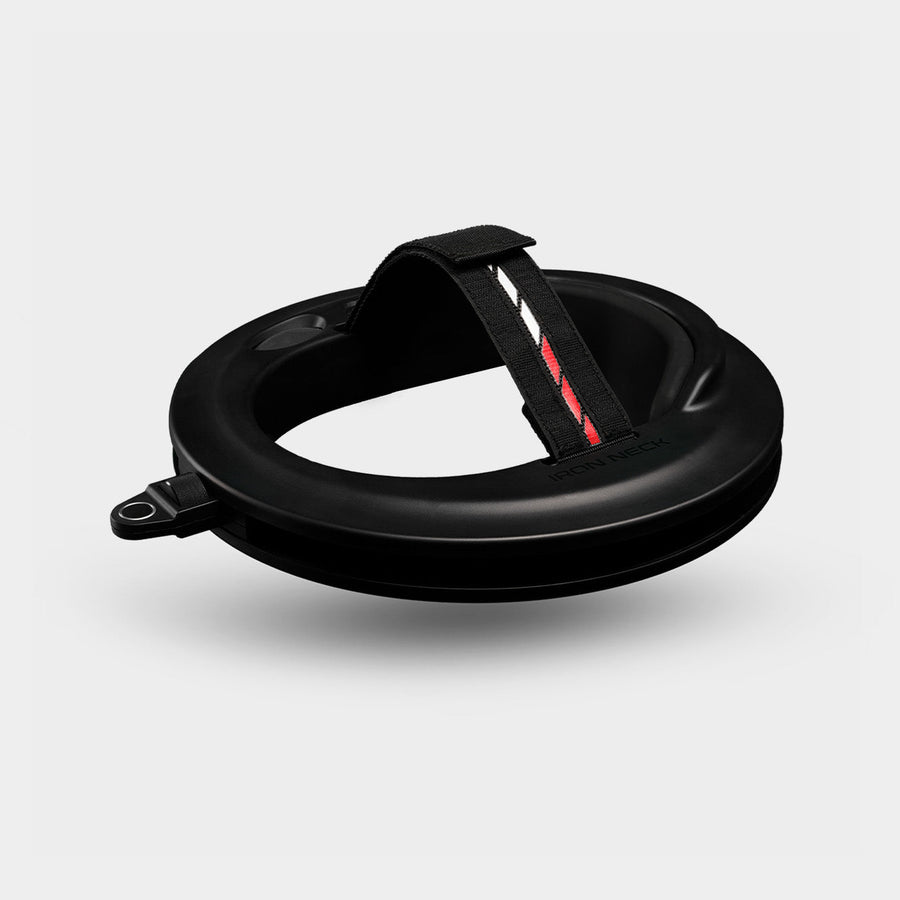
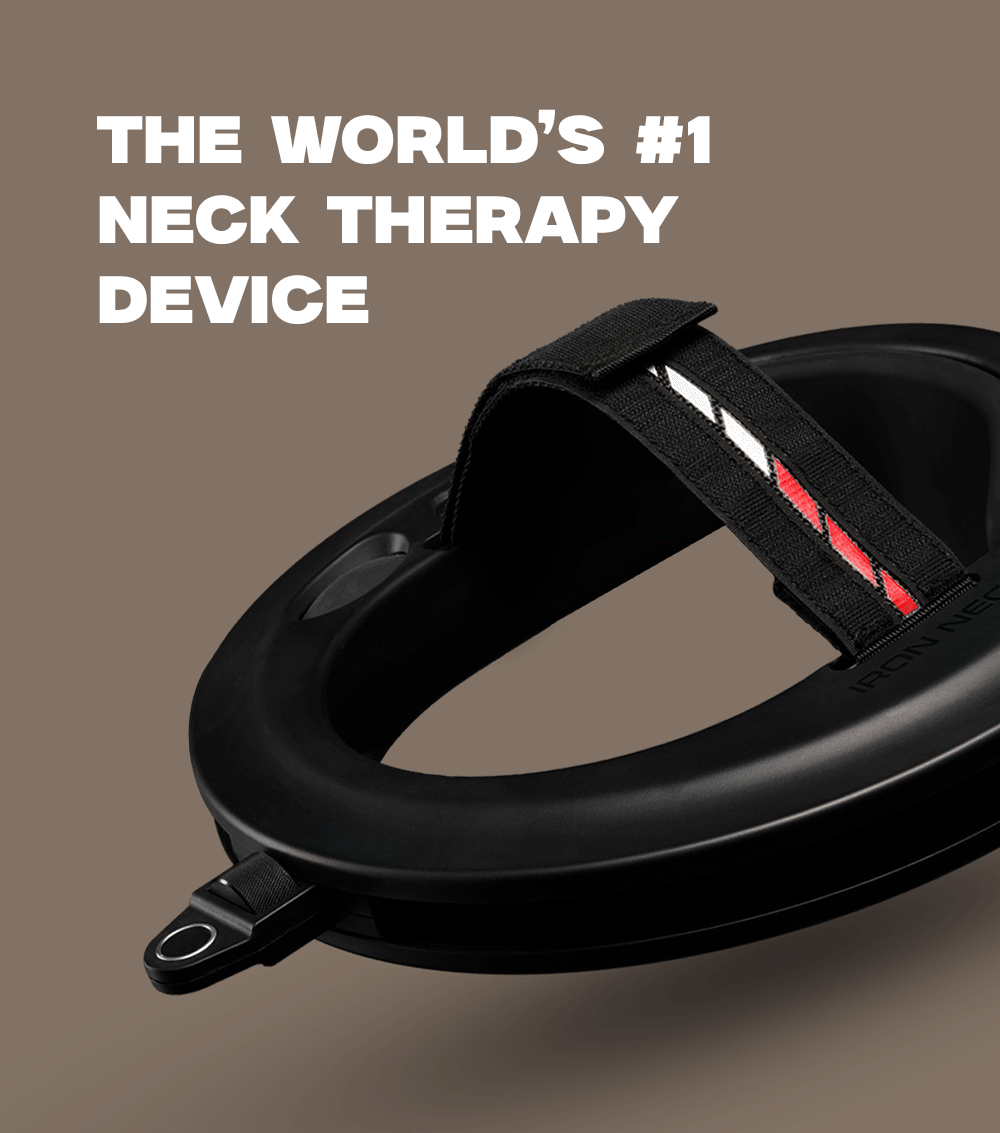
The 360 degree resistance head unit this program is built around, with the anchor and bands you need to train every direction from day one.

We call for an effort level instead of a specific weight, because the right resistance depends on you, the movement, and where you are in your training. For the sets and reps listed on each exercise, pick the resistance that makes the last few reps feel like the level shown.
You finish the set with several clean reps still in the tank. The work stays easy and fully controlled from the first rep to the last.
You could manage a few more reps at the end, but not many. The final reps take real effort while your form holds.
You reach the last prescribed rep with little or nothing left. Completing every rep with good form is genuinely hard.
These are starting points, not rules. Everyone is built differently, so adjust to fit you: size down if your form breaks before the final rep or a movement aggravates a symptom, and only size up once every rep feels smooth and pain free. When you are unsure, choose the lighter option.