

Protraction / Retraction
Gliding decompresses the facet surfaces and restores the joint play that irritation and guarding have stiffened away.
Irritated facet joints announce themselves with sharp, localized pain when you turn or extend the neck. This program restores the clean gliding and rotation those joints are built for, then strengthens the deep stabilizers that keep them tracking smoothly. Movement quality comes first, load second, and the sharp catches fade as both improve.

Restore smooth facet joint motion and reduce localized neck pain by improving rotation, gliding, and cervical stability.
Unload the irritated joints and reintroduce rotation inside a comfortable arc. Smooth, symptom-free gliding is the only target here.
Gliding decompresses the facet surfaces and restores the joint play that irritation and guarding have stiffened away.
Slow rotation re-grooves the gliding motion facet joints exist to provide, staying short of the angles that pinch.
Minimal tension through a full circle distributes gentle load across every facet pair instead of concentrating it on the sore one.
Advance whenAdvance when rotation through your comfortable range is consistently free of sharp catches.
Add holds and pauses so each segment learns to control its share of the motion. Precise control keeps irritated joints from being dragged past their comfort zone.
Holding at the end of comfortable rotation builds strength at the exact joint angles facet pain has taught you to avoid.
Retraction holds stabilize the head in the alignment where facet joints sit least compressed, easing their daily workload.
Stopping at each quarter turn forces segment-by-segment control, so no single facet level gets yanked through its motion.
Advance whenAdvance after two weeks of hold work with no return of the sharp localized pain.
Load the restored motion and add oblique planes. The joints now practice handling the combined angles real life throws at them.
Extended slow circles build the muscular endurance that shields facet joints from the fatigue-driven sloppiness that reignites them.
Shallow diagonals load the facets through combined flexion and rotation, the plane where they work hardest in daily life, at a respectful depth.
Isometrics at rotated positions strengthen the stabilizers that hold each joint centered at the angles that used to catch.
Advance whenAdvance when diagonal work and rotational holds are pain-free at full effort.
Keep the joints gliding and the stabilizers strong for good. This routine is your long-term guard against the stiffness that restarts the cycle.
Eyes-closed circles sharpen joint position sense so the neck steers itself away from pinch-prone angles automatically.
Full-range diagonals keep every facet pair moving through its complete arc, the best defense against re-stiffening.
Moderate-load rotation at varied speeds keeps the joints conditioned for quick, loaded head turns without protest.
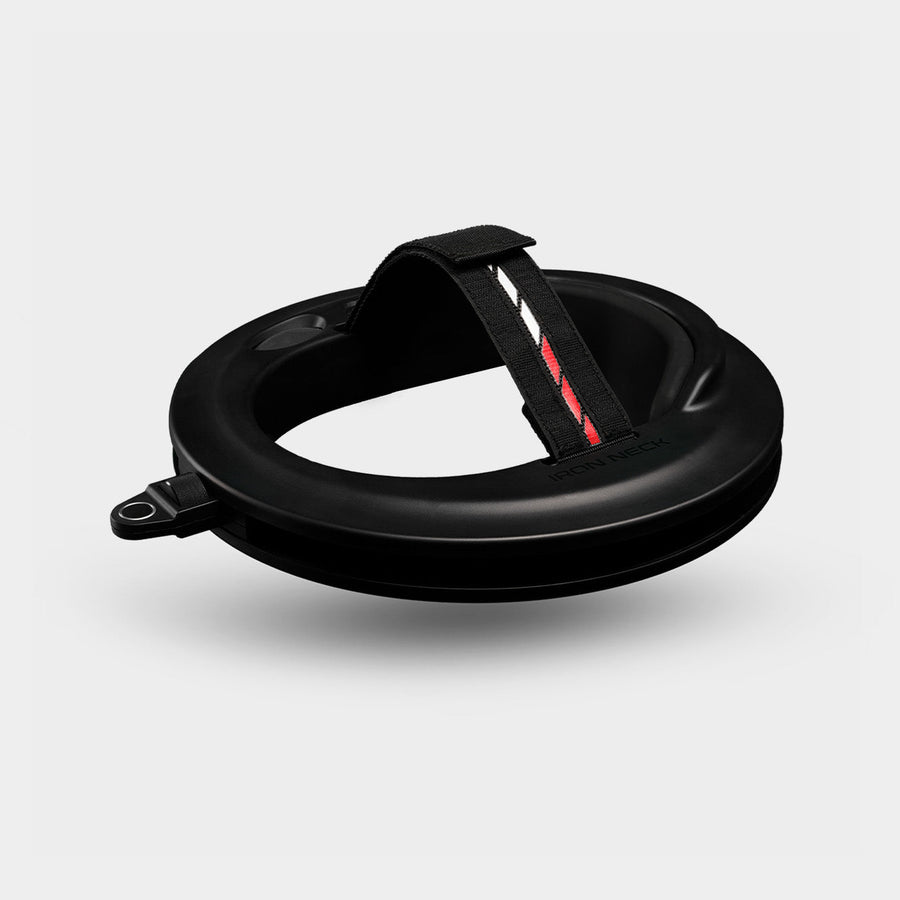
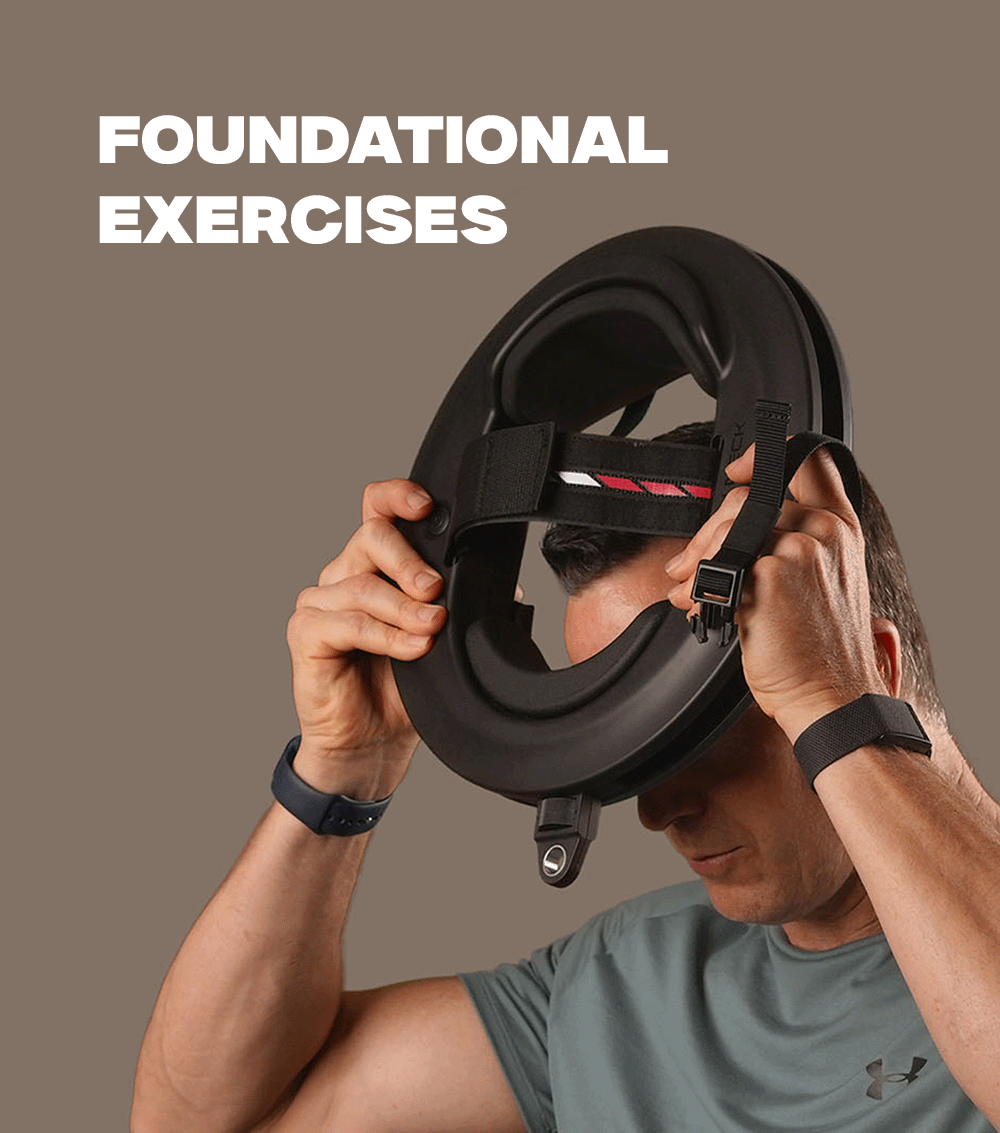
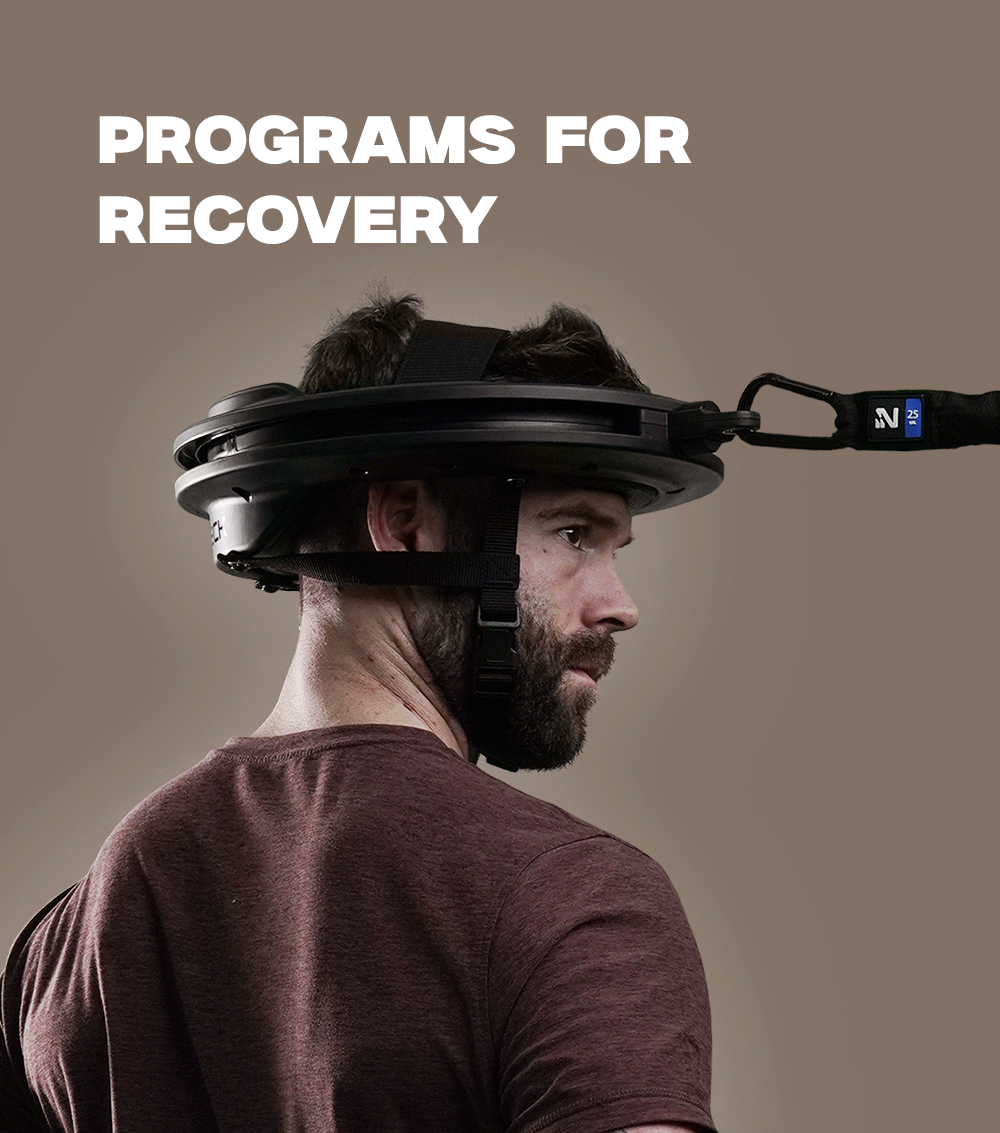
The 360 degree resistance head unit this program is built around, with the anchor and bands you need to train every direction from day one.

We call for an effort level instead of a specific weight, because the right resistance depends on you, the movement, and where you are in your training. For the sets and reps listed on each exercise, pick the resistance that makes the last few reps feel like the level shown.
You finish the set with several clean reps still in the tank. The work stays easy and fully controlled from the first rep to the last.
You could manage a few more reps at the end, but not many. The final reps take real effort while your form holds.
You reach the last prescribed rep with little or nothing left. Completing every rep with good form is genuinely hard.
These are starting points, not rules. Everyone is built differently, so adjust to fit you: size down if your form breaks before the final rep or a movement aggravates a symptom, and only size up once every rep feels smooth and pain free. When you are unsure, choose the lighter option.