







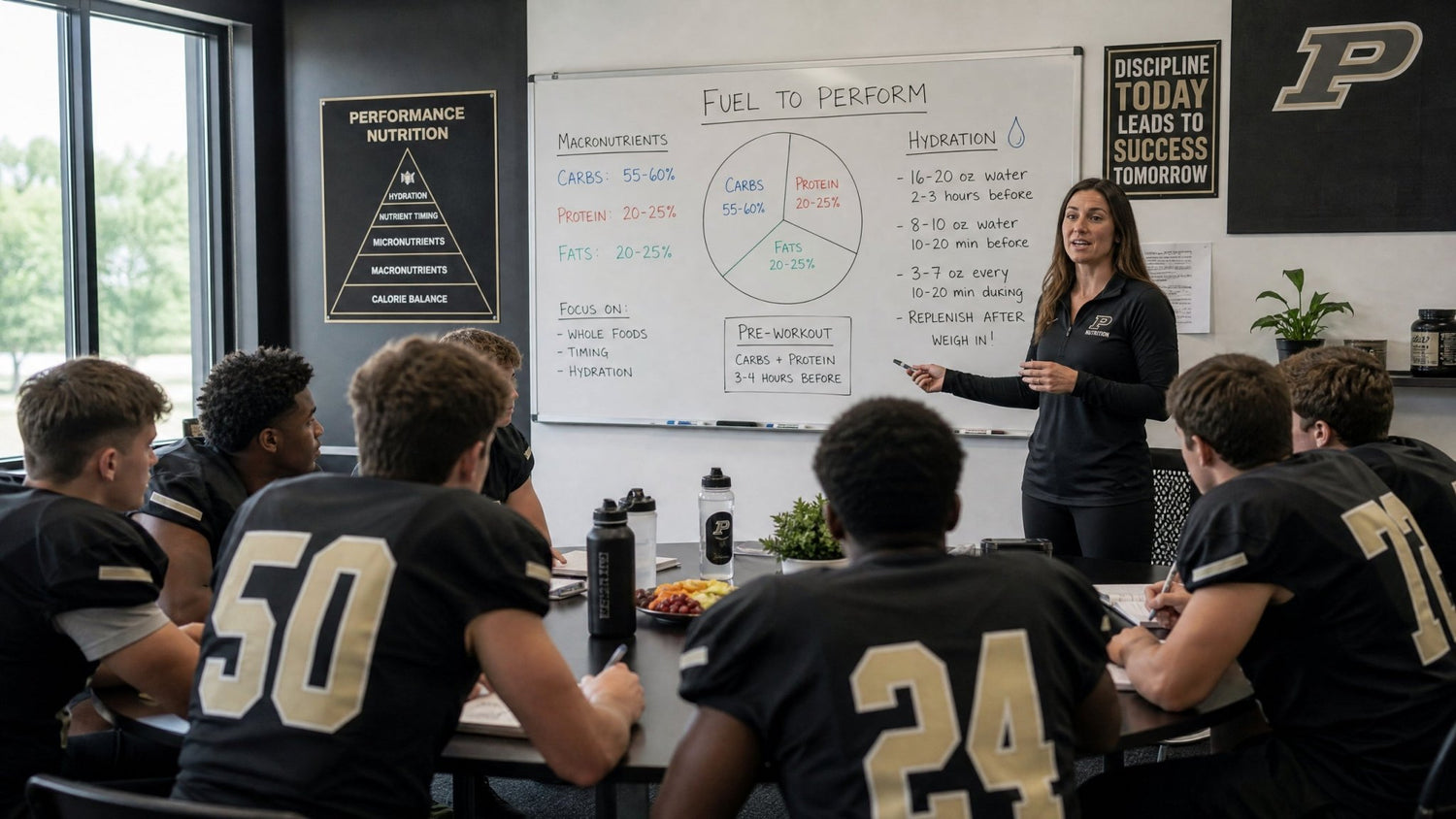
Nutrition and Fueling for Football: A Practical Guide for Coaches and Athletic Trainers
Nutrition is one of the most impactful and most neglected components of football player development. Athletes who fuel correctly recover faster, perform better, and sustain fewer injuries. Yet most football programs provide little structured nutrition education, leaving athletes to make fueling decisions based on habit, convenience, and peer influence.
This guide provides a practical framework for coaches and athletic trainers to support better nutrition practices in their programs.
Practice-Day Fueling
The goal of practice-day fueling is to arrive at practice with adequate energy stores, maintain performance throughout the session, and initiate recovery immediately afterward.
Pre-Practice Nutrition
Athletes should eat a balanced meal 2–3 hours before practice. The meal should emphasize carbohydrates (the primary fuel for high-intensity exercise), moderate protein, and low fat and fiber (both slow gastric emptying and can cause GI distress during exercise).
Practical examples: pasta with lean protein, rice and chicken, a sandwich with lean meat. Athletes who cannot eat a full meal 2–3 hours before practice should eat a smaller carbohydrate-rich snack 30–60 minutes before (banana, sports bar, toast with honey).
During Practice
For practices exceeding 60–90 minutes, carbohydrate intake during practice can maintain performance and delay fatigue. Sports drinks (6–8% carbohydrate concentration) provide both carbohydrates and electrolytes. Water is sufficient for shorter sessions.
Post-Practice Recovery Nutrition
The 30–60 minutes after practice is the most important window for recovery nutrition. During this window, muscle glycogen synthesis rates are elevated and the body is primed to absorb protein for muscle repair.
The recovery nutrition target: 1.0–1.2 g/kg of carbohydrates and 0.3–0.4 g/kg of protein within 30 minutes of practice. For a 200-pound (91 kg) athlete, that is approximately 90–110 g of carbohydrates and 27–36 g of protein.
Practical recovery nutrition options: chocolate milk (an excellent recovery food — the carbohydrate-to-protein ratio is nearly ideal), a protein shake with a banana, Greek yogurt with fruit, or a turkey sandwich.
Game-Day Fueling
Game-day nutrition should be familiar — this is not the time to try new foods. Athletes should eat a meal they know agrees with them 3–4 hours before kickoff, emphasizing carbohydrates and moderate protein.
Pre-game snacks 1–2 hours before kickoff: fruit, sports bars, toast, crackers. Avoid high-fat, high-fiber foods that can cause GI distress.
During the game: sports drinks on the sideline, particularly in hot weather. Post-game: recovery nutrition within 30–60 minutes of the final whistle, even if the team is traveling.
Safe Weight Management
Football involves athletes at both ends of the weight spectrum — linemen who need to gain weight and skill players who may need to manage weight. Both situations require careful management to avoid health risks.
Weight Gain for Linemen
Linemen who need to gain weight should aim for a gradual, controlled gain of 0.5–1 pound per week. Faster weight gain is almost always fat gain, not muscle gain, and impairs athletic performance. The approach: a modest caloric surplus (300–500 calories above maintenance), adequate protein (1.6–2.2 g/kg body weight), and progressive strength training.
Avoid encouraging linemen to eat indiscriminately to gain weight. Excessive body fat increases heat stress risk, reduces cardiovascular efficiency, and increases joint stress. The goal is lean mass gain, not simply weight gain.
Weight Management for Skill Players
Skill players who need to manage weight should do so gradually and never through dehydration. Rapid weight loss through dehydration impairs performance, increases heat stress risk, and can cause serious health complications. Any weight management program should be supervised by a registered dietitian or sports medicine physician.
Programs should have a written policy prohibiting weight cutting through dehydration and should monitor athletes who are under pressure to make weight.
Supplement Policy
Dietary supplements are a significant source of risk for football programs. The supplement industry is poorly regulated — products may contain undisclosed ingredients, including substances banned by the NCAA and NFHS. Athletes who test positive for banned substances due to contaminated supplements face the same consequences as intentional doping.
Program supplement policy should include:
- Third-party certification requirement — only supplements certified by NSF International, Informed Sport, or USP should be used. These certifications verify that the product contains what it claims and does not contain banned substances.
- Prohibited substance education — athletes should understand the NCAA's banned substance list and the risks of supplement contamination
- Approval process — athletes should be required to disclose all supplements to the athletic trainer before use
- Creatine policy — creatine is not banned by the NCAA or NFHS and is one of the most researched supplements in sports science. Programs that choose to allow creatine should specify the approved form (creatine monohydrate) and source (third-party certified)
Program-Level Nutrition Support
The most effective nutrition programs provide structured support rather than relying on individual athlete initiative. Options include:
- Registered dietitian on staff or available for consultation
- Pre- and post-practice fueling stations in the athletic facility
- Nutrition education sessions during team meetings
- Meal planning resources for athletes who cook for themselves
- Collaboration with dining services at the collegiate level to ensure athlete-appropriate options are available
Programs that invest in nutrition support see measurable returns: faster recovery, fewer soft tissue injuries, better body composition, and improved performance. The investment is modest relative to the return.


Leave a comment
This site is protected by hCaptcha and the hCaptcha Privacy Policy and Terms of Service apply.