



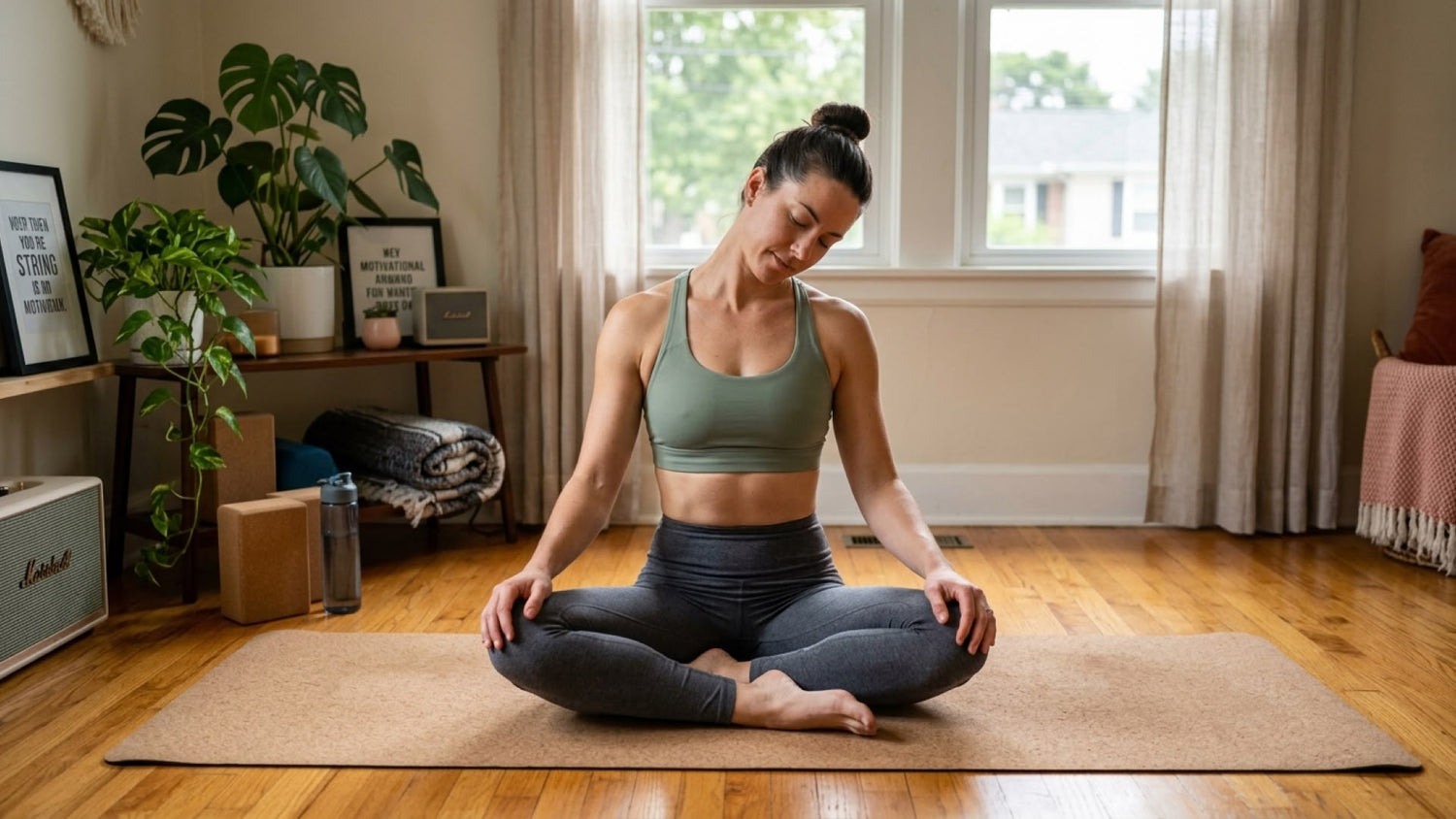
How to Build Neck Muscles at Home Without a Gym
Building neck muscles at home is entirely achievable, and in some ways, the home environment is better suited to neck training than a commercial gym. Most gyms don't have dedicated neck training equipment, and the few that do often have machines that only train one or two planes of movement. At home, with the right approach and minimal equipment, you can build a comprehensive neck training program that rivals what any gym can offer.
This guide covers everything you need: the most effective bodyweight neck exercises, how to add progressive resistance without expensive equipment, and the home-friendly tools that take your training to the next level.
Why Home Neck Training Works
The neck muscles respond to resistance and progressive overload just like any other muscle group. They don't care whether that resistance comes from a weight plate in a commercial gym or a resistance band anchored to a door frame at home. What matters is the quality of the stimulus, consistent resistance through a meaningful range of motion, applied progressively over time.
The advantage of home training is consistency. You're more likely to train your neck regularly when you can do it in your living room during a commercial break than when it requires a separate trip to the gym. And for neck training specifically, where sessions can be completed in 15–20 minutes, the home environment is ideal.
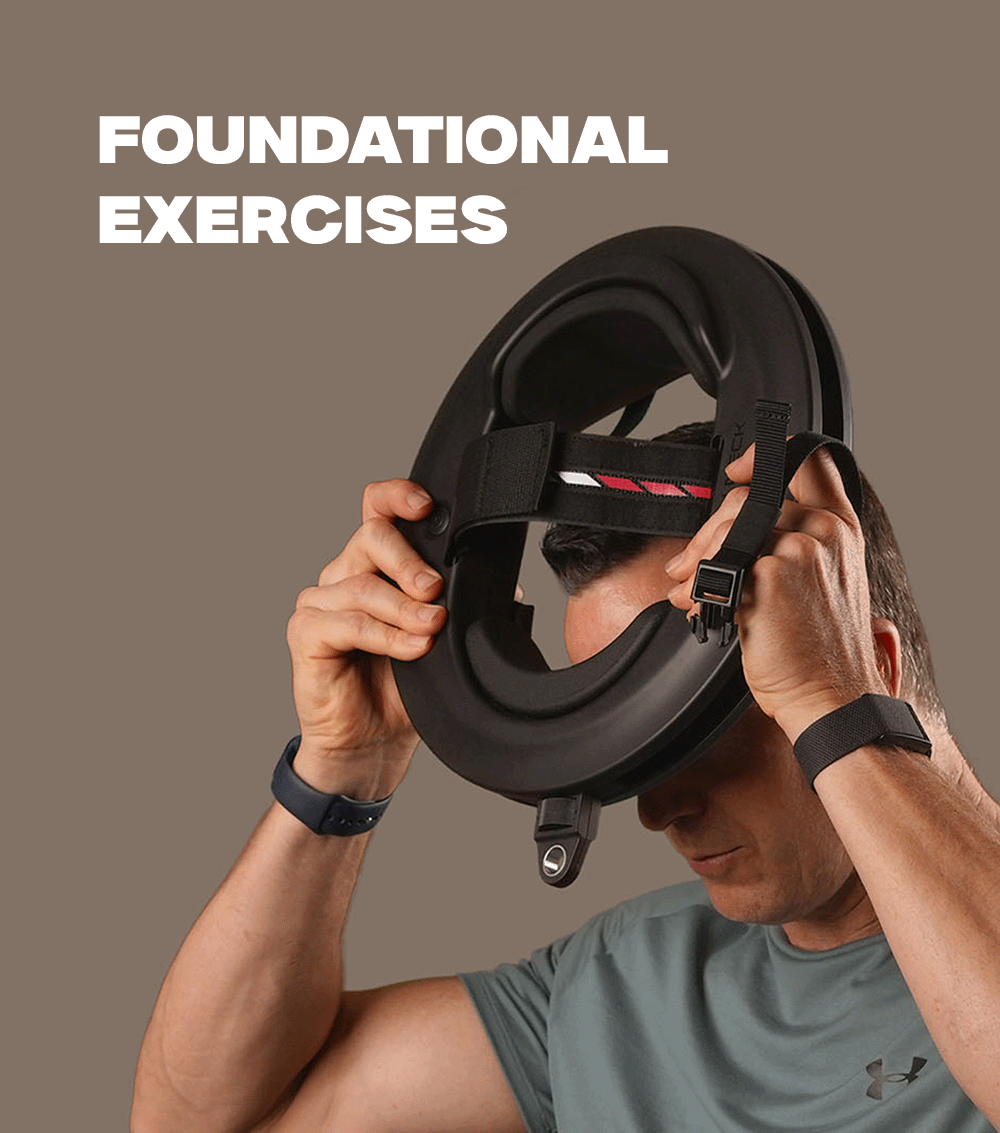
Bodyweight Neck Exercises: The Foundation
These exercises require no equipment and form the foundation of any home neck training program. Master these before adding resistance.
Chin Tucks
The chin tuck is the most important neck exercise for most people. It targets the deep cervical flexors. The muscles that maintain proper head position and are weakened by hours of screen use. Sit or stand with your spine neutral. Without tilting your head, draw your chin straight back as if making a double chin. Hold for 2–3 seconds and release. Perform 3 sets of 15 repetitions. This exercise can be done anywhere, anytime, and the benefits, improved posture, reduced neck tension, stronger deep flexors, are immediate and significant.
Wall Isometrics
Stand facing a wall with your forehead resting against it. Press your head gently into the wall and hold for 10 seconds. This trains the anterior neck muscles isometrically. Repeat with the back of your head against the wall (training extensors), and each side of your head against the wall (training lateral muscles). Perform 3 holds of 10 seconds in each direction. Wall isometrics require nothing but a wall and are an excellent starting point for building baseline neck strength.
Neck Nods
From a neutral position, slowly lower your chin toward your chest using a 3-second lowering phase, then return. This builds dynamic strength in the anterior neck through a full range of motion. Perform 3 sets of 15 repetitions. As this becomes easy, add a 2-second pause at the bottom of the movement to increase the difficulty without adding weight.
Prone Neck Extensions
Lie face down on a bed or bench with your head hanging off the edge. Slowly raise your head to a neutral position and lower back down. This targets the posterior neck muscles. The muscles responsible for the thickness of the neck when viewed from the side. Perform 3 sets of 12 repetitions. The edge of a bed works perfectly for this exercise, making it ideal for home training.
Side-Lying Lateral Raises
Lie on your side on the floor or a bed with your head hanging off the edge. Raise your head toward your shoulder and lower back down. This targets the lateral neck muscles that most people completely neglect. Perform 3 sets of 10 repetitions per side. These muscles are essential for resisting side-impact forces and for the full, developed appearance of a well-trained neck.
Adding Resistance at Home
Once bodyweight exercises become easy, you need to add resistance to continue progressing. Here are the most effective home-friendly options.
Manual Resistance
Place your hand against your forehead and press your head forward while your hand resists the movement. The key is to provide consistent resistance throughout the range of motion, not just at the end point. Perform 3 sets of 10 repetitions in each direction (front, back, left, right). Manual resistance is free and immediately available, but it's difficult to quantify and apply progressively, which limits its long-term effectiveness.
Resistance Bands
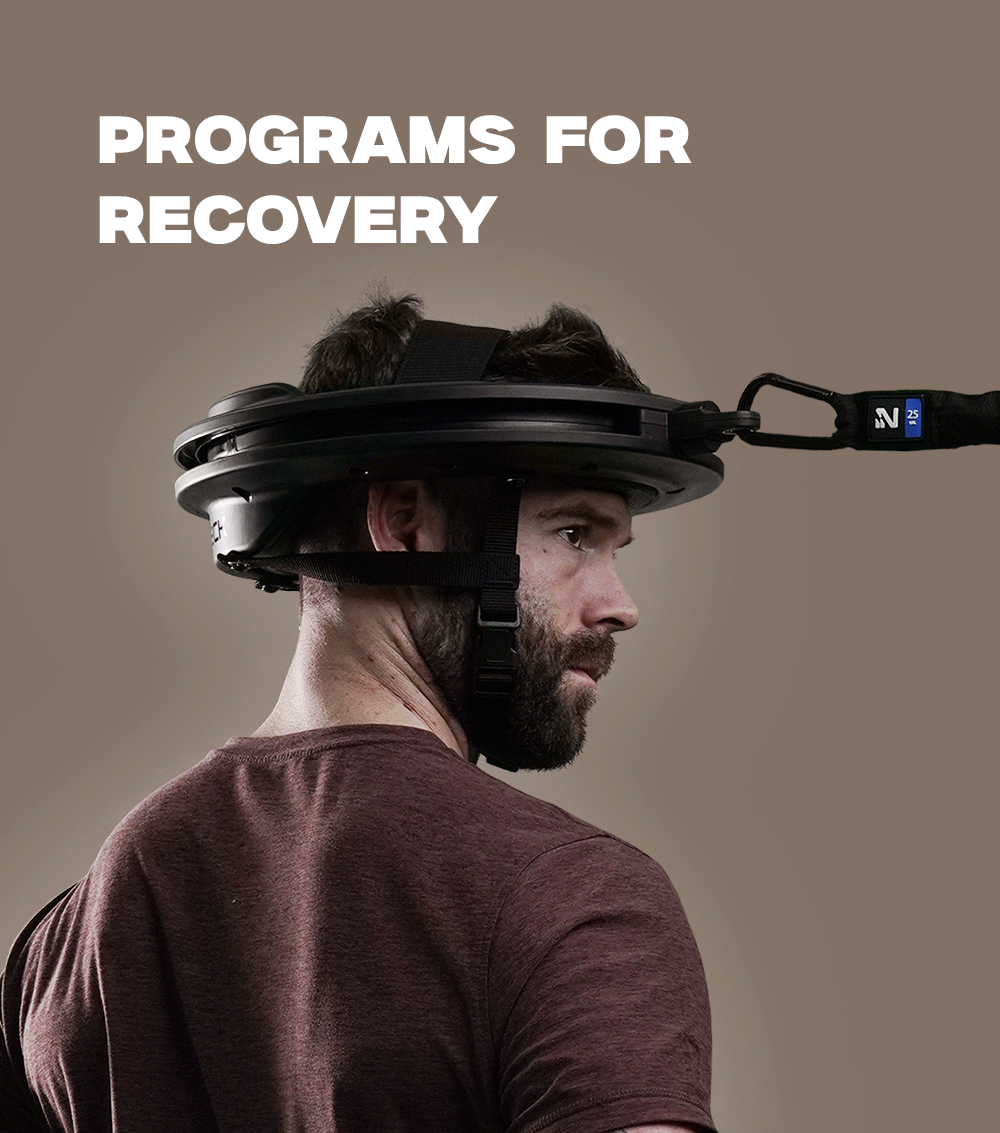
A resistance band anchored to a door frame or heavy furniture allows you to train all four planes of neck movement with adjustable, progressive resistance. Loop the band around your head and step away from the anchor point to create tension. Perform controlled movements against the band's resistance. Resistance bands are inexpensive ($10–30), portable, and versatile. The best value home neck training tool available.
The Iron Neck resistance bands are specifically designed for neck training, with appropriate resistance levels and durable construction for the demands of cervical training.
Neck Harness with Weight Plates
A neck harness allows you to add weight plates to flexion and extension training. The same approach used in commercial gyms, but perfectly suited to home use. You don't need a bench; you can perform weighted neck flexion and extension while seated on a chair or standing with a slight forward lean. The Iron Neck Alpha Harness provides a secure, comfortable fit that makes home weighted neck training practical and effective.
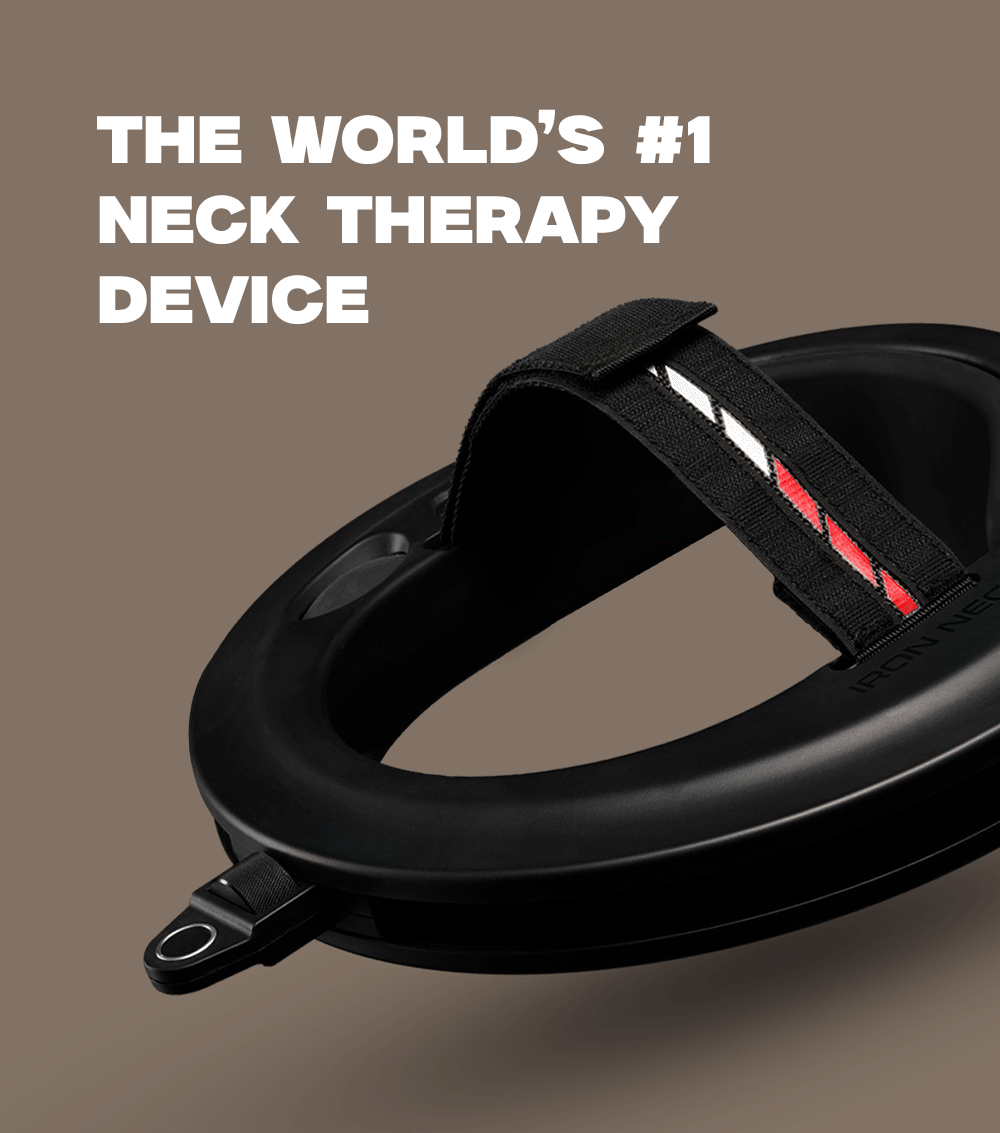
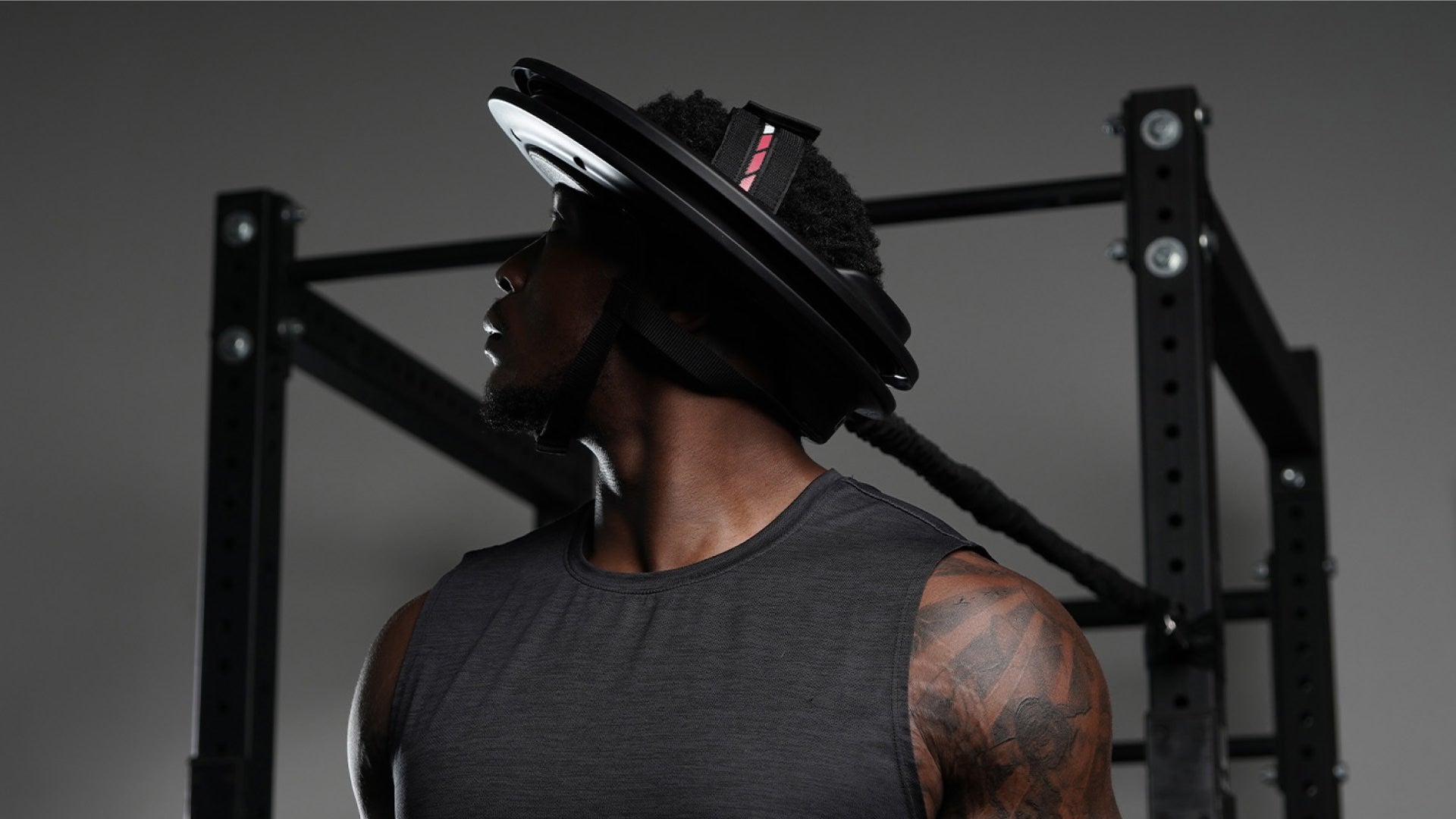
The Iron Neck 3.0 Pro at Home
The Iron Neck 3.0 Pro is designed for use with a cable system, but it can also be used at home with resistance bands as the resistance source. This setup provides the full 360-degree training capability of the Iron Neck in a home environment. Many professional athletes use this setup for home training during travel or off-season periods.
A Complete Home Neck Training Program
The following program can be performed entirely at home with minimal equipment. It progresses through three phases over 12 weeks.
Weeks 1–4 (Bodyweight Foundation): Chin tucks (3×15), wall isometrics (3×10s each direction), neck nods (3×15), prone extensions (3×12), lateral raises (3×10 each side). Perform twice per week.
Weeks 5–8 (Band Resistance): Add resistance band work for all four directions. Perform 3 sets of 12–15 reps in each direction with a band. Continue bodyweight warm-up. Perform twice per week.
Weeks 9–12 (Progressive Loading): Add a neck harness with weight plates for flexion and extension. Continue band work for lateral and rotational training. Increase resistance progressively each week. Perform two to three times per week.
Consistency Is the Key
The biggest advantage of home neck training is the ability to be consistent. A 15–20 minute neck training session performed consistently twice per week will produce far better results than an occasional gym session. Set a specific time for your neck training, after your morning workout, during a lunch break, or in the evening, and treat it as a non-negotiable part of your routine. The results will follow.

Leave a comment
This site is protected by hCaptcha and the hCaptcha Privacy Policy and Terms of Service apply.