




Football Neck Training: Reduce Concussion Risk and Build Power
Football is the sport that has done more than any other to advance our understanding of neck training's role in injury prevention. The combination of high-speed collisions, helmet-to-helmet contact, and the catastrophic consequences of traumatic brain injury has driven NFL teams, college programs, and sports medicine researchers to invest heavily in understanding how neck strength affects concussion risk. The findings are clear and compelling: stronger necks mean fewer concussions and less severe head injuries when they do occur.
This guide covers the science behind football neck training, the specific exercises and protocols used by elite programs, and how to build a football-specific neck training program regardless of your level of play.
The Science: How Neck Strength Prevents Concussions
A concussion occurs when the brain moves rapidly within the skull, typically as a result of a sudden impact that causes the head to accelerate or decelerate quickly. The neck muscles are the primary mechanism for resisting this acceleration. A stronger neck can absorb and redirect impact forces before they translate into head acceleration, reducing the biomechanical forces that cause concussions.
Research published in the Journal of Athletic Training found that for every pound of neck strength, concussion risk decreased by approximately 5%. A study of high school athletes found that those with weaker necks were significantly more likely to sustain concussions than those with stronger necks, even after controlling for other variables. NFL biomechanics researchers have consistently found that neck stiffness. The product of neck strength and muscle activation, is a key predictor of head acceleration during impacts.
The mechanism is straightforward: a stiff, strong neck acts as a shock absorber. When a player with a strong, activated neck takes a hit, the neck muscles engage immediately to resist the impact force, reducing the acceleration of the head. A player with a weak, unactivated neck has no such protection. The head moves freely in response to the impact, dramatically increasing concussion risk.
Football-Specific Neck Training Demands
Football imposes specific demands on the neck that general neck training programs don't fully address. Understanding these demands is essential for building a football-specific protocol.
Multi-directional impact resistance: Football players face impacts from every direction, front, back, sides, and oblique angles. A neck training program that only trains flexion and extension leaves players vulnerable to lateral and rotational impacts, which are common in football collisions.
Explosive activation: The protective benefit of neck strength depends not just on the maximum force the neck can produce, but on how quickly those muscles can activate in response to an unexpected impact. Football neck training should include explosive elements that train fast-twitch fiber recruitment.
Postural endurance: Linemen, in particular, need to maintain head position under sustained load throughout a game. Neck training for football should include endurance components that build the capacity to maintain proper head position when fatigued.
Position-specific demands: Different positions have different neck training priorities. Linemen need maximum strength and endurance for sustained contact. Skill positions (wide receivers, defensive backs) need explosive activation and the ability to absorb unexpected impacts from unpredictable directions. Quarterbacks need rotational strength for throwing mechanics and the ability to absorb hits from any direction.
The Football Neck Training Protocol
The following protocol is designed for football players at the high school level and above. It addresses all football-specific neck training demands and can be performed two to three times per week during the off-season, with a modified maintenance protocol during the season.
Phase 1: Foundation (Off-Season, Weeks 1–4)
Begin with isometric holds and bodyweight movements to build baseline strength and prepare the cervical spine for heavier loading. Perform all exercises with strict form and controlled tempo.
Isometric holds (all four directions, 3×10 seconds each), chin tucks (3×15), neck nods (3×15), prone extensions (3×12), lateral raises (3×10 each side). Two sessions per week.
Phase 2: Strength Loading (Off-Season, Weeks 5–10)
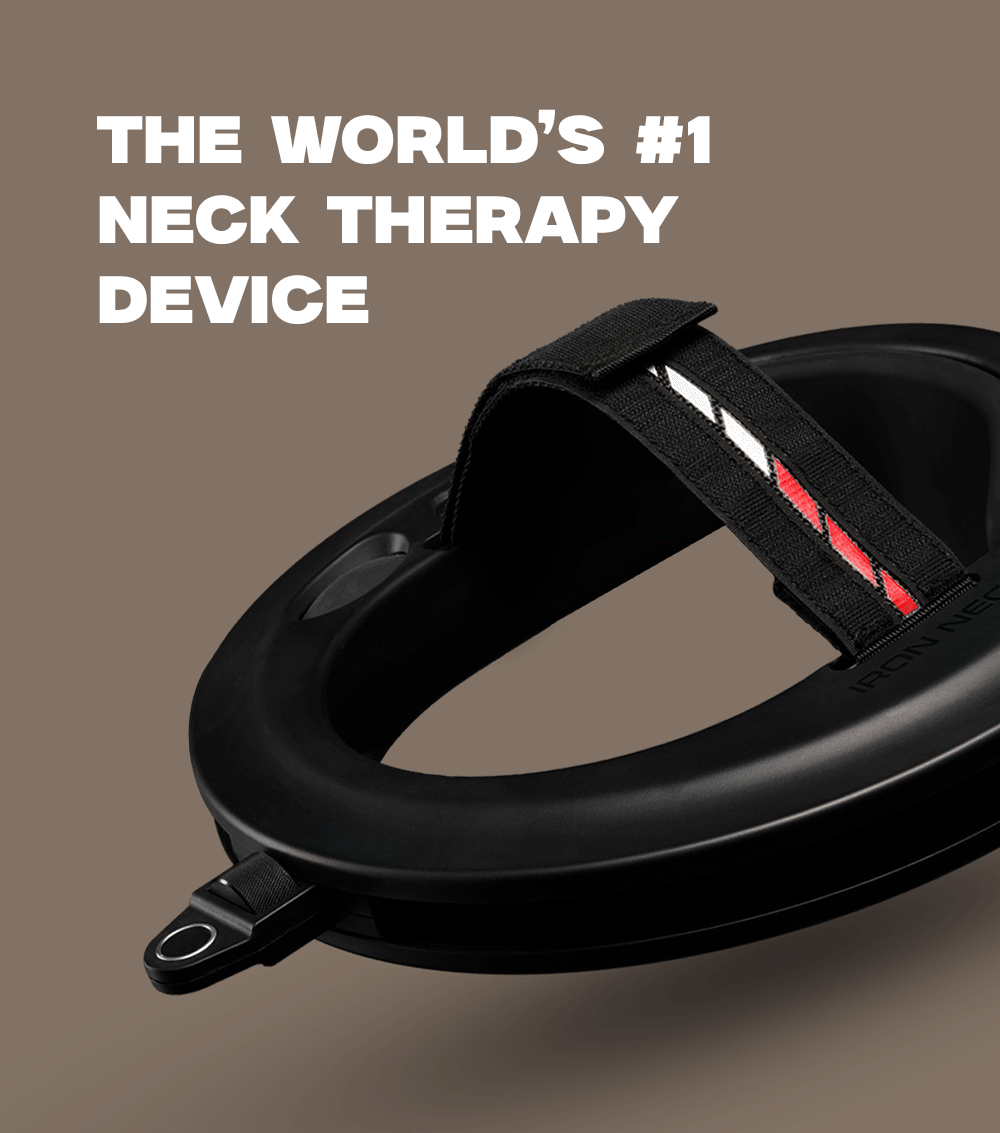
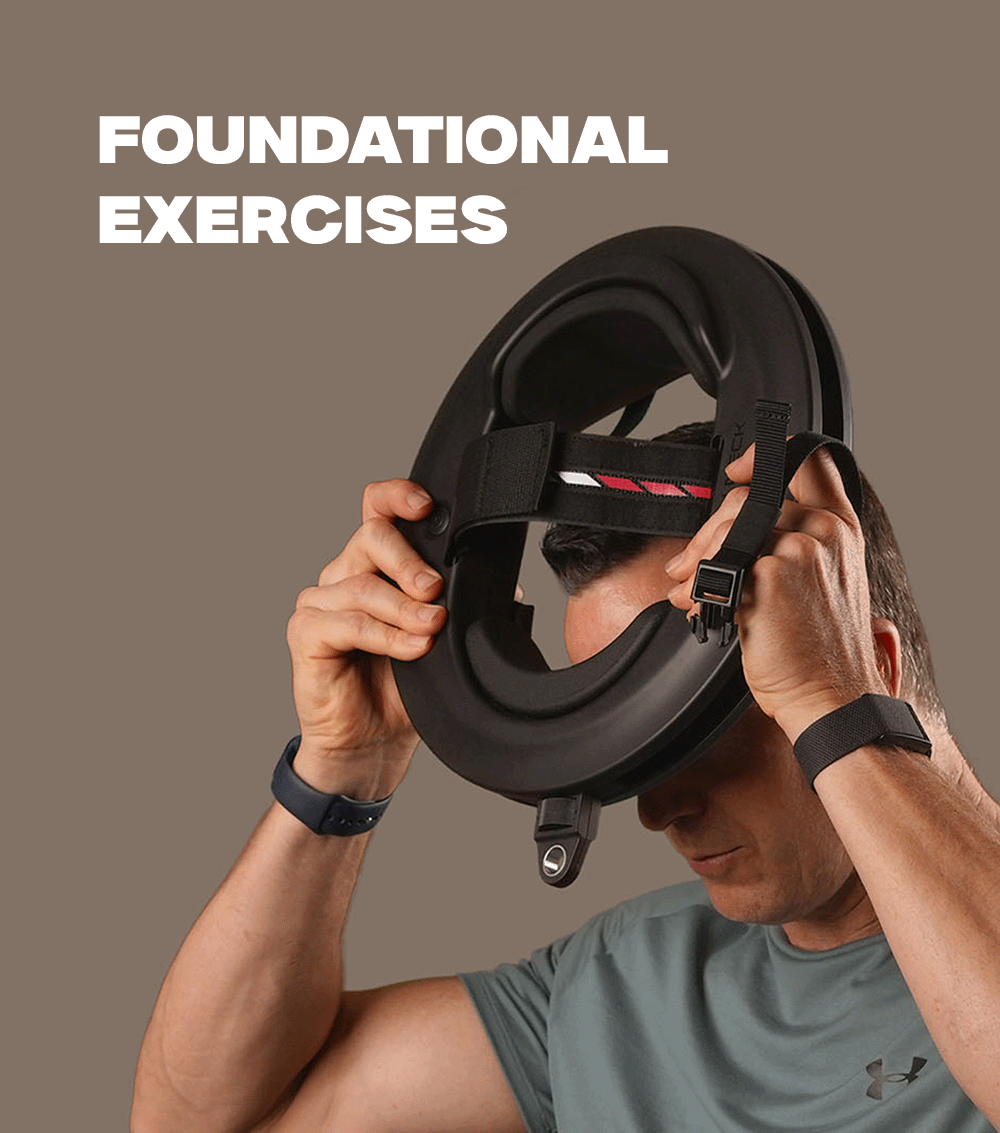
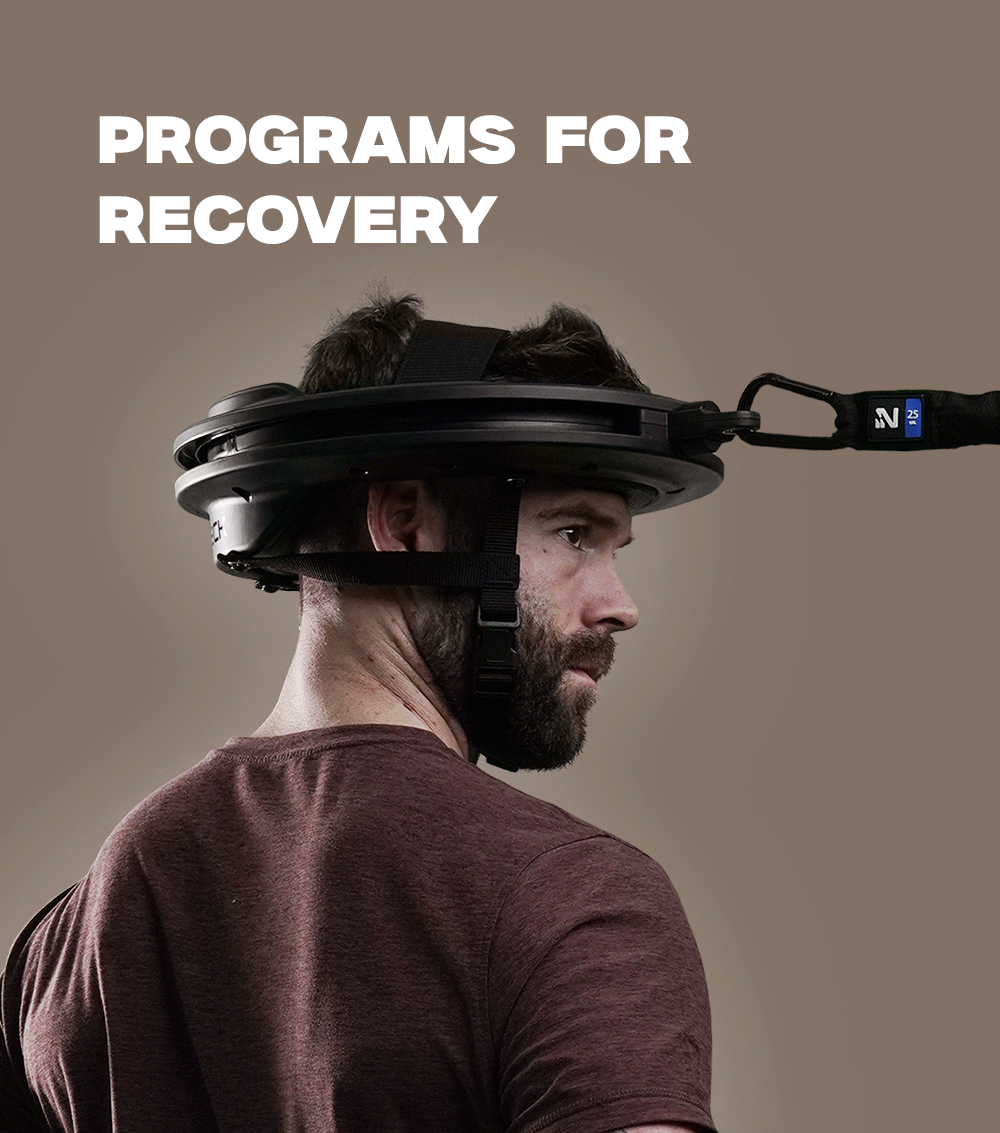
Introduce external resistance with progressive loading. The Iron Neck 3.0 Pro is the tool of choice for this phase, its 360-degree resistance capability addresses all football-specific movement planes simultaneously.
Iron Neck 360° rotations (3×10 each direction), weighted flexion with harness (4×12), weighted extension with harness (4×12), lateral raises with weight (3×10 each side), neck carries (3×45 seconds). Two to three sessions per week.
Phase 3: Power and Explosiveness (Pre-Season, Weeks 11–16)
Add explosive elements to build fast-twitch fiber recruitment and the rapid activation speed that protects against unexpected impacts.
Explosive neck flexion (4×8, fast concentric/controlled eccentric), Iron Neck reactive drills (partner calls direction, player resists rapidly), neck carries with increased weight (3×60 seconds), position-specific drills. Two sessions per week.
In-Season Maintenance
During the season, reduce volume but maintain frequency. One session per week of isometric holds, light weighted flexion and extension, and Iron Neck rotations is sufficient to maintain the strength built during the off-season without creating excessive fatigue.
Equipment for Football Neck Training
The Iron Neck 3.0 Pro is the premier tool for football neck training and is used by NFL teams and major college programs. Its ability to train all planes of movement with consistent, progressive resistance makes it uniquely suited to the multi-directional demands of football.
For programs with budget constraints, the Iron Neck Alpha Harness provides an excellent foundation for weighted flexion and extension training at a lower price point. Supplement with resistance bands for lateral and rotational work.
Implementing Neck Training in a Football Program
The most common barrier to football neck training is time, practice schedules are already packed, and adding another training component requires buy-in from coaches and players. The solution is integration: neck training sessions of 15–20 minutes can be added to the beginning or end of existing strength training sessions without significantly impacting overall training time.
The return on this time investment is substantial. Programs that have implemented systematic neck training have reported reductions in concussion rates, faster return-to-play times when concussions do occur, and improved overall neck and shoulder strength that benefits performance across all positions. For any football program serious about player safety and performance, neck training is not optional. It is essential.


Leave a comment
This site is protected by hCaptcha and the hCaptcha Privacy Policy and Terms of Service apply.