



Athletic Neck Training: How to Add It to Any Strength and Conditioning Program
In the relentless pursuit of athletic excellence, coaches and administrators meticulously optimize every facet of a strength and conditioning program. Yet, one crucial area often remains underserved: athletic neck training. While the focus frequently gravitates towards larger muscle groups and more visible performance metrics, the neck, a vital pillar of both performance and protection, is frequently overlooked. This oversight can have profound implications, particularly in contact sports where head impacts are commonplace, but also in sports demanding high levels of head stabilization and proprioception.
The challenge for many athletic directors, strength coaches, school administrators, and gym owners isn't a lack of understanding regarding the neck's importance, but rather a perceived barrier to integration. How does one seamlessly weave dedicated neck training into an already packed training schedule without compromising other critical components? This article serves as a comprehensive, practical guide to demystify athletic neck training. We will delve into its undeniable benefits, dissect the underlying anatomy and function, explore effective assessment strategies, and, most importantly, provide actionable, time-efficient methods for integrating it into any strength and conditioning program, complete with sample session templates.
The Undeniable Benefits of Athletic Neck Training
The benefits of a robust neck extend far beyond aesthetics, impacting both injury resilience and athletic prowess. For institutional buyers, understanding these multifaceted advantages is key to justifying its inclusion in programming.
Concussion and Injury Prevention
Perhaps the most compelling argument for athletic neck training lies in its potential to mitigate the risk and severity of concussions and other neck-related injuries. Research consistently highlights a strong correlation between neck strength and reduced head acceleration upon impact. A stronger neck acts as a natural shock absorber, effectively dampening the forces transmitted to the brain during collisions. Studies have shown that for every pound of increased neck strength, there is a measurable reduction in concussion risk [1].
"Neck strength: A protective factor reducing risk for concussion in high school sports."
— Collins et al., 2014 [1]
Furthermore, the concept of neck stiffness—the ability of neck muscles to contract and resist deformation—is critical. When an athlete braces for impact, strong neck musculature can significantly reduce the kinematic response of the head, thereby minimizing the forces that contribute to traumatic brain injury [2]. This is particularly relevant in high-impact sports like football, rugby, and combat sports, where repeated head impacts (RHI) are a significant concern [3].
Enhanced Athletic Performance
Beyond injury prevention, a strong and well-conditioned neck contributes directly to superior athletic performance across a spectrum of sports:
- Improved Head Stabilization: During dynamic movements, rapid changes in direction, or explosive actions, a stable head allows for better visual tracking and overall body control. This translates to improved balance, agility, and reaction time.
- Better Force Transfer: The neck is a crucial link in the kinetic chain. A strong neck optimizes the "trunk-neck-head coupling mechanism," ensuring efficient transfer of force from the lower body through the core and into the upper extremities, which is vital for actions like throwing, striking, or tackling [4].
- Enhanced Proprioception and Sensorimotor Control: The deep muscles of the neck are rich in proprioceptors, providing critical feedback to the brain about head position and movement. Improved sensorimotor control leads to better spatial awareness, balance, and the ability to react quickly and accurately to external stimuli [5].
- Reduced Muscular Fatigue: A conditioned neck is less prone to fatigue, allowing athletes to maintain optimal head and body posture throughout prolonged training sessions and competitions. This sustained performance can be a decisive factor in critical moments.
Long-Term Athlete Health
Investing in neck training also contributes to the long-term health and well-being of athletes. It can help mitigate chronic neck pain, reduce the incidence of headaches, and promote better overall spinal health and posture, extending an athlete's career and quality of life both on and off the field.
Understanding Neck Anatomy and Function for S&C Coaches
For strength and conditioning professionals, a foundational understanding of neck anatomy and its functional movements is paramount for designing effective and targeted training programs. The cervical spine, comprising seven vertebrae (C1-C7), is supported by a complex network of over 20 muscles, each contributing to its remarkable mobility and stability.
Key Muscle Groups
The neck muscles can be broadly categorized by their primary actions:
- Anterior Muscles (Flexion, Rotation, Lateral Bending): These muscles are located at the front and sides of the neck. Key players include the Sternocleidomastoid (SCM), a large, powerful muscle responsible for neck flexion and rotation, and the Scalenes, which assist in flexion and lateral bending, and also play a role in respiration.
- Posterior Muscles (Extension, Rotation, Lateral Bending): Situated at the back of the neck, these muscles facilitate extension and contribute to rotation and lateral bending. Important muscles here include the Erector Spinae (though primarily a back muscle, its upper fibers contribute significantly to neck extension), the Upper Trapezius, and the deep Suboccipital Muscles, which are crucial for fine motor control of head movements.
- Lateral Muscles (Rotation, Lateral Flexion, Stabilization): While some overlap exists with anterior and posterior groups, specific muscles like the Longus Capitis and Longus Colli provide deep cervical stabilization, supporting against forward head posture and aiding in muscular endurance.
Movements and Their Importance
Effective neck training must address all primary planes of motion:
- Flexion: Bending the head forward (chin to chest).
- Extension: Bending the head backward.
- Lateral Flexion: Bending the head sideways (ear to shoulder).
- Rotation: Turning the head from side to side.
Training across all these movements ensures comprehensive development, addressing potential imbalances and enhancing the neck's ability to withstand forces from multiple directions. For instance, while flexion and extension are often prioritized, lateral flexion and rotation are equally vital for resisting rotational forces common in many sports [6].
Assessing Neck Strength: Establishing Baselines and Monitoring Progress
Before implementing any training program, a thorough assessment of an athlete's current neck strength and mobility is crucial. This allows coaches to identify weaknesses, establish baselines, and objectively monitor progress over time.
Why Assess?
- Identify Weaknesses and Imbalances: Pinpoint specific areas of deficiency (e.g., weaker extension compared to flexion) that require targeted intervention.
- Establish Normative Data: Create sport-specific and position-specific benchmarks for your athletes, allowing for more precise goal setting.
- Monitor Program Effectiveness: Quantify the impact of your neck training program and make data-driven adjustments.
- Injury Risk Screening: While not a definitive predictor, significant asymmetries or weaknesses can indicate a higher potential risk for certain injuries.
Assessment Methods
While a "gold standard" assessment may still be evolving, several reliable methods are available to S&C coaches:
- Manual Muscle Testing (MMT): A quick, qualitative assessment of strength, but often lacks the precision and objectivity needed for detailed profiling.
- Dynamometry: This is the preferred method for objective measurement.
- Fixed Frame Dynamometers: Devices like the VALD ForceFrame can reliably assess isometric neck strength in various positions (flexion, extension, lateral flexion) [7].
- Handheld Dynamometers: More portable and versatile, these can also provide objective strength measurements, though consistency in application is key.
Regardless of the method chosen, consistency in testing protocols (e.g., body position, verbal cues, rest periods) is paramount to ensure reliable and comparable data.
Key Ratios and Considerations
Beyond absolute strength, analyzing ratios between different neck movements can provide valuable insights:
- Flexion:Extension Ratios: Research suggests that a neck flexion to extension ratio of less than 0.60 is associated with an increased concussion risk in adolescent and adult rugby players [8]. Aiming for a more balanced ratio (e.g., 0.8:1 or 1:1) can be a protective factor.
- Flexion:Lateral Flexion Ratios: An ideal relationship for head stabilization is often cited as 1:1, though sport-specific demands can alter this.
- Symmetry vs. Sport-Specific Asymmetry: While general symmetry is desirable, some sports may inherently develop asymmetries. For example, race car drivers might develop stronger lateral neck musculature on one side due to sustained forces during turns [9]. Coaches must consider these sport-specific demands when interpreting data and designing programs.
Regularly tracking these metrics allows coaches to tailor programs to individual athlete needs and address specific imbalances, ultimately contributing to a more resilient and higher-performing athlete.
Integrating Neck Training into Your S&C Program: Practical Strategies
The most common hurdle for coaches is not the belief in neck training's efficacy, but rather the practical challenge of integrating it into an already demanding strength and conditioning schedule. The good news is that effective neck training doesn't require a complete overhaul of existing programs; it can be seamlessly woven into various phases of a training session.
Overcoming the Time Barrier
The key to successful integration is efficiency and strategic placement. Instead of viewing neck training as an additional, separate block of time, consider how it can complement and enhance existing components of your program. Short, focused bouts of neck work can yield significant benefits without adding substantial time to a session.
Integration Points
Here are practical strategies for incorporating neck training throughout a typical S&C session:
Warm-up: Activation, Proprioception, and Motor Control
The warm-up phase is an excellent opportunity to prime the neck musculature, improve mobility, and enhance neuromuscular activation. These exercises are typically low-intensity and focus on controlled movements.
- Chin Tucks: A foundational exercise for activating deep cervical flexors, improving posture, and promoting cervical stability. Perform slowly and with control.
- Gentle Rotations and Lateral Flexions: Controlled, pain-free movements through the full range of motion to improve mobility and blood flow.
- Isometric Holds (Light Resistance): Using manual resistance or a light band, perform short isometric holds in various directions (flexion, extension, lateral flexion, rotation) to activate muscles without excessive load.
Integrating 2-3 minutes of these exercises into the general warm-up can significantly enhance an athlete's readiness for the session and improve their ability to maintain optimal head position during subsequent movements.
Accessory Work/Between Sets: Strength Development and Muscular Endurance
This is where the bulk of strength and endurance development for the neck can occur. Neck exercises can be performed as dedicated accessory work or strategically paired with main lifts during rest periods.
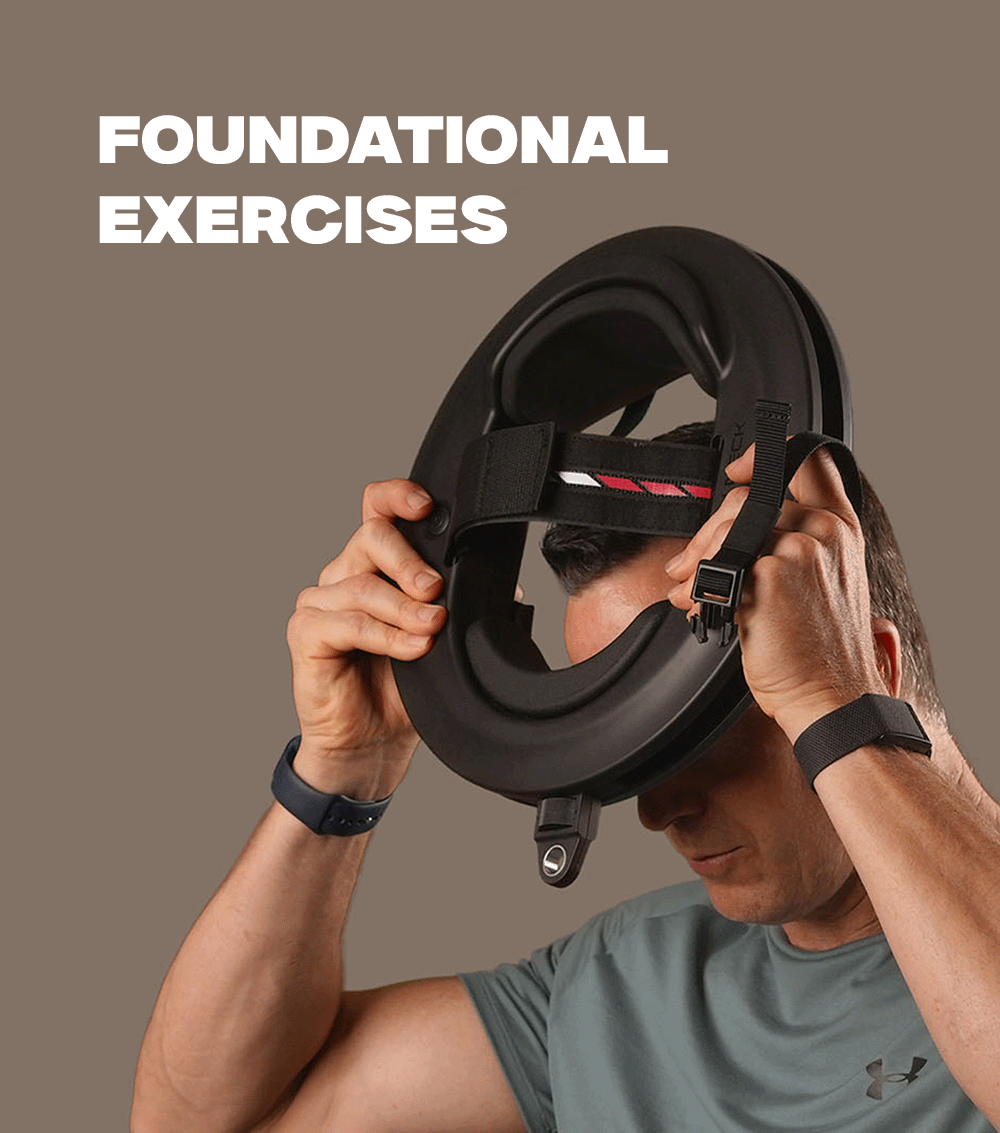
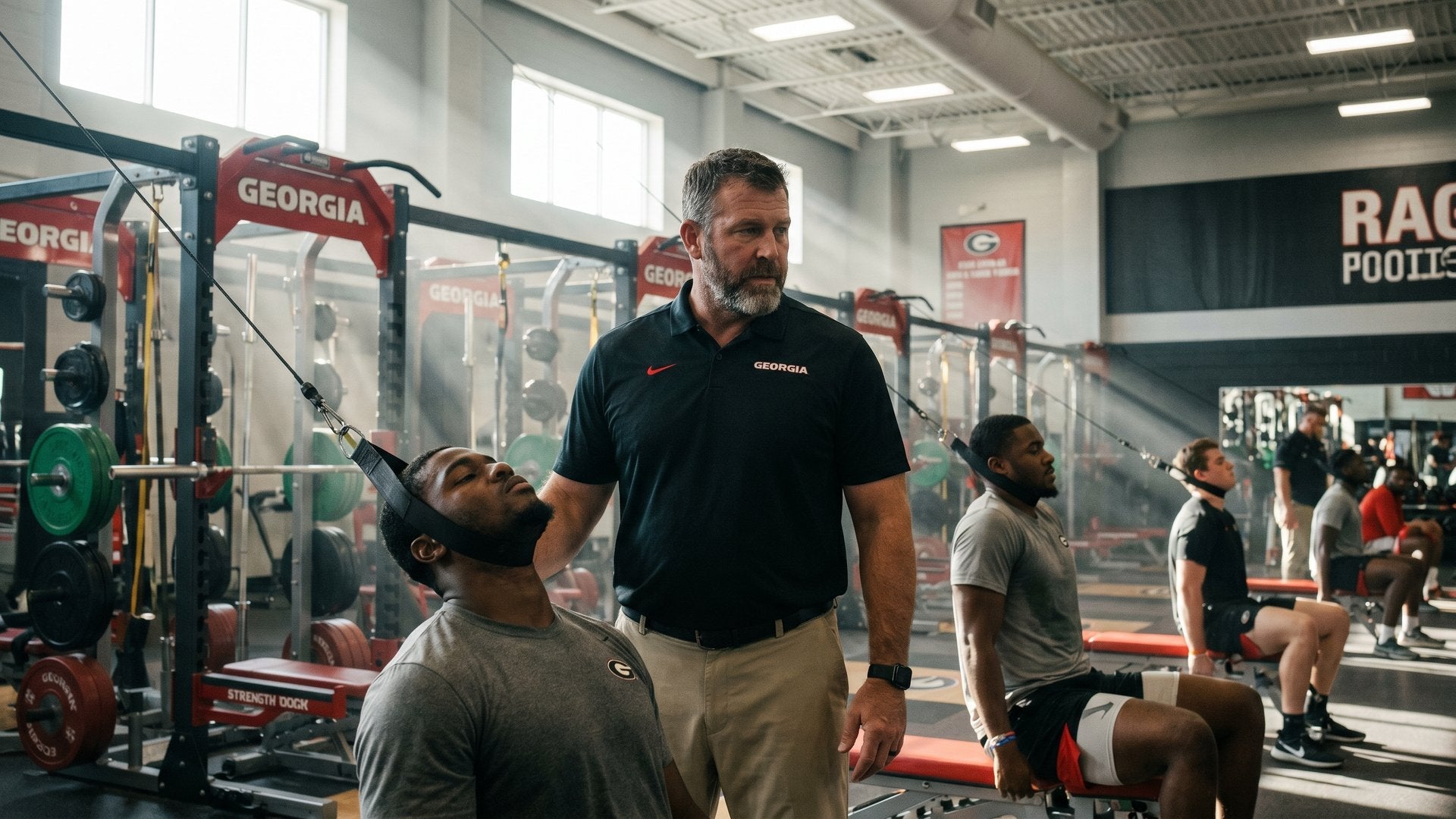
- Neck Harness Exercises: A classic and effective method for loading all planes of neck movement. Use a neck harness with plates or cables for progressive resistance in flexion, extension, and lateral flexion.
- Manual Resistance: A partner can provide resistance, allowing for variable intensity and immediate feedback. This is particularly useful for rotational movements.
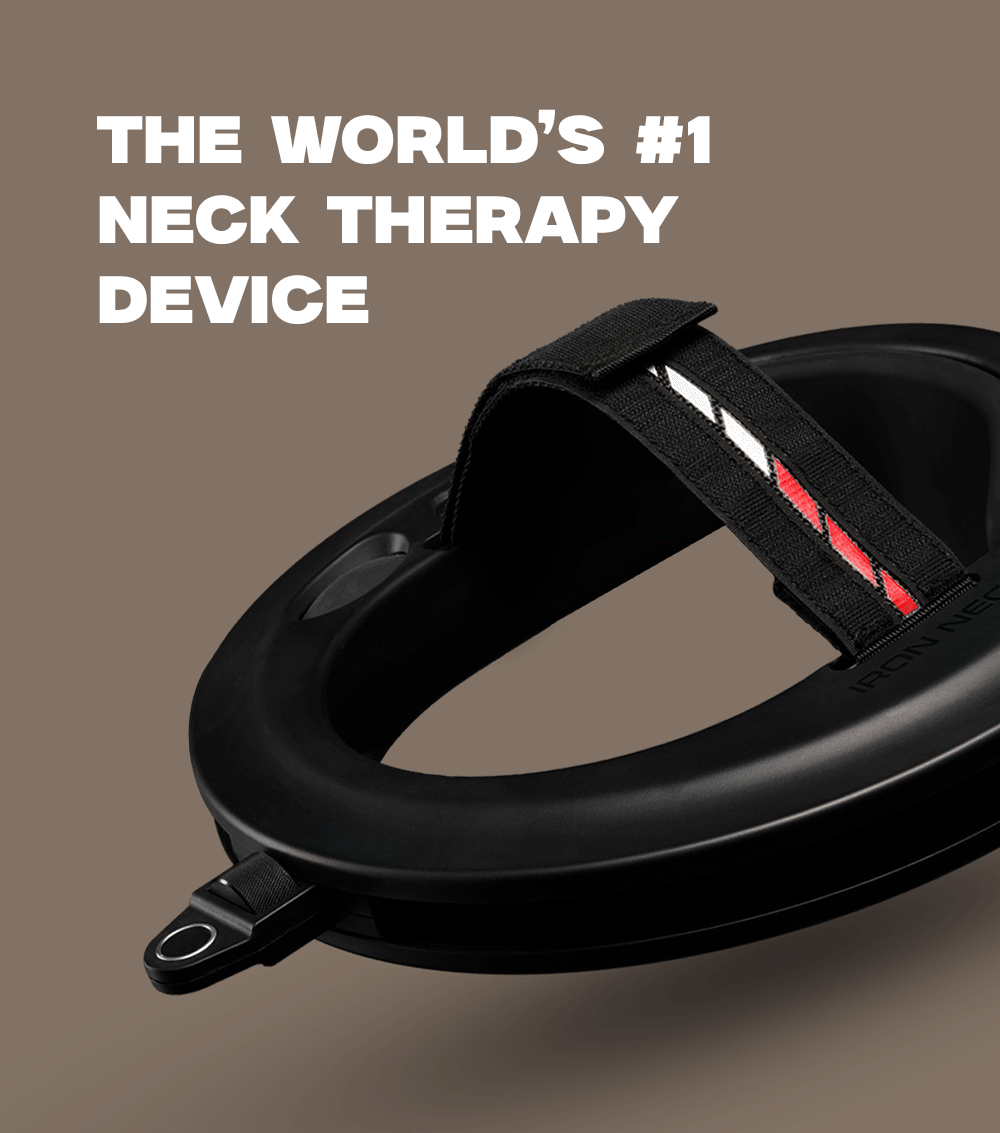
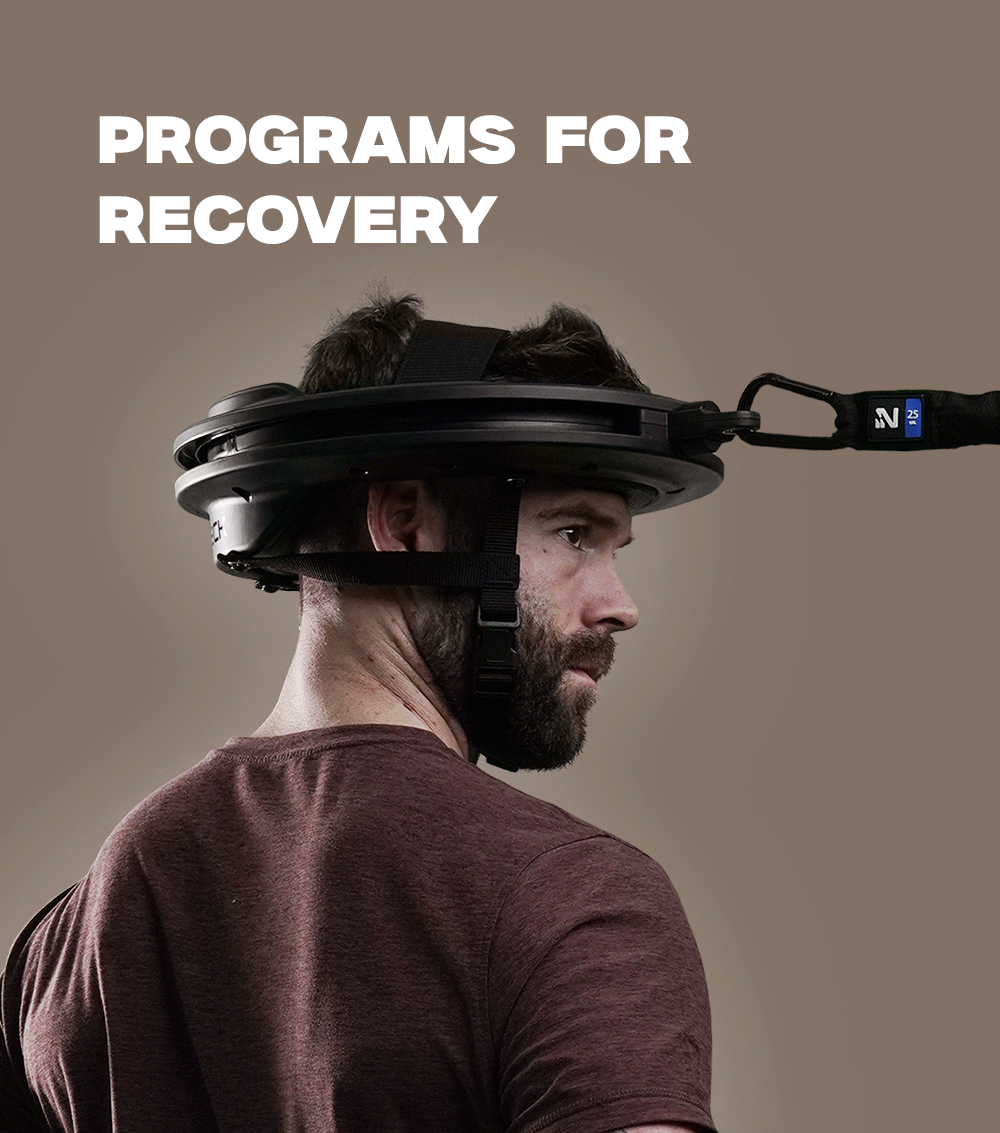
- Iron Neck Training Device: The Iron Neck training device offers a versatile and highly effective solution for dynamic and isometric neck training. Its 360-degree resistance allows for comprehensive development across all planes of motion, making it ideal for targeting specific weaknesses and enhancing sport-specific movements. It can be used for isometric holds, slow dynamic movements, and even faster, reactive drills.
Sample Pairing: Bench Press + Neck Extension
Instead of passively resting between sets of a main lift, coaches can program a neck exercise. For example:
- A1. Barbell Bench Press: 4 sets of 3 reps @ 90% 1RM
- A2. Cable Neck Harness: Extension: 4 sets of 8 reps (performed during the 60-second rest period for A1)
This approach maximizes training density and ensures that neck work is consistently integrated without requiring additional dedicated time blocks.
Finisher/Cool-down: Muscular Endurance, Recovery, and Flexibility
The end of a session can be used for higher-repetition, lower-intensity neck work to build muscular endurance, or for gentle mobility drills to aid in recovery.
- High-Rep, Low-Intensity Movements: Using light bands or bodyweight, perform 15-20 repetitions of flexion, extension, and lateral flexion to promote blood flow and endurance.
- Gentle Static Stretches: Lightly stretch the neck muscles to improve flexibility and reduce post-exercise stiffness.
Progressive Overload Principles
Like any other muscle group, the neck responds to progressive overload. Coaches should systematically increase the demands on the neck muscles over time. This can involve:
- Increasing Resistance: Heavier plates, stronger bands, or increased tension on devices like the Iron Neck.
- Increasing Volume: More sets or repetitions.
- Increasing Time Under Tension: Slower eccentric phases, longer isometric holds.
- Decreasing Rest Periods: For endurance-focused work.
- Progressing Movement Speed: Moving from static holds to slow dynamic movements, then to faster, more reactive drills. The UFC Performance Institute's "neck matrix" emphasizes developing foundational static and slow dynamic strength before progressing to fast dynamic and reactive strength [10].
By applying these principles, coaches can ensure continuous adaptation and development of neck strength, endurance, and resilience.
Sample Session Templates
To illustrate how neck training can be integrated, here are three sample session templates tailored to different training phases and sport demands. These are examples and should be adapted to the specific needs of your athletes and program.
Template 1: General Athletic Development (Off-Season)
Goal: Build foundational neck strength and endurance, improve overall cervical health.
-
Warm-up (10-12 minutes):
- General dynamic warm-up (5-7 min)
- Neck Activation (3-5 min): Chin Tucks (2x10), Gentle Neck Rotations (2x10 each side), Isometric Holds (manual resistance, 3 directions, 2x10s each).
- Main Lift (e.g., Back Squat): 3-4 sets of 5-8 reps
-
Accessory Block (Paired with Main Lift Rest):
- A1. Back Squat
- A2. Iron Neck 3-Way Isometric Holds (Flexion, Extension, Lateral Flexion): 3 sets of 15-20 seconds each direction (performed during squat rest).
-
Finisher (10 minutes):
- Core Circuit (e.g., planks, side planks)
- Neck Endurance: Neck Harness Flexion/Extension (light weight, 2x15-20 reps each).
Template 2: Contact Sport Athlete (Pre-Season/In-Season)
Goal: Enhance reactive neck strength, improve head stabilization under impact, maintain strength.
-
Warm-up (10-15 minutes):
- Dynamic warm-up with sport-specific movements (5-7 min)
- Neck Mobility & Activation (5-8 min): Dynamic Neck Rotations (2x10 each side), Partner Resisted Isometric Holds (3 directions, 2x5s max effort each), Banded Neck Flexion/Extension (2x10).
- Main Lift (e.g., Power Clean): 3-5 sets of 2-3 reps
-
Accessory Block (Dedicated):
- Iron Neck Dynamic Rotations (controlled speed): 3 sets of 8-12 reps each direction.
- Neck Harness Lateral Flexion: 3 sets of 10-12 reps each side.
-
Finisher (5-10 minutes):
- Reactive Neck Work: Partner Tap Drills (light, quick taps to the head/helmet, athlete resists movement) or quick, resisted movements with the Iron Neck training device. 2-3 sets of 15-20 seconds.
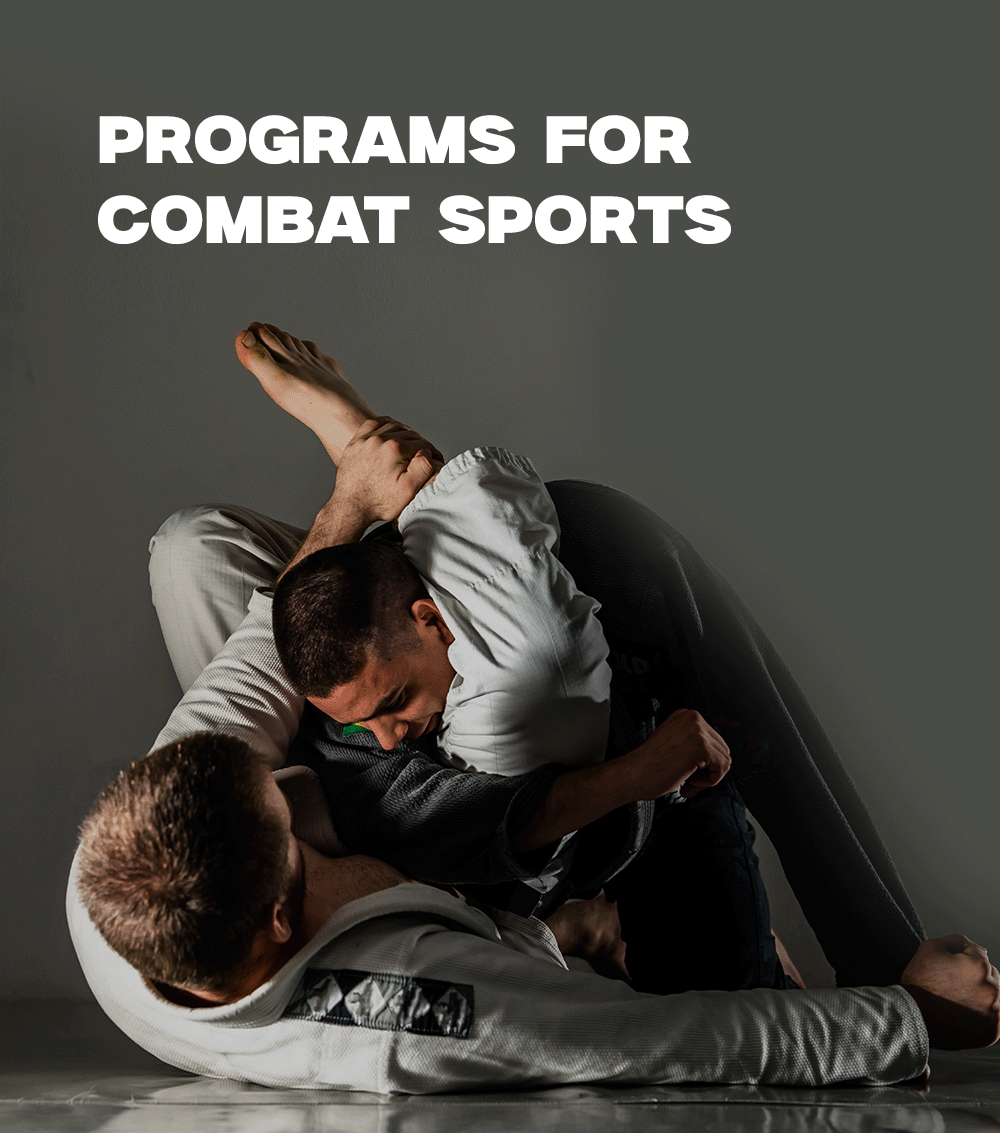
Template 3: Sport-Specific Focus (e.g., MMA/Wrestling)
Goal: Maximize neck strength and endurance for grappling, clinching, and impact resistance.
-
Warm-up (10-15 minutes):
- General warm-up (5 min)
- Neck-Specific Mobility & Activation (5-10 min): Neck Bridges (forward/backward, 2x10s hold), Wrestler's Neck Drills (controlled, 2x5 each direction).
- Main Lift (e.g., Overhead Press): 3-4 sets of 6-8 reps
-
Accessory Block (Heavy Neck Work):
- Neck Harness Flexion/Extension (heavy weight): 3 sets of 8-10 reps.
- Iron Neck Resisted Rotations (slow, controlled): 3 sets of 8-10 reps each side.
- Manual Neck Resistance (partner-assisted, all directions): 2 sets of 10-15 seconds holds.
-
Finisher (10-15 minutes):
- Neck Endurance Circuit: Perform 1 minute each of Neck Flexion, Extension, Lateral Flexion (both sides) with light resistance (band or bodyweight), minimal rest between exercises. Repeat 2-3 rounds.
Key Takeaways
- Neck training is a non-negotiable component of comprehensive S&C. It is no longer a niche practice but a fundamental aspect of athlete development and protection.
- Benefits extend beyond injury prevention to performance enhancement. A strong neck improves head stabilization, force transfer, proprioception, and reduces fatigue, directly contributing to athletic prowess.
- Integration can be seamless with strategic programming. Neck exercises can be effectively incorporated into warm-ups, accessory work, and finishers without significantly extending session duration.
- Progressive overload and proper assessment are crucial. Like any other muscle group, the neck requires systematic loading and objective measurement to ensure continuous adaptation and monitor progress.
- The Iron Neck training device offers versatile and effective solutions for all phases of neck training, from foundational strength to reactive movements, catering to diverse athletic needs.
Frequently Asked Questions (FAQ)
- 1. Why is neck training important for athletes?
- Neck training is crucial for athletes primarily for injury prevention, especially reducing the risk and severity of concussions by acting as a natural shock absorber. It also significantly enhances athletic performance by improving head stabilization, force transfer, balance, and reducing muscular fatigue during dynamic movements.
- 2. How often should athletes train their neck?
- The frequency of neck training depends on the athlete's sport, training phase, and individual needs. Generally, incorporating neck exercises 2-3 times per week is effective for most athletes. For high-impact sports or those with identified weaknesses, more frequent, shorter sessions might be beneficial.
- 3. What are the best exercises for neck strength?
- Effective neck exercises include isometric holds (resisted flexion, extension, lateral flexion, rotation), neck harness exercises, and dynamic movements with specialized equipment like the Iron Neck training device. Manual resistance from a partner can also be highly effective. A comprehensive program should target all planes of motion.
- 4. Can neck training prevent concussions?
- While no training can completely prevent concussions, a strong neck is a significant protective factor. Research indicates that increased neck strength can reduce head acceleration upon impact, thereby lowering the risk and severity of concussions. It helps the neck muscles brace more effectively to absorb and dissipate forces.
- 5. Is the Iron Neck device suitable for all athletes?
- Yes, the Iron Neck training device is designed for versatility and can be adapted for athletes of all levels and sports. Its adjustable resistance and 360-degree movement capabilities allow for progressive training, from foundational strength building to advanced sport-specific reactive drills.
- 6. How can I integrate neck training without adding significant time to my program?
- Neck training can be seamlessly integrated into existing S&C programs. Short, focused exercises can be added to warm-ups for activation, performed as accessory work during rest periods between main lifts, or included in finishers for endurance. Strategic pairing and efficient exercise selection are key.
- 7. What are the key considerations for progressive overload in neck training?
- Progressive overload for neck training involves systematically increasing resistance (heavier plates, stronger bands, increased Iron Neck tension), increasing volume (more sets/reps), increasing time under tension (slower eccentrics, longer holds), decreasing rest periods for endurance, and progressing movement speed from static to dynamic and reactive drills.
References
- Collins, C. L., Fletcher, E. N., Fields, S. K., Kluchurosky, L., Rohrkemper, M. K., Comstock, R. D., & Cantu, R. C. (2014). Neck strength: A protective factor reducing risk for concussion in high school sports. Journal of Primary Prevention, 35(5), 309-319.
- Eckner, J. T., Oh, Y. K., Joshi, M. S., Richardson, J. K., & Ashton-Miller, J. A. (2014). Effect of neck muscle strength and anticipatory cervical muscle activation on the kinematic response of the head to impulsive loads. American Journal of Sports Medicine, 42(3), 566-576.
- Pratt, G. (n.d.). Neck training to improve performance and injury outcomes. Sportsmith. Retrieved from https://www.sportsmith.co/articles/neck-training-to-improve-performance-and-injury-outcomes/
- McBride, J. M., et al. (2022). Reliability of isometric neck strength assessment using a fixed frame dynamometer. Journal of Strength and Conditioning Research, 36(1), 1-7.
- Hrysomallis, C. (2007). Relationship between isometric neck strength and head kinematics during heading in soccer. Journal of Science and Medicine in Sport, 10(4), 273-278.
- Guskiewicz, K. M., et al. (2001). The effects of sport-related concussion on neurocognitive function and postural stability. Journal of Athletic Training, 36(3), 265-273.
- Leddy, J. J., et al. (2007). The role of cervical musculature in the prevention of concussion. Journal of Athletic Training, 42(2), 297-302.
- Schmidt, J. D., et al. (2014). The relationship between neck strength and concussion risk in male and female collegiate athletes. Journal of Athletic Training, 49(5), 612-618.
- Crisco, J. J., et al. (2010). The effect of head and neck muscle activation on the kinematics of the head during football impacts. Journal of Biomechanics, 43(15), 2932-2938.
- Powers, C. M. (2003). The influence of altered lower-extremity kinematics on patellofemoral joint dysfunction: a prospective investigation. Journal of Orthopaedic & Sports Physical Therapy, 33(11), 639-646.
- Farley, T., et al. (2022). Cervical Joint Position Error Test in professional rugby players. Journal of Sports Sciences, 40(1), 1-8.
- UFC Performance Institute. (2022-23). A Cross-Sectional Performance Analysis and Projection of the UFC Athlete: Volume 2.
- Hrysomallis, C. (2016). Neck strength and risk of concussion in rugby union. Sports Medicine, 46(10), 1411-1422.
Leave a comment
This site is protected by hCaptcha and the hCaptcha Privacy Policy and Terms of Service apply.