


Sport Specific · Program 100

Shoulder Strength for Hockey Players

For hockey players and goaltenders whose shoulders absorb checks, board contact, and thousands of stick handling repetitions a season. The first phase armors the cuff with the external rotation series, internal rotations, scapular activation, and shoulder circles, then the second builds the frame and stick strength behind puck battles using single arm rows, anti-protraction holds, high to low diagonal pulls, T-shape pulls, and postural endurance work. The last phase trains the fast end of the game with rotational power throws, low to high diagonal power, explosive overhead press, overhead position holds, and sport-specific patterns.

Focus · Ice hockeyFrequency · 3-4 days / weekSession · 15-25 min
Shoulder Strength for Hockey Players cover art

Phase 1 · Armor Under the Pads

Build the cuff base that takes a hit instead of getting hurt by one. The external rotation series, internal rotations, scapular activation, and shoulder circles balance both directions of rotation and keep the humeral head centered in a joint that gets loaded from odd angles all game. Shoulder pads spread the impact, but the joint underneath still has to hold itself together.

01

External Rotation Series

3 sets of 15 reps (per side)Mid Anchor

Comprehensive external rotation training at multiple angles. Excellent for endurance and rotator cuff health.

How To
1Perform external rotation at different arm angles (0, 45, 90 degrees).
2Focus on endurance and varied positions.
Coaching Cues
Vary arm angles
slow controlled tempo
focus on endurance
maintain form throughout series
Muscles Activated
Posterior DeltoidInfraspinatusTeres MinorExternal Rotators
02

Internal Rotations (Uncrossed)

3 sets of 12-15 reps (per side)Low Anchor

Balances rotator cuff strength. Critical for americana defense in combat sports.

How To
1Stand facing away from low anchor, elbow at side.
2Rotate forearm across body against resistance.
3Control return to start.
Coaching Cues
Maintain elbow position
control internal rotation
resist extension forces
focus on subscapularis activation
Muscles Activated
Anterior DeltoidSubscapularisPectorals
03

Scapular Activation (Uncrossed)

2-3 sets of 12-15 repsLow Anchor

General scapular activation for multiple programs. Excellent for rehab and postural training.

How To
1Activate scapular muscles through various pulling and stabilization patterns.
2Focus on scapular control and activation.
Coaching Cues
Focus on scapular movement quality
control patterns
activate commonly inhibited muscles
Muscles Activated
Lower TrapeziusSerratus Anterior
04

Multi-Level Shoulder Circles (Variable)

2 sets of 10-12 repsMid Anchor

Universal mobility exercise for comprehensive shoulder movement. Adaptable to all programs and populations.

How To
1Perform large shoulder circles with light resistance in both directions.
2Focus on full range of motion and circulation.
Coaching Cues
Large range of motion
both directions
gentle resistance
focus on mobility and circulation
Muscles Activated
Scapular Stabilizers

Phase 2 · Puck Battles and Board Work

Train the sustained strength behind hand fighting on the wall. Single arm rows, anti-protraction holds, high to low diagonal pulls, T-shape pulls, and postural endurance work build one-sided pulling and the isometric frame you hold through a battle along the boards. Stick handling and puck protection are endurance tasks wearing the costume of strength tasks.

01

Single Arm Rows (Alternating)

3 sets of 12-15 reps (per side)High Anchor

Unilateral pulling strength. Excellent for functional strength and imbalance correction.

How To
1Stand facing high anchor, one arm extended forward.
2Pull band to ribs with rowing motion.
3Alternate arms or single arm focus.
Coaching Cues
Pull elbow to ribs
squeeze shoulder blade
maintain athletic stance
control the return
Muscles Activated
Posterior DeltoidLatissimus DorsiRhomboids
02

Anti-Protraction Strengthening (Uncrossed)

3 holds of 45-60 secondsLow Anchor

Counters forward shoulder posture from prolonged sitting. Strengthens posterior chain.

How To
1Stand facing low anchor, resist forward pull of bands by maintaining retracted shoulder position.
2Focus on posterior strength.
Coaching Cues
Resist protraction forces
maintain good posture
engage posterior chain
counter forward positioning
Muscles Activated
Posterior DeltoidRhomboidsMiddle Trapezius
03

High to Low Diagonal Pulls (Uncrossed) (alternating)

3 sets of 12 reps (per side)High Anchor

Functional diagonal movement. Excellent for tackling motions, golf, and general function.

How To
1Stand facing high anchor, arms extended overhead.
2Pull bands down and across body to opposite hip in diagonal pattern.
Coaching Cues
Engage core
pull through full range
emphasize eccentric phase
maintain good posture
Muscles Activated
Latissimus DorsiRhomboidsLower Trapezius
04

T Shape Pulls

3 sets of 12-15 repsMid Anchor

Classic middle trapezius isolation exercise. Primary movement for addressing postural deficits and scapular retraction weakness. Essential for all programs focusing on posture correction and shoulder blade control. Often called reverse fly at 90 degrees.

How To
1Stand facing mid-level anchor, arms extended straight out to sides at shoulder height (90 degree abduction) forming letter T shape.
2Pull bands back horizontally, squeezing shoulder blades together while keeping arms parallel to ground.
3Maintain shoulder-height arm position throughout movement.
4Return with control.
Coaching Cues
Arms stay parallel to floor
lead with pinkies
elbows slightly bent
squeeze shoulder blades together forcefully
avoid dropping arms
maintain level shoulders
control return phase
think proud chest position.
Muscles Activated
Posterior DeltoidRhomboidsMiddle TrapeziusInfraspinatusTeres MinorExternal RotatorsScapular Stabilizers
05

Postural Endurance Training (Uncrossed)

3 holds of 45-60 secondsHigh Anchor

Builds endurance for sustained postural demands. Excellent for occupational and postural training.

How To
1Perform sustained holds or higher repetition posterior chain exercises.
2Build endurance for daily demands.
Coaching Cues
Focus on endurance over strength
maintain form throughout
progressive duration increases
Muscles Activated
RhomboidsMiddle Trapezius

Phase 3 · Deliver and Absorb Contact

Train both sides of a collision, the one you give and the one you take. Rotational power throws, low to high diagonal power, and explosive overhead press build the speed behind a shot and a check, while overhead position holds and sport-specific patterns prepare the joint for an arm getting loaded fast and without warning. Contact arrives whether you are ready for it or not, so the shoulder gets trained at game speed.

01

Rotational Power Throws (Alternating)

4 sets of 6-8 reps, explosive (per side)Mid Anchor

Maximum rotational power for sports. Develops core integration and striking/throwing power.

How To
1Rotate explosively alternating directions, simulating powerful rotational motions with maximum velocity.
2Focus on core engagement.
Coaching Cues
Maximum rotation speed
engage core
maintain balance
use whole body for power generation
Muscles Activated
Anterior DeltoidPosterior DeltoidCore
02

Low to High Diagonal Power (Uncrossed)

4 sets of 6-8 reps, explosiveLow Anchor

Functional diagonal patterns. Excellent for throwing sports and kinetic chain development.

How To
1Pull explosively from low to high in diagonal pattern.
2Use legs and core for power generation.
3Complete follow-through.
Coaching Cues
Use legs and core
explosive upward pull
complete follow-through
integrate whole body movement
Muscles Activated
Anterior DeltoidSerratus AnteriorCoreScapular Stabilizers
03

Explosive Overhead Press (Uncrossed)

4 sets of 6-8 reps, explosiveLow Anchor

Develops overhead power and strength. Adjust tempo from explosive (sports) to controlled (rehab).

How To
1Stand facing away from low anchor or step on bands.
2Press arms overhead explosively.
3Lower with control to shoulder level.
Coaching Cues
Drive through heels
press straight up
reach tall at top
control the descent
keep core engaged
Muscles Activated
Anterior DeltoidSerratus AnteriorTriceps
04

Overhead Position Holds (Uncrossed)

3 holds of 20-30 secondsLow Anchor

Builds isometric overhead strength and stability. Critical for overhead athletes and blocking sports.

How To
1Press arms overhead and hold position against band resistance.
2Focus on stability and endurance in overhead position.
Coaching Cues
Hold steady position
breathe normally during holds
resist perturbations
maintain overhead alignment
Muscles Activated
Anterior DeltoidSerratus AnteriorTricepsCore
05

Sport-Specific Patterns (Uncrossed) (single)

3 sets of 8-10 reps (per side)Low Anchor

Adaptable exercise for sport-specific movement patterns. Modify based on sport demands.

How To
1Perform sport-specific movement patterns with band resistance.
2Adapt to individual sport requirements and movement patterns.
Coaching Cues
Sport-specific mechanics
adapt to individual needs
control movement quality
progress intensity
Muscles Activated
Scapular Stabilizers
Get the gear

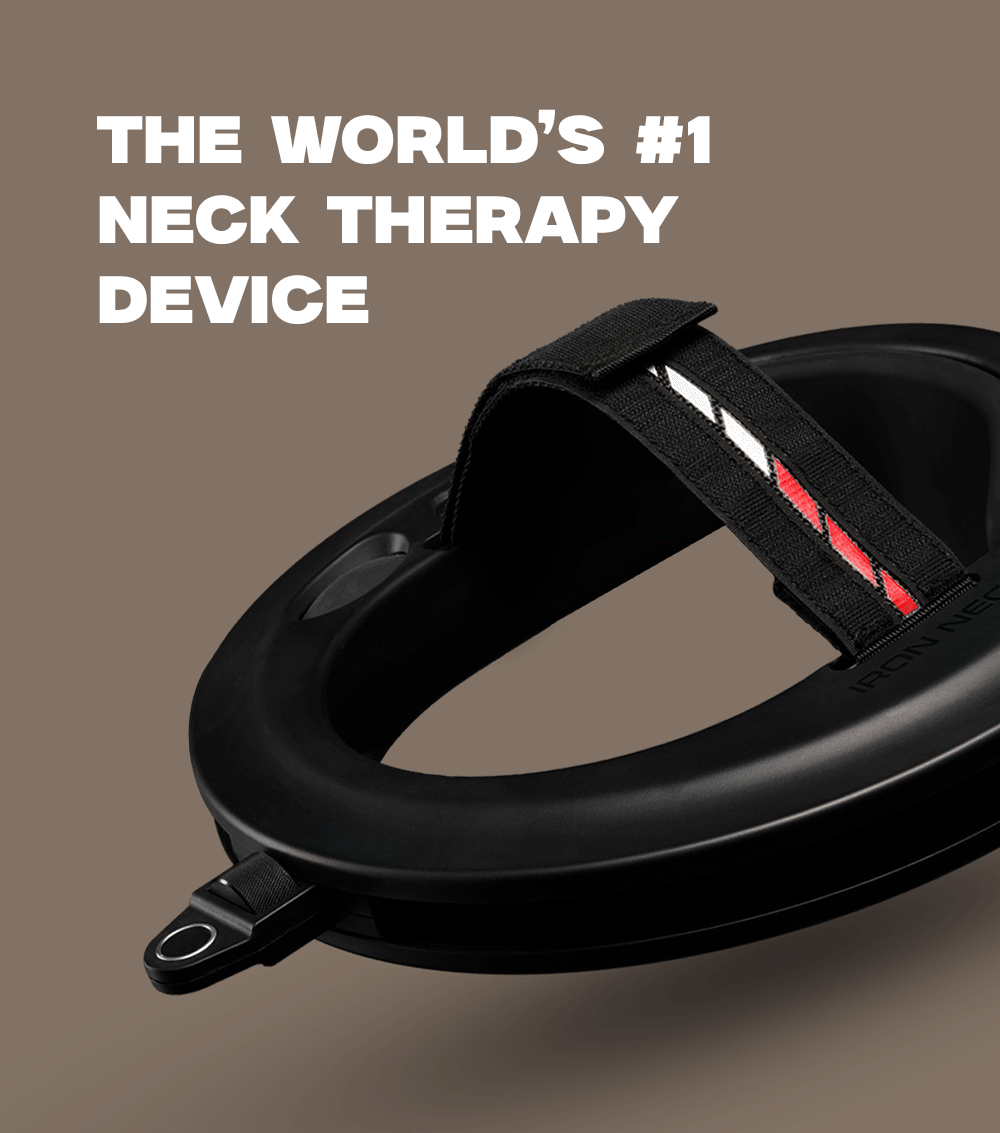
Train this program with Iron Neck shoulder bands

Cloth wrapped bands with graduated resistance and a door anchor for high, mid, and low setups. Everything this program calls for, in one kit.

Prehab and Performance Shoulder Bands (Set of 6) $199.00
Set your resistance

Light, medium, or heavy?

We call for an effort level instead of a specific weight, because the right resistance depends on you, the movement, and where you are in your training. For the sets and reps listed on each exercise, pick the resistance that makes the last few reps feel like the level shown.

Light

You finish the set with several clean reps still in the tank. The work stays easy and fully controlled from the first rep to the last.

Medium

You could manage a few more reps at the end, but not many. The final reps take real effort while your form holds.

Heavy

You reach the last prescribed rep with little or nothing left. Completing every rep with good form is genuinely hard.

These are starting points, not rules. Everyone is built differently, so adjust to fit you: size down if your form breaks before the final rep or a movement aggravates a symptom, and only size up once every rep feels smooth and pain free. When you are unsure, choose the lighter option.