
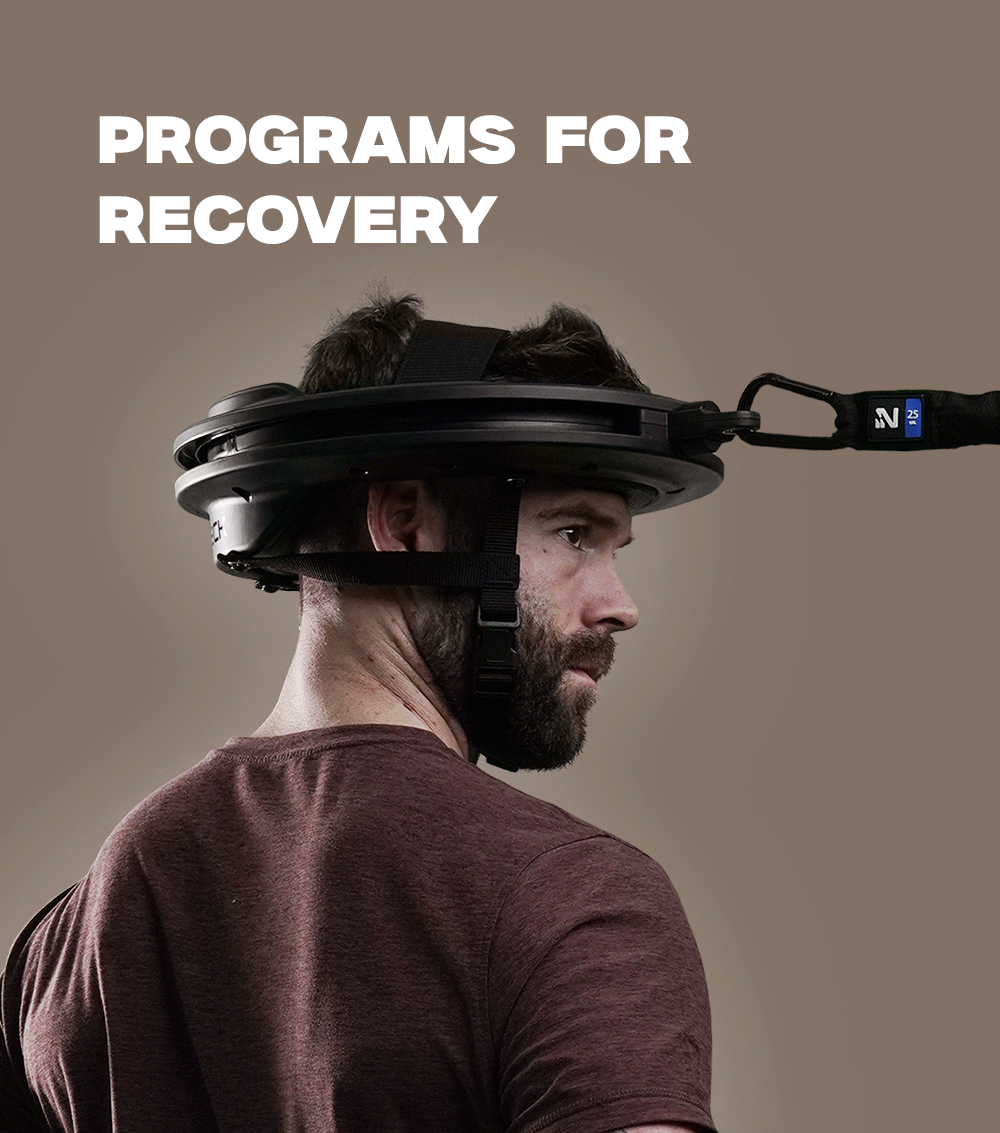

Gentle External Rotations (Uncrossed)
Universal recovery exercise with light external rotation. Promotes blood flow and gentle activation.
For rotator cuff durability across tennis, pickleball, and padel. It calms the cuff with gentle and full external rotations, activation, and cross-body stretch, then builds durability with face pulls, the TWYs combo, reverse flies, and A-shape pulls. The finish lets you play pain-free with T pulls, Y-pulls, Y-shape pulls, anti-protraction, and rows.

Calm the cuff. Gentle and full external rotations, scapular activation, and cross-body stretch settle the cuff that repeated overhead swings irritate. A calm cuff is the base for building durability.
Universal recovery exercise with light external rotation. Promotes blood flow and gentle activation.
Comprehensive external rotation training at multiple angles. Excellent for endurance and rotator cuff health.
General scapular activation for multiple programs. Excellent for rehab and postural training.
Universal mobility exercise for posterior capsule and shoulder mobility. Essential for all programs.
Build durability. Face pulls, the TWYs combo, reverse flies, and A-shape pulls strengthen the back-of-shoulder muscles that absorb racquet stress. Loading these is what makes the shoulder hold up to a full match.
Premier corrective exercise for the upper back and shoulder complex. Combines scapular retraction with shoulder external rotation to heavily target the posterior deltoids, infraspinatus, teres minor, and mid-to-lower trapezius. Vital for reversing rounded shoulder posture and building rotator cuff resilience.
Comprehensive high anchor sequence incorporating T, W, and Y positions. The W adds external rotation component making this ideal for rotator cuff health. Most complete scapular and rotator cuff activation sequence. Excellent for swimmers, overhead athletes, and comprehensive shoulder health programs.
Fundamental posterior chain exercise. Excellent for postural correction and activation across all programs.
Isolated scapular retraction at 45 degree arm angle. Targets mid-trapezius and rhomboids for postural correction. Excellent for addressing rounded shoulder posture and upper crossed syndrome. Can be used in isolation or as part of combination sequences.
Play pain-free. T pulls, Y-pulls, Y-shape pulls, anti-protraction, and rows build all-angle strength so the shoulder handles serves and swings without flaring. You finish able to play without pain.
Classic middle trapezius isolation exercise. Primary movement for addressing postural deficits and scapular retraction weakness. Essential for all programs focusing on posture correction and shoulder blade control. Often called reverse fly at 90 degrees.
Activates lower trap and serratus anterior. Critical for scapular upward rotation and overhead function.
Lower trapezius dominant exercise crucial for scapular upward rotation and depression. Addresses scapular dyskinesis and prepares shoulders for overhead function. Essential for overhead athletes, swimmers, and anyone with shoulder impingement concerns.
Counters forward shoulder posture from prolonged sitting. Strengthens posterior chain.
Unilateral pulling strength. Excellent for functional strength and imbalance correction.
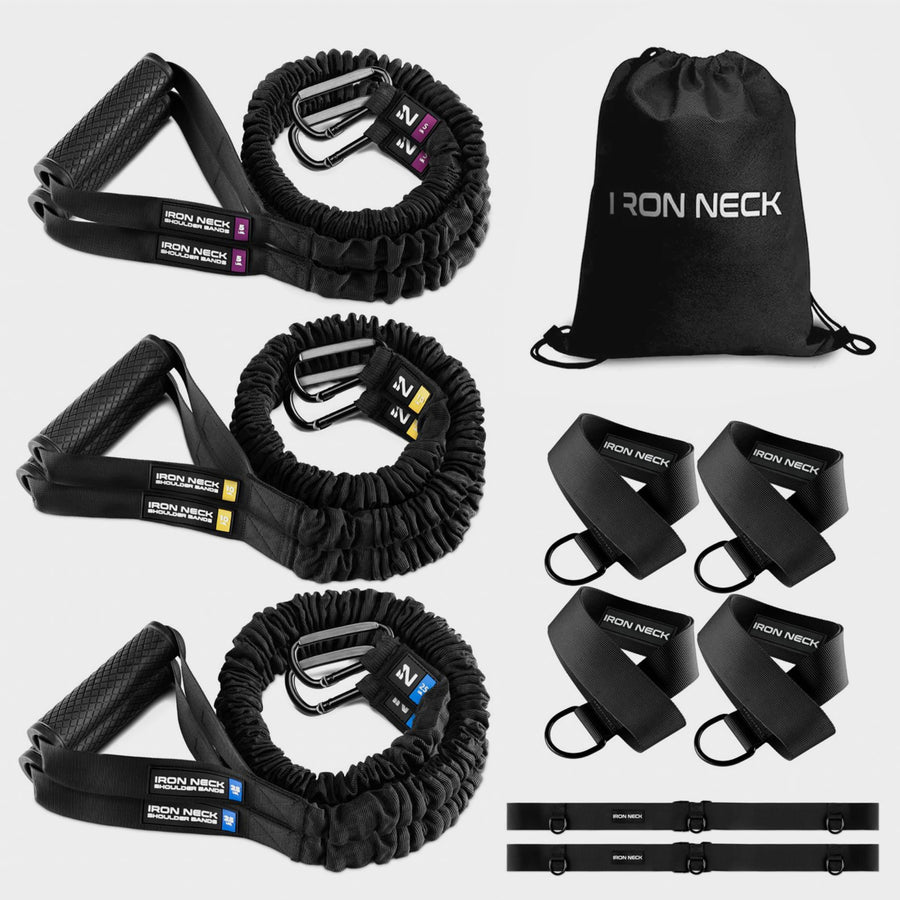
Cloth wrapped bands with graduated resistance and a door anchor for high, mid, and low setups. Everything this program calls for, in one kit.

We call for an effort level instead of a specific weight, because the right resistance depends on you, the movement, and where you are in your training. For the sets and reps listed on each exercise, pick the resistance that makes the last few reps feel like the level shown.
You finish the set with several clean reps still in the tank. The work stays easy and fully controlled from the first rep to the last.
You could manage a few more reps at the end, but not many. The final reps take real effort while your form holds.
You reach the last prescribed rep with little or nothing left. Completing every rep with good form is genuinely hard.
These are starting points, not rules. Everyone is built differently, so adjust to fit you: size down if your form breaks before the final rep or a movement aggravates a symptom, and only size up once every rep feels smooth and pain free. When you are unsure, choose the lighter option.