



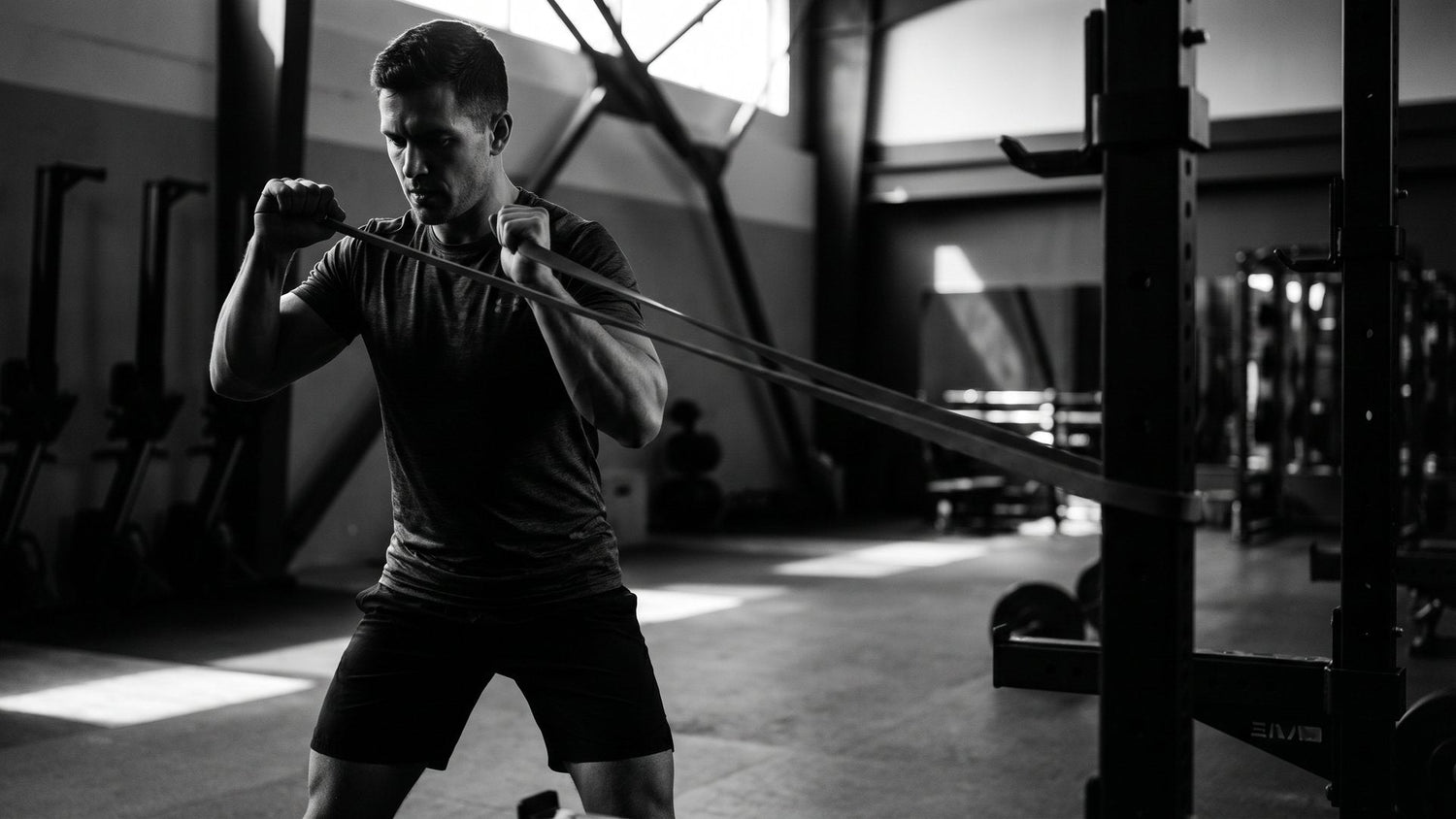
Resistance Band Shoulder Exercises: The Complete Workout Guide
Resistance bands are one of the most versatile and effective tools available for shoulder training. They provide accommodating resistance, meaning the load increases as the band stretches and the muscle is in its strongest position, which is the opposite of free weights where the load is constant regardless of joint angle. This property makes bands particularly well-suited for rotator cuff training, where the muscles are often weakest at the end ranges of motion where injury risk is highest. Whether you are rehabilitating a shoulder injury, building strength for athletic performance, or simply maintaining shoulder health as you age, resistance band training offers a comprehensive and joint-friendly approach to shoulder development.
Why Resistance Bands Are Ideal for Shoulder Training
The shoulder is a complex joint that requires training across multiple planes of motion and at varying joint angles. Free weights are excellent for training in the sagittal and frontal planes, but they struggle to provide effective resistance in the transverse plane, where many of the most important rotator cuff exercises occur. Resistance bands can be anchored at any height and used in any direction, making them uniquely capable of providing resistance in the exact planes and at the exact angles needed for comprehensive shoulder training.
Bands are also joint-friendly. Because the resistance is accommodating rather than constant, the load is lower at the beginning of the movement where the joint is in its most vulnerable position and higher at the end of the movement where the muscle is strongest. This reduces the risk of joint irritation during rehabilitation and makes bands appropriate for people with shoulder pain who cannot tolerate the constant load of free weights.
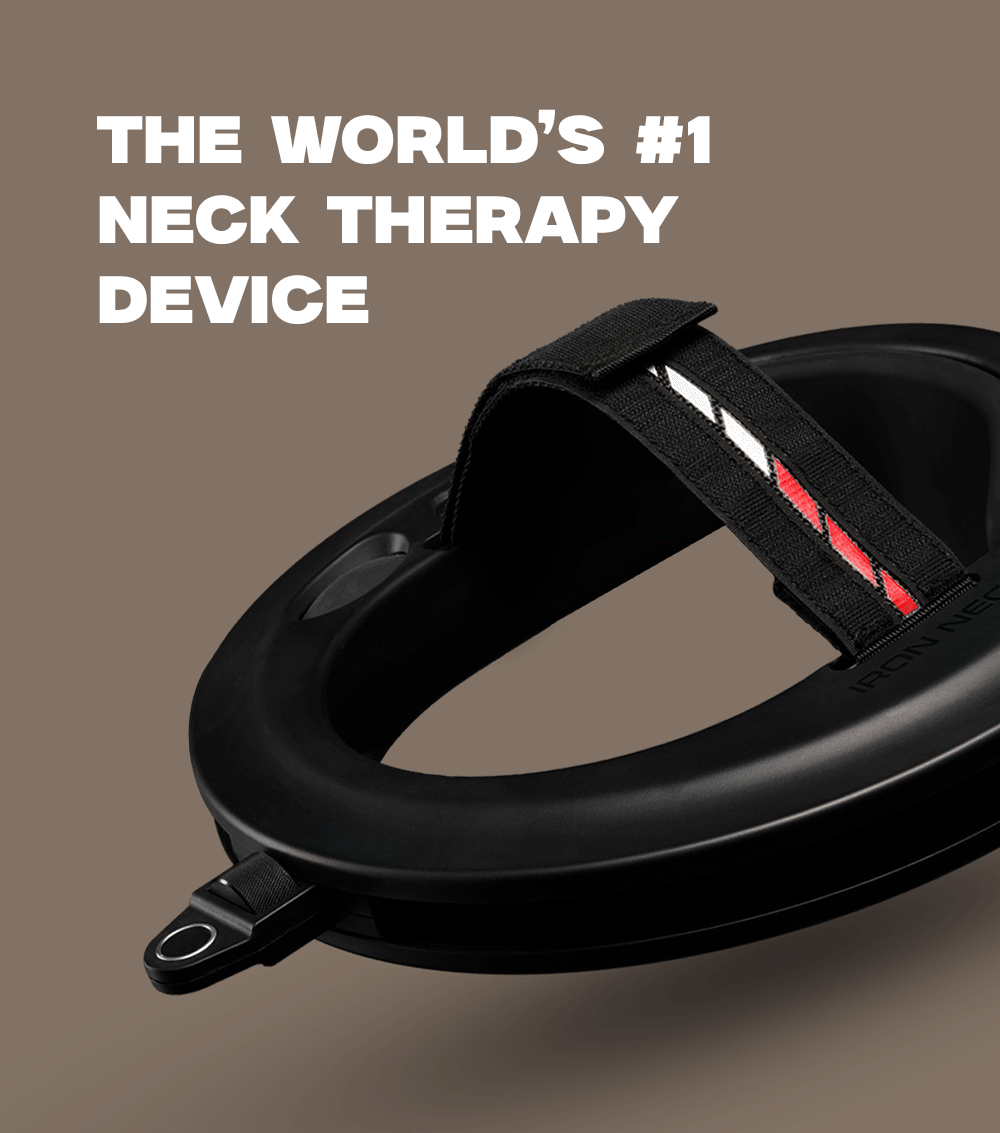
The Iron Neck resistance bands are designed with these principles in mind, offering multiple resistance levels that allow you to select the appropriate challenge for each exercise and progress systematically over time.
The Complete Resistance Band Shoulder Workout
The following workout targets all of the major muscle groups of the shoulder complex: the rotator cuff, deltoid, scapular stabilizers, and supporting muscles of the upper back. Perform this workout two to three times per week, allowing at least 48 hours between sessions for recovery.
Warm-Up (5 minutes)
Begin with 2 minutes of arm circles (10 forward, 10 backward) and 3 minutes of light band pull-aparts to warm up the shoulder joint and activate the rotator cuff before the main workout.
Rotator Cuff Exercises
Band External Rotation (3 sets of 15 repetitions per side): Attach the band to a fixed point at elbow height. Stand sideways to the band with your arm closest to the anchor. Hold the band with that hand, elbow bent to 90 degrees and pressed against your side. Rotate your forearm outward against the resistance. Return slowly. This is the most important rotator cuff exercise in any shoulder program, targeting the infraspinatus and teres minor that are most commonly weak in people with shoulder problems.
Band Internal Rotation (3 sets of 15 repetitions per side): Reverse your position so that your arm is farthest from the anchor. Rotate your forearm inward against the resistance. Return slowly. This targets the subscapularis, the largest rotator cuff muscle.
Band External Rotation at 90 Degrees Abduction (3 sets of 12 repetitions per side): Attach the band at shoulder height. Stand sideways to the band with your arm at 90 degrees of abduction and your elbow bent to 90 degrees. Rotate your forearm upward against the resistance. Return slowly. This exercise trains the rotator cuff in the overhead position where it is most commonly challenged during athletic activity.
Scapular Stabilizer Exercises
Band Face Pulls (3 sets of 15 repetitions): Attach the band at face height. Hold the band with both hands and pull it toward your face while simultaneously externally rotating your shoulders. Squeeze your shoulder blades together and down at the end of the movement. Return slowly. Face pulls are the single most effective exercise for training the posterior rotator cuff, lower trapezius, and mid trapezius simultaneously.
Band Pull-Aparts (3 sets of 20 repetitions): Hold the band in front of you at chest height with both hands, arms straight. Pull the band apart by squeezing your shoulder blades together until the band touches your chest. Return slowly. Pull-aparts train the mid trapezius and rhomboids, which are essential for proper scapular positioning.
Band Rows (3 sets of 15 repetitions): Attach the band at chest height. Hold the band with both hands and pull it toward your chest by squeezing your shoulder blades together, keeping your elbows close to your sides. Return slowly. Rows strengthen the mid trapezius and rhomboids in a functional pulling pattern.
Deltoid Exercises
Band Lateral Raises (3 sets of 15 repetitions): Stand on the band with both feet. Hold the band in each hand at your sides. Raise your arms to the side to shoulder height, keeping your elbows slightly bent. Return slowly. Band lateral raises train the middle deltoid with accommodating resistance that increases as the arm approaches shoulder height, where the deltoid is strongest.
Band Front Raises (3 sets of 12 repetitions): Stand on the band with both feet. Hold the band in each hand at your sides. Raise one arm forward to shoulder height, keeping your elbow slightly bent. Return slowly and repeat with the opposite arm. Front raises train the anterior deltoid in the sagittal plane.
Band Overhead Press (3 sets of 12 repetitions): Stand on the band with both feet. Hold the band in each hand at shoulder height. Press your arms overhead until they are fully extended. Return slowly. The band overhead press trains the deltoid, upper trapezius, and triceps in the overhead pressing pattern that is fundamental to most athletic activities.
Upper Back and Posterior Shoulder
Band Reverse Flies (3 sets of 15 repetitions): Hold the band in front of you at chest height with both hands crossed. Pull the band apart by raising your arms to the side and squeezing your shoulder blades together. Return slowly. Reverse flies train the posterior deltoid and mid trapezius in the horizontal abduction pattern.
Band High Rows (3 sets of 12 repetitions): Attach the band at face height. Hold the band with both hands and pull it toward your chin, leading with your elbows and keeping them above shoulder height. Return slowly. High rows train the upper trapezius and posterior deltoid in a movement pattern that complements the lower trapezius work of face pulls and rows.
Programming and Progression
Begin with a resistance level that allows you to complete all repetitions with good form while feeling a moderate challenge on the final two to three repetitions. When you can complete all sets and repetitions with good form and the final repetitions feel easy, progress to the next resistance level. Aim to progress the resistance every two to three weeks as you build strength.
For general shoulder health maintenance, perform this workout two times per week. For rehabilitation purposes, three times per week is appropriate, with at least 48 hours between sessions. For athletic performance, this workout can be used as a supplementary shoulder health routine alongside your primary training program, performed two times per week.
Iron Neck is the only device that trains your neck through 360 degrees of resistance, combining rotation, extension, and lateral movement in one tool. Used by NFL teams, UFC fighters, and physical therapists.

Leave a comment
This site is protected by hCaptcha and the hCaptcha Privacy Policy and Terms of Service apply.