



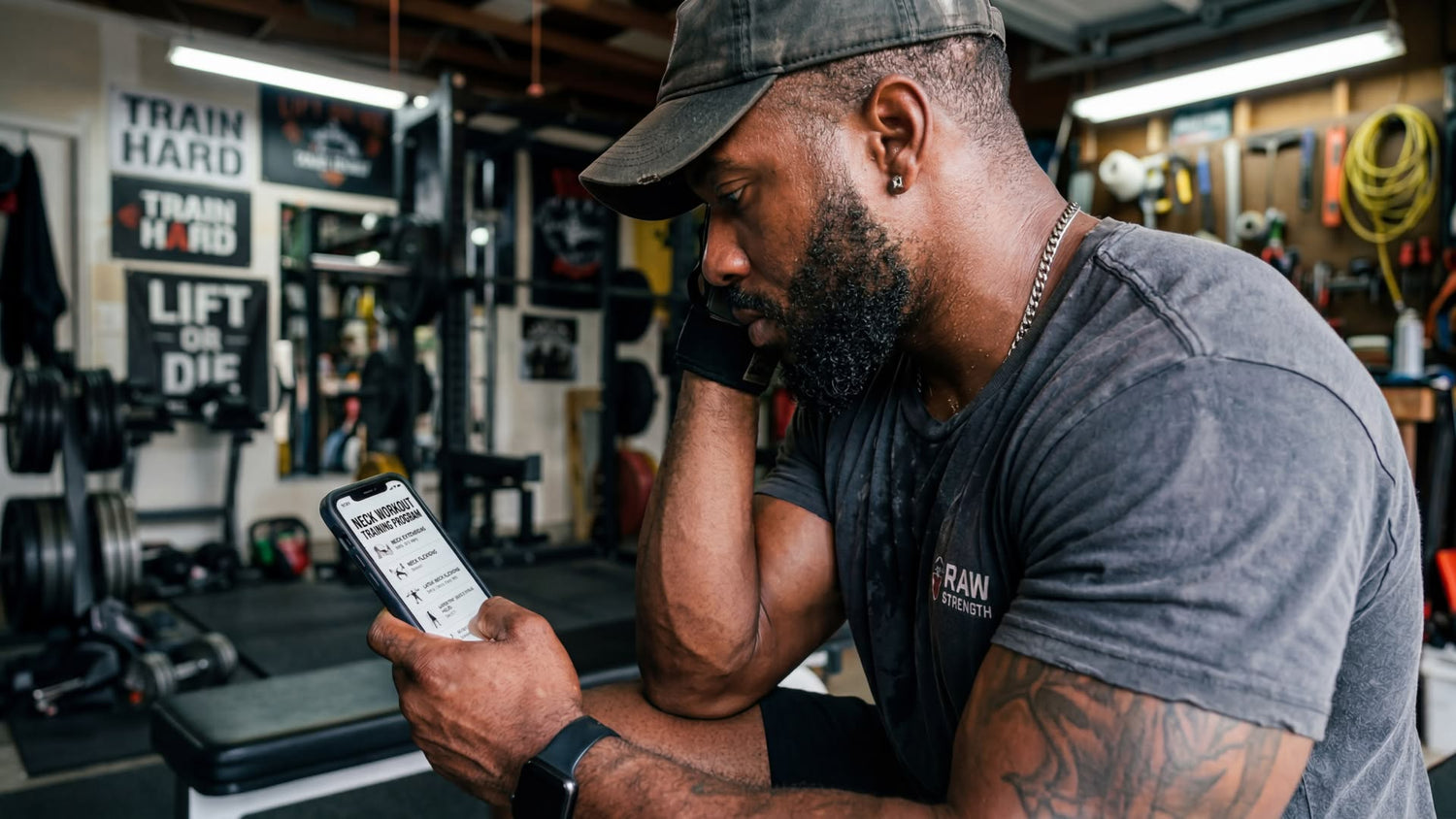
Neck Strengthening Exercises: The Only Guide You'll Ever Need
The neck is one of the most structurally complex regions of the human body, seven vertebrae, more than 20 muscles, and a network of nerves and blood vessels all packed into a relatively small space. It supports the weight of your head (approximately 10–12 pounds), allows a remarkable range of motion, and serves as the critical link between your brain and your body. Despite all of this, most people never train their neck directly.
This guide changes that. Whether you're an athlete looking to reduce injury risk, someone dealing with chronic neck tension from desk work, or a strength enthusiast who wants a complete physique, the following exercises and programming principles will give you everything you need to build a genuinely strong, resilient neck.
Understanding Neck Anatomy Before You Train
Effective neck training starts with understanding what you're training. The cervical spine has muscles on all four sides, and each group serves a distinct function. Training only one or two of these groups, which is what most people do when they "train their neck", creates imbalances that can actually increase injury risk.
The anterior (front) muscles, primarily the sternocleidomastoid and deep cervical flexors, control forward flexion and rotation. These are the muscles that tuck the chin and resist whiplash. They are chronically weak in most people due to forward head posture from screen use.
The posterior (back) muscles, including the splenius capitis, semispinalis capitis, and upper trapezius, control extension and help maintain upright head position. These muscles are often tight but not necessarily strong, tightness and strength are different qualities.
The lateral muscles, primarily the scalenes and levator scapulae, control side-bending and contribute to rotation. These are the muscles most responsible for resisting lateral impacts in contact sports.
A complete neck strengthening program trains all three groups with appropriate volume and progressive resistance.
Bodyweight Neck Strengthening Exercises
Bodyweight exercises form the foundation of any neck training program. They require no equipment, can be performed anywhere, and are the appropriate starting point for anyone new to direct neck training.
Chin Tucks
The chin tuck is the single most important neck exercise for the majority of people. It directly targets the deep cervical flexors. The muscles that maintain proper head position and are weakened by prolonged forward head posture. To perform: sit or stand with your spine in a neutral position. Without tilting your head up or down, draw your chin straight back as if making a double chin. Hold for 2–3 seconds and release. Perform 3 sets of 15 repetitions. This exercise is foundational and should be in every neck training program regardless of your goals.
Neck Nods
Neck nods build on the chin tuck by adding a controlled range of motion. From a neutral position, slowly lower your chin toward your chest through a full range of motion, then return. The key is control, use a 3-second lowering phase and a 2-second return. Avoid letting the movement become a head-bobbing motion; the entire range should be deliberate. Perform 3 sets of 12–15 repetitions.
Prone Neck Extensions
Lie face down on a bench or bed with your head hanging off the edge. From this position, slowly raise your head to a neutral (horizontal) position and lower back down. This targets the posterior neck muscles and upper trapezius. Begin with bodyweight only and focus on control rather than speed. Perform 3 sets of 10–12 repetitions. As this becomes easy, you can add a small weight plate held against the back of your head.
Lateral Neck Raises
Lie on your side on a bench or the floor with your head hanging off the edge. Raise your head toward your shoulder and lower back down. This targets the lateral neck muscles on the side facing up. Perform 3 sets of 10–12 repetitions per side. Control is critical here, avoid jerky movements, which can strain the cervical spine.
Isometric Neck Holds
Isometric exercises build strength without movement, making them the safest option for people with neck sensitivity or those returning from injury. Place your palm against your forehead and press your head forward against your hand while your hand resists the movement. Hold for 10 seconds. Repeat with your hand on the back of your head (resisting extension), and on each side of your head (resisting lateral flexion). Perform 3 holds of 10 seconds in each direction. Isometrics are also excellent as a warm-up before loaded neck training.
Resistance-Based Neck Strengthening Exercises
Once you have built a foundation with bodyweight exercises, adding resistance is essential for continued progress. The neck responds to progressive overload just like any other muscle group, without increasing challenge over time, strength gains plateau.
Head Harness Neck Flexion and Extension
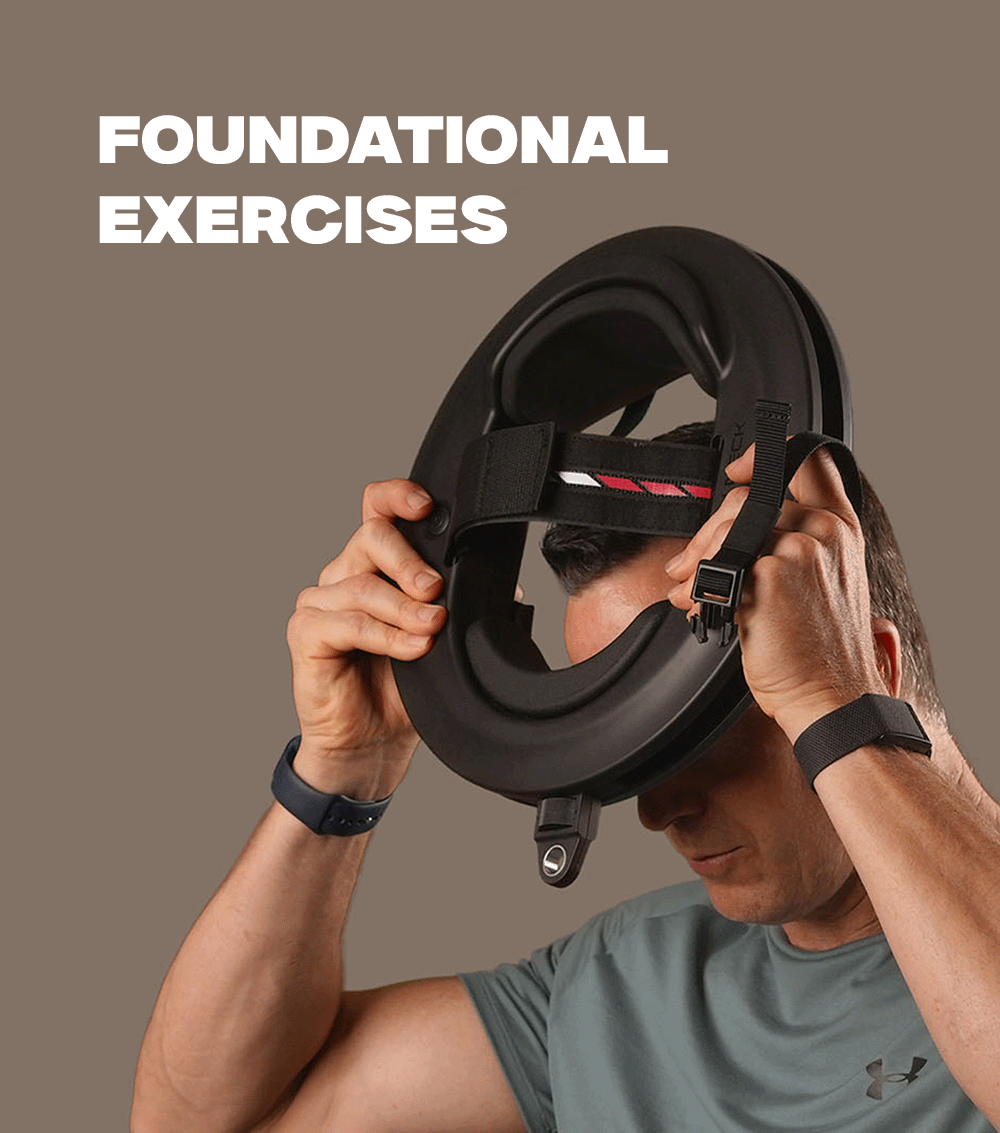
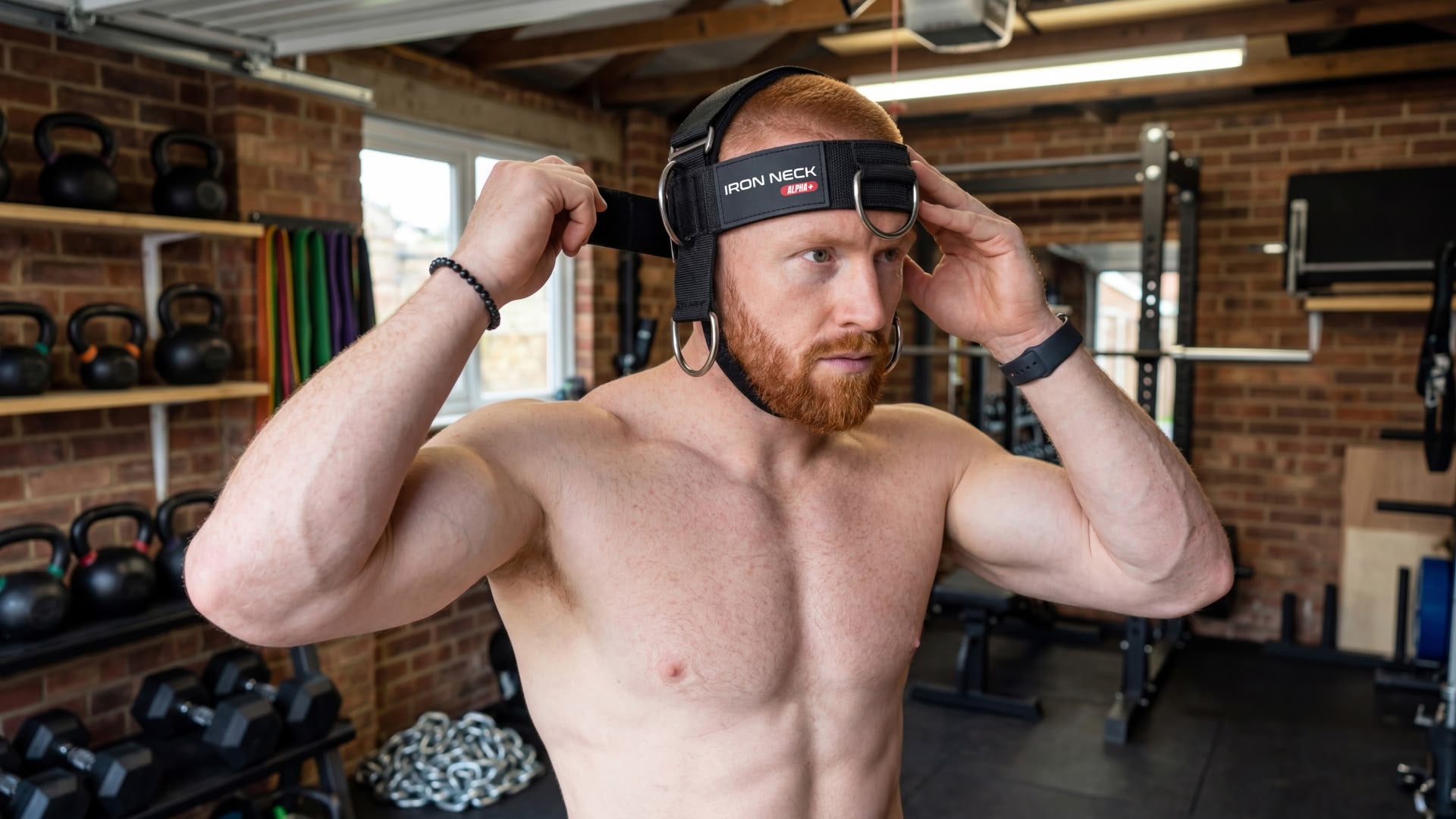
A neck harness allows you to add external weight to flexion and extension movements. Attach the harness, add a weight plate, and perform controlled flexion (chin to chest) and extension (head back) movements. Start conservatively, even 5–10 pounds is significant resistance for the neck. Perform 3 sets of 12–15 repetitions. The Iron Neck Alpha Harness is an excellent option for this type of training, providing a secure fit and comfortable weight distribution.
Band-Resisted Neck Exercises
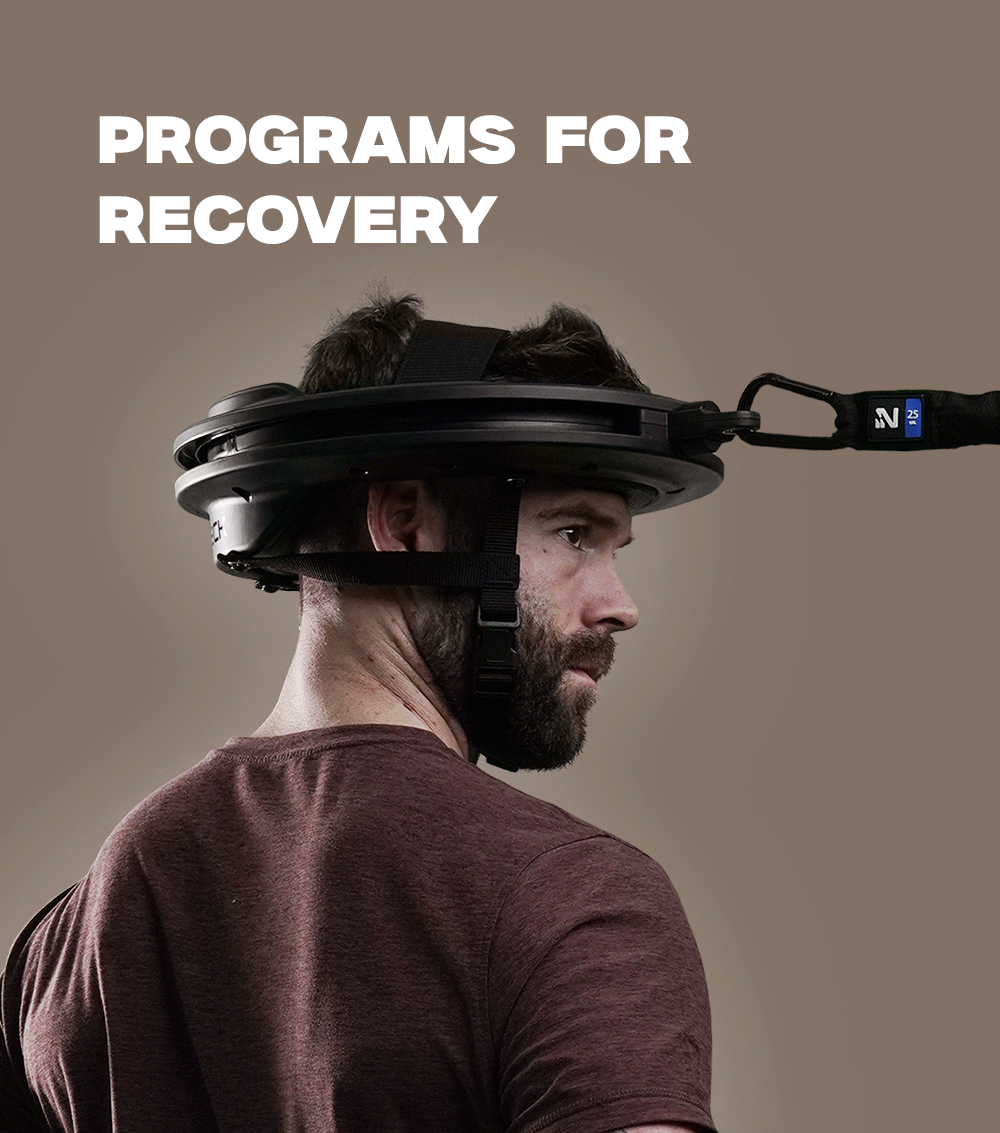
Resistance bands allow you to train the neck through all planes of motion with adjustable resistance. Anchor a band at head height, loop it around your head, and step away to create tension. Perform flexion, extension, and lateral flexion movements against the band's resistance. Bands are particularly useful for lateral and rotational training, which is difficult to achieve with traditional weights. Perform 3 sets of 12–15 repetitions per direction.
Iron Neck 360° Training
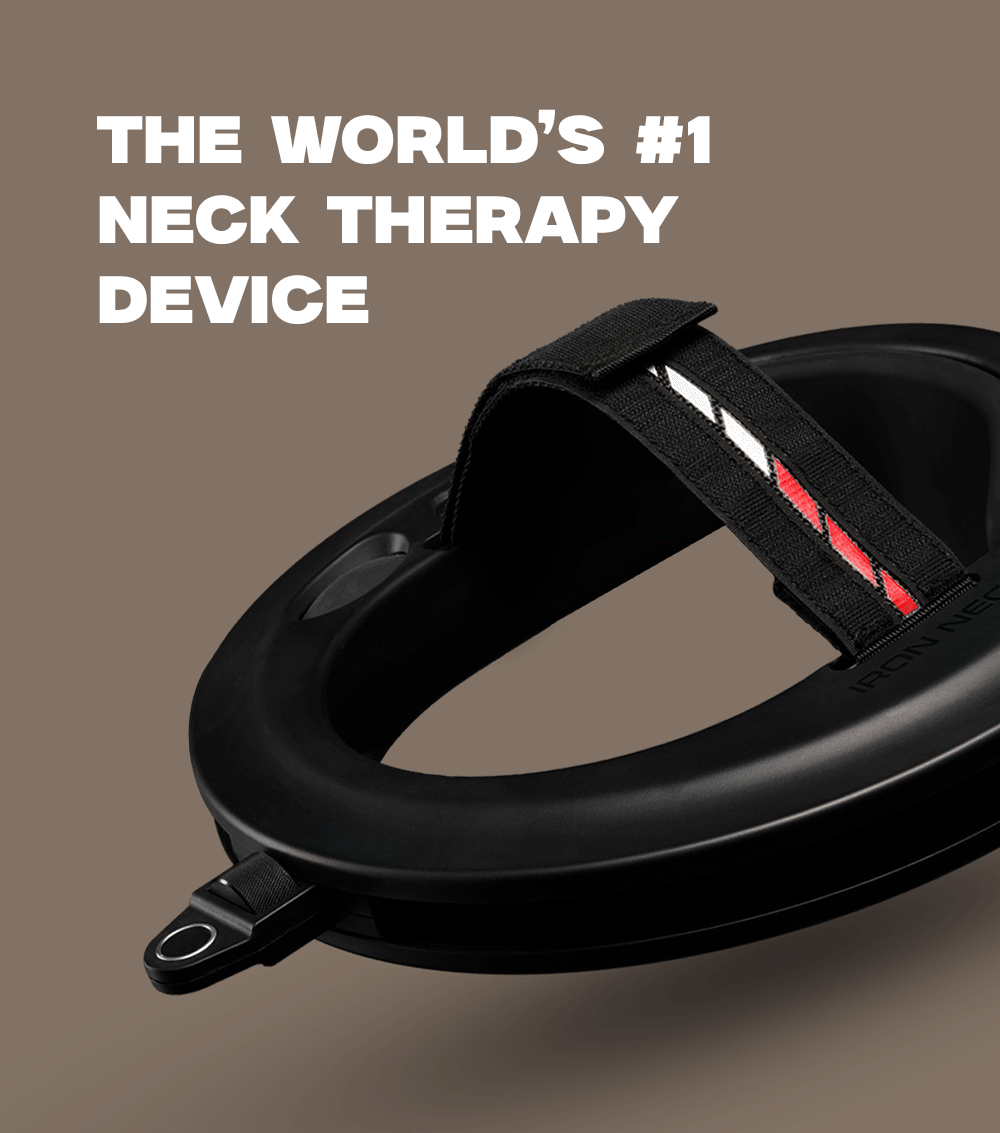
The Iron Neck 3.0 Pro represents the most advanced approach to neck strengthening available. Unlike harnesses or bands, it provides consistent resistance through a full 360-degree range of motion, allowing you to train all planes of neck movement in a single session with precise, adjustable resistance. The device attaches securely to the head and connects to a cable or resistance system, enabling exercises that are impossible with any other equipment. For athletes serious about neck development, it is the definitive tool.
Programming Your Neck Strengthening Routine
Neck training should be performed two to three times per week with at least one rest day between sessions. The cervical spine, while adaptable, requires adequate recovery time, daily training is counterproductive and increases injury risk.
A complete neck strengthening session for an intermediate trainee might look like this: begin with 2 sets of chin tucks and isometric holds as a warm-up (5 minutes total). Follow with 3 sets each of weighted flexion, weighted extension, and lateral raises. Finish with 2 sets of band rotations or Iron Neck 360 rotation movements. Total session time: 20–30 minutes.
Progress by adding one repetition per set each week, or by increasing resistance every two weeks. Track your numbers. This is the only way to ensure you are applying progressive overload consistently.
Common Mistakes to Avoid
The most common mistake in neck training is using too much weight too soon. The cervical spine is not accustomed to direct loading, and the supporting muscles need time to adapt. Start lighter than you think you need to and build gradually.
The second most common mistake is training only flexion and extension while neglecting lateral and rotational strength. This creates imbalances that can increase injury risk, particularly in contact sports. Every neck training program should include work in all four planes.
Finally, avoid training through sharp or radiating pain. Mild muscular fatigue is normal and expected. Sharp pain, pain that radiates down the arm, or pain accompanied by numbness or tingling are warning signs that require medical evaluation before continuing.
The Bottom Line
Neck strengthening exercises are among the highest-return investments you can make in your physical health and athletic performance. The neck is involved in virtually every movement you perform, and its strength directly affects your injury resilience, posture, and athletic capability. The exercises and programming in this guide give you a complete system, start with the bodyweight foundations, add resistance progressively, and train all planes of motion consistently. The results, measured in both performance and injury prevention, will be substantial.

Leave a comment
This site is protected by hCaptcha and the hCaptcha Privacy Policy and Terms of Service apply.