



Frozen Shoulder Exercises: How to Regain Full Range of Motion
Frozen shoulder, medically known as adhesive capsulitis, is one of the most frustrating shoulder conditions a person can experience. It develops gradually, progresses through predictable stages, and can take one to three years to resolve without treatment. The condition involves a thickening and contraction of the shoulder joint capsule that progressively restricts range of motion in all directions, eventually making even simple movements like reaching overhead or fastening a seatbelt painful and difficult. The right exercise approach, applied consistently and at the right stage of the condition, can significantly accelerate recovery and restore full range of motion faster than the natural history of the condition alone.
The Three Stages of Frozen Shoulder
Understanding the stages of frozen shoulder is essential for choosing the right exercises at the right time. Applying aggressive stretching during the freezing stage, when inflammation is active, typically worsens pain and may slow recovery. Applying only gentle exercises during the thawing stage, when the capsule is beginning to loosen, misses the window for more aggressive mobility work that can accelerate recovery.
The freezing stage, lasting approximately two to nine months, is characterized by progressive pain and stiffness. Pain is often severe, particularly at night, and range of motion decreases steadily throughout this stage. The frozen stage, lasting approximately four to twelve months, is characterized by significant stiffness with reduced pain. Range of motion is at its most restricted during this stage, but the severe pain of the freezing stage has typically subsided. The thawing stage, lasting approximately five to twenty-four months, is characterized by a gradual spontaneous improvement in range of motion as the capsular adhesions begin to resolve.
Exercise Approach by Stage
Freezing Stage: Gentle Mobilization and Pain Management
During the freezing stage, the primary goals are managing pain and maintaining as much range of motion as possible without aggravating the inflammatory process. Aggressive stretching is contraindicated during this stage and will worsen pain without accelerating recovery.
Pendulum Exercises: Stand beside a table and lean forward, supporting your weight with your unaffected arm. Allow your affected arm to hang freely. Gently swing the arm in small circles, forward and backward, and side to side. Perform for 2 minutes, two to three times daily. Pendulum exercises use gravity and gentle momentum to maintain joint mobility without producing the inflammatory response that more aggressive stretching triggers during the freezing stage.
Gentle Active Range of Motion: Perform slow, controlled movements through your comfortable range of motion in all planes. Move only to the point where you feel mild discomfort, not sharp pain. Perform 10 repetitions in each direction, twice daily. The goal during this stage is to maintain the range of motion you have, not to push beyond it.
Heat Before Exercise: Applying heat to the shoulder for 15 to 20 minutes before exercise during the freezing stage can reduce pain and improve tissue extensibility, making the gentle mobilization exercises more comfortable and effective.
Frozen Stage: Progressive Stretching
During the frozen stage, when pain has decreased but stiffness is at its maximum, more aggressive stretching can be introduced. The goal is to progressively stretch the contracted capsule and restore range of motion.
Pendulum Exercises with Increased Range: Continue pendulum exercises, but gradually increase the size of the circles as your range of motion allows. Perform for 3 minutes, three times daily.
Active Assisted Flexion: Use a cane or wand held with both hands to assist your affected arm through overhead flexion. Perform 3 sets of 15 repetitions. Progress the range of motion gradually over several weeks.
External Rotation Stretch: Stand in a doorway with your affected arm at 90 degrees of abduction, elbow bent to 90 degrees, and your forearm resting against the door frame. Gently lean your body forward until you feel a stretch in the front of your shoulder. Hold for 30 seconds. Perform three times. This stretch targets the anterior capsule, which is typically the most contracted structure in frozen shoulder.
Cross-Body Stretch: Bring your affected arm across your chest and use your opposite hand to gently pull it closer to your body. Hold for 30 seconds. Perform three times. This stretch targets the posterior capsule.
Inferior Capsule Stretch: Raise your affected arm overhead and bend your elbow so that your hand rests behind your head. Use your opposite hand to gently pull your elbow further behind your head. Hold for 30 seconds. Perform twice. This stretch targets the inferior capsule, which limits overhead reach.
Sleeper Stretch: Lie on your affected side with your arm at 90 degrees of abduction and your elbow bent to 90 degrees. Use your opposite hand to gently press your forearm toward the floor, increasing internal rotation. Hold for 30 seconds. Perform three times.
Thawing Stage: Progressive Strengthening
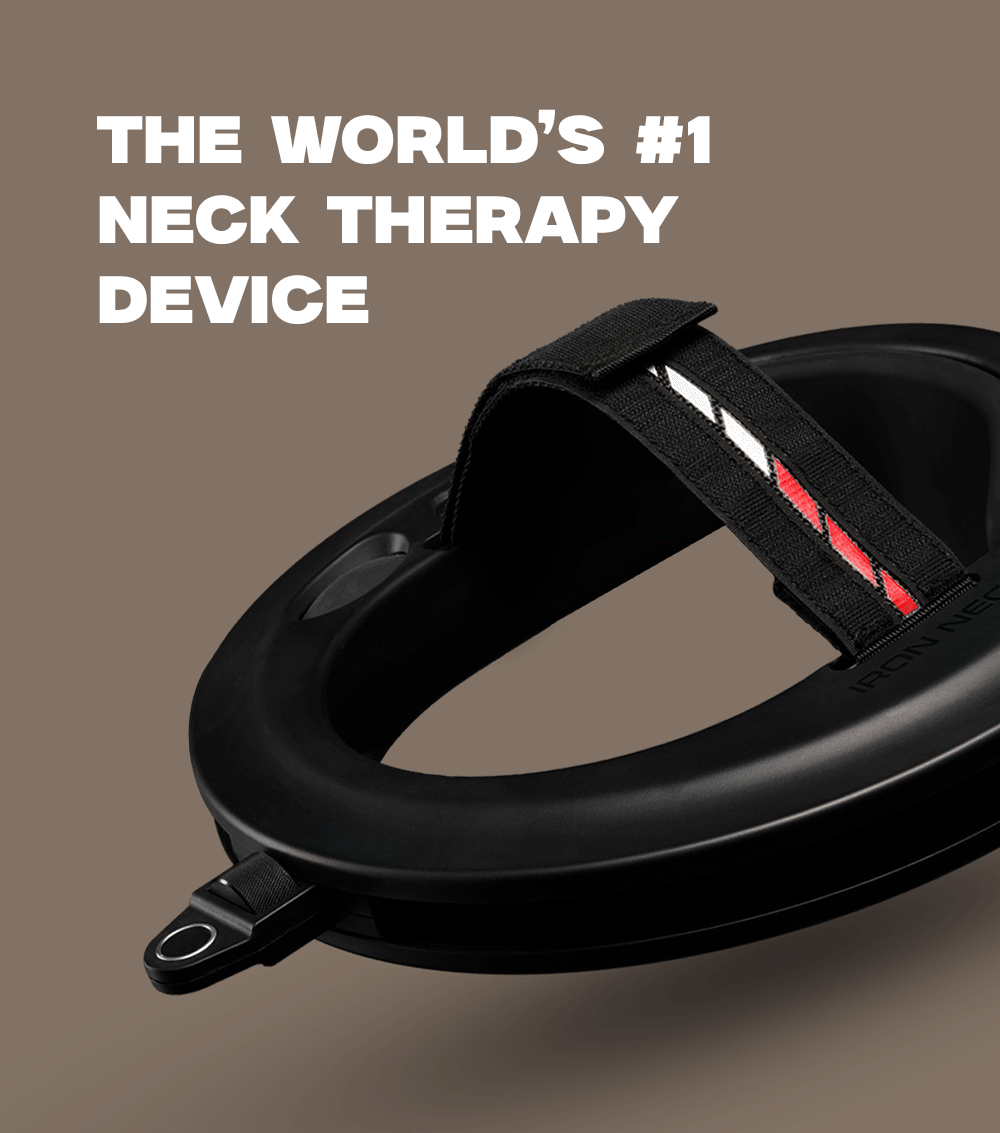
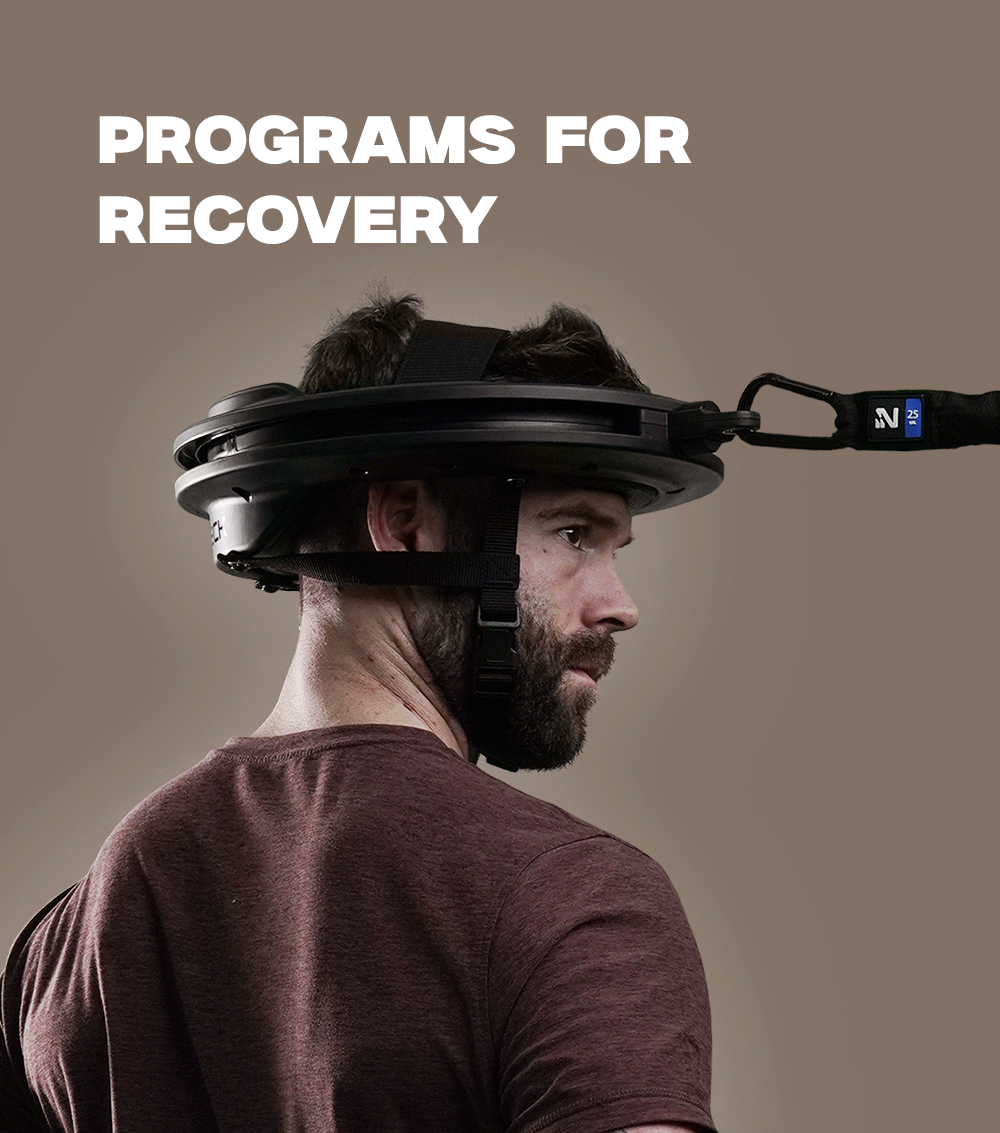
During the thawing stage, as range of motion begins to return spontaneously, the focus shifts to strengthening the rotator cuff and scapular stabilizers that have weakened during the prolonged period of restricted movement. The Iron Neck resistance bands are ideal for this phase, providing controlled, progressive resistance for rotator cuff and scapular exercises.
Band External Rotation: Attach a resistance band at elbow height. Stand sideways to the band with your affected arm closest to the anchor. Hold the band with your affected hand, elbow bent to 90 degrees and pressed against your side. Rotate your forearm outward against the resistance. Return slowly. Perform 3 sets of 15 repetitions. Begin with the lightest available resistance.
Band Rows: Attach a resistance band at chest height. Pull the band toward your chest by squeezing your shoulder blades together. Perform 3 sets of 15 repetitions.
Band Face Pulls: Attach a resistance band at face height. Pull the band toward your face while simultaneously externally rotating your shoulders. Squeeze your shoulder blades together and down. Perform 3 sets of 15 repetitions.
Medical Interventions to Consider
For people in the freezing stage with severe pain that is significantly disrupting sleep and daily function, a corticosteroid injection into the shoulder joint can provide meaningful pain relief and may accelerate the transition to the frozen stage. This is a medical intervention that requires a physician's assessment and prescription.
For people in the frozen stage who are not making adequate progress with exercise alone, hydrodilatation (distension arthrography) or manipulation under anesthesia may be considered. These procedures are performed by orthopedic surgeons and are typically reserved for cases that have not responded to six months or more of conservative management.
What to Expect from Recovery
With consistent exercise and appropriate medical management, most people with frozen shoulder achieve full or near-full recovery of range of motion. The timeline varies significantly between individuals, but the combination of targeted exercise and medical intervention when appropriate typically reduces the total recovery time compared to the natural history of the condition. Patience and consistency are the most important factors in achieving a full recovery.


Leave a comment
This site is protected by hCaptcha and the hCaptcha Privacy Policy and Terms of Service apply.