





Neck Hypertrophy: How to Actually Build Neck Muscle Mass
Neck hypertrophy. The process of building actual muscle mass in the cervical region, is one of the most misunderstood topics in strength training. Most people either ignore neck training entirely, or they perform a handful of random exercises without any understanding of the principles that drive muscle growth. The result is years of training with little to show for it in the neck department.
This guide cuts through the confusion. It covers the specific physiological principles that govern neck muscle growth, the exercises and training variables that produce the best hypertrophic response, and the practical programming strategies that will help you build a noticeably thicker, more developed neck.
The Physiology of Neck Hypertrophy
Muscle hypertrophy occurs through two primary mechanisms: mechanical tension and metabolic stress. Mechanical tension. The force applied to muscle fibers during resistance training, is the dominant driver of long-term muscle growth. Metabolic stress, the accumulation of metabolic byproducts during high-rep training, contributes to the "pump" and may have additional hypertrophic effects.
The neck muscles respond to these same stimuli as any other muscle group. They contain a mix of Type I (slow-twitch, endurance-oriented) and Type II (fast-twitch, strength-oriented) muscle fibers, with the ratio varying by muscle. The sternocleidomastoid, for example, has a relatively high proportion of Type I fibers, suggesting it responds well to moderate-to-high rep ranges. The cervical extensors have a higher proportion of Type II fibers, making them more responsive to heavier loading.
The practical implication: effective neck hypertrophy training should include both heavier, lower-rep work (6–10 reps) and moderate-rep work (12–20 reps) to stimulate both fiber types and maximize total muscle development.
Volume and Frequency for Neck Growth
Research on optimal training volume for hypertrophy generally suggests 10–20 working sets per muscle group per week for most trainees. For the neck, this translates to approximately 3–4 exercises performed for 3–4 sets each, two to three times per week.
Frequency matters because the neck muscles, like all muscles, need repeated stimulus to grow. Training the neck once per week is suboptimal for hypertrophy. The muscle protein synthesis response to a training session peaks within 24–48 hours and returns to baseline within 72 hours. Training twice per week ensures you're stimulating growth more consistently.
However, the neck also needs adequate recovery. The cervical spine is not accustomed to direct loading in most people, and the supporting connective tissues (tendons, ligaments) adapt more slowly than the muscles themselves. Starting with two sessions per week and building to three over several months is the appropriate progression for most trainees.
Exercise Selection for Maximum Neck Hypertrophy
Not all neck exercises are equally effective for hypertrophy. The following exercises produce the best hypertrophic stimulus based on their ability to load the target muscles through a full range of motion with progressive resistance.
Weighted Neck Flexion
Weighted neck flexion is the primary mass-builder for the anterior neck. Using a neck harness with a weight plate, perform controlled flexion movements through a full range of motion. The key for hypertrophy is the eccentric (lowering) phase, lower the weight slowly (3–4 seconds) to maximize mechanical tension. Perform 4 sets of 10–15 repetitions.
Weighted Neck Extension
Weighted extension is the primary mass-builder for the posterior neck. The muscles responsible for the thickness of the neck when viewed from the side. The same principles apply: full range of motion, controlled eccentric, progressive loading. Perform 4 sets of 10–15 repetitions.
Lateral Neck Raises
Lateral raises are essential for building the width of the neck. The muscles visible from the front. Without lateral training, the neck can appear narrow even when the front and back are well-developed. Perform 3 sets of 12–15 repetitions per side.
Iron Neck Resistance Training
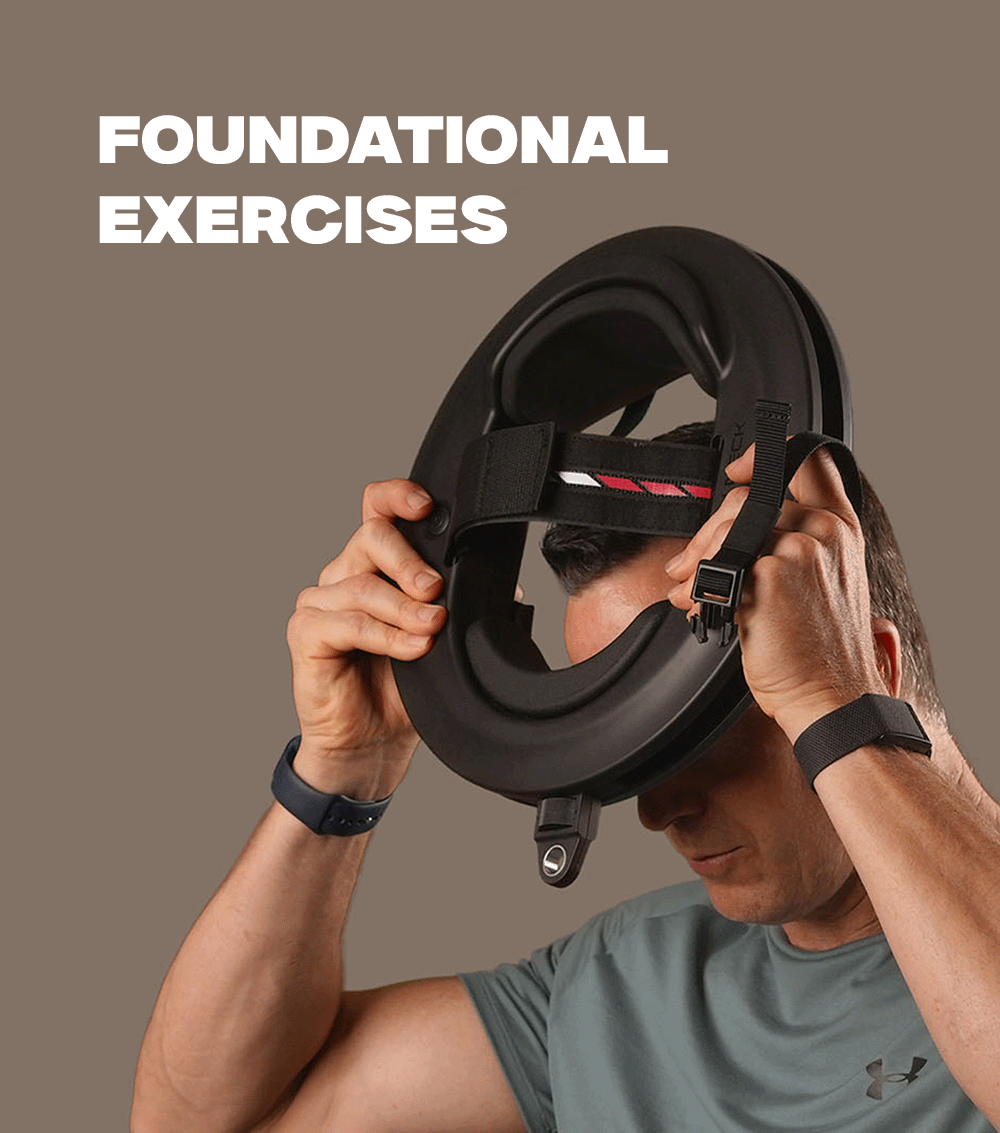
The Iron Neck 3.0 Pro provides a unique hypertrophic stimulus because it allows resistance training through the full 360-degree range of cervical motion. This means every muscle of the neck, including the rotators and deep stabilizers that no other exercise can effectively load, receives a growth stimulus. For athletes serious about neck hypertrophy, it is the most comprehensive tool available.
Nutrition for Neck Muscle Growth
Neck hypertrophy follows the same nutritional principles as hypertrophy anywhere else in the body. You need a caloric surplus (or at minimum, caloric maintenance) to support muscle growth, and adequate protein to provide the amino acid building blocks for new muscle tissue.
Aim for 0.7–1 gram of protein per pound of bodyweight per day. Distribute protein intake across 3–5 meals to maximize muscle protein synthesis throughout the day. Ensure you're eating enough total calories to support your training, trying to build muscle in a significant caloric deficit is inefficient and often counterproductive.
Realistic Expectations and Timeline
Neck hypertrophy is a slow process, as is hypertrophy in any muscle group. With consistent training, progressive overload, and adequate nutrition, most people can expect to add 0.5–1 inch of neck circumference in the first year of dedicated neck training. This is a significant and visible change. A 1-inch increase in neck circumference is immediately noticeable and represents substantial muscle development.
The neck also responds relatively quickly to training in the early stages, as most people are starting from a very undertrained baseline. The first 8–12 weeks of consistent neck training typically produce the most dramatic visible changes, as the muscles are responding to a novel stimulus.
Putting It All Together
Building neck muscle mass requires the same systematic approach as building any other muscle group: consistent training with progressive overload, adequate volume across all planes of movement, sufficient protein and calories, and patience. The exercises and principles outlined in this guide provide a complete framework for neck hypertrophy. Implement them consistently, track your progress, and the results will follow.


Leave a comment
This site is protected by hCaptcha and the hCaptcha Privacy Policy and Terms of Service apply.